

Published Nov 21, 2026, 2:45 AM EST
Dhruv is a Lead Writer in Screen Rant's New TV division. He has been consistently contributing to the website for over two years and has written thousands of articles covering streaming trends, movie/TV analysis, and pop culture breakdowns.
Before Screen Rant, he was a Senior Writer for The Cinemaholic, covering everything from anime to television, from reality TV to movies.
After high school, he was on his way to become a Civil Engineer. However, he soon realized that writing was his true calling. As a result, he took a leap and never looked back.
Rewind Father Time's hands back one decade ago, Netflix quietly released a time travel masterpiece. Some time travel stories tweak the past timeline and alter the future. Others go one step further and explore the possibility of the past, the present, and the future existing simultaneously. And then, there is one that goes down an existential rabbit hole to question the very nature of humanity's free will.
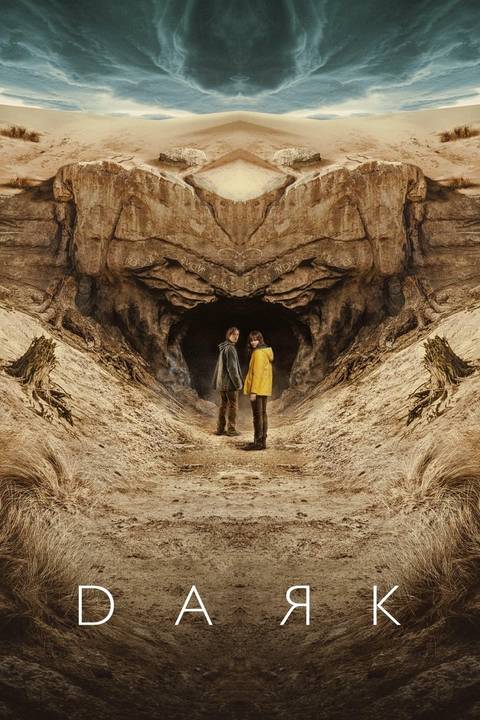
Created by Baran bo Odar and Jantje Friese, Dark premiered during the 21st century's golden age of sci-fi. Despite being one of the many ambitious shows on Netflix, Dark rose in the ranks to become one of the greatest sci-fi offerings on the streaming service. While the show's time travel mechanics and rules alone are incredibly appealing, it is its warm embrace of existential dread that truly makes it addictive.
Picture a nightmare. The beginning of which cannot be remembered, while the end keeps looping back to the beginning. Even death offers no escape, while any attempt to awaken only pulls one deeper into the dream. There lies the mind-bending premise of Dark. The only difference being that nothing in the Netflix sci-fi show's story is a dream. It all unfolds in an existential reality where free will is a stubborn illusion.
Netflix’s Dark Fully Embraces Existentialism With Its Time Travel Story

As far as temporal physics is concerned, Netflix's Dark is the opposite of existentialist. It is externalist. In a town called Widen, the show captures a "block" universe where characters travel across 33 years. With every attempt to change the past, they eventually learn that they are fulfilling a predetermined series of events. It is an eternal loop.
However, what begins as a story about determinism pushed to its absolute limit gradually turns into an existential portrayal of human freedom and grief. Mirroring Friedrich Nietzsche's "Eternal recurrence," Dark's main characters are foreced to question what they would do if they had to eternally live the same life again and again.
While some go down the nihilistic route and hope to destroy the world, others cling to the broken reality for it guarantees the survival of their loved ones. Either way, there is suffering.
As Albert Camus once exemplified, absurdism lies in the constant battle between humanity's desire for control and the chaos of the disorderly universe. In Dark, the characters are only able to escape the overarching deterministic loop once they are willing to embrace the existential dread of an unscripted life. It comes with freedom but at the cost of losing the illusion of control.
Time Travel Storytelling Peaked With Netflix's Dark

While time travel will always remain an enthralling plot device in sci-fi, the brilliance with which Dark uses it almost remains unmatched. No time travel TV show or movie since Netflix's Dark has even come remotely close to creating such a perfect, well-rounded story. Dark also heavily benefited from the fact that its creators had fully pre-planned its 3-season structure.
Most shows in the streaming era these days struggle to make it past two seasons. Dark was fortunate enough to realize its full vision before being axed.
Baran bo Odar and Jantje Friese's 1899 could have been the next Dark with its portrayal of mind-bending simulations. Sadly, it was canceled after just one season. Perhaps the only time travel sci-fi show that comes close to being as compelling and "complete" as Dark is Syfy's 12 Monkeys.
The two sci-fi shows on Netflix and Syfy are absolute masterclasses in time travel storytelling and never cease to lose their existential appeal no matter how many times one rewatches them.
Dark
Release Date 2017 - 2020-00-00


 English (US) ·