
When it comes to literary adaptations that should have been great, few shows disappoint quite like Netflix’s The Witcher. What began as a promising prestige fantasy slowly unraveled across four seasons, drifting from the spirit of its source material. Now, the runaway success of the live-action One Piece has pushed the frustrations of The Witcher fans back into the spotlight.
As the live-action One Piece goes from strength to creative strength with its second season, many readers of Andrzej Sapkowski’s novels are once again asking uncomfortable questions about The Witcher. If Netflix can translate such an eccentric, effects-heavy world like One Piece so effectively, how did its version of Sapkowski’s grounded, character-driven The Witcher saga go so wrong?
One Piece Should Have Been Harder To Adapt Than The Witcher
Netflix Nailed The Tougher Adaptation So Flawlessly That It’s Frustrating

There’s an important and incredibly obvious reason that Netflix’s live-action One Piece makes its take on The Witcher painful all over again. Of the two source materials, One Piece should have been much, much harder to adapt for several reasons.
From a purely visual standpoint, One Piece was always the riskier of the two stories. In both the games and novels, The Witcher operates in a familiar swords-and-sorcery space of castles, monsters, and medieval grit. One Piece, by contrast, thrives on elastic physics, living skeletons, animal-human hybrids, and superpowers born from magical fruits.
Not only was translating that heightened manga logic into convincing live action a colossal specital effects challenge, it also required having a lot of faith that viewers unfamiliar with the One Piece manga would embrace the weirdness of its world. As the success of the show proves, they absolutely were. The Witcher is far from generic fantasy, but it follows audience expectations much more closely as far as its aesthetic goes.
The difference becomes obvious from the first moment Monkey D. Luffy (Iñaki Godoy) stretches his limbs in combat in Netflix’s One Piece. His rubber physiology is intentionally cartoonish, yet the series commits fully to making it feel tangible. Meanwhile, Geralt of Rivia (Henry Cavill/Liam Hemsworth) exists in a far more traditional fantasy frame that television has handled comfortably for decades. Yet, of the two, it’s One Piece that honors its source material more closely.
When it comes to potential narrative challenges, the gap between how easy The Witcher should have been to adapt compared to One Piece is even more striking. Andrzej Sapkowski’s saga spans nine core books and reaches a definitive chronological conclusion with 1999's The Lady of the Lake. The roadmap was complete. Character arcs, political turns, and thematic payoffs were already structured for long-form storytelling. A season-by-season adaptation plan practically writes itself.
Eiichiro Oda’s One Piece manga, on the other hand, is the total opposite. It’s an ongoing weekly manga that has expanded for decades, constantly introducing new islands, factions, and power systems. There is no neat endpoint, no tight trilogy structure, and no conventional pacing rhythm to lean on.
However, amazingly, Netflix’s live-action One Piece adaptation carves that sprawl into clean, character-focused seasonal arcs. The eight-episode runs feel purposeful rather than rushed. Emotional beats land. Backstories breathe. The live-action version finds cohesion in material that was never designed to be a structured TV show. Meanwhile, pacing issues are one of the biggest complaints about Netflix’s The Witcher adaptation.
The failure of The Witcher compared to One Piece is even harder to ignore when just how much comparitive creative freedom The Witcher team had is taken into account. The Witcher novels describe people and places with selective detail, leaving vast interpretive space for designers and showrunners. Outside of key iconography, The Witcher TV show had room to define its own visual identity.
One Piece had far less flexibility. The manga and anime already established exact silhouettes, color palettes, costumes, and creature designs. Deviating too far risked alienating fans, yet strict accuracy risked looking absurd. The show somehow threads that needle, honoring the blueprint while adapting it for physical reality. Given those hurdles, One Piece succeeding where The Witcher struggled is more than surprising. It’s frustrating, whether one is a fan of the original books or otherwise.
The Success Of One Piece Makes The Witcher’s Treatment Of The Source Material Even Worse
Respecting The Original Blueprint Made All The Difference

One of the loudest criticisms surrounding Netflix’s The Witcher TV show has been its uneasy relationship with the source material. Fan frustration and multiple behind-the-scenes reports painted a picture of a writers’ room more interested in reshaping the saga than faithfully translating it.
That approach stands in stark contrast to Netflix’s approach to the live-action One Piece. Its creative team consistently treated the manga’s tone, themes, and character dynamics as strengths to preserve, not obstacles to modernize. Emotional sincerity and eccentric humor remained intact rather than being sanded down.
This difference matters because, because Andrzej Sapkowski’s work and ideas have already proved themselves across multiple mediums. The Witcher novels were international bestsellers. CD Projekt Red’s acclaimed game adaptations expanded the audience even further. The foundation for success was sturdy.
In other words, the hard part for Netflix was already done. They had a working story that clearly resonated with those who engaged with it in either literary or video game format. All they had to do was rework the narrative of The Witcher into a multi-season show. Rendering that story into live action required care and attention, not reinvention. Instead, frequent deviations created tonal inconsistencies and fractured long-term arcs.
Ironically, One Piece had more obvious reasons to play it safe. The exaggerated style and elastic logic of the manga could have been toned down for mainstream comfort. Instead, the live-action One Piece show leaned into its identity. Those creative risks paid off. By comparison, the risks The Witcher avoided feel more glaring than ever.
Comparing One Piece To The Witcher Reveals How Important Franchise Creators Are
One Piece Proves How Vital Creator Involvement Truly Is
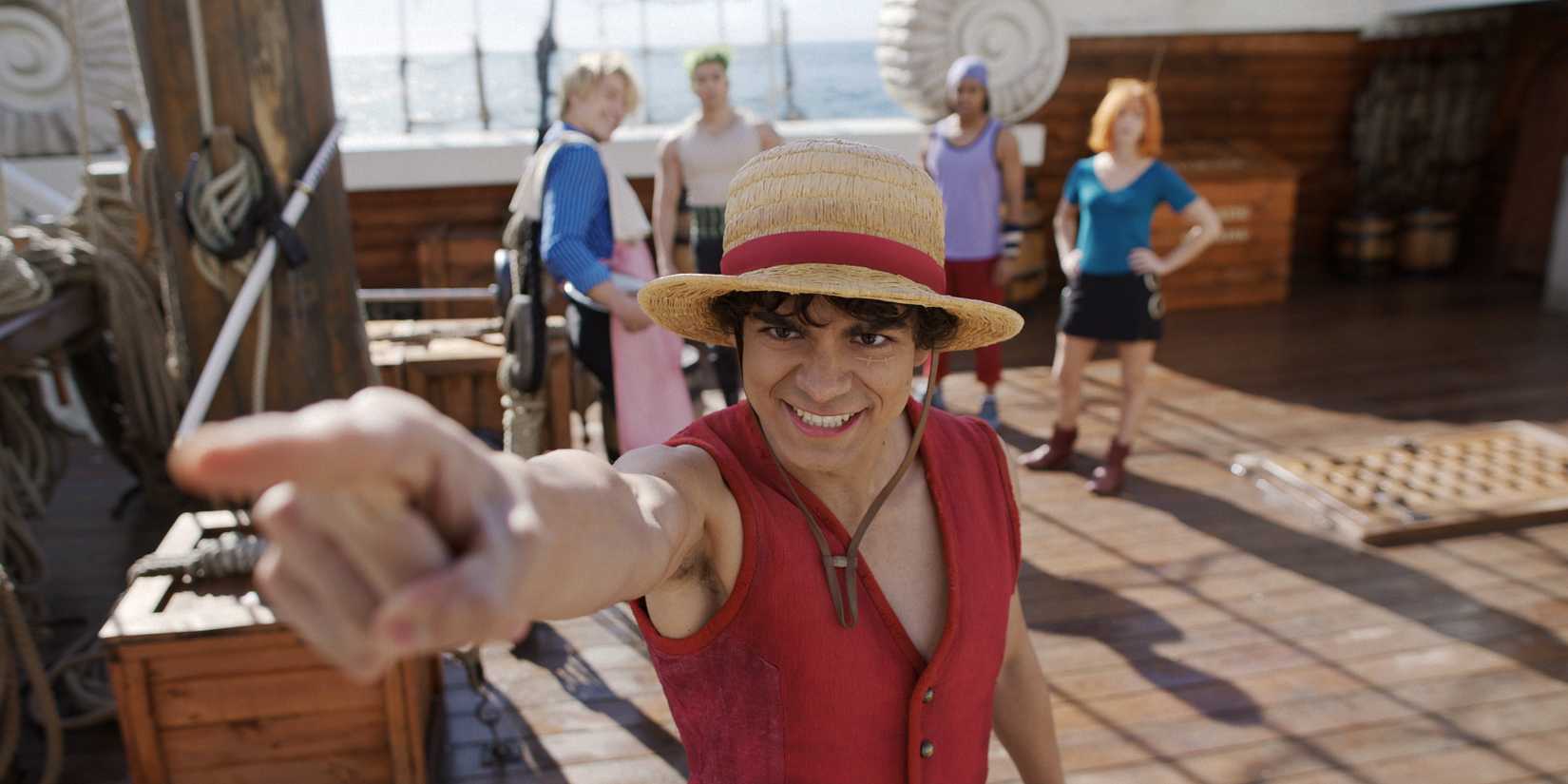
A defining advantage for One Piece has been the hands-on involvement of Eiichiro Oda. The original creator worked closely with Netflix, reviewed scripts, and reportedly had approval power over major creative decisions. His fingerprints are all over the adaptation’s tone and character integrity.
That presence carries enormous weight. Eiichiro Oda understands the emotional architecture of his world better than anyone, and why it has so many fans due to literal decades of interacting with them. His guidance ensured the live-action series captured the soul of One Piece, and kept the spirit that makes the manga so beloved.
The situation was very different for Andrzej Sapkowski when Netflix was working on The Witcher. According to reports (via Variety), the author said the show’s team largely ignored his input during set visits. The distance between creator and adaptation became part of the wider criticism cycle.
That disconnect is difficult to overlook. Just as Oda’s imagination fuels One Piece, Sapkowski’s tact for political nuance and moral ambiguity define The Witcher novels. Removing that guiding voice clearly contributed towards the live-action version lacking the literary saga’s narrative soul.
Closer collaboration with Sapkowski could have aligned Netflix’s adaptation choices with the themes The Witcher readers love. Instead, the creative distance from the mind that conceived Geralt in the first place led to a show that book fans felt was unfaithful, and casual viewers gradually love interest in.
The value of Oda’s involvement in the live-action One Piece makes it clear just how important Sapkowski’s creative voice is to the story of The Witcher. The contrast also teaches a valuable lesson - when adapting a fantasy cornerstone, honoring the creator isn’t optional.
-

The Witcher

6/10
Release Date December 20, 2019
Network Netflix
-

-

Anya Chalotra
Yennefer of Vengerberg
-
-





 English (US) ·