
 2 hours ago
8
2 hours ago
8
The Israeli prime minister, Benjamin Netanyahu, has ordered the country’s attorney general and the head of the Shin Bet security service to reveal the identities of soldiers and officers interviewed in the investigative documentary NAZA and prosecute them for causing “harm to Israel’s diplomatic and security interests”.
The award-winning documentary, directed by the Oscar-winning film-makers Yuval Abraham and Rachel Szor and produced by the Guardian, details Israel’s mass killing of civilians in Gaza. The film is in cinemas, including in the UK and the US, and will be shown in more than 50 countries.
In a letter addressed to the attorney general, Gali Baharav-Miara, the IDF chief of staff, Lt Gen Eyal Zamir, and the Shin Bet head, David Zini, the Israeli PM demanded they “act urgently to uncover the identity of all those who are involved or appear in the libel film”.
Netanyahu also called for “the opening of a criminal investigation and prosecution for serious information security offences, criminal defamation, and harming Israel’s diplomatic and security interests”.
NAZA premiered last month at the Venice international film festival, where it won the special jury prize after receiving the longest ovation in the festival’s history. It takes its name from an acronym used euphemistically by Israeli intelligence to indicate how many civilians it expects to be killed in an airstrike.

The Israeli government has fiercely attacked Abraham and Szor, threatening to strip them of their citizenship and accusing them of treason. Government supporters have vowed to hound the film-makers on their return to Israel and picketed Szor’s parents’ home in Savyon, chanting: “Death sentence to traitors.”
Zamir denounced the film as an “attack on the state of Israel”, accusing it of spreading “lies and blood libels”. He had earlier ordered military and legal officials to identify the soldiers featured and examine possible legal action against them. However, the military advocate general, Itai Ofir, said criminal prosecution would require evidence of security violations or disclosure of classified material, although disciplinary measures remained possible.
The protection of journalistic sources is a cornerstone of press freedom under international human rights standards and disclosure orders are permitted only under stringent conditions.
Ricardo Gutiérrez, the general secretary of the European Federation of Journalists, representing over 320,000 journalists, said: “These threats constitute a blatant act of intimidation against journalists who have simply been doing their job, in strict accordance with ethical standards and in the public interest. I am not surprised by this outburst, which confirms that this regime is prepared to do anything to cover up its crimes against humanity and the ongoing genocide in Gaza.”
A Guardian spokesperson said: “After first threatening to strip NAZA’s directors of their Israeli citizenship, the Israeli government is now calling for an investigation into their journalistic sources. These moves are all attempts to distract from the urgent questions the film asks about the mass killings of Palestinian civilians in Gaza. Journalists should be free to pursue public interest investigations without threats or harassment.”
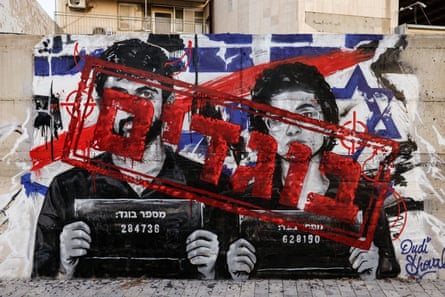
NAZA builds on revelations first published by the Israeli-Palestinian publication +972 Magazine, the Hebrew-language outlet Local Call and the Guardian between 2023 and 2025. Earlier this month, a Guardian spokesperson said the “process of assessing the credibility of the testimonies was rigorous. It included leaked classified documents, detailed verification of specific strikes and corroboration via a wider pool of confidential journalistic sources who did not appear on camera in the film.”
In the past three years the team behind the film has “interviewed more than 100 sources familiar with IDF systems used in the war in Gaza, including senior-ranking commanders directly involved in the authorisation of strikes”, the Guardian spokesperson added.
In recent days, the Israeli government has promoted an online film project that mimics the style of NAZA, in an attempt to challenge the real film’s findings. Ariel Averbuch, an Israeli attorney and army reservist who made NAZA: The Real Story, described it as an “offensive move” intended to shift the world’s focus from allegations about the Israeli military’s killing of civilians.
Film industry heavyweights across the globe, including the heads of the Locarno film festival, have expressed solidarity with Abraham and Szor, saying they stood “firmly in support of film-makers’ rights to pursue difficult and urgent subjects without fear of reprisal”.






 English (US) ·