
 3 weeks ago
49
3 weeks ago
49
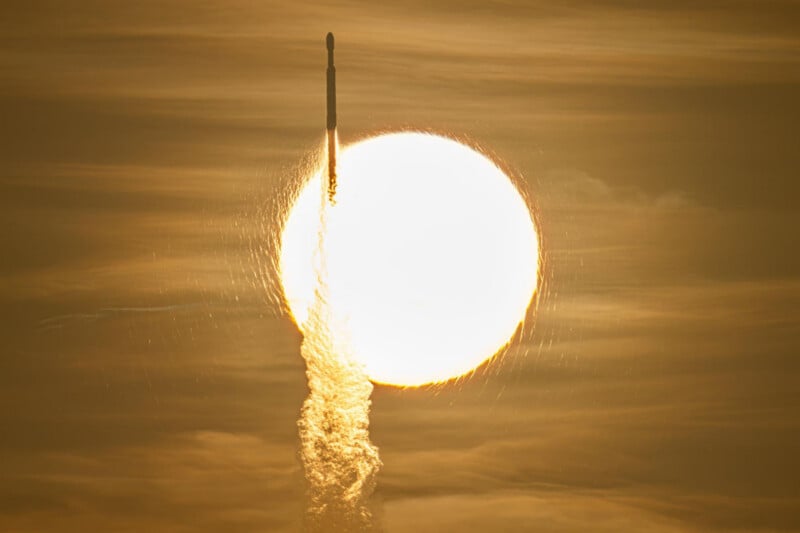 ‘A SpaceX Falcon Heavy rocket with NASA’s Nancy Grace Roman Telescope on board is seen transiting the sun during launch from Launch Complex 39A, Sunday, Aug. 30, 2026, at NASA’s Kennedy Space Center in Florida.’ | Credit: NASA/John Kraus
NASA’s cutting-edge Nancy Grace Roman Space Telescope launched this morning aboard a SpaceX Falcon Heavy rocket from Kennedy Space Center in Florida, beginning a million-mile journey with the goal of solving some of the many mysteries of dark energy and the origins of the Universe itself.
NASA’s new flagship space telescope will utilize its 300-megapixel infrared Wide Field Instrument camera alongside other instruments to investigate dark energy and dark matter, peer at exoplanets, study cosmic objects in deep space, and, most importantly, chart a new course for humanity’s understanding of the Universe.
It will take Roman about three months to get to its final destination, Lagrange point two, or L2. From this orbital position, Roman’s primary scientific tool will be its 300-megapixel Wide-Field Instrument (WFI).
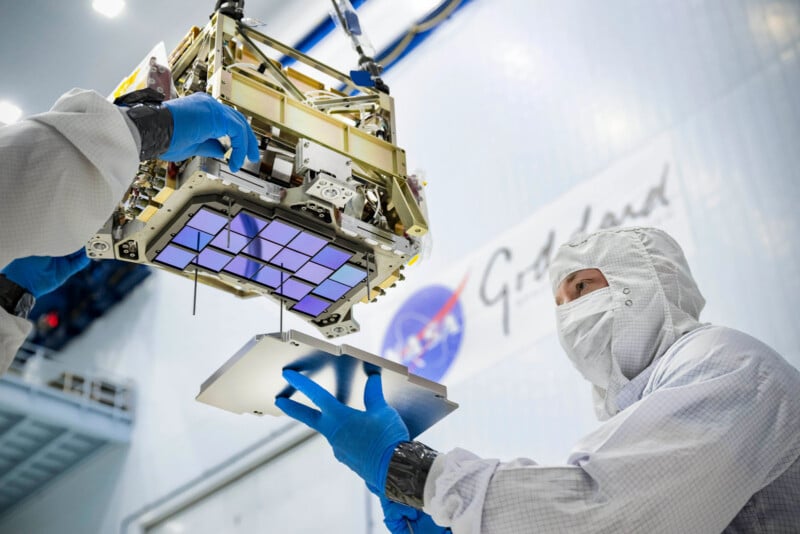 ‘Principal technician Billy Keim installs a cover plate over the detectors for NASA’s Nancy Grace Roman Space Telescope in the largest clean room at the agency’s Goddard Space Flight Center in Greenbelt, Md., on Feb. 8, 2021.’ | Credit: NASA/Chris Gunn
The camera, which technically has 300.8 megapixels, features 18 individual detectors, or image sensors, combined to form a giant sensor. Each detector has 4,096 x 4,096 pixels, delivering a total active pixel count of over 300 million. The WFI is sensitive across 0.5 to 2.3-micron wavelengths.
The WFI’s claim to fame is its relatively wide field of view, covering 0.281 square degrees. This is roughly 100 times the area covered by the Hubble Space Telescope’s Advanced Camera for Surveys or the NIRCam on the James Webb Space Telescope. Roman’s WFI covers about 200 times the area of Hubble’s Wide Field Camera 3.
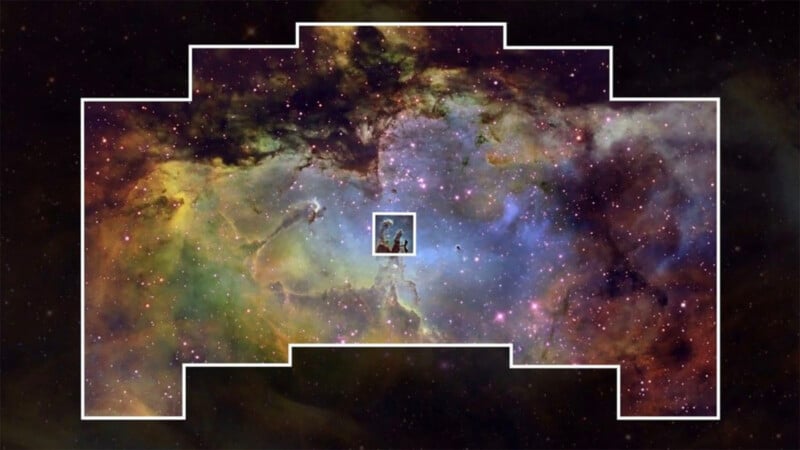 ‘This image of the Eagle Nebula showcases the superb resolution and wide field of view of NASA’s upcoming Nancy Grace Roman Space Telescope. It begins with a Hubble image of the famous Pillars of Creation superimposed on a ground-based image. The view then zooms out to show the full field of view of Roman’s Wide Field Instrument. Roman’s images will have the resolution of Hubble while covering an area about 100 times larger in a single pointing.’ Credit: L. Hustak (STScI)
“Roman pairs a large field of view with crisp infrared vision to explore vast swaths of the sky and probe deeply into cosmic history,” NASA explains. “This flagship mission will help astronomers explore dark matter, dark energy, and worlds outside of our solar system, known as exoplanets. Its surveys will support a broad range of research extending far beyond the mission’s main science goals.”
“Roman will be a discovery machine that will bring us closer than ever before to answering humanity’s most profound questions about our cosmic history,” explains Nicky Fox, associate administrator for the Science Mission Directorate at NASA Headquarters in Washington, D.C.
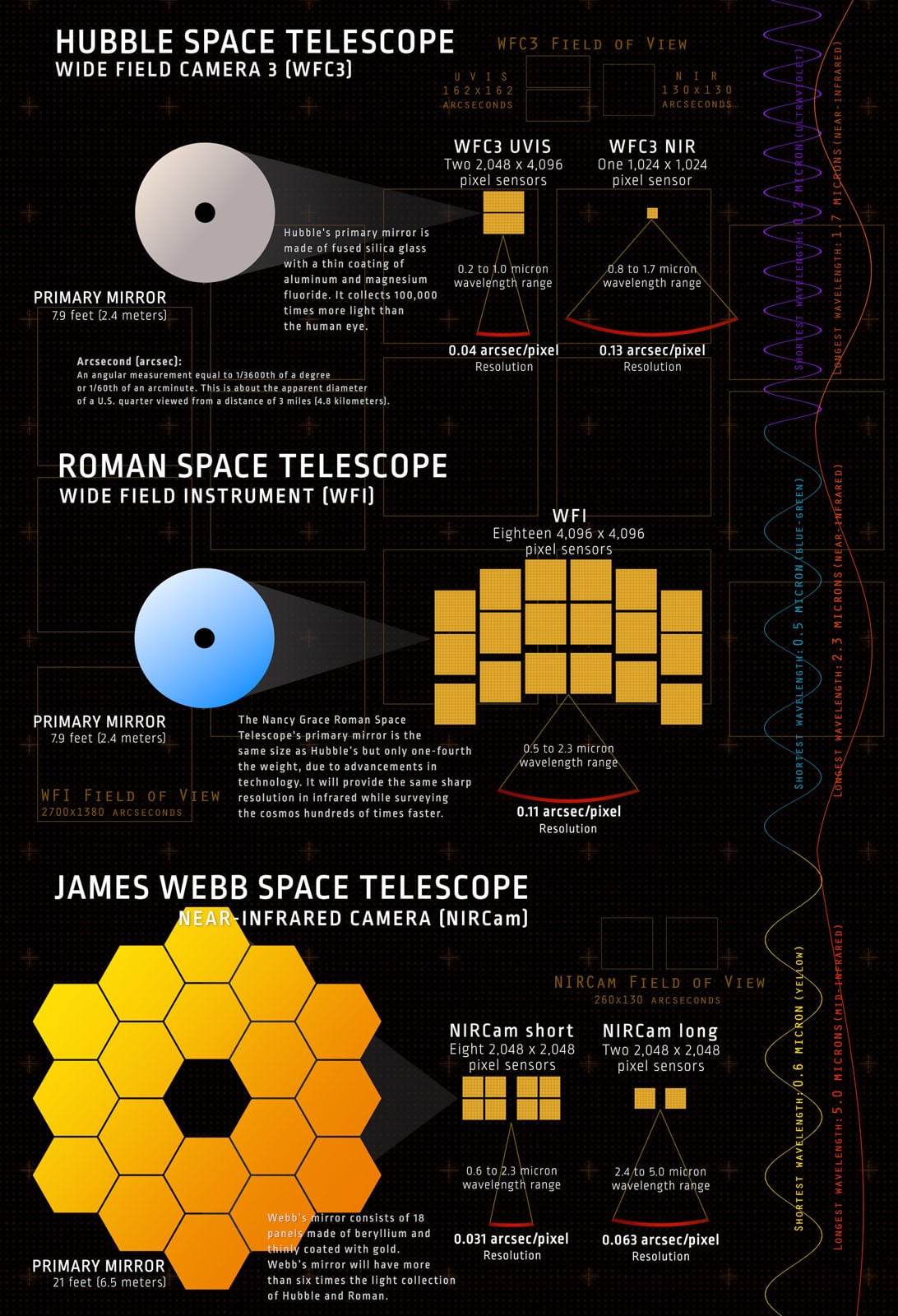 ‘This infographic shows complementary capabilities of select instruments on three of NASA’s flagship missions: the Hubble Space Telescope, the James Webb Space Telescope, and the Nancy Grace Roman Space Telescope. Roman can create enormous panoramas of the Universe with more-or-less the same spatial resolution as Hubble. The WFI’s 18 detectors build off of the technological advancements from Webb and provide an 0.11 arcsec per pixel resolution. | Credit: NASA’s Goddard Space Flight Center
“With its large field of view and fast survey speeds, Roman will usher us into a new era of discovery and make the invisible visible, setting the foundation for humanity’s search for life beyond our solar system,” Fox continues.
A few weeks from now, while Roman is still en route to its final destination a million miles away from Earth, its Wide Field Instrument will turn on. Each of its 18 4K detectors, each the size of a saltine cracker, will fire up and scientists will begin calibrating everything. This process will take months, and NASA expects to publish Roman’s first images by early 2027.
Once the primary mission is active, Roman will send 1.4 terabytes of data back to Earth every single day, the highest rate of any NASA astrophysics mission in history.
“We’ve never been able to view the universe with eyes like Roman’s before,” says Julie McEnery, Roman’s senior project scientist at NASA Goddard. “There’s no telling what more we’ll know and have seen by this time next year.”
Image creditsNASA






 English (US) ·