
 3 weeks ago
46
3 weeks ago
46
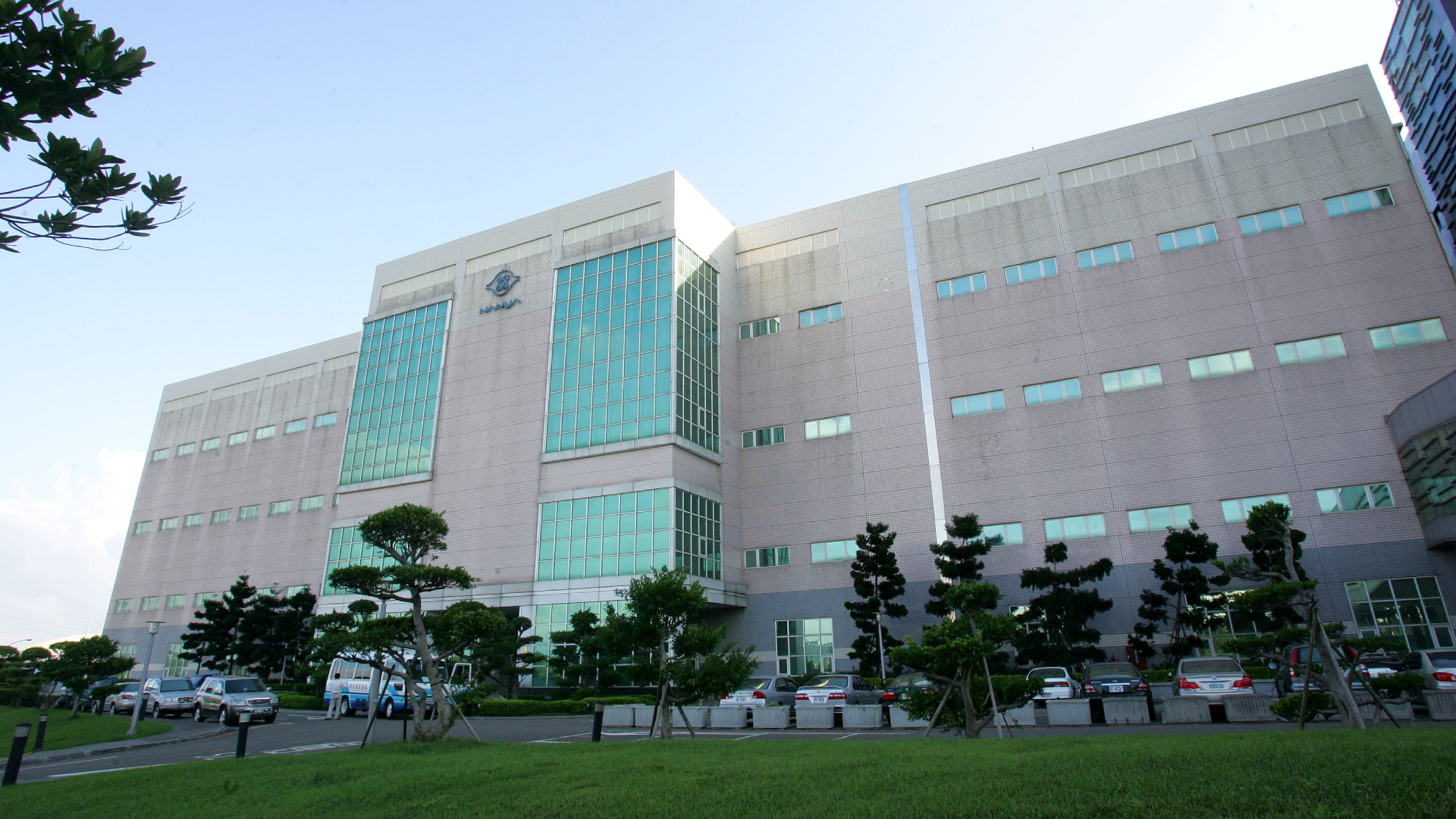
Nanya Technology plans to increase its capital expenditure to more than TW$200 billion ($6.2 billion) in 2027, roughly four times its budget for this year, President Pei-Ing Lee said during an online briefing. The Taiwanese memory maker reported unaudited second-quarter revenue of T$82.55 billion, up 684% from 2025, and net income of T$50.19 billion, up 1,324%. Gross margin reached 79.5%, against a negative 20.6% during the same quarter of 2025. That single quarter's profit is 7.6 times what Nanya earned across the entirety of last year, and the quarter's revenue exceeds the company's entire 2025 sales.
Nanya spent T$13.2 billion on capex in 2023, T$16.1 billion in 2024, and T$13.4 billion in 2025, and has budgeted up to T$52 billion for 2026, per its Q1 investor presentation. Those four years together come to T$94.7 billion, less than half what Lee intends to spend in 2027 alone. Lee, however, admits that the 2027 figure is preliminary and hasn’t yet gone to the board, and that the new plant will absorb about T$480 billion at full capacity.
Go deeper with TH Premium: Memory
Nanya's average selling price climbed more than 70% quarter over quarter in Q1 2026, while its bit shipments fell by a mid-single-digit percentage, its own results deck shows. The company is targeting bit shipment growth in the teens for the full year, so almost all of the 684% revenue increase is due to price. Meanwhile, TrendForce projects a further 13% to 18% rise in conventional DRAM contract prices in Q3.
Roughly 70% of Nanya's shipments are DDR4 and low-power DDR4, Lee said at a January earnings conference, and DDR5 contributes about 10% of revenue. Nanya builds no high-bandwidth memory, and Lee has ruled out competing in HBM2, HBM3, HBM3E, or HBM4. A customized HBM part for edge AI, developed with Etron Technology, Piecemakers Technology, and Formosa Advanced Technologies, is targeted for the end of this year, however. Its 79.5% margin is close to a pure reading on conventional DRAM, and it sits within six points of the 85% consolidated gross margin Micron reported in its most recent 10-Q with HBM in the mix.
SanDisk, Kioxia, Solidigm, and Cisco paid T$78.72 billion for 10.19% of Nanya in a private placement completed in April, with SanDisk and Kioxia signing long-term DRAM supply agreements alongside the equity. Three of the four make SSDs and need DRAM for cache. Solidigm is a subsidiary of SK hynix, the world's second-largest DRAM maker, and it went to a supplier holding roughly 2% of the market to source it.
The first phase of Nanya's new fab in New Taipei City's Taishan District reaches 30,000 wafers per month in 2028 and expands to 45,000 later, Lee said Friday. The plant will run Nanya's 1B node, its second-generation 10nm-class process, to build DDR5, DDR4, and low-power DDR4, the company said during a March briefing. Lee said at that briefing that the most severe supply constraints run through the first half of 2027 and that the shortage persists into 2028. Samsung's P3 fab alone is expected to reach around 115,000 wafers per month by the end of this year.

Follow Tom's Hardware on Google News, or add us as a preferred source, to get our latest news, analysis, & reviews in your feeds.





 English (US) ·