
 4 weeks ago
18
4 weeks ago
18
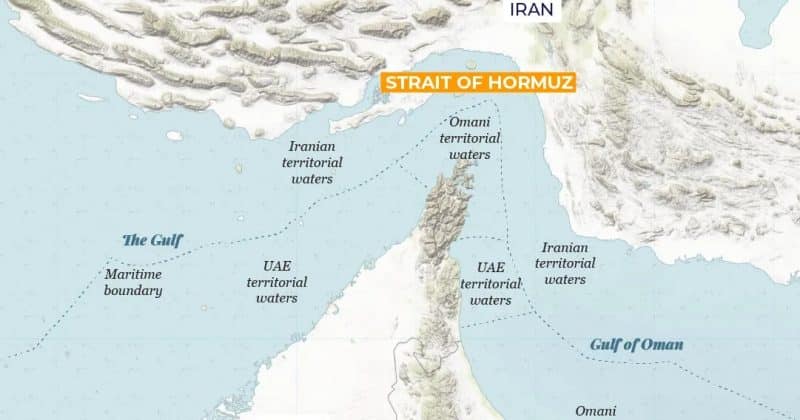
Morgan Stanley is sounding the alarm on what could become a historic energy shock. The bank’s analysts warn that Brent crude could surge to $150 per barrel by summer 2026 if the Strait of Hormuz remains closed, choking off a waterway that once carried roughly 20 million barrels of oil per day.
That flow has now dropped to near zero.
A race against depleting reserves
Morgan Stanley’s framing is blunt. Analysts describe the situation as a “race against time,” with global oil inventories drawing down faster than alternative supply routes can compensate. If prices push past $150, the bank warns of a stagflation scenario, the ugly economic condition where prices rise while growth stalls.
The geopolitical backdrop centers on tensions involving Iran, which borders the strait’s northern edge. With no resolution in sight, the disruption has created a widening risk premium baked into every barrel of crude traded globally.
Not everyone is losing here. The US and Saudi Arabia have both benefited from elevated energy prices, with domestic producers and state oil companies pocketing higher revenues. But the pain is concentrated in Asia, where import-dependent economies are scrambling to secure alternative energy supplies and brace for what could be months of sustained disruption.
Bitcoin miners feel the squeeze
Bitcoin mining is, at its core, an energy arbitrage business. Electricity costs typically account for 60-80% of total mining expenses. When the price of energy spikes, profit margins compress fast.
Bitcoin dropped below $70K back in March 2026 as rising oil prices began rippling through broader markets. The sell-off wasn’t just about mining economics. It reflected a broader risk-off shift as investors started pricing in higher inflation and the likelihood of tighter monetary policy.
The pressure on miners creates a second-order problem. If enough operators go offline due to unprofitable energy costs, the network hashrate drops. A lower hashrate doesn’t immediately threaten Bitcoin’s functionality, but it does signal reduced network security, which can erode market confidence at precisely the wrong moment.
Inflation fears and risk assets
The connection between oil prices and crypto valuations runs through a familiar channel: inflation expectations. When energy costs spike, inflation accelerates. When inflation accelerates, central banks tighten. When central banks tighten, risk assets suffer.
Bitcoin and the broader crypto market are no exception to this sequence, despite years of narrative-building around Bitcoin as an inflation hedge. In practice, Bitcoin has traded more like a high-beta tech stock during macro stress events, and the March 2026 drop below $70K reinforced that pattern.
One potential silver lining for the mining industry specifically: a prolonged energy price shock could finally force the migration toward renewable power sources that the sector has been talking about for years. When natural gas and grid electricity become prohibitively expensive, solar, wind, and stranded hydroelectric power start looking less like ESG window dressing and more like survival strategy.
Traders should watch two numbers closely. First, Brent crude’s trajectory toward that $150 threshold. Second, Bitcoin’s network hashrate, which serves as a real-time barometer of miner health. If hashrate begins declining meaningfully while oil prices climb, it suggests the mining industry is starting to buckle under energy costs, and that could trigger further downside pressure on BTC’s price as weaker operators liquidate holdings to cover expenses.
Disclosure: This article was edited by Editorial Team. For more information on how we create and review content, see our Editorial Policy.







 English (US) ·