
Monster is one of the most popular job boards and, more so, is a pioneer of the online job board industry. It began back in 1994, making it one of the earliest job sites still up and running.
Over three decades after its founding, Monster still maintains a large user base, although later rivals like Glassdoor and Indeed have overtaken it in terms of number of users.
Is Monster a good job board for you? What does it offer for job-seekers, or employers seeking job candidates? What are its key features, and how does it stack up against rival job sites? I thoroughly used Monster to answer these questions, so read on to learn what it offers.
Monster: Plans and pricing
Like most popular job boards, Monster runs a business model where it’s free for job-seekers, but businesses pay to advertise job listings, access the resume database, and unlock other advanced features. You can check it out by clicking here.
Anyone can create an account to access job listings. You can filter listings by location, title, remote or hybrid, and other factors, and also upload your resume to Monster’s database for employers to find you. Access is completely free for job-seekers.
On the other hand, Monster charges businesses to access its resume database, promote job listings, and message job candidates right on the platform.
The Monster+ Pro plan costs $299 per month, or discounted to $2,990 if paid annually ($598 less than paying month-to-month).
This plan unlocks complete access to the database of resumes uploaded by job-seekers and the ability to message candidates about job offers. It also includes 299 monthly credits, which are spent when candidates click on a company’s job postings and when the company views a resume or contacts a candidate.
Monster also lets businesses promote job listings like ads, with budgets starting from $8 per day. You’ll only pay if a candidate clicks, taps, or swipes to view your job listing, not based on views like some job boards.
Large enterprises can also negotiate custom deals by contacting Monster’s sales team. For example, a company with 500+ employees and a rapidly growing headcount can get significant discounts compared to the standard Monster+ Pro plan to promote job listings and find the best candidates.
Monster’s pricing isn’t the most affordable, considering the use of limited credits to interact with the resume database. However, job seekers have nothing to worry about because they can use Monster without paying a dime.
Monster: Features
Think of Monster as a pairing system between job candidates and employers. For job seekers, it’s the go-to platform for finding opportunities in diverse industries.
From healthcare to software development, logistics, professional services, retail, hospitality, and more, Monster hosts numerous job listings. You can filter these listings by your preferences (remote status, date posted, full-time, part-time, city, region, country, and specific keywords).
Scouring job listings can get tiring, but you don’t always have to do that. Monster lets you upload a resume, and this resume is scanned to get paired with the right jobs. Employers can find your resume and contact you for a fitting role.
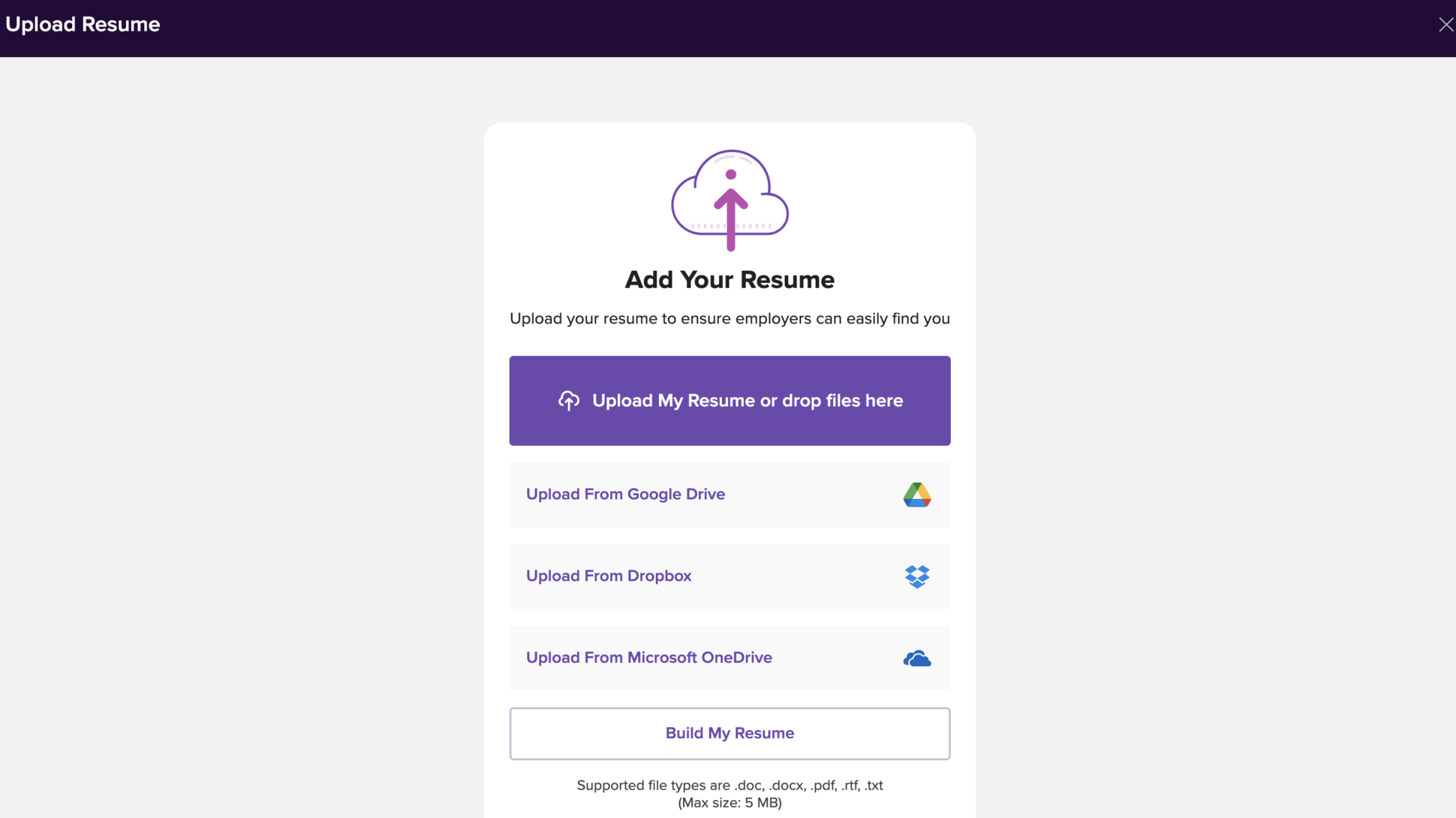
I like that Monster doesn’t just let users upload resumes but also offers a tool that assists in creating resumes. I got AI recommendations for refining my resume, particularly optimizing keywords to align with specific job applications.
Many companies use applicant tracking systems (ATSs) to scan resumes for specific keywords, then filter the matching resumes out of the many ones submitted, and optimization increases the chances of getting past ATS filters.
Monster does more than curate job listings. I also found interview prep guides, cover letter templates, and salary data that helped inform job applications. Particularly, the Monster Salary Calculator let me look up average pay ranges for specific job titles, experience level, skills, and locations.
Monster curates this data from various sources, including employee submissions. The salary data isn’t as detailed as that of Glassdoor, a major competitor, but it’s still helpful.
I’ve dwelled on Monster from a job seeker’s perspective, so let’s now look at it from an employer’s perspective. As a business seeking to hire candidates, Monster offers a vast pool to choose from. Its database hosts millions of resumes that you can scan to find the right fit.
Of course, scanning through this database manually will be very hectic, so Monster uses algorithms to pinpoint resumes that match your job descriptions.
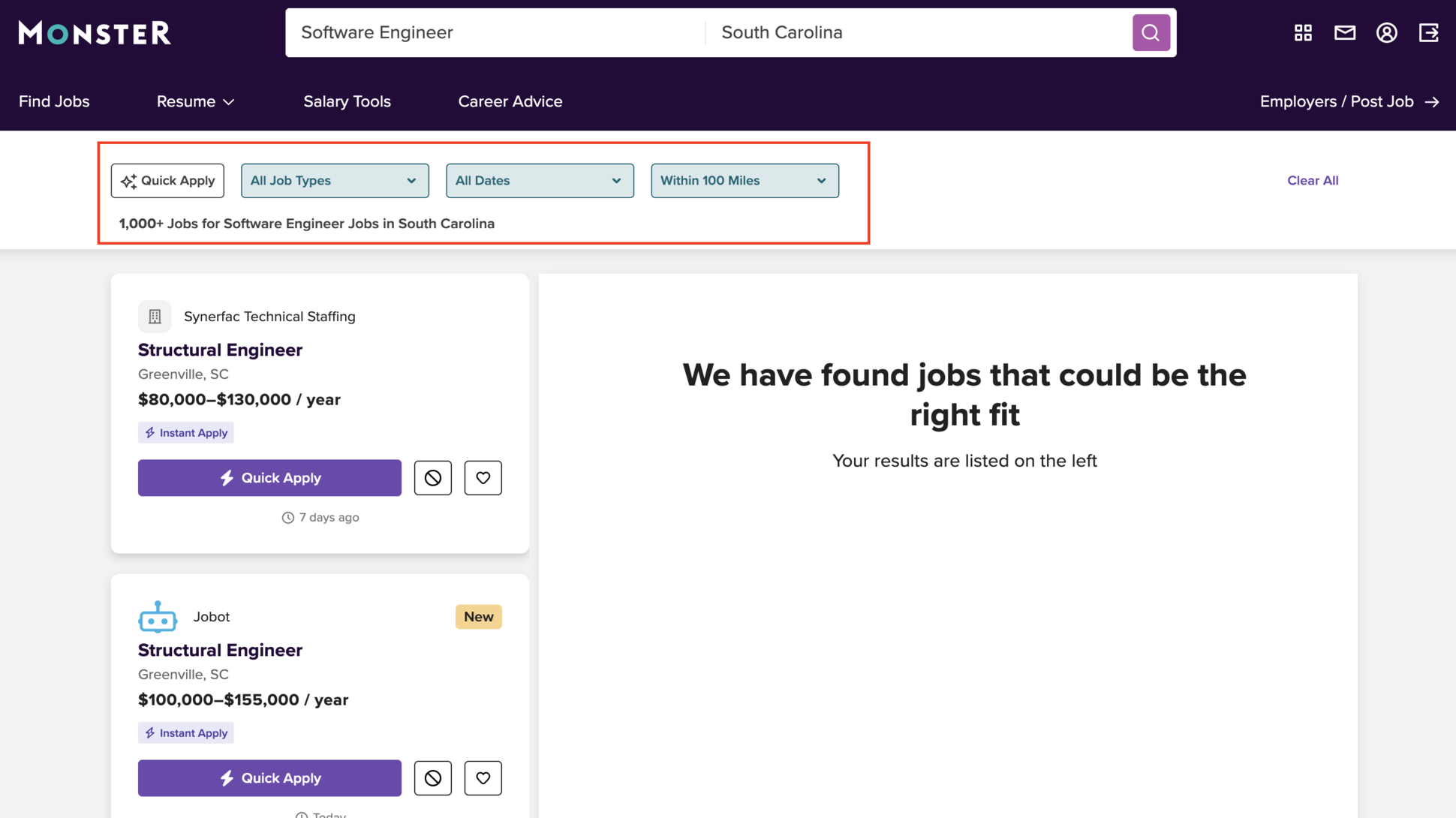
Suppose your business needs a graphic designer specializing in Adobe Illustrator, and this role is based in Miami, Florida. From the database, Monster’s algorithms will identify graphic designers whose resumes indicate they’re based in Miami and work with Adobe Illustrator. You can then contact the candidates considered the best fit, but note that Monster charges credits for each contact.
Monster+ Pro plan costs $299 per month (or a discounted $2,990 annually), and it includes 299 credits. Viewing a resume costs 2 credits, and contacting a candidate costs another 2 credits, so use them efficiently. Credits expire monthly and do not roll over. If exhausted, Monster bills for additional credits used at a rate of $1 for 1 credit.
Your company can also promote job listings on Monster, and the listings will be shown to candidates matched by the platform’s algorithms. The listings are like running ad campaigns, where you’ll select your daily budget and how long you want it to run. Monster bills based on how many candidates interact with your job listings, not based on views, so there’s some certainty of getting candidates.
Likewise, your business can create a custom Monster page to highlight employee benefits, workplace events, and other information that compel candidates to apply for jobs.
Overall, Monster offers valuable features for both job seekers and employers. As a job seeker, you’ll get access to immense job listings and can upload your resume to connect with the right businesses. Employers unlock access to a vast candidate pool and can contact qualified candidates right on Monster. The platform excels at pairing job candidates with the right opportunities.
Monster: Ease of use
Monster offers a modern, intuitive interface. I particularly like the fusion of purple and white colors with minimal clutter, as it makes navigation quite enjoyable. From registering to scouring job listings and applying, I didn’t find any issues with the workflow.
Users can easily access Monster from the web interface or download the official iOS or Android smartphone app. There’s no native Monster desktop app, but most job boards don’t have a desktop app, so it isn’t really a competitive disadvantage.
Monster: Support
I found Monster’s support resources to be sufficient, beginning with the Help Center. This Help Center contains detailed information about commonly encountered issues plus user guides for Monster’s features.
I found it helpful as a newish user. I’ve used Monster before, but some things changed since I last reviewed the platform, so I needed help understanding them.
The Help Center also contains detailed user guides for paid business accounts. For direct help, businesses can contact Monster’s support team via telephone or by filling out a support ticket and expecting an email response. Overall, Monster offers good support resources compared to the competition.
Monster: The competition
Monster has formidable competition. Glassdoor is one, known for its rich database of salary data, interview prep tips, and company reviews. Monster offers some salary data and information about companies. However it’s not as detailed as what you’ll find on Glassdoor.
If you’re researching compensation, company culture, and interview tips, Glassdoor serves you better. However, I’ll say Monster is as good as Glassdoor in terms of scouring job listings.
ZipRecruiter is another notable competitor. For job seekers, it offers a vast database of available opportunities on par with Monster. However, I think ZipRecruiter is a more budget-friendly option for businesses, as a subscription (starting from $419 per month) unlocks unlimited access to the resume database, unlike Monster that offers exhaustible credits.
Also, any job posting a business makes on ZipRecruiter is syndicated to over 100 other job boards. Monster does some syndication too, but it isn’t as broad as what businesses get on ZipRecruiter.
Monster: Final verdict
I consider Monster a good option for job seekers, particularly for its vast job database, but it kind of lacks an edge when compared with rivals like Glassdoor and ZipRecruiter. Sure, it offers a rich job database, but so do several other platforms, and its salary data isn’t the most detailed.
For more picks, we've tested the best recruitment platforms and the best job sites.






 English (US) ·