
 3 weeks ago
44
3 weeks ago
44
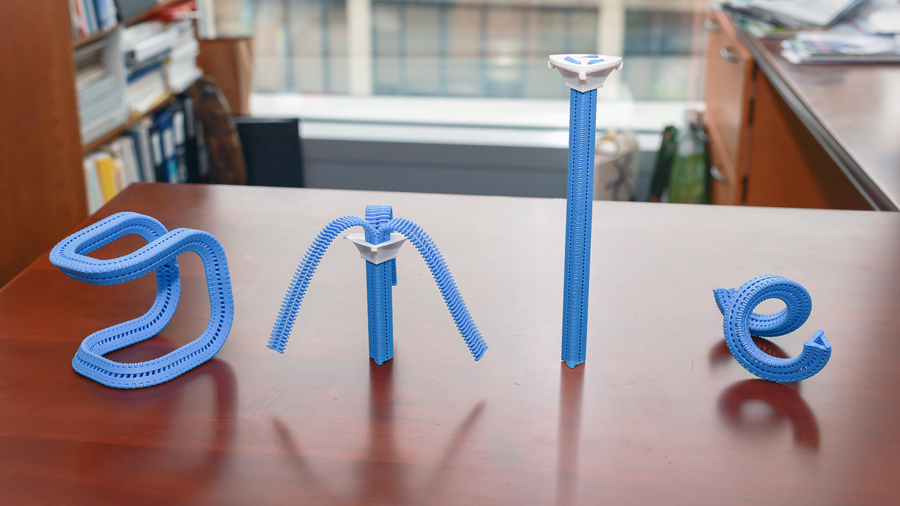
Researchers at MIT's Computer Science and Artificial Intelligence Laboratory have developed a three-sided zipper that transforms 3D-printed floppy structures into rigid, load-bearing forms in seconds. The mechanism, called the “Y-Zipper,” can rapidly assemble beams, arches, robotic limbs, and deployable frameworks — potentially opening the door to adaptive robots, fast-deploying shelters, and reconfigurable medical devices.
Unlike conventional zippers that connect two flat surfaces in 2D, the Y-Zipper joins three flexible arms into a rigid 3D triangular tube. When open or unzipped, the structure behaves like soft plastic strips or floppy tentacles, with each arm flexing and twisting independently. Once zipped shut with a custom slider, however, the arms interlock to form a stiff, beam-like structure capable of supporting loads.
Y-Zipper: 3D Printing Flexible-Rigid Transitions in One Click - YouTube
The engineering principle behind the system is relatively straightforward: triangles are inherently rigid. Structural engineering has relied on triangular geometry for decades in bridges, cranes, towers, and trusses because triangles resist deformation far better than flat or rectangular structures. The Y-Zipper exploits that same principle by forcing three flexible arms into a triangular configuration during closure, essentially assembling a lightweight structural beam on demand.
That ability to switch between soft and rigid states is particularly relevant for robotics and deployable systems. Engineers often struggle to combine flexibility and structural stiffness within the same mechanism. Soft robotic systems adapt well to unpredictable environments but often lack strength, while rigid systems provide stability at the cost of flexibility. MIT’s design attempts to combine both.
The researchers demonstrated a robotic quadruped with legs capable of changing height and stiffness by actuating the zipper mechanism with motors. Such systems could help robots navigate uneven terrain by dynamically adjusting limb geometry in response to the environment.
The team also tested the system in deployable structures. In one demonstration, they used the Y-Zipper to rapidly assemble a tent-like structure, with the three-sided mechanism serving as both the structural support frame and the joining system. According to the team, setup time dropped from roughly six minutes to one minute and 20 seconds because the zipper effectively snaps the structure into place.
Medical applications are another possible target. The researchers created a wrist-cast prototype that wrapped the mechanism around a wrist cast, allowing users to loosen it during the day for comfort before tightening it again at night for support.
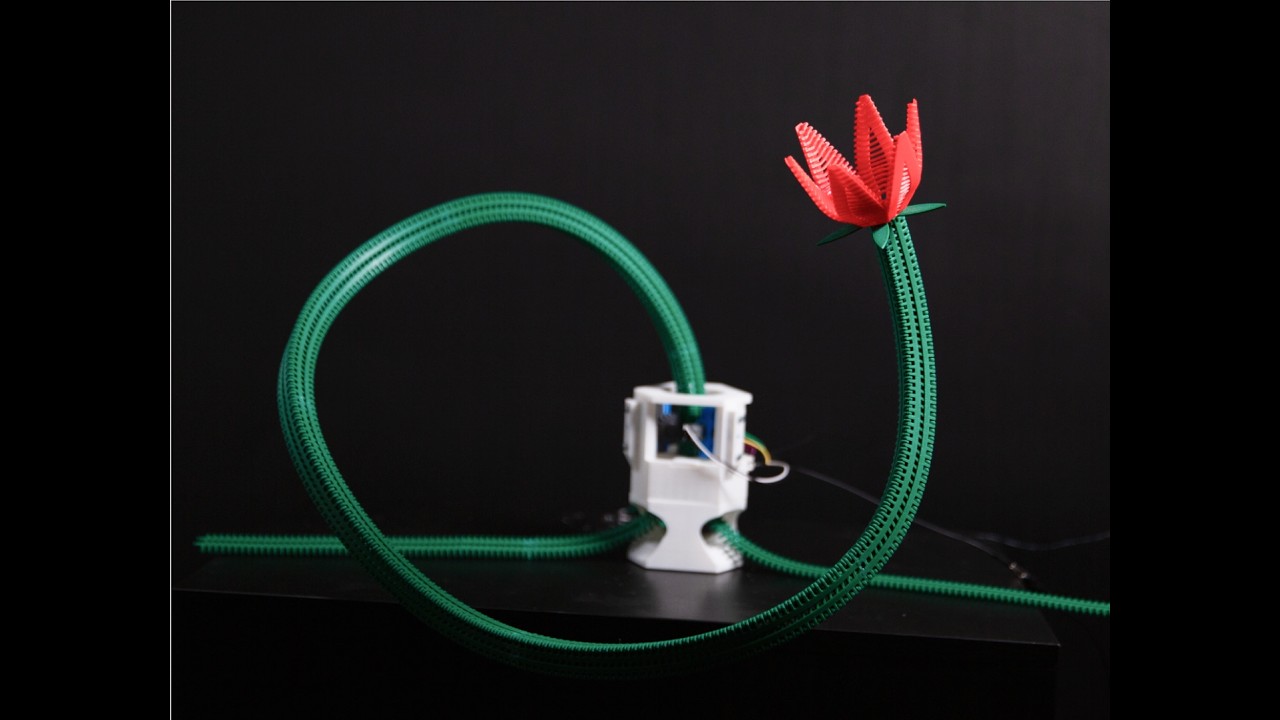
Beyond engineering applications, the system can also produce dynamic moving structures for art and design. One prototype resembled a mechanical flower that “bloomed” as a motor zipped the structure upward.
Durability testing showed the mechanism surviving roughly 18,000 zip-and-unzip cycles before failure. According to the researchers, the structure’s elastic behavior helps distribute stress across the assembly instead of concentrating it in a single area.
The team evaluated versions of the structure made from popular 3D-printing materials, polylactic acid (PLA) and thermoplastic polyurethane (TPU). PLA handled heavier loads more effectively, while TPU provided greater flexibility. Future versions could use stronger materials such as metal and scale to much larger sizes. Researchers also suggested possible aerospace applications, including deployable spacecraft structures and robotic systems capable of grabbing rock samples during exploration missions.
The work was presented at the ACM Conference on Human Factors in Computing Systems (CHI) in April and detailed in a paper titled "Y-Zipper: 3D Printing Flexible–Rigid Transition Mechanism for Rapid and Reversible Assembly."

Follow Tom's Hardware on Google News, or add us as a preferred source, to get our latest news, analysis, & reviews in your feeds.





 English (US) ·