
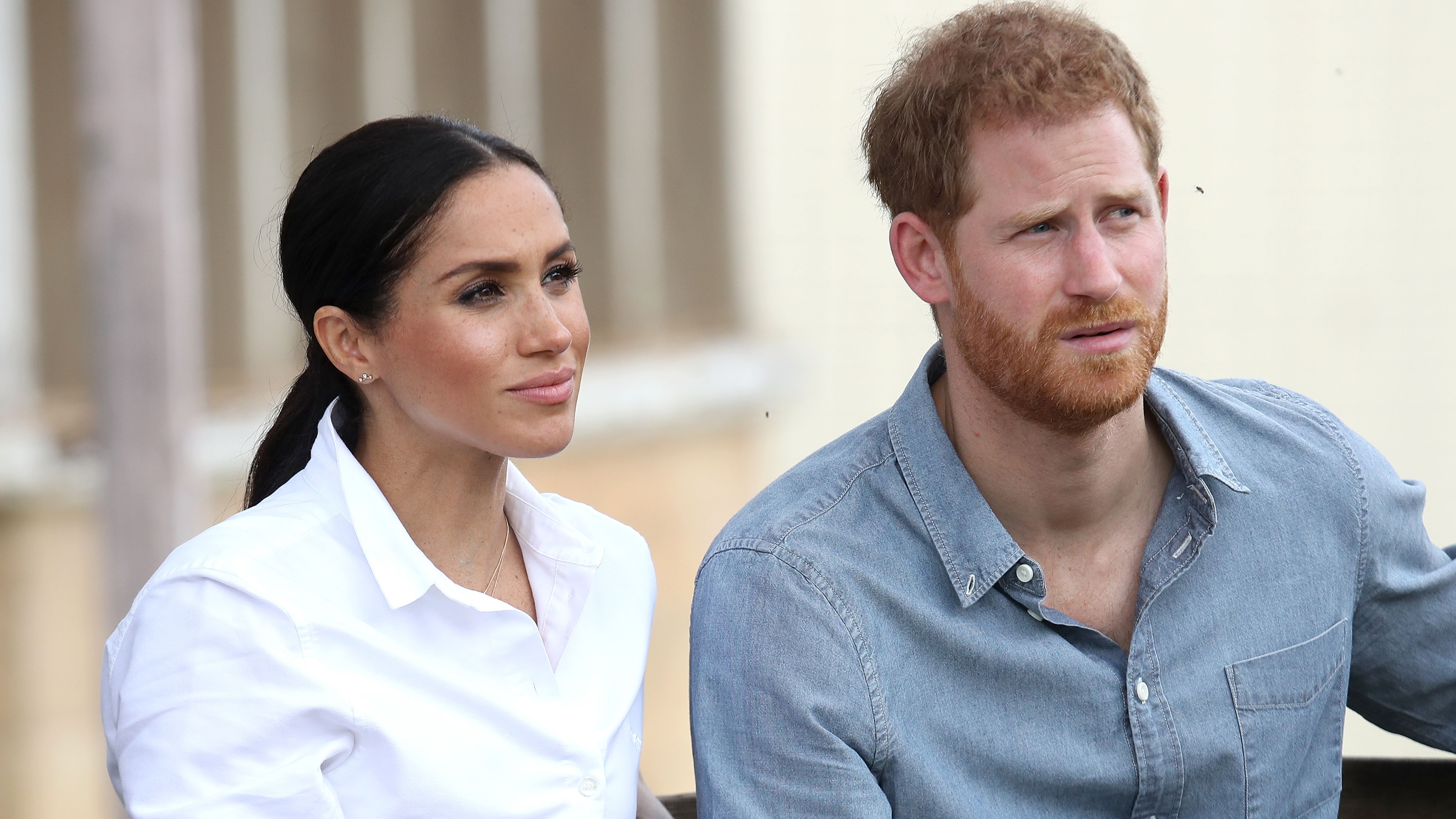
Prince Harry and Meghan Markle have taken direct aim at Grok after Minnesota became the first state to enforce a ban on AI "nudification" technology, using an unusually blunt official statement to criticize xAI's attempt to stop the law. Days before the legislation took effect, Elon Musk's AI company filed an emergency legal request seeking to block it, arguing that the measure violates the First Amendment. A federal judge refused to grant the request, allowing the law to go into effect while the broader case continues.
The Sussexes made it clear which side they believe this fight should be on. "Technology should not enable predators to target children," their statement begins. "Yet, ahead of Minnesota's first-in-the-nation law banning AI 'nudification' apps taking effect tomorrow, one of the world's largest technology companies sued to stop it. Why?" It is a remarkably direct criticism, one that shifts the conversation away from legal arguments and back toward the people these tools can harm.
Whether Minnesota's law ultimately survives every constitutional challenge is a question for the courts, but Harry and Meghan have identified something larger than one lawsuit. AI companies are racing to make image generation more powerful while governments scramble to prevent those same tools from being weaponized against real people. When a company fights to preserve technology that can create convincing fake nude images of recognizable adults and children, it is easy to see why the couple argues that the industry's priorities deserve much closer scrutiny.
Sussex vs. Musk
AI has become extraordinarily good at manipulating images, but that includes convincing fake intimate photographs with only a few prompts. And it has spread far faster than the laws designed to deal with it.
Minnesota's legislation attempts to tackle the problem at its source by preventing apps and websites from offering AI nudification tools in the first place. Rather than waiting until fake images have already spread across social media or messaging apps, lawmakers are trying to make the technology itself less readily available. Whether every provision survives constitutional scrutiny remains to be seen, but the intention is difficult to misunderstand.
Harry and Meghan clearly believe that technology companies have had plenty of opportunities to address the issue voluntarily and have failed to do so. Their statement praises Minnesota's bipartisan action as "an example of leadership fit for the digital age," adding that lawmakers recognized "this technology, if not stopped, would protect predators and hurt innocent people, especially women and girls."
The Sussexes are slicing through the tangled debate over algorithms against constitutional doctrine. Those issues matter, but it can miss the forest for the trees if people forget that these synthetic nudes begin with an identifiable person whose image has been manipulated without permission.
AI models as neutral tools whose morality depends entirely on the user. But laws often are stricter when any tool is used to hurt children for a reason. And the claim that Grok's moderation system is enough has proven untrue. But the feature does not stop being Grok's responsibility simply because someone else typed the prompt.
Safety should not be an optional feature
The Sussexes refuse to treat this as an abstract policy dispute.
"Big Tech companies are raising billions claiming AI will bring society forward, yet they retaliate against basic safety measures to keep children safe," they wrote. "Can AI make our world better while it enables the worst in humans? Should our children pay the price while we wait to find out?"
Those are uncomfortable questions for AI companies racing to release increasingly capable products. Every major developer wants to ship the next breakthrough before its competitors do. Safety work, moderation systems and abuse prevention rarely generate the same excitement as flashy new features demonstrated on stage.
xAI is hardly alone in facing this challenge. Every major AI company has struggled with image generation, impersonation and deepfakes. The difference here is the explicit pushback against a state trying to make them take some responsibility for how their technology is misused.
The legal arguments will continue for months, and there's no way to tell yet what the final version of the law will look like. Courts have to balance free speech and public safety, and that's not simple. But the fact that AI has made creating nonconsensual intimate imagery dramatically easier remains, and Harry and Meghan are right to zero in on that human cost over legal theory.
The debate matters because children's safety matters. Whether the companies building these tools can be made to accept meaningful responsibility when those capabilities are turned against children may be decided in courts, but Harry and Meghan are correct that it shouldn't take lawyers for them to do the right thing here.

Follow TechRadar on Google News and add us as a preferred source to get our expert news, reviews, and opinion in your feeds.








 English (US) ·