
 4 weeks ago
70
4 weeks ago
70
A new report from The Verge suggests Microsoft is working to bring an unprecedented level of backwards compatibility to its upcoming PC-console hybrid, the Xbox Helix. The outlet obtained leaked screenshots of an internal memo allegedly sent to publishers, asking them to opt into a new model that allows legacy titles from old Xbox consoles to be available for modern devices without additional effort.
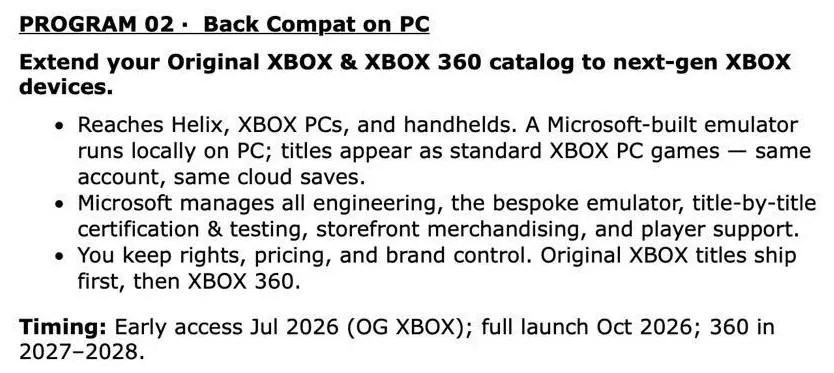
Microsoft began charting this course with the release of four original Xbox titles on PC last month that shipped with an Xbox 360 emulator baked in. That discovery led many to speculate that Xbox 360 backwards compatibility is right around the corner, too, and the memo indeed confirms it to be in the works for 2027-28. That's around the time we expect to see the next-gen Xbox Helix console as well, which may or may not have a disc drive.
Recent reports suggest Microsoft wants to follow in Sony's footsteps and move away from physical discs by offering a way to digitize them. This would tie the game on the disc to a license instead, and you'd be able to access it anywhere with your Xbox account. This kind of universality is the direction Microsoft has been heading in for a decade at this point, and the memo says a public beta for this feature was coming in July 2026 (we're in August now).
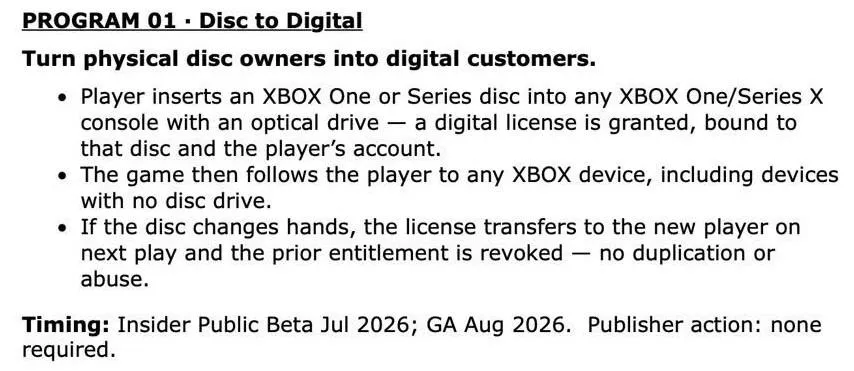
To support this digitization, Microsoft seems to be asking publishers to join hands in offering original Xbox and Xbox 360 games on Xbox Helix, PCs, and handhelds. Keep in mind that Xbox One and Xbox Series backwards compatibility is already expected (and obvious) given the architectural similarities between the three consoles — the OG Xbox and Xbox 360 need emulators for modern hardware since they weren't x86-based.
As such, the leaked memo says that Microsoft will generously "manage all engineering, the bespoke emulator, title-by-title certification and testing, storefront merchandising and player support." Leaving the developers to simply give permission for their legacy titles to appear on the storefront and reap the profits in return. Microsoft promises devs that they will retain "rights, pricing, and brand control."
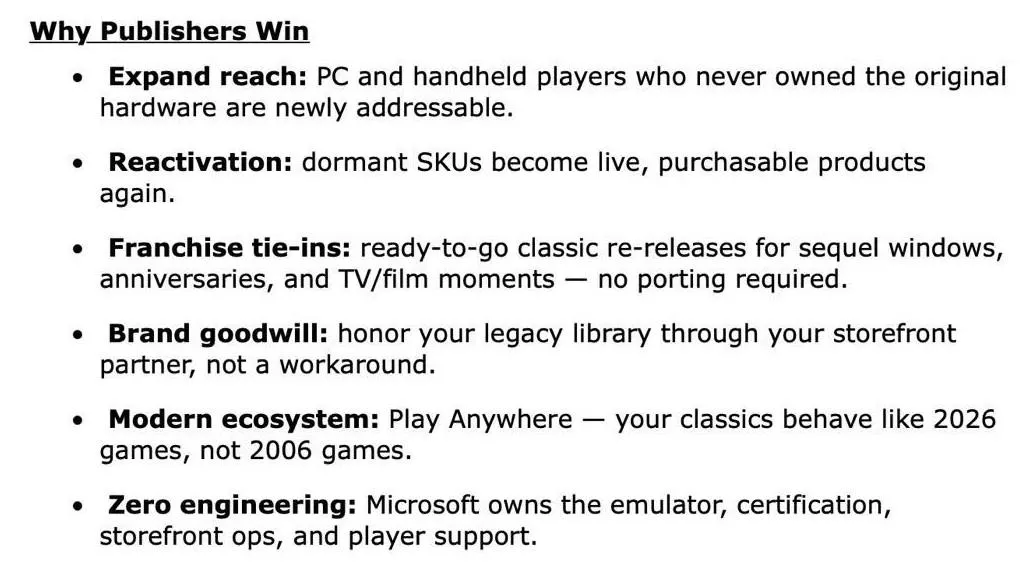
All of this makes it sound like the ball is entirely in the developers' courts, and it is, because the next screenshot is an even more explicit sales pitch. Microsoft wants them to know just how beneficial it would be to revive older titles and how there'd be zero effort required on their part, so it's really a win-win scenario. The company is promising a "modern ecosystem" with cloud saves for old games that would be convenient for the player, too.
This kind of proposal makes sense when you realize that backwards compatibility on this scale doesn't work like it would between recent consoles. As we mentioned, the underlying, PC-like x86 architecture makes it possible for an Xbox One disc to be plopped into an Xbox Series console and just work. Microsoft even has a Smart Delivery system in place to download additional content best suited to your hardware.
This is simply not possible for older titles that require explicit permission if the emulator already supports them, or titles that are delisted because of third-party licensing issues. For instance, an old racing game won't have the rights to the cars and music featured in it anymore, and relicensing those assets wouldn't make sense even if Microsoft is handling the actual distribution for you as it promises in this memo.
Therefore, the idea of converting discs into digital games is perhaps more enticing and less legally binding, while serving the same concept of organizing all Xbox generations under one roof. The memo calls that "Program 01" as if that's the more preferred option anyway. The call to publishers is labeled "Program 02" and seems less likely to prevail, at least at the scope Microsoft wishes for, but only time will tell.

Ultimately, if the Xbox Helix can play PC games (all of them?) and at least three separate generations of Xbox titles — Helix, Series, One — it's already going to have a vast catalogue. Add emulated backwards compatibility and disc digitization to the mix, and you'll have by far the largest library on a console, ever. Of course, it can be argued whether Xbox Helix is even a traditional console to begin with, hence undermining this achievement in hindsight, but let's table that debate for later.

Follow Tom's Hardware on Google News, or add us as a preferred source, to get our latest news, analysis, & reviews in your feeds.





 English (US) ·