
Metroid Prime 4: Beyond's title screen is somewhat indicative of the game as a whole. The hypnotic, curvy eye motif and mysterious purple hue are backed by yet another belter of a title screen track; a series staple I'm glad is intact here. The presentation is immediately absorbing, and it's hard to suppress the goosebumps at the feeling that Metroid's 3D subseries is truly back. And then the whole aesthetic is ruined by a massive 'Nintendo Switch 2 Edition' logo slapped dead center of the display.
Review info
Platform reviewed: Nintendo Switch 2
Available on: Nintendo Switch, Nintendo Switch 2
Release date: December 4, 2025
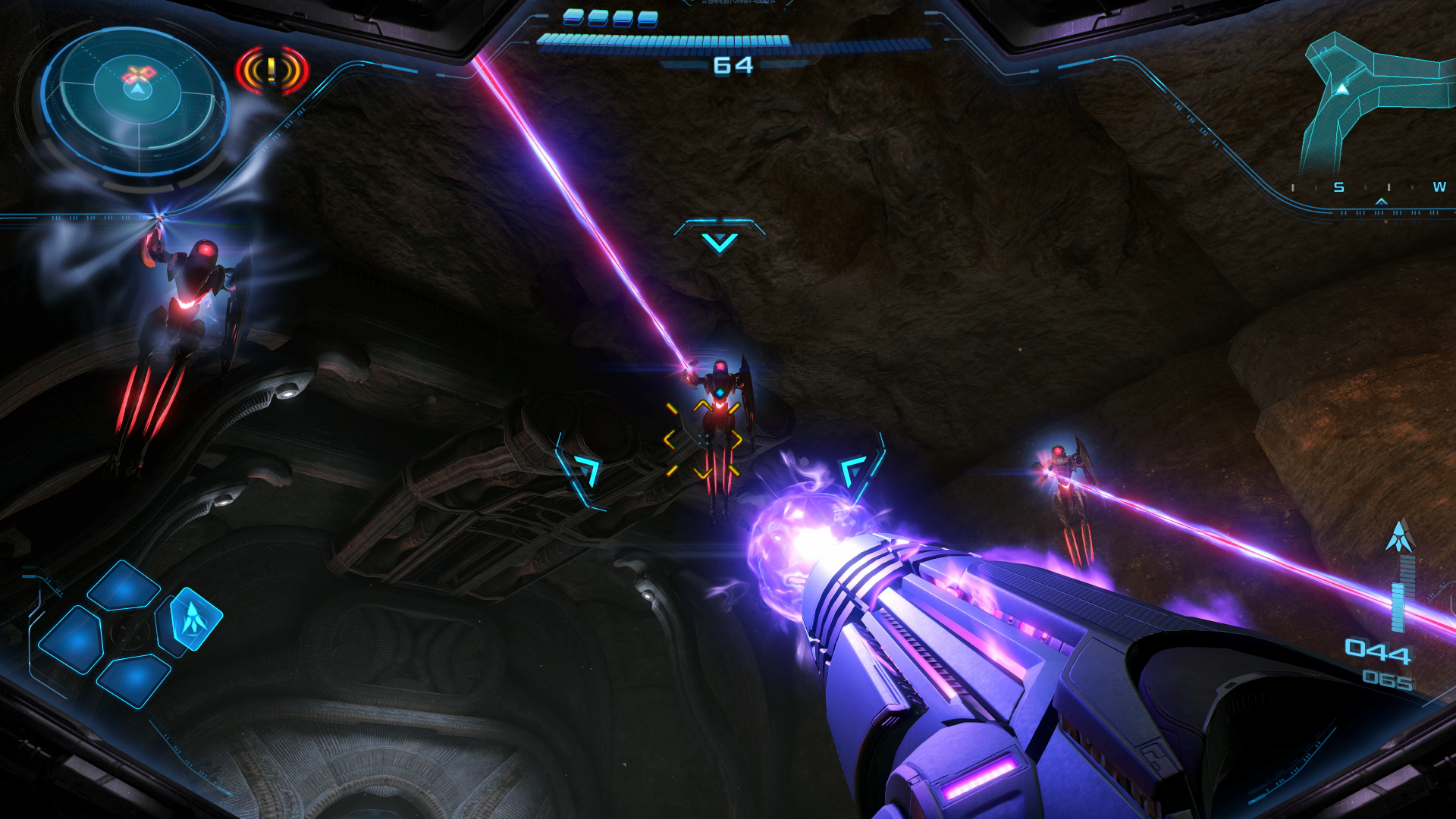
Of course, this is helped by just how gorgeous of a game Metroid Prime 4: Beyond really is. Naturally you'll get the most out of it with the Nintendo Switch 2 Edition and its support for 4K resolution. Returning developer Retro Studios clearly put a ton of work into environmental design, and an impressive amount of detail helps most areas stand out as a real visual treat.
But I can't quite say Beyond stands shoulder-to-shoulder with the GameCube masterpieces that came two decades before it. The large open desert is the feature that Nintendo arguably made the most noise about in Beyond's marketing, but its enormous size and barren nature ultimately make it serve little outside of boring, needless padding.
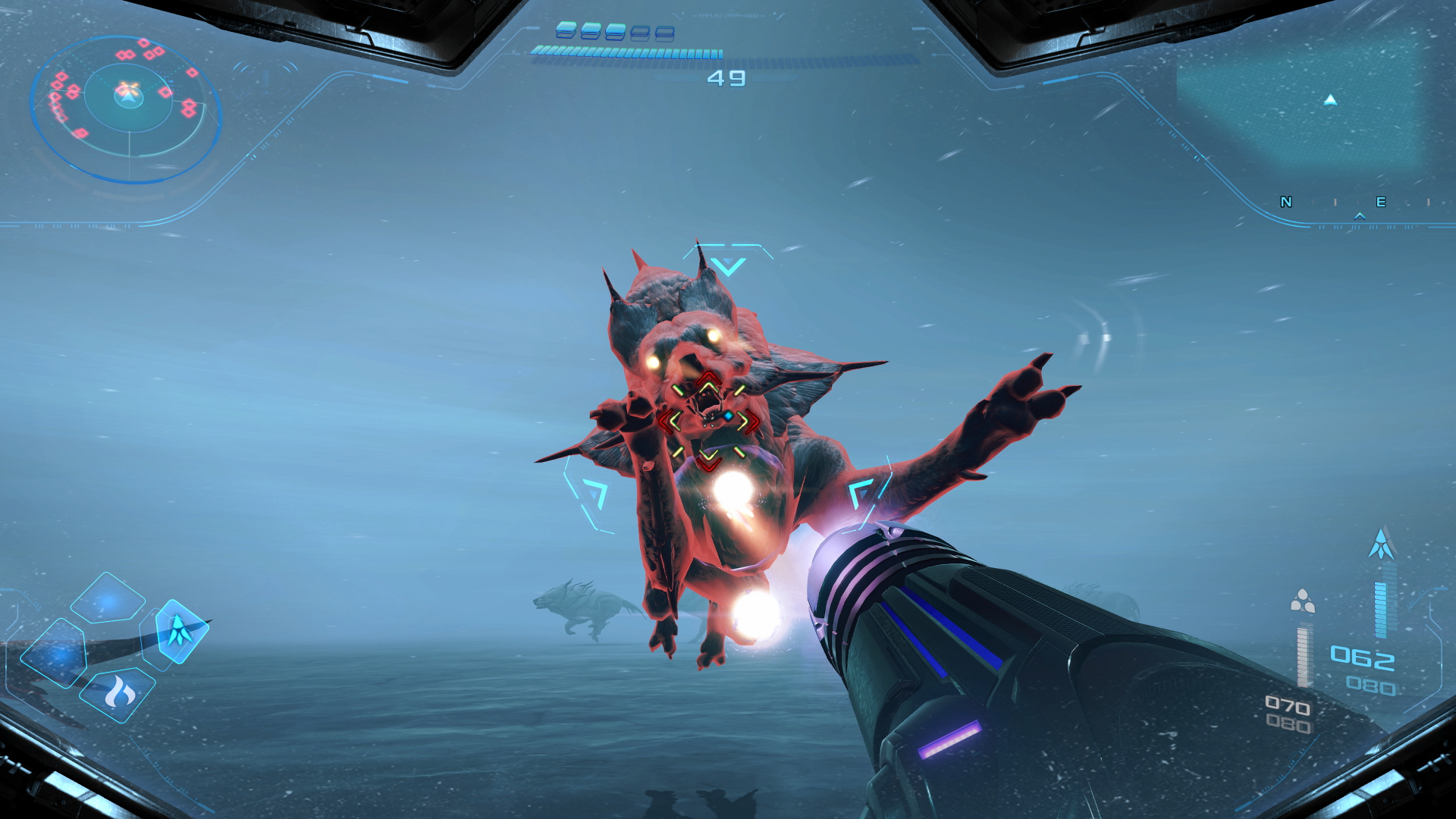
Enemy variety is alarmingly lacking, too, with just a couple of actually threatening types across all areas. Bosses follow suit; they often share simlar types of attacks and don't make much use of the various power-ups you'll accrue throughout the game.
There's clearly some rustiness on display here, 18 years on from the last mainline Prime entry. But when Metroid Prime 4: Beyond is firing on all cylinders, it still delivers a deeply rewarding and satisfying first-person adventure.
Can't complain about the View(ros)
If you're not caught up on the Metroid Prime games or the Metroid series in general, don't worry; like most games in the long-running franchise, Metroid Prime 4: Beyond is designed to be enjoyed as a largely standalone entry. There are callbacks, such as the presence of the Galactic Federation and returning antagonistic bounty hunter Sylux, but don't feel like you have to get up to speed in any sense.
Beyond begins, unsurprisingly, in the same way a lot of these games do. Samus Aran responds to a distress call to aid in pushing back against a Space Pirate invasion at a Galactic Federation base. Things go awry when a mysterious artifact being kept in the base is activated, teleporting Samus and swathes of the base's personnel to the planet Viewros.
Not much is known about Viewros. Like Metroid Prime 2: Echoes' Aether, its existence appears to be something of an anomaly, undiscoverable on any galactic chart. It's on Viewros that we uncover the plight of the Lamorn, a now-extinct alien race that may or may not have invited tragedy upon themselves. The goal, then, is to reactivate Viewros's master teleporter and return Samus and the displaced Gal Fed troopers' home.
I really like Beyond's story. It's pretty unintrusive, and can largely be discovered through data logs and environmental details via Samus's scan visor. Uncovering the dark fate of extraterrestrial factions isn't anything new for Metroid, but the Lamorn are a particularly fascinating species in their aptitude for psychic abilities and technological prowess.
Much, too, has already been made of the Galactic Federation troopers, with fans worrying that their chatty nature might be at odds with the series' trademark feeling of isolation. I'm happy to say they're really not that bad, and a couple are even quite endearing.
Mackenzie is perhaps the worst offender, but not because of his socially awkward quipping. Rather, like a PlayStation Studios character, he has a habit of spelling out puzzle and progression answers to you before you've even properly had a chance to look around.
There's an element of hand-holding that just isn't welcome, especially when you're prompted to open the map to view an annoyingly unskippable animation showing you exactly where you need to go. That really becomes an issue towards the end of the game when you're just trying to do your 100% item and scan cleanup before the point of no return.
Third eye
In typical series fashion, Samus loses the lion's share of her abilities after being transported to Viewros. The game doesn't really make a song and dance of it this time, which is just as well; it beats the rather contrived ways Samus has undergone her nerfs in the past.
Best bit
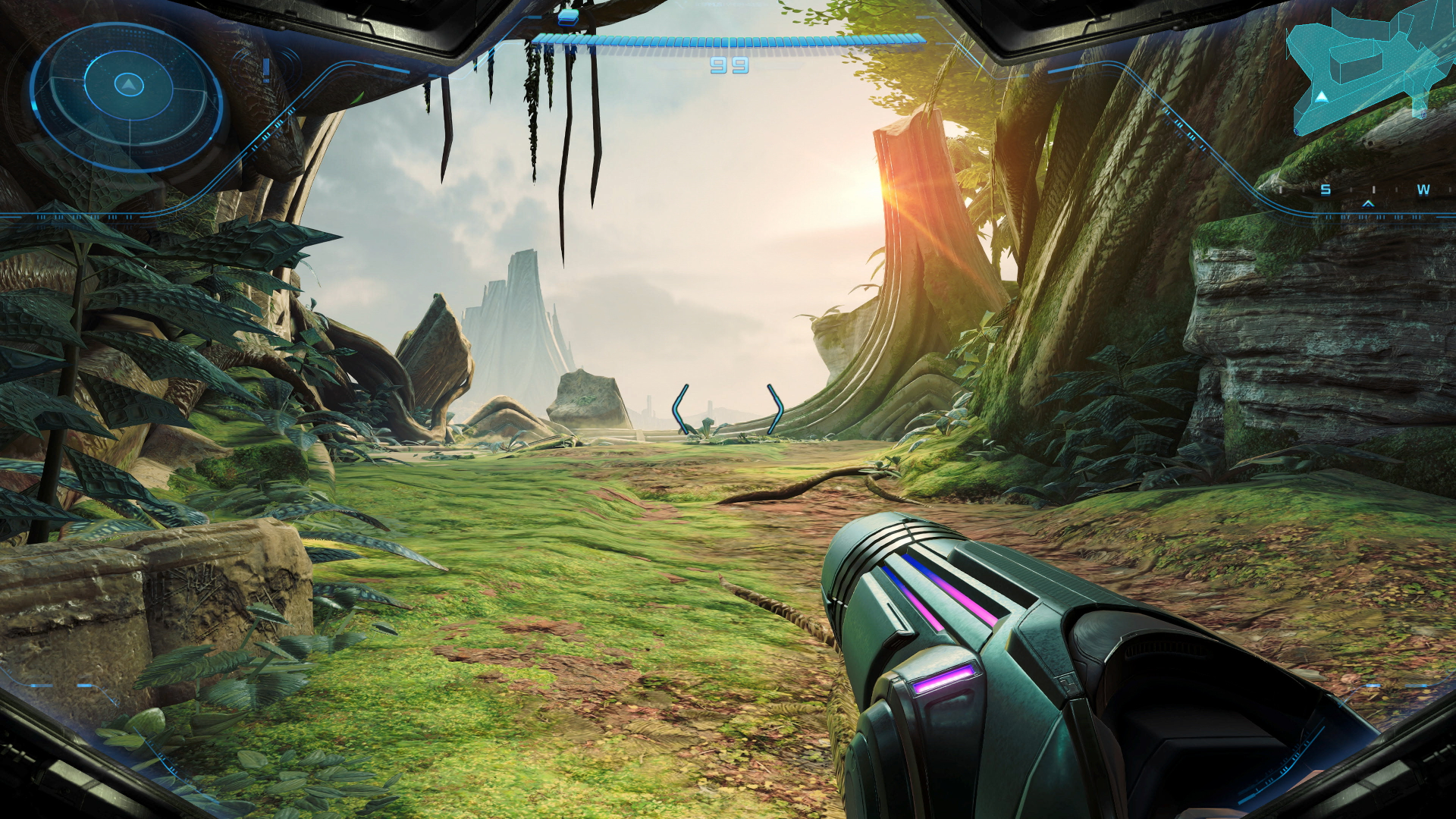
Metroid Prime 4: Beyond's atmosphere is incredible. Paired with some headphones, the world of Viewros comes alive with wonderful audio design. Gorgeous visuals, lighting, and environmental design all really help ground Samus in this otherworldly setting.
Progression in Metroid Prime 4: Beyond, then, is as you'd expect if you're familiar with the series. You'll explore through a number of different areas, encountering roadblocks as you go that require you to discover power-ups elsewhere to progress.
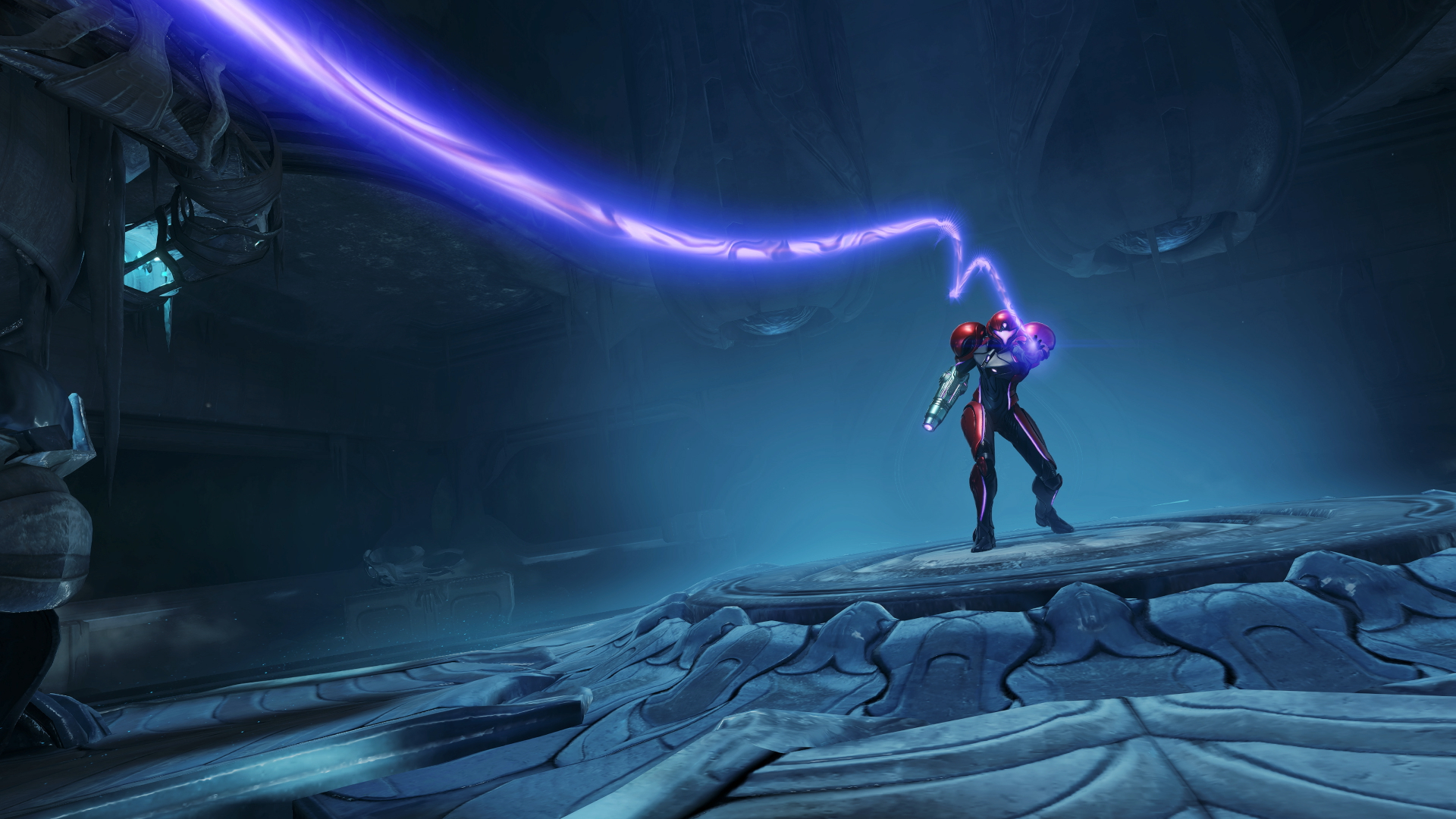
On Viewros, Samus is able to inherit the psychic abilities of the Lamorn race. This lets her do things like open special doors, uncover hidden platforms, and make use of a psychic beam power-up that can be momentarily controlled to activate switches or hit multiple enemies.
Otherwise, power-ups are played safe in Metroid Prime 4: Beyond. Having the 'psychic' label doesn't stop morph ball bombs, the grapple beam, and various beam cannon types from acting the same than they used to. Even modifiers like fire and ice behave like you'd expect; dealing damage over time or freezing enemies solid respectively.
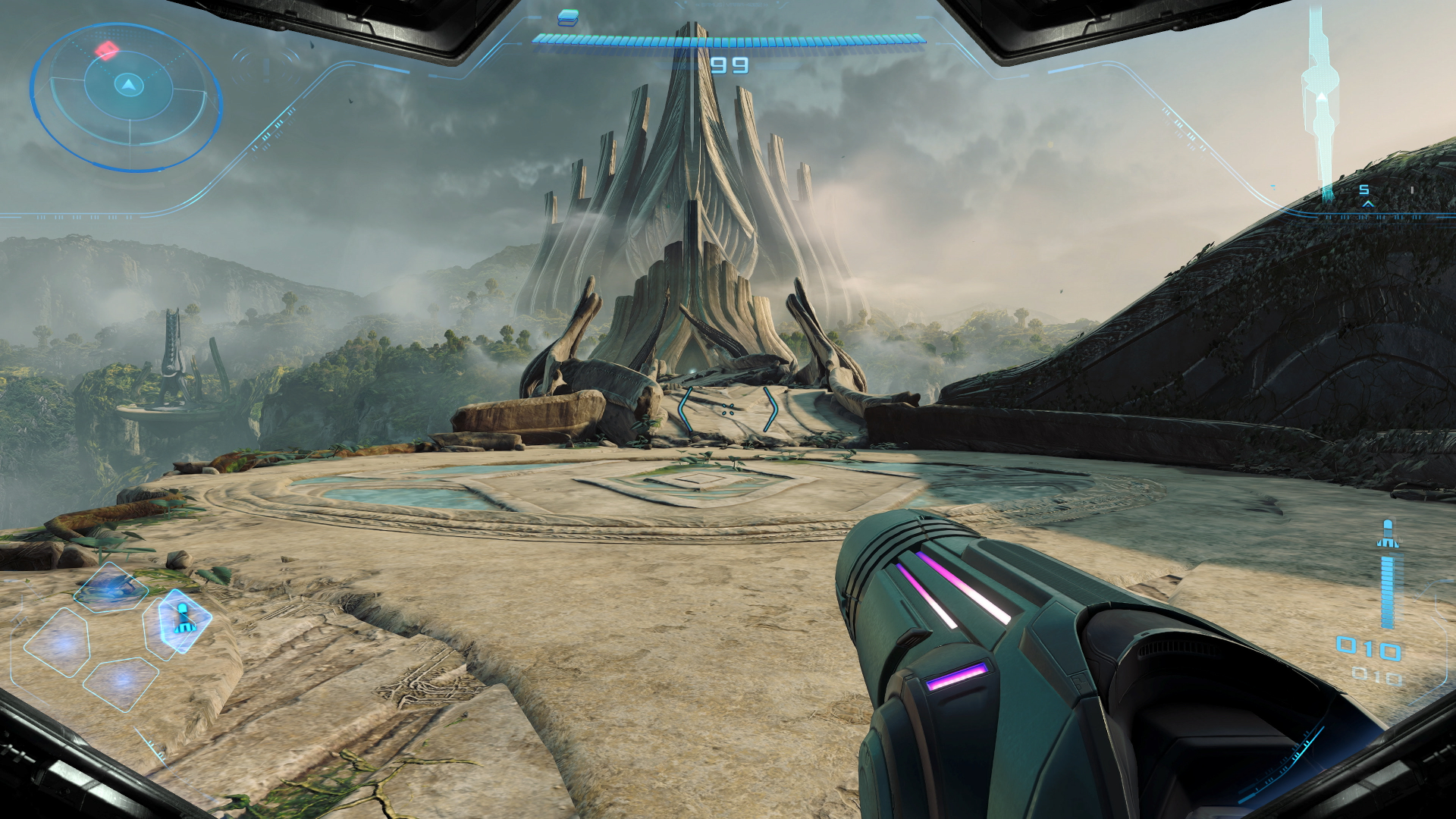
My guess is that Retro Studios didn't feel the need to push the boat out too much in regards to Samus's abilities. It's a robust kit that plays to the series' strengths of combat and exploration.
This time, though, the ball has been dropped when it comes to the boss fights. In fact, there's not many bosses to speak of, at least when compared to other games in the Prime sub-series. Unfortunately, this lack of quantity has not translated to a higher level of quality.
Bosses all share a handful of similar attacks, such as generating a wave of energy that Samus must jump over, or rolling around the arena at high speeds. They rarely, if ever, require Samus to make use of her various beam types, and it's not until the truly exceptional final boss that Retro presents a challenging and memorable fight - one of the best in the series, actually.
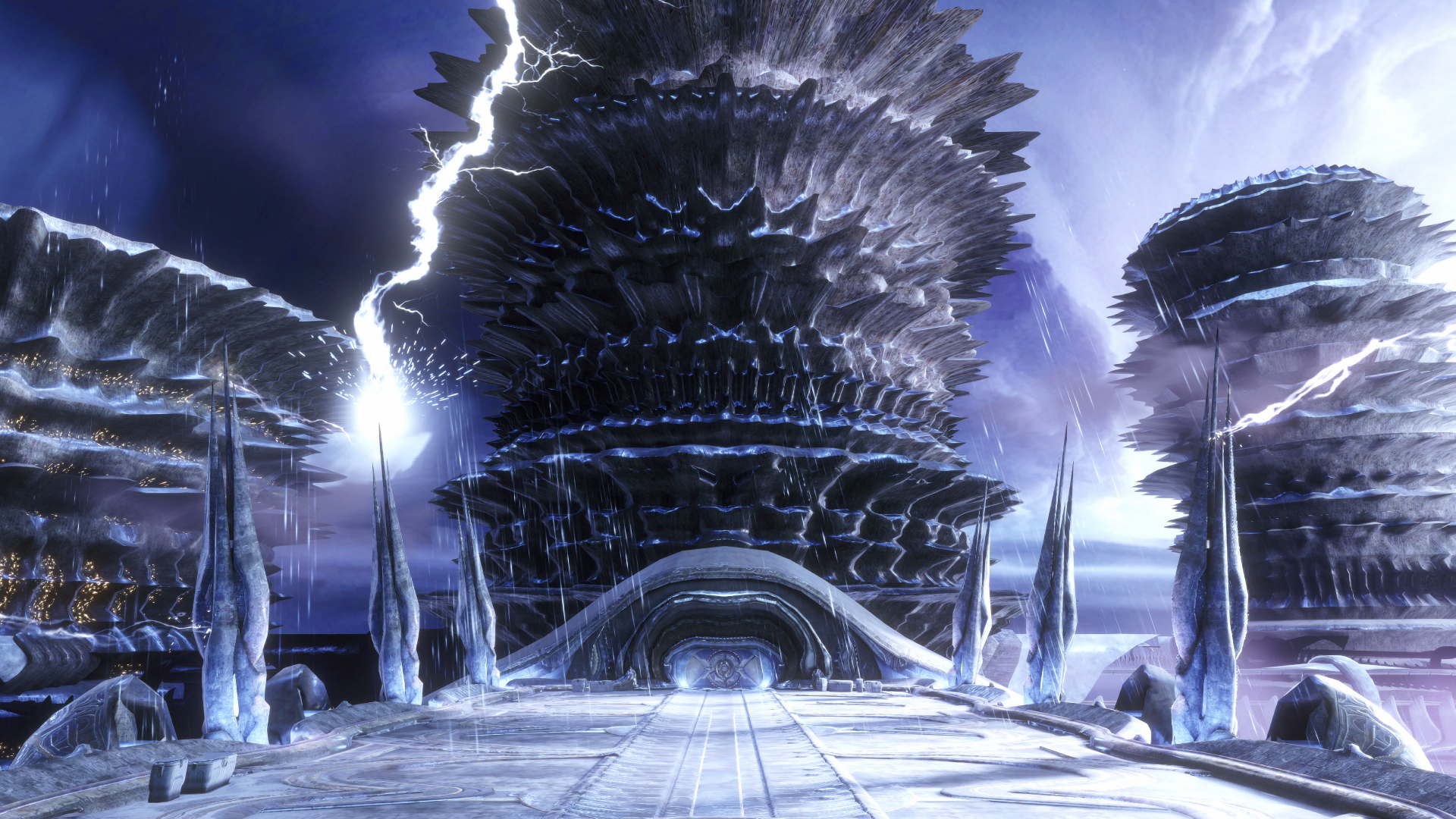
Level design and progression also isn't quite as ambitious or winding as we've seen in past games. Metroid Prime 4: Beyond definitely leans on the more linear side. That's not necessarily a bad thing; some of the series' best games, including Metroid Dread and Fusion, are fairly straightforward entries.
Like those games, Beyond more than makes up for it in the atmopshere department. The dense wilderness of Fury Green, the derelict, harshly-lit laboratories of Ice Belt, and the impressive industral scale of Volt Forge all lend their own unique atmospheric flavor, and it's a joy to scour these environments for items and snippets of lore.
Some areas are more painfully linear than others. There are rather annoying combat gauntlets in Volt Forge and the Great Mines, for example, that require at least a couple trips through for both story progression and late-game item hunting. Mercifully, you're never required to hop between gimmicky visor types in this game like Prime 1 and 2, but they show an occasional lack of care and ambition in overall level design.
At least backtracking for items is a pretty painless and actually quite enjoyable affair here. Once you have a certain beam power-up, you can activate a droid in each biome that will reveal item locations on the map. This, paired with some really handy shortcuts in each level, make going for 100% completion doable and worthwhile on your first playthrough.
Deserted
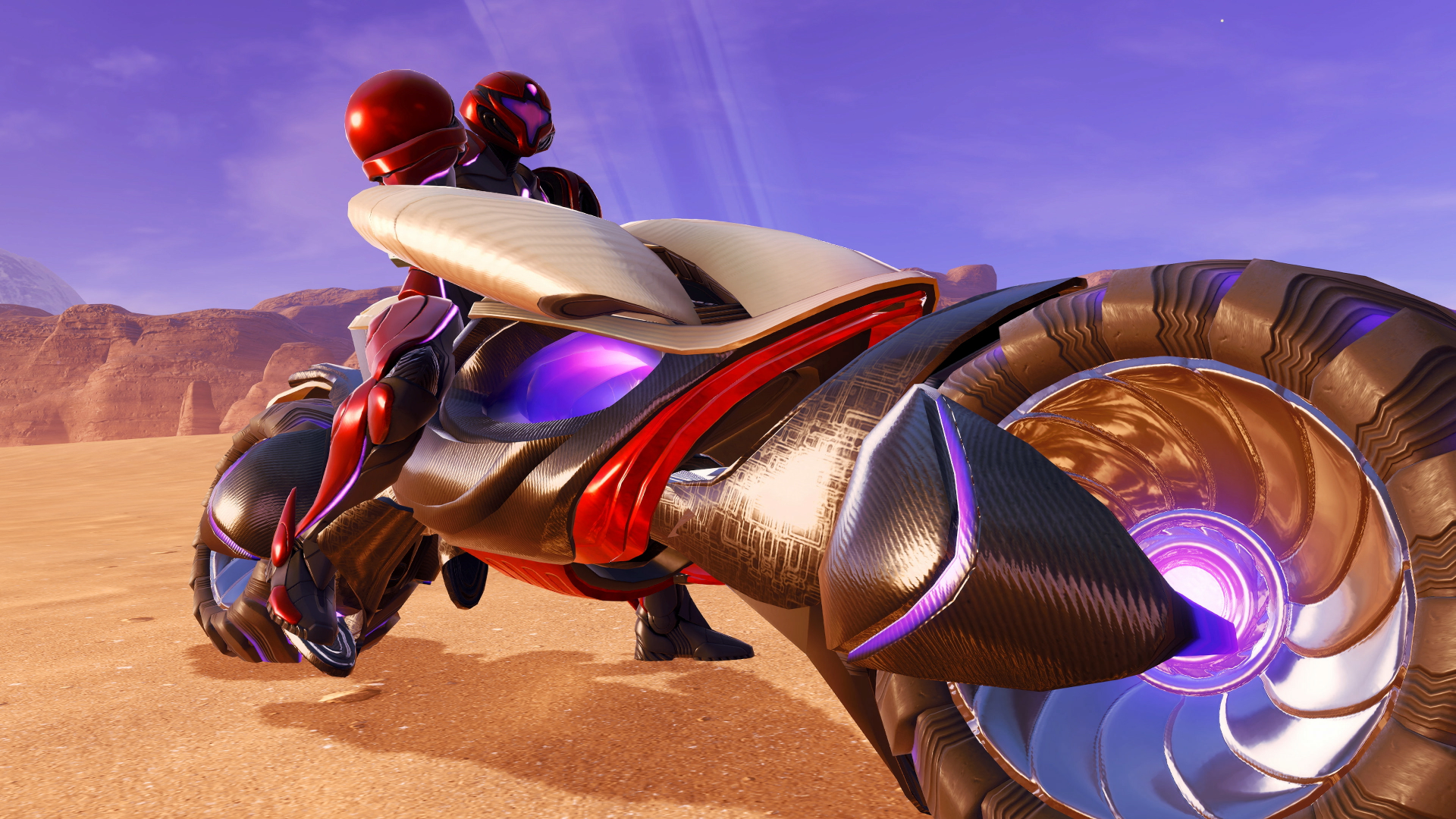
But this leads me onto easily the weakest element of Metroid Prime 4: Beyond, and it's the barren Sol Valley. This is a massive, arid expanse, in the corners of which sit the game's major locations. And good lord is it dull.
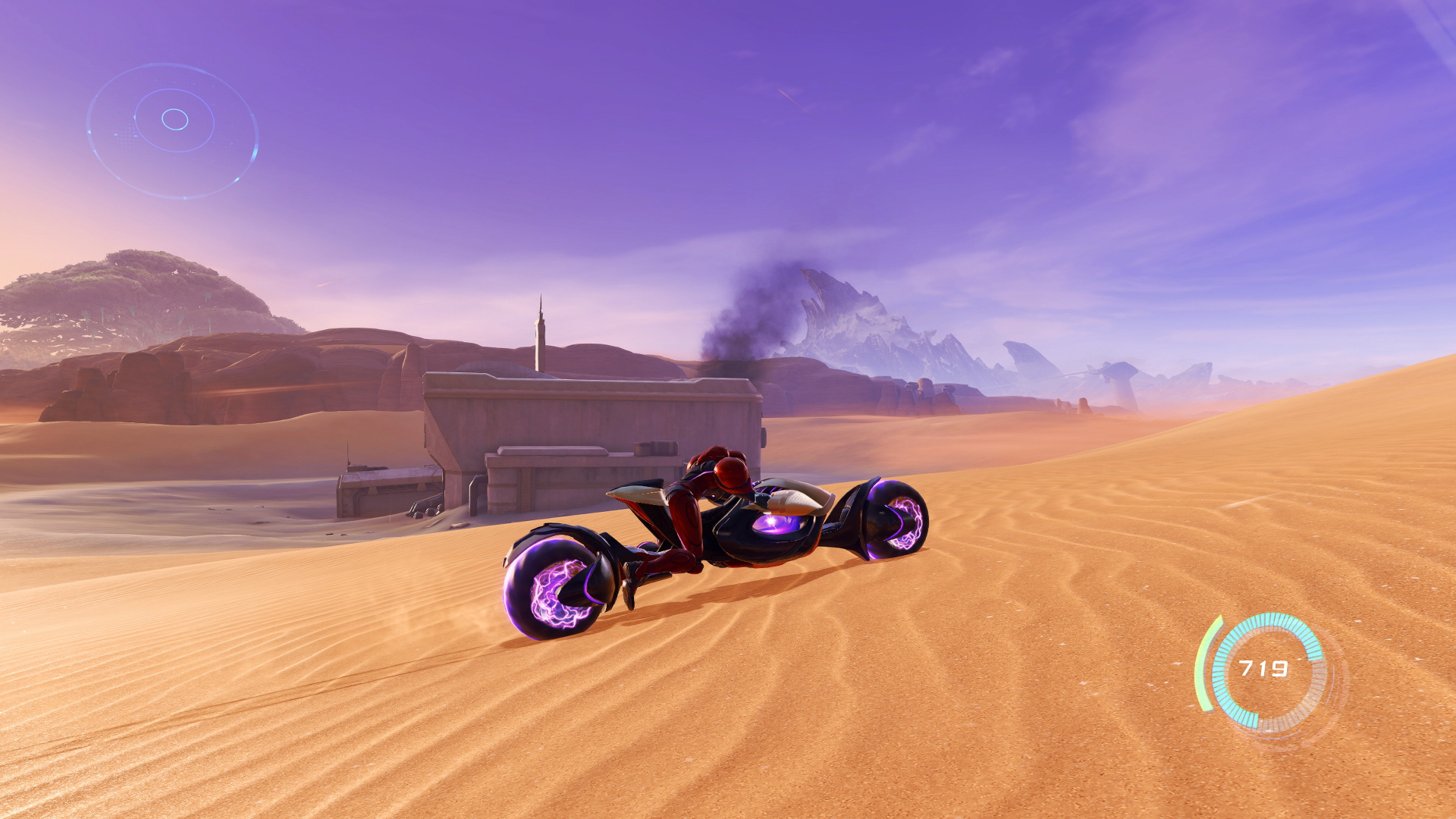
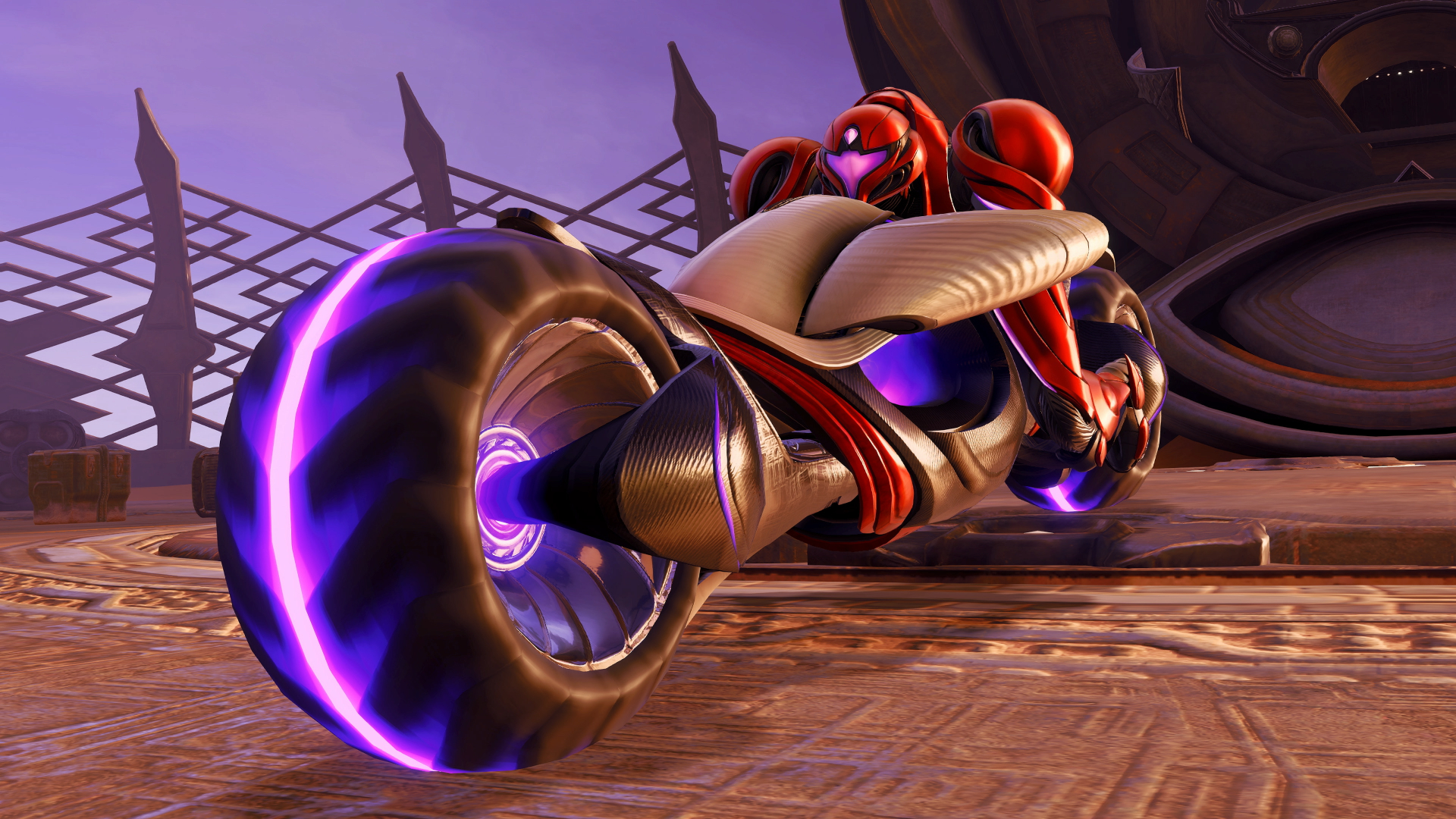
Designed for exploration with Samus's new VI-O-LA motorcycle - which she gets partway through an earlier area - Sol Valley just isn't very interesting. It's simply an enormous stretch of desert with very little in it. Presumably, this is stripped back so the original Nintendo Switch can handle while maintaining 60fps performance.
The motorcycle is fun to drive, at least. It's fast and performs turns and drifts in a satisfying manner. It's even equipped with weaponry to help shoot down a few rather pesky enemy types that periodically bother you while you're out and about.
Unfortunately, the mostly flat terrain of the desert doesn't really play to the bike's strengths. There are a few jumps, and chunks of Green Energy crystals that can be smashed and collected for a handful of optional power-ups, but the desert largely just serves as unenjoyable padding in an otherwise pretty short game.
The good stuff
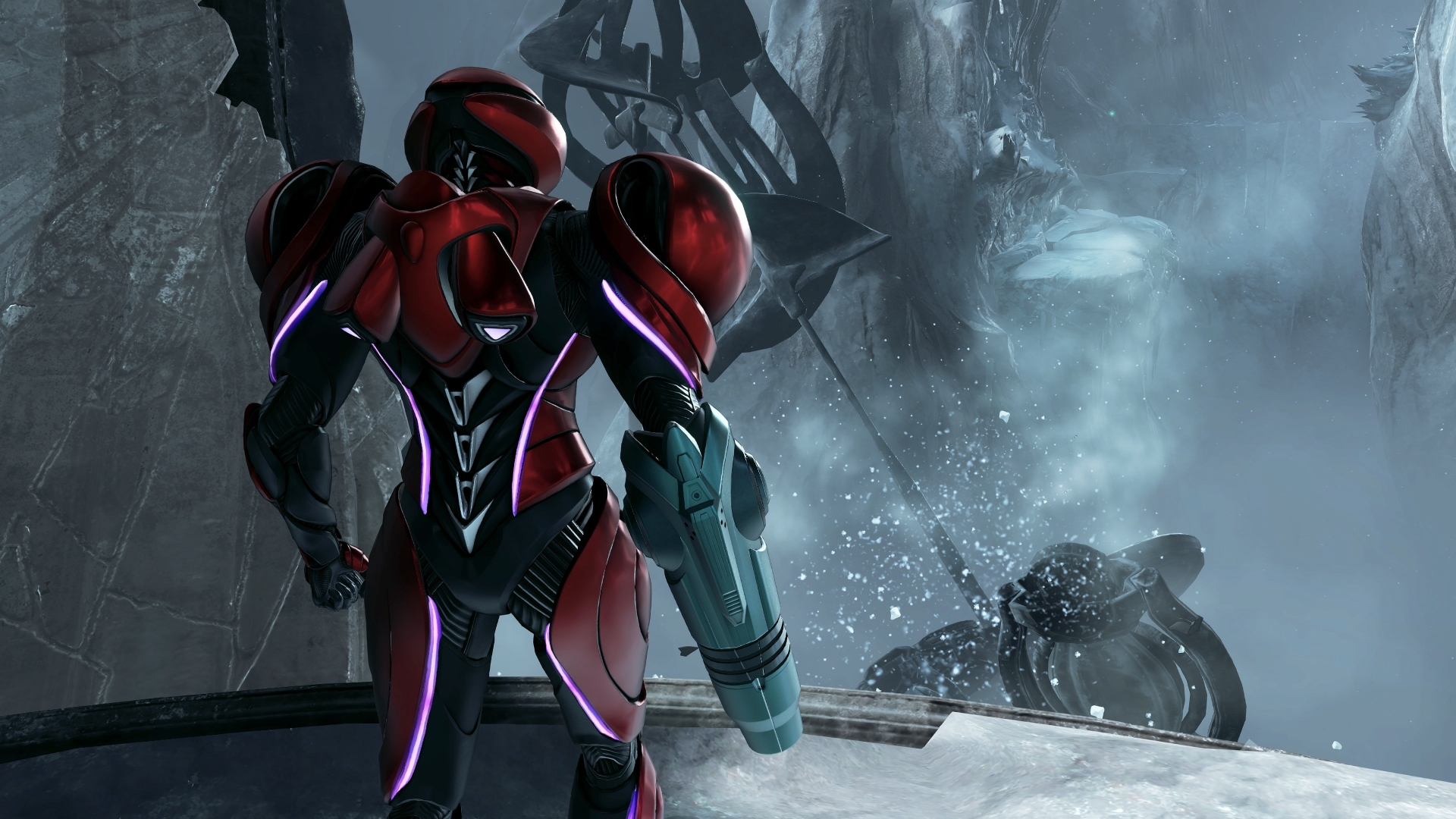
I've been pretty critical of many elements in Metroid Prime 4: Beyond, but I do want to leave this review on a few high notes; things the game does exceedingly well. Samus feels better than ever to control in 3D, with tightened-up movement and improvements to physics in her morph ball form.
When Samus has all her abilities late in the game, and you're uncovering the last few rooms in each major biome, the game really comes alive. Backtracking and 100% item collection is superbly paced, and it feels as satisfying as ever to tear through areas with a fully-kitted bounty hunter.
I also really didn't hate the Galactic Federation troopers Samus partners with at various points in her journey. Yes, it's really annoying when Mackenzie points out the obvious or forces you into an unskippable map animation, but there's good chemistry between each of the team members.
Samus isn't with them for overly long, just a handful of sections. One that really stands out is when she partners with a couple of them to take down a massive gunship. And seeing your base camp in Fury Green evolve over time as troopers file in is endearing; you can even catch dialogue between them if you visit at certain times.
But once again I really just have to gush about how gorgeous of a game Beyond is, in both the visuals and soundtrack department. It's easily the best-looking game on Switch 2 so far, and a 4K 60fps lock (or 1080p at 120fps in performance mode) shows a real technical wizardry on both Retro and Nintendo's part.
Multiple control options are also welcome, and all are a success. You have your standard twin-stick movement more in line with contemporary first-person shooters. Or you can make use of the Joy-Con 2 for gyro aiming. Mouse controls are also excellent, providing a level of accuracy that you can't get on other control types without locking onto enemies first.
Flaws and all, I still think Metroid Prime 4: Beyond is a brilliant entry in the series. If the desert was a touch smaller, and there were a few extra rooms to explore in each biome, it'd be on its way to sitting alongside the first two Prime games in quality. But, this is nonetheless a really welcome three-dimensional return for Samus, and I really hope it won't be her last.
Should you play Metroid Prime 4: Beyond?
Play it if...
You want to see what the Switch 2 hardware can do
Beyond is an utterly gorgeous game, to the point where I can't quite believe it's running on Nintendo hardware even with the Switch 2's improvements. Dense, atmosphere-rich environments are backed up by a wonderful soundtrack and audio design, too.
You love the Metroid Prime series
Each game in the Prime series has its own unique set of issues, and Beyond is no different. However, this is still very much a satisfying adventure that holds up well compared to those that came before it.
Don't play it if...
You really don't like massive deserts
Desert-like environments aren't the most inspiring biomes at the best of times, and Beyond's is a real slog to visit time and time again.
You're hoping for a long adventure
At around 15 hours (or less if you're not going for 100%), Beyond is a pretty lean game that may be a bit too short for those looking at the full-fat price tag.
Accessibility
Metroid Prime 4: Beyond has some accessibility features worth highlighting, though unfortunately not much. You can enable a background for subtitles for increased legibility, and fully remap button profiles in all control settings. You can also adjust cursor, camera, and stick sensitivity to fine-tune a setup that's right for you.
How I reviewed Metroid Prime 4: Beyond
My playthrough of Metroid Prime 4: Beyond lasted just over 15 hours on Normal difficulty. This was a 100% completion run, with all items and scans collected. That may sound short, but is still very much in line with the length of most Metroid titles, including those within the Prime subseries.
I primarily played in the default control scheme on a Nintendo Switch 2 Pro Controller, mixing it up with the support for mouse controls later in the game during some boss fights and item hunts. I also switched occasionally between docked play on an LG CX OLED TV, and handheld play with the RIG R5 Spear Pro HS gaming headset for enhanced audio.
First reviewed November/December 2025






 English (US) ·