Meta's new transoceanic undersea cable boasts a whopping petabit of bandwidth
3 hours ago
4
(Image credit: Getty Images)
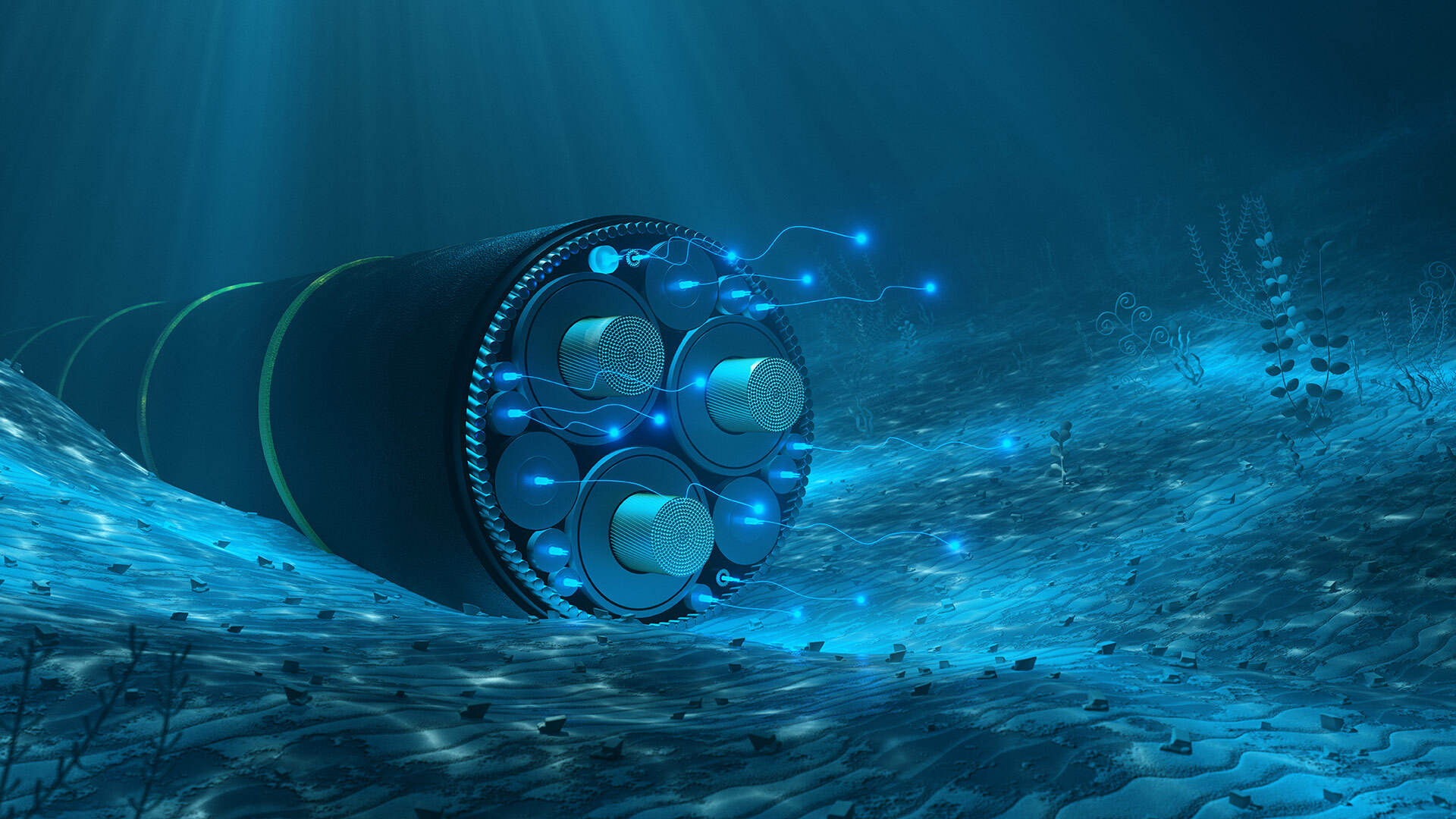
Meta has announced plans to build and install a new subsea cable that will connect France and the United States at a breakneck 1 Pbps (1 petabit per second or 1,000 terabits per second). It will become the most advanced subsea cable at its length and blow Meta's own 0.5 Pbps Anjana cable system out of the water. Figuratively, of course.
Anjana runs from Spain to the US for a total distance of 4,425 miles at a relatively leisurely 480 Tbps thanks to its 24 fiber pairs. But Petal ratchets things up a notch, using 48 fiber pairs and a two-core fiber-based solution (with 24 pairs each) to achieve 1 Pbps across transatlantic distances.
Meta claims that the new cable will have enough network capacity to allow 75% of the planet's population to stream music at the same time — so long as they stick to 160 kbps MP3s or lower, that is. No lossless streaming for you.
Either way, you'll have to wait a while for your theoretical music fix. Meta says that Petal is expected to enter service in 2029. It'll be built in partnership with NEC and Sumitomo Electric Industries, with support for the French landing from Orange.
Today we’re announcing Petal: the world’s first petabit-class transoceanic subsea cable and the first to deploy multi-core fiber at scale.Spanning 7,000 km (4,000+ mi) between France and the United States, Petal will deliver 1 Petabit per second (1 Pbps / 1,000 Tbps), doubling… pic.twitter.com/fLSWGkHDzSSeptember 21, 2026
Subsea cables might not be at the top of many internet users' minds, but they're vital to the way our connected world functions today — and they've often been the subject of sabotage plots as a result. As the number of connected devices continues to grow, these cables become all the more important. And they need to be fast and reliable.
Meta says that its decision to use a two-core fiber design for Petal brought complications along with its huge performance. Minimizing crosstalk is key, as is ensuring low attenuation throughout the length of the cable.
The fix for the attenuation involves using ultra-pure synthetic silica during the manufacture of the preform, while crosstalk is minimized by "carefully controlling for high refractive indexes in the cores against lower indexes within the surrounding medium and counter-propagating the optical signals."
Get Tom's Hardware's best news and in-depth reviews, straight to your inbox.
Meta says that a subsea cable of this length typically needs around 100 repeaters to get the signal from one end to the other without degradation. Petal uses single-body 96-amp repeaters, each with single-core fiber amplification and a Fan-In/Fan-Out (FIFO) interface to convert two-core fiber into two single-core fibers inside the repeater before converting it back to two-core fiber following amplification. The theory is that this approach will allow Petal to retain the efficiency and reliability afforded by single-core amplification.
As for why Meta feels the need to build such a cable, it points to its desire to bring "greater capacity, stronger resiliency, and future-proof infrastructure to Europe as demand for communications and reliable connectivity continues to increase." We hope that dual-core fiber isn't twice as tasty to the average shark.
Oliver Haslam has written about technology of all shapes and sizes for over 15 years, both online and in print. He's fascinated by how personal computing continues to change as tower PCs give way to foldable phones and beyond.

 3 hours ago
4
3 hours ago
4







 English (US) ·