
 3 weeks ago
44
3 weeks ago
44
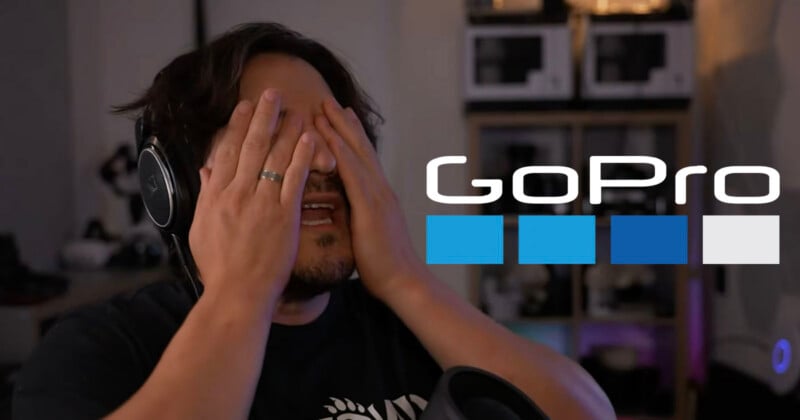
YouTube star and filmmaker Mark Fischbach, better known as Markiplier, is fully aware that the timing looks very bad but is adamant he did nothing wrong and is very concerned about what GoPro’s new $285 million merger means for the company’s products.
News broke late Sunday that YouTube star and filmmaker Mark Fischbach, better known as Markiplier, had become GoPro’s largest single shareholder after purchasing an 8.5 percent stake in the company. Then on Monday, GoPro became a bit of a memestock following Markiplier’s investment. Yesterday, September 1, GoPro announced that it was merging with Starman Optical for $285 million, and its stock soared higher still.
As of writing, GoPro’s shares are trading at $1.22 per share, but they peaked at nearly $1.60 yesterday. It was the highest GoPro’s stock price had been in months, although still a tiny fraction of what it was at GoPro’s peak over a decade ago, when the company closed at $93.85 per share on October 7, 2014.
Given the timing and sequence of the news, from Markiplier’s investment to GoPro’s merger, it is reasonable that people would be suspicious. There have been a lot of pump-and-dump schemes over the years, but Fischbach is very clear this is not one of them. He took to a YouTube stream last night to discuss the GoPro news and reassure his fans that he had zero knowledge of any potential merger.
“There are people in the sphere that will also use my name to pump stock. They’ll do that. And I want to be very clear. There’s some confusion. I did not buy on Sunday. I did not buy at all Sunday,” Fischbach says of acquiring GoPro’s stock. “I had started collecting stock months ago, right? Months ago. Even the filing, the filing which is required by the SEC for public ownereship, I filed that, or it was filed, August 20, which you can find on GoPro’s website. I started that process July 23, right? It just took a long time to get there.”
The reason Fischbach is talking about Sunday is because that’s when Bloomberg published its interview with Fischbach about his GoPro stock purchase. That article’s publication set off a wave of news stories and helped push GoPro’s stock price up on Monday as people followed Markiplier’s lead.
This was something Fischbach was rightly concerned about before it happened.
“The last thing I want to do is imply in any capacity that you guys should also do it,” the YouTube star says of investing in GoPro. “I was going to be okay if I lost [my money].”
“… It is an extremely risky thing and you guys might want to trust me and you guys might want to follow me or, you know, and, and this may seem like a ridiculous thing to say, but it happened. Literally, it happened two days ago when news broke that I was invested in GoPro, my exact fear happened. All of a sudden, boom, everyone was like, ‘Oh, you gotta get in there. We gotta do that thing.'”
Fischbach was especially concerned about people putting their money after his because GoPro has been struggling a lot in recent years, especially so far this year.
“I feared that me saying I am heavily invested in this company might lead people to invest in a company that is down 91 percent over the past five years,” Fischbach explains. “They are really in the hole.”
Fischbach says he wanted to invest in GoPro because he believes in the company’s cameras, especially the new Mission 1 Pro and the Mission 1 Pro ILS. As soon as he saw the new cameras, he began thinking about how he could use his money to support the company in some fashion.
While he argues that his investment in GoPro was and remains risky, he believes in GoPro’s cameras and how useful they can be for creative filmmakers like him. Or, at least, he did believe in GoPro when he began buying shares in July.
Fischbach, who learned about the merger with Starman Optical at the same time as everyone else, is very concerned about where GoPro might go from here. Starman makes optical transceivers for AI data centers, which are essential devices that send data from one place to another using light.
If Starman’s acquisition of GoPro goes through, the company plans to use GoPro’s optical expertise in new, not-very-camera-related ways.
“Advanced optics and imaging are essential to AI, national security, and the broader economy, yet much of the critical hardware supporting these technologies continues to be manufactured overseas,” said Charles Tebele, Chief Executive Officer of Starman Holding.
“The combination of GoPro’s world-class optical expertise and intellectual property with Starman’s advanced transceiver capabilities and U.S. manufacturing platform creates a unique opportunity. Together, we intend to bring production of these critical components back to the United States,” Tebele continued.
GoPro’s Founder and CEO, Nicholas Woodman, added that the merger will help GoPro grow across “consumer, commercial and defense markets.”
On the consumer side, Fischbach is onboard. He loves GoPro’s cameras and believes in what people can do with them. The defense and AI data center things appeal to him significantly less. As of now, Fischbach has not sold any of his GoPro shares, even though he could have made some very easy money doing so already.
“I did not invest for the purpose of making money in this,” Fischbach says.
“If [GoPro] pivots away from making cameras, I’m not gonna be on board with that because, again, the only reason I invested in the first place was for the cameras. It’s always been GoPro. They’ve just made cameras. They’ve just made cameras the entire time they’ve been a company,” he continues.
“Of all the companies coming and say like, ‘Yes, we’re gonna buy GoPro. Yeah, we’re the data center, AI connectivity, and also possibly government contract thing.’ I’m like, ‘Holy s—-.’ I hope that they retain some autonomy. I really do, but I don’t know. But again, I haven’t dumped, right?”
Fischbach says he has minimal voting shares in GoPro, meaning his voice carries very little weight. Nonetheless, he says he will vote against the merger.
“I’m sad because the camera’s great. I wasn’t lying about anything I said in the video because the camera is legitimately good. I don’t know where it’s going. I don’t know what’s going to happen in the end. I’m genuinely sad because I really wanted GoPro to succeed because this is such a fun, cool little camera that can do so much. And it’s like, man, all of it got lost in what happened over the past couple days,” Fischbach says.
Markiplier adds that he genuinely hoped that GoPro could turn things around through its new cameras. He knew it was a long shot, “an ice cube thrown into hell,” as he says, but he had the money to lose thanks to the huge success of his first feature film, Iron Lung.
For GoPro’s part, the company says it will continue to fully support its existing consumer products, including the Mission 1 Pro ILS that Fischbach loves so much. As for what level of support these types of products get down the road, it is impossible to predict. Fischbach is, at the very least, worried.
“If [GoPro] stops making cameras or starts making Flock-based cameras, I am out 100%,” Fischbach says.
Affiliate Disclosure PetaPixel articles may include affiliate links; we may earn a commission if you buy through one.




 English (US) ·