
 9 hours ago
19

Published Nov 27, 2026, 7:00 AM EST
All it took was some angel's blood
All it took was some angel's blood
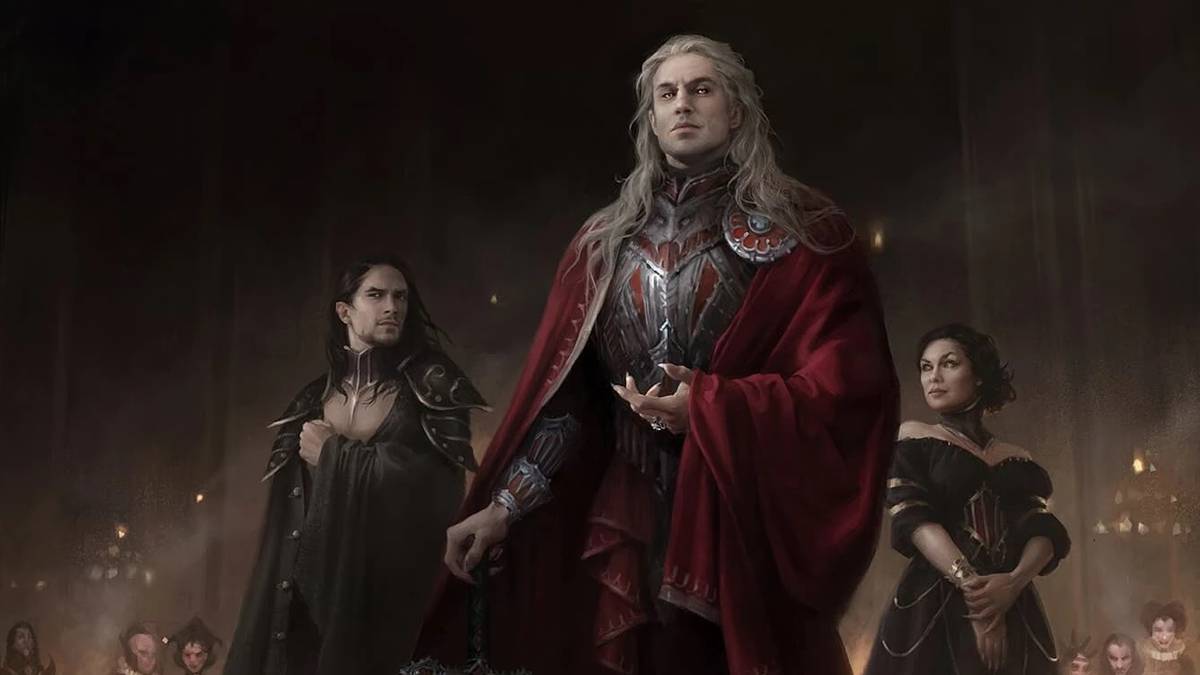 Image: Wizards of the Coast
Most Commanders in Magic: The Gathering have to show up on the battlefield before they can do anything. But Edgar Markov can make you the most dangerous player at the table while he’s still sitting in the Command Zone. Cast a one-mana vampire on your first turn, and Edgar gives you a second vampire for free. Do it twice on turn two, and you have six creatures before some players have cast their first spell.
Nine years after his debut in Commander 2017, Edgar ranks second on EDHREC, with more than 52,000 decks tracked over the past two years. Given his Eminence ability, which Wizards itself has admitted was a mistake, it's easy to see why.
While most people spend Black Friday buying presents for the holidays, we at Polygon celebrate all things vampire and vampire-adjacent with Fangsgiving. So let’s talk about the guy who sired an entire plane’s worth of vampires and then became one of Magic: The Gathering’s most lethal (and controversial) Commanders.
The origins of Edgar Markov
Magic actually introduced Edgar’s grandson first. Sorin Markov debuted as a mono-black vampire planeswalker in 2009’s Zendikar, where he had unfinished business with the Eldrazi he’d helped imprison thousands of years prior. Two years after that, Innistrad took players to Sorin's home plane. In Wizards of the Coast’s A Planeswalker’s Guide to Innistrad, a description of a hilltop estate in Stensia casually identifies its owner as Edgar Markov, Sorin’s grandfather. The guide also connects Edgar to the ritual that gave rise to Innistrad’s original 12 vampire bloodlines.
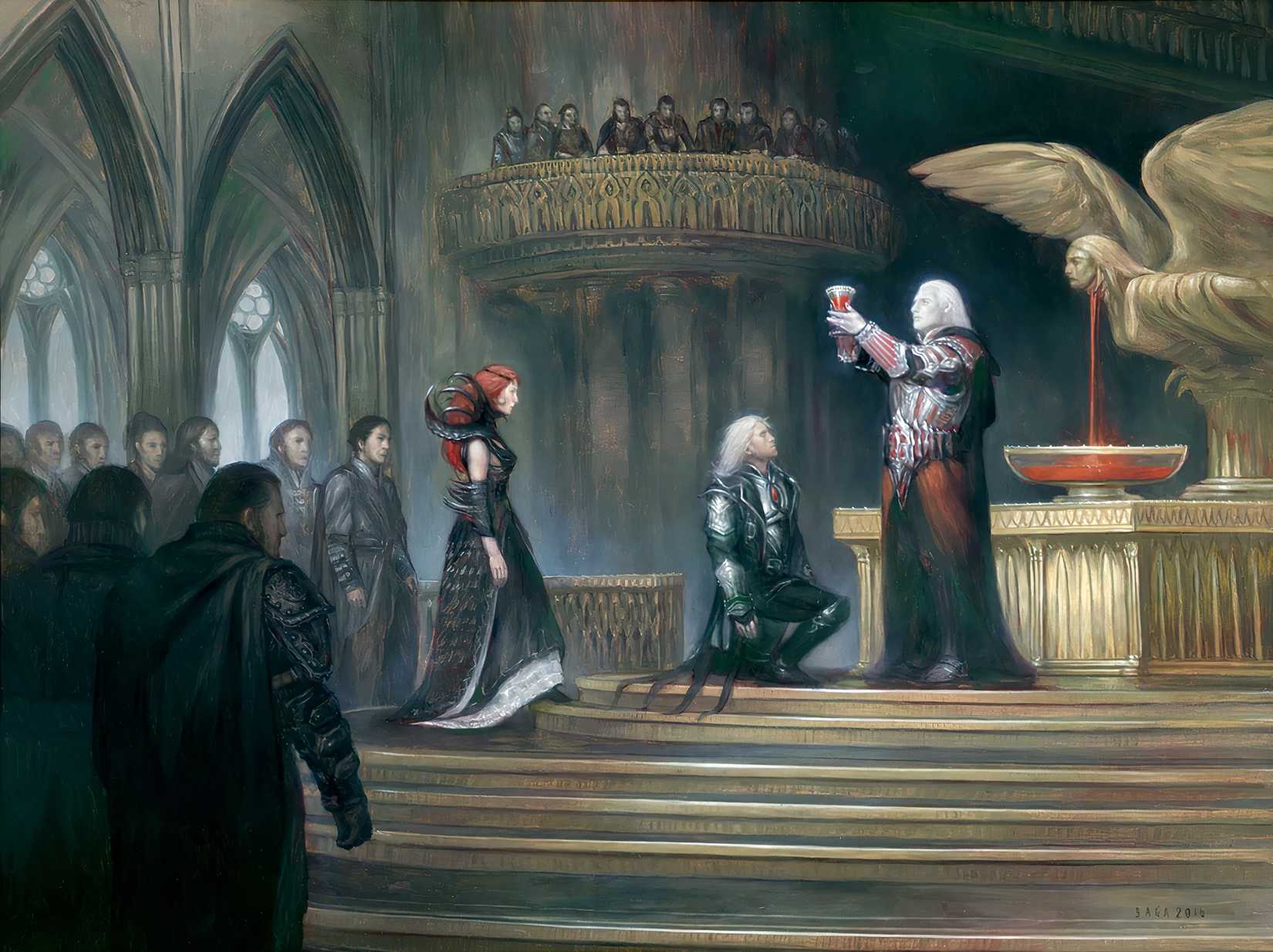 Image: Wizards of the Coast
The horrifying details came in 2014’s “The Lunarch’s Journal,” an in-universe story published on Magic's website in which a church official discovers that a then-human Edgar worked with the demon Shilgengar to devise a formula for vampirism. The key ingredient was the blood of a living angel. Edgar and his sons trapped the angel Marycz in his laboratory and drained her blood. This revelation is enough to shake the Lunarch’s faith, because the monsters that his church exists to fight were created by humans to begin with.
The 2016 Dungeons & Dragons supplement Plane Shift: Innistrad explains what Edgar was after. He was an aging alchemist and healer who wanted to prolong his life and the lives of his family. When alchemy didn’t work, he turned to black magic, and Shilgengar offered him a way to live forever. Edgar’s Commander 2017 profile singles out Sorin as one of the people he wanted to save.
In a flashback in 2021’s Innistrad: Crimson Vow story, Sorin remembers standing in front of his family with a cup of blood in his hands. Marycz was still alive, hanging upside down in chains, and she looked at him as if begging him for help. His family held him down, and Edgar forced Sorin to drink. The trauma of becoming a vampire ignited Sorin’s planeswalker spark. He would go on to create Avacyn, the angel Innistrad’s humans worshipped as their protector.
How Edgar Markov took over Commander
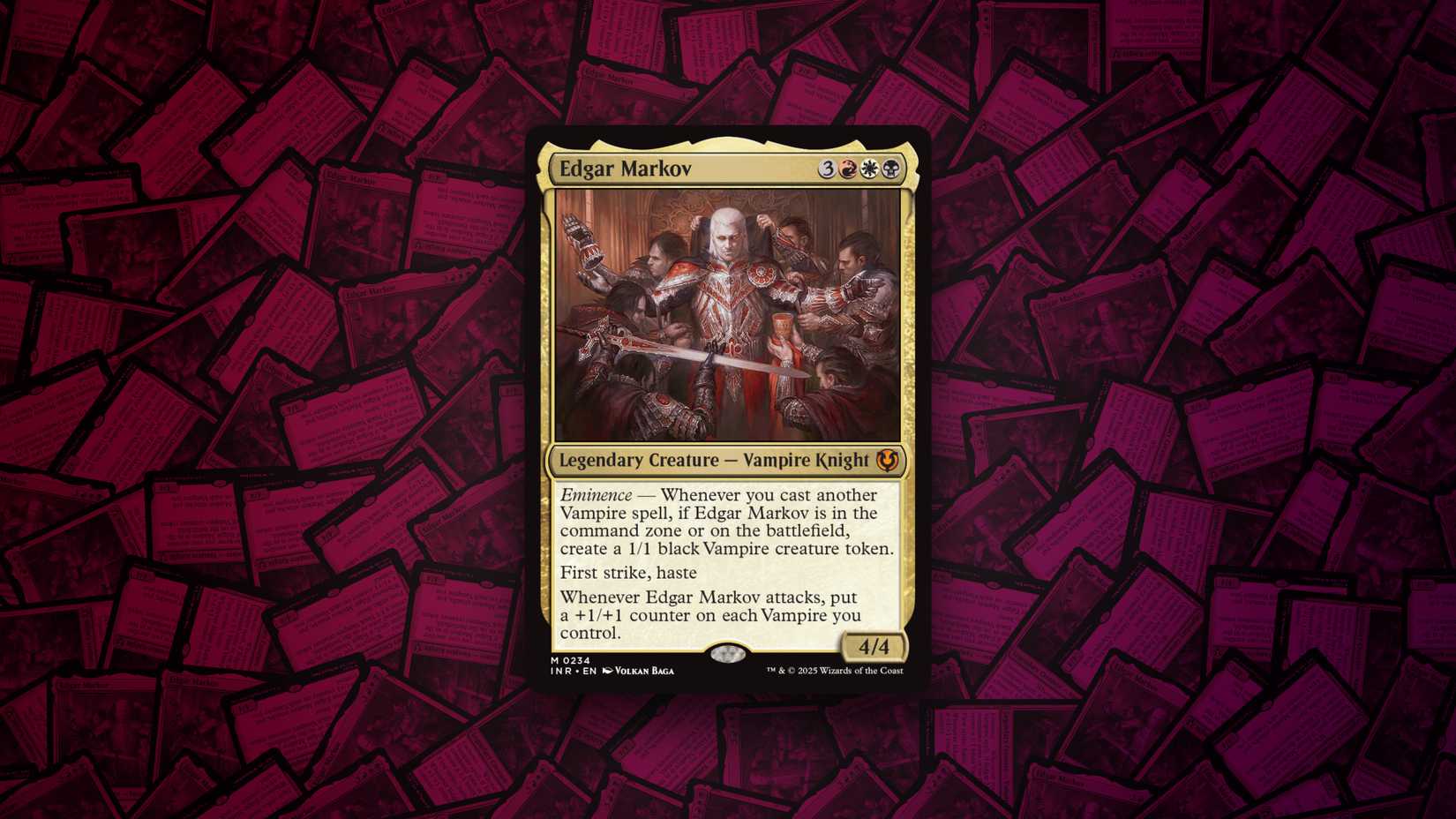 Image: Wizards of the Coast
In a 2020 episode of principal designer Gavin Verhey’s YouTube channel, Good Morning Magic, Verhey explains that, while working on the Vampiric Bloodlust deck for Commander 2017, he asked Kelly Digges on Magic’s creative team who should be its Commander. Digges suggested Edgar. The fit was obvious. If the whole deck was about getting a bunch of vampires onto the battlefield, who better to lead it than the man who’d sired so many of them in the first place?
The design team initially called the ability that became Eminence “Coach” during playtesting (because a coach helps from the sidelines). An early Edgar was a six-mana 5/5 with an activated ability that cost three more mana to put a +1/+1 counter on each vampire that had attacked that turn. At another point he was a five-mana 4/3. The final Edgar landed at six mana for a 4/4 with first strike and haste. Now, all he has to do is attack to give every vampire you control a +1/+1 counter. That’s a tremendous payoff for a vampire deck, but Edgar goes even further.
 Image: Wizards of the Coast
Edgar Markov’s Eminence ability is where he gets truly game-breaking. Whenever you cast another vampire spell, Edgar creates a 1/1 black vampire token as long as he’s in the Command Zone or on the battlefield. Even if that spell is countered, the casting trigger still creates the token. After a board wipe, your next vampire spell can get the army going again. And because Eminence is active even while Edgar is in the Command Zone, he cannot be targeted by any spell until you cast him. It’s a perfectly feasible strategy to never actually play Edgar for that very reason. But because his Eminence ability is available from the Command Zone and can be difficult to interact with, that’s not exactly fair or fun to play against.
Wizards had already tested a version of this with Oloro, Ageless Ascetic in Commander 2013. Oloro could sit in the Command Zone and give you two life every turn. Oloro’s ability buys you time, and with the right lifegain combos, it can be very powerful. Edgar’s tokens do the opposite. Every extra vampire can attack, grow with counters, or even get sacrificed for some other benefit. The cheaper they are, the better. It’s positively overwhelming to the point that years after Edgar Markov’s creation, Verhey himself called Eminence a “design mistake” in an interview with Magic content creator Ben Bateman.
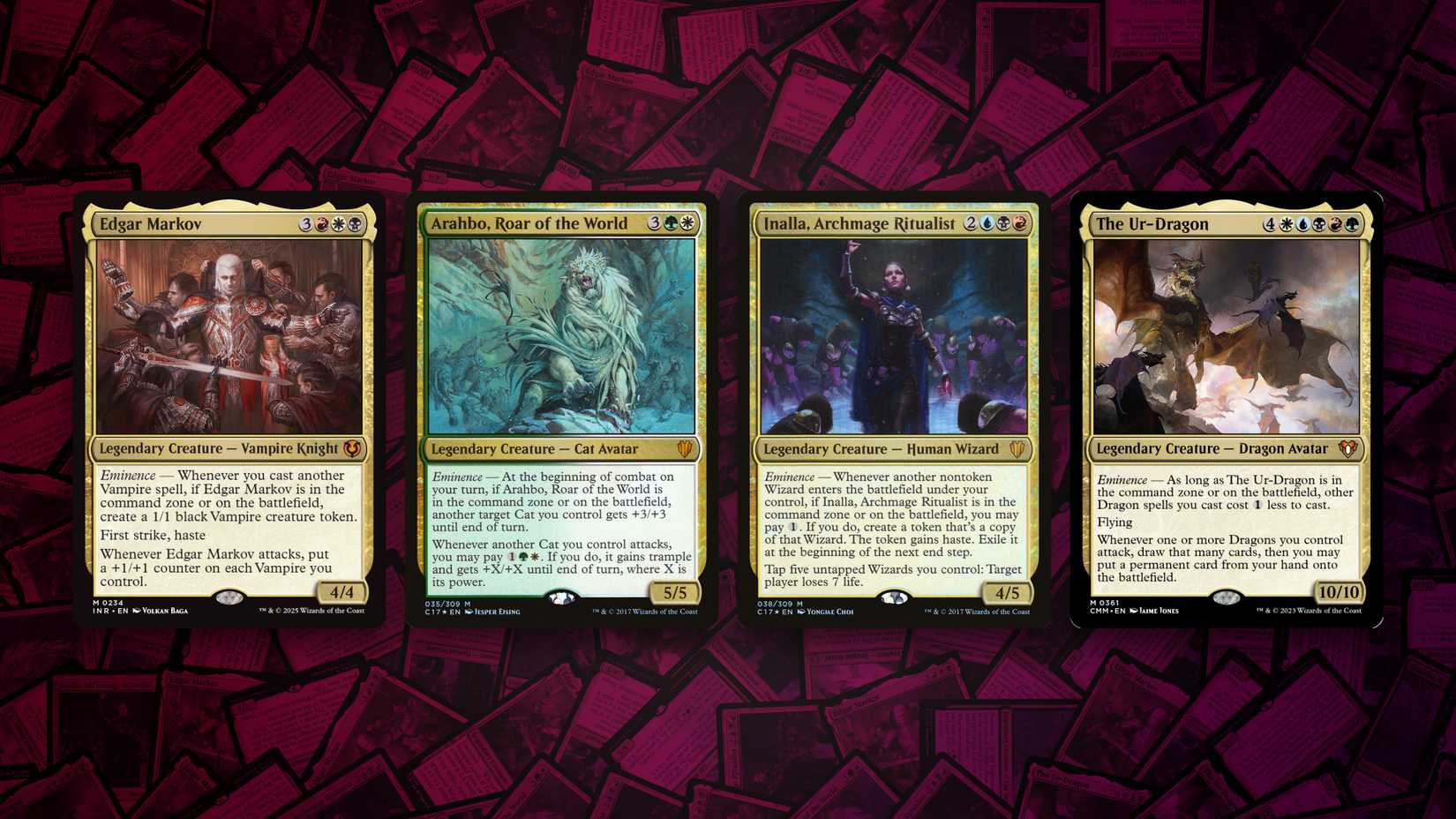 Image: Wizards of the Coast
As Verhey himself explained in a TikTok video from June of this year, not all Eminence abilities are created equal. Commander 2017 included three other precons, each with an Eminence Commander focused on creature types. There’s the cat-focused Arahbo, Roar of the World; the wizard-focused Inalla, Archmage Ritualist; and The Ur-Dragon, who is the progenitor of all dragons in the multiverse. Verhey specifically pointed out that a lot of people complain about Edgar — but nobody complains about Arahbo.
From a design standpoint, that’s because Edgar generates value in the form of more vampires. The others don’t generate additional creatures in the same way. Arahbo requires that you already have a cat on the battlefield that it buffs for a single turn. Inalla allows you to pay one mana to copy a nontoken wizard you play, but those copies get exiled at the end of your turn. The Ur-Dragon, also the third-most popular Commander on EDHREC, boasts all five colors and reduces the cost of other Dragon spells from the Command Zone. As Verhey implies in that same video, it’s basically impossible to design a dragon Commander that’s better than The Ur-Dragon.
 Image: Wizards of the Coast
Edgar Markov’s Eminence ability might be broken, but Eminence itself isn’t gone from Wizards of the Coast’s design toolkit. The Reality Fracture Commander precon includes The Ur-Sphinx, which simply discounts all sphinx spells by one mana (a cheeky reference to The Ur-Dragon).
One of my opponents when I participated in a Mystery Booster Commander Edition draft event at MagicCon: Atlanta was also running Sahir, Visitor in Darkness. This new card features an Eminence ability that pings its controller for one damage each turn, but when he’s in play, his second ability gives him a +1/+1 counter every time you self-inflict one point of damage. If that happens a second time on any given turn, you draw a card. That makes his Eminence ability a weakness, but if you can counterbalance that with some lifegain effects and manipulate more pings, you’ve got a consistent draw engine.
Early leaks for the upcoming Nauctis: The Sunken Realm have also teased The Ignoble Serpent from a Commander precon that dabbles in an Eminence-esque ability, milling four cards on your first turn. This turns Eminence into a one-time ability to start the game, rather than something that's always on and impossible to interact with. Once The Ignoble Serpent hits the board, it’s a 7/9 that costs eight mana and returns a sea monster from your graveyard to the battlefield on your end step.
The trick when it comes to Eminence, then, is to ensure that these abilities have some kind of drawback so that they’re not as overpowered as they are with Edgar Markov, while still feeding into some kind of core strategy.
Still, nothing beats the elegant simplicity of hitting your opponents with a massive vampire storm while your vampire lord coaches them from the sidelines.






 English (US) ·