
 3 weeks ago
32
3 weeks ago
32
The zesty, ebullient actor Louise Lasser, who has died aged 87, played a harried Ohio housewife dealing with extreme events (drug addiction, mass murder, drowning-by-soup) in Mary Hartman, Mary Hartman, an innovative satirical sitcom that doubled as a spoof of daytime soap operas.
Like the target of its mockery, the show aired five times a week in the US, so that its modest two-season run, between 1976 and 1977, produced a staggering 325 episodes. (UK audiences were treated to a measly nine of them in 1980; a 38-disc DVD box set was released in 2013.)
That role made Lasser a household name in the US. She was known more widely elsewhere as a fixture of several early, goofy films by Woody Allen, to whom she was married for four years. He called her “charming, smart as a whip, quick, very funny and witty”.
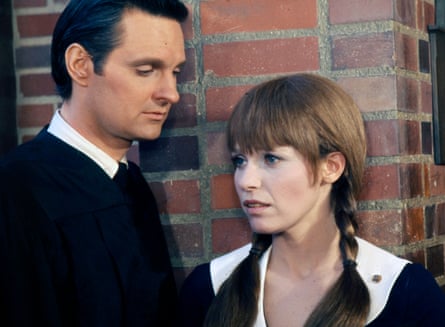
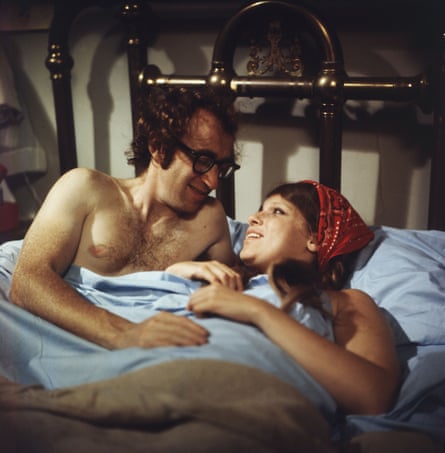
She is seen briefly as a giddy interviewee in a vox pop scene in Take the Money and Run (1969), his mockumentary about a hare-brained bank robber. In Bananas (1971), she played Nancy, the sweetly earnest social activist who inspires Allen’s character to join the revolution in a fictional Latin American country. A sex scene between them is staged like a sporting event, complete with breathless commentary from the real-life sports broadcaster Howard Cosell.
An attempted break-up conversation becomes amusingly circuitous when Nancy struggles to articulate exactly why she wants to end the relationship: “Maybe if you could guess a few things …?” Lasser’s vague dottiness is the ideal foil for Allen’s neurotic bluster.
Photograph: Walt Disney Television Photo Archives/Disney General Entertainment Content/Getty Images
She made a notable contribution to Everything You Always Wanted to Know About Sex* (*But Were Afraid to Ask) (1972), which comprises seven irreverent sketches inspired by the popular sex manual of the same name. Lasser appeared as a woman who can only climax in public; the vignette, entitled “Why Do Some Women Have Trouble Reaching an Orgasm?”, was a parody of chic Italian arthouse cinema.
Allen had considered dropping the sequence at script stage. She argued for keeping it, and pointed out that it would be more effective played “with rich modern Italians” than in the rough-and-ready neorealist style he had envisaged. “I hear footsteps in a large corridor and I see Ferraris and that kind of thing,” she said. Allen recalled resisting at first: “Then all of a sudden the name Antonioni started flashing and I said, ‘Yes’.” The pair delivered their dialogue in phonetic Italian, with English subtitles running beneath them.
Another sketch, in which Lasser played a black widow spider waiting at the centre of her web to consume her mate (Allen) after sex, was shot at some expense but scrapped when a satisfactory payoff proved elusive.
She was born in New York City, to Paula (nee Cohen), an interior decorator, and Sol Lasser, an accountant and author who wrote a successful series of guides to income tax. Her background was one of wealth and privilege. “While I was growing up on linoleum eating Del Monte string beans out of a can,” wrote Allen, “she was knocking off escargot on Fifth Avenue.”
She was educated at Fieldston, a private school, and at Brandeis University in Waltham, Massachusetts, where she studied political science until depression forced her to drop out. Encouraged by her experience of performing in friends’ shows while at Brandeis, she took acting classes with Sanford Meisner and found work in commercials and on stage.
She and Allen met in 1958, when he was still with his first wife, Harlene Rosen. They began a relationship in 1960 and were married six years later. Both their careers were gathering momentum. Allen, then a standup, credited Lasser’s “instinct and faith” with encouraging him to submit humorous pieces to the New Yorker magazine, where he became a regular contributor.
Meanwhile, Lasser understudied Barbra Streisand in the original 1962 Broadway production of the musical I Can Get It for You Wholesale. “Streisand was electric,” she said. “She stopped the show, and then when I did it no one knew when a song was over.” In 1967, she starred with Don Ameche in Henry, Sweet Henry, a short-lived Broadway musical version of the Peter Sellers comedy The World of Henry Orient.
On screen, she appeared with Alan Alda in The Laughmakers (1962), Allen’s sitcom pilot about an improv group. She had a cameo as a massage therapist rubbing Sellers’s back in What’s New Pussycat? (1965), which Allen wrote and starred in. She was one of eight credited writers and part of the voice cast on What’s Up, Tiger Lily? (1966), his comic redubbing of a Japanese spy thriller.
They divorced in 1970 but remained friends. She had an uncredited cameo as a chaotic secretary in his comedy-drama Stardust Memories (1980).
The punishing workload and hectic schedule of Mary Hartman, Mary Hartman left Lasser exhausted; the producers took up her suggestion that Mary should suffer a nervous breakdown. “This was equivalent to America’s nervous breakdown that we were all starting to go through,” she said in 2013. “I thought she was like a survivor that lived in a world that might not be worth surviving in, you know?” The show’s humour, she said, “came from a great angst inside”.
After quitting the sitcom, she wrote and starred in a TV movie, the road-trip comedy Just Me and You (1978), with Charles Grodin. She had guest spots in TV series including Taxi (1980-82) and St Elsewhere (1984), and in films such as Crimewave (1985), co-written by the Coen brothers, and the exploitation horror Frankenhooker (1990).
She was in Todd Solondz’s taboo-busting black comedy Happiness (1998) and Darren Aronofsky’s gruelling addiction drama Requiem for a Dream (2000). She played a suicidal artist in three episodes of Lena Dunham’s hit HBO series Girls (2014-15). Dunham had tracked down the elusive actor by asking Twitter users for her whereabouts.
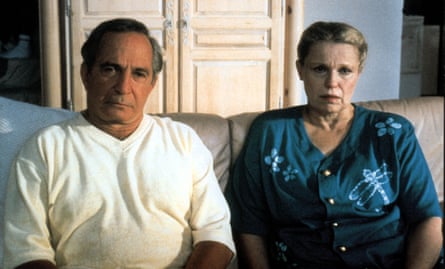
The faltering progress of Lasser’s career can be blamed partly on some daunting personal traumas. In 1964, her mother took her own life (Lasser had prevented one of her earlier suicide attempts). Her father later died the same way.
Lasser’s own mental health was fragile at best. She suffered nervous breakdowns as well as extended periods of poor physical health. In his 2020 memoir Apropos of Nothing, Allen wonders “just how huge a star she could have been if she’d never had to fight an uphill battle all the way”.
Her struggles, including an arrest for cocaine possession, were alluded to in parts of Mary Hartman, Mary Hartman and in a 1976 appearance on Saturday Night Live. Her relationship with her mother was also said to have inspired the fraught family dynamic in Allen’s solemn chamber-piece Interiors (1978).
Though she was evidently unwell in her final screen appearance in Funny Pages (2022), in which she is glimpsed as a volatile, rheumy-eyed customer demanding Percocet in a pharmacy, Lasser’s eccentric comic force and precision timing remained miraculously undimmed.
She is survived by her partner, Michael Citriniti.







 English (US) ·