


Published Jun 7, 2026, 6:01 PM EDT
Faith Roswell is a Senior Writer on Screen Rant's Classic TV team. Since earning her degree in Creative Writing over a decade ago, Faith has written articles on film and TV from a variety of different angles. Faith now combines her knowledge of psychology with her love of monster movies to give more insight into what makes the best ones.
You may have read her Screen Rant lists and features covering horror, sci-fi, and fantasy, or read her Amazon Top 10 book, "Movie Monsters of the Deep."
Faith has had an extensive career as a writer, appearing on BBC live radio, researching true crime for Rotten Mango podcast, and writing for publications including Mental Floss, Atlas Obscura, and The Daily Jaws before beginning here at Screen Rant.
Sign in to your ScreenRant account
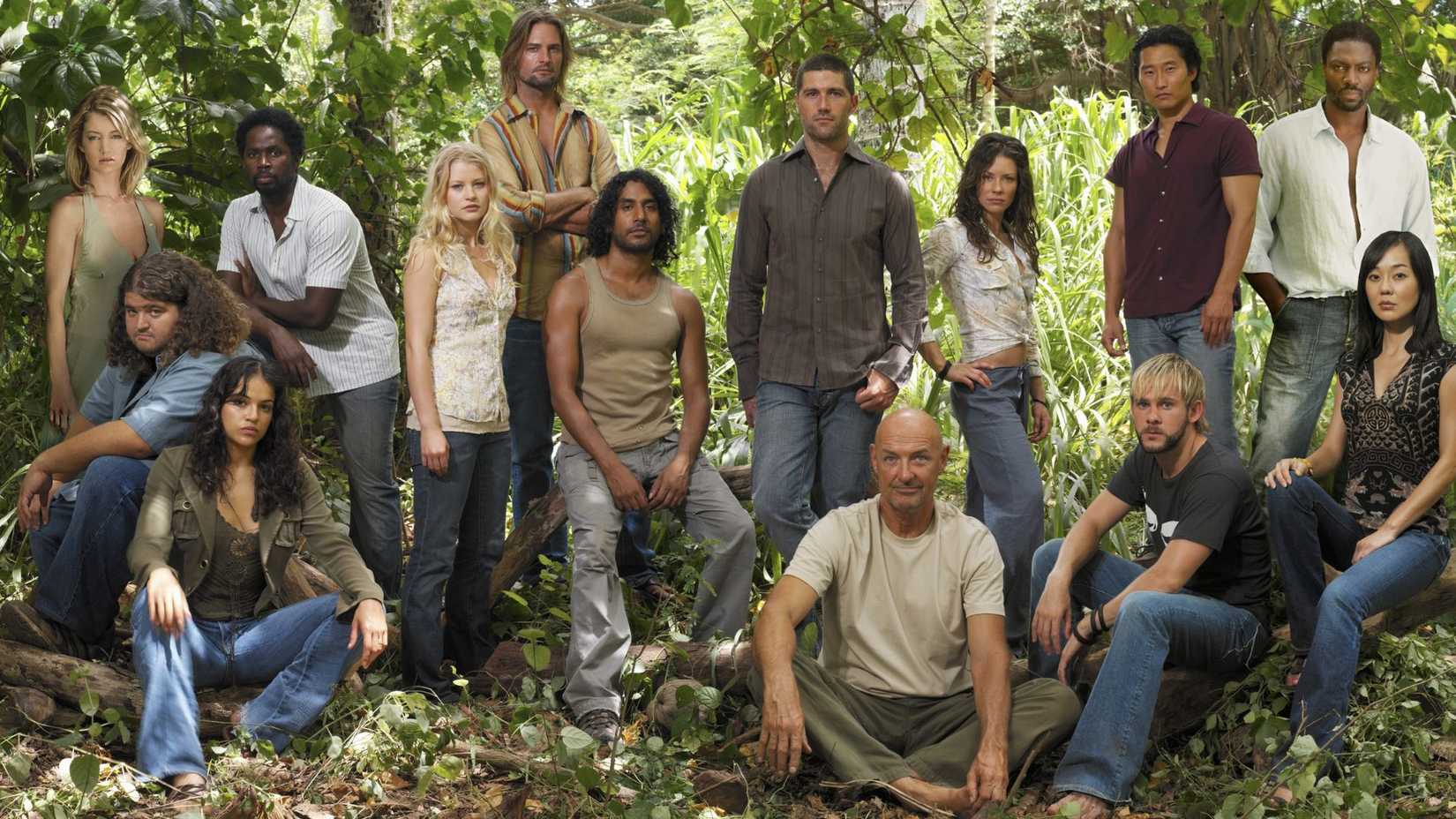
The last 25 years have given us many mindbending TV shows that are uniquely complex, but Lost is generally the one that immediately comes to mind. The series changed the TV industry for good, encouraging fan theories and forums that speculated on what was going on, with each episode uncovering another layer of the mystery while also adding more. Just when viewers thought that they had got to grips with Lost's many wild twists, the series introduced time travel. This began with a consciousness-based projection in season 4, before shifting to full physical time travel in season 5.
Still, while Lost might rank among one of the best TV series that involve time travel, it does not play as great a role in the series as might be expected. This, combined with the tangled plotlines and layered mysteries, sometimes makes it easy to forget that Lost includes time travel at all. That said, Lost is not the only notoriously complicated show that sci-fi fans will love, as Syfy has a four-part series with completely different time travel rules that will make Lost feel small by comparison.
12 Monkeys is loosely based on Terry Gilliam's 1995 masterpiece of the same name. The show follows James Cole, who is sent back in time to prevent a world-ending plague that is set to decimate life on Earth. He enlists the help of the virologist Dr. Cassandra Railly, and they discover that not only the virus is engineered, but they are up against a terrifying force. This is the Army of the 12 Monkeys, whose aim is to destroy time itself, bringing about a state known as The Red Forest, which will hold them indefinitely in a place without death.
12 Monkeys Vs. Lost: How Each Show's Time Travel Is Different
 via MovieStillsDB
Both Lost and 12 Monkeys involve elaborate plot threads that center on time travel and the nature of the past, especially creating paradoxes by trying to change past events. In Lost, the attempt to stop the plane from crashing ensures that it will, while in 12 Monkeys, Cole demonstrated that time cannot be changed by scratching Frost's watch in the past, with the effects showing in the future. However, while the two shows employ similar storylines and theories surrounding time travel, the mechanics of it work differently.
12 Monkeys treats time travel as a science, with the characters essentially teleporting to the past using complex machines that "splinter" their bodies' molecular structure, projecting these fragments into the past or future. On the other hand, Lost's mysterious island is the key to time travel. The island carries enormous reserves of electromagnetic energy, which causes characters to skip uncontrolably through time in flashes forward or back, with alternate realities producing a flash-sideways too. Some characters' bodies remain in one place while their minds travel, while others move through space and time physically.
Time Travel Is A Relatively Small Part Of Lost's Mythology
Unlike other TV shows that either present time travel as overly simple or a tangled web of possibilites and paradoxes, 12 Monkeys masters time travel by focusing on the cost of the characters' trips, rather than just the results. The show's four seasons explore what it means to life in a world in which reality itself can be altered, while fighting a faction that intent to eliminate reality entirely. This idea gives 12 Monkeys a much more ambitious concept than Lost, which is an impressive achievement given Lost's reputation and enduring popularity as a sci-fi TV masterpiece.
That said, the fact that a concept as mindbending as time travel is a still a minor part of the show's mythology is a testament to Lost's creativity. The show leans more into the fantasy genre, with its central struggle being between the forces of good and evil, with some fans guessing early on that the series was set in purgatory. However, the island was mysterious enough that it acted as a character in its own right, and the ending's final reveal still offered a few surprises.
|
Title |
Year |
Seasons |
Rotten Tomatoes critics rating |
Rotten Tomatoes audience rating |
|
Lost |
2004 |
6 |
86% |
89% |
|
12 Monkeys |
2015 |
4 |
88% |
78% |
Despite both series featuring time travel, Lost and 12 Monkeys actually represent opposite concepts. While both have satisfying endings, Lost's final scenes are introspective, with the main characters looking back at their time and understanding how far they have come, while 12 Monkeys erases Cole's memory, allowing him to begin a new life looking forward, rather than back.

Release Date 2015 - 2018
Directors David Grossman, David Greene, Grant Harvey, Joe Menendez, Magnus Martens, Michael Waxman, Steven A. Adelson, Mairzee Almas, Alex Zakrzewski, Bill Eagles, David Boyd, Dennie Gordon, Guy Norman Bee, Jeffrey Reiner, John Badham, Kat Candler, Mark Tonderai, Sheree Folkson, T.J. Scott, Kevin Tancharoen
Writers Sean Tretta, Richard Robbins, Christopher Monfette, Oliver Grigsby, Natalie Chaidez, Ian Sobel, Rebecca Kirsch, Michael Sussman, Matt Morgan
-

Aaron Stanford
James Cole
-

Amanda Schull
Cassandra Railly







 English (US) ·