
 3 hours ago
2
3 hours ago
2
Is there room for a new full-frame 35mm film camera? When the Pentax 17 half-frame camera came out, it represented a serious risk to see if beginner photographers would be willing to buy a new camera. When you consider the saturated used camera market with all of the options that are still available, it’s hard to imagine much demand for a camera that will cost substantially more.
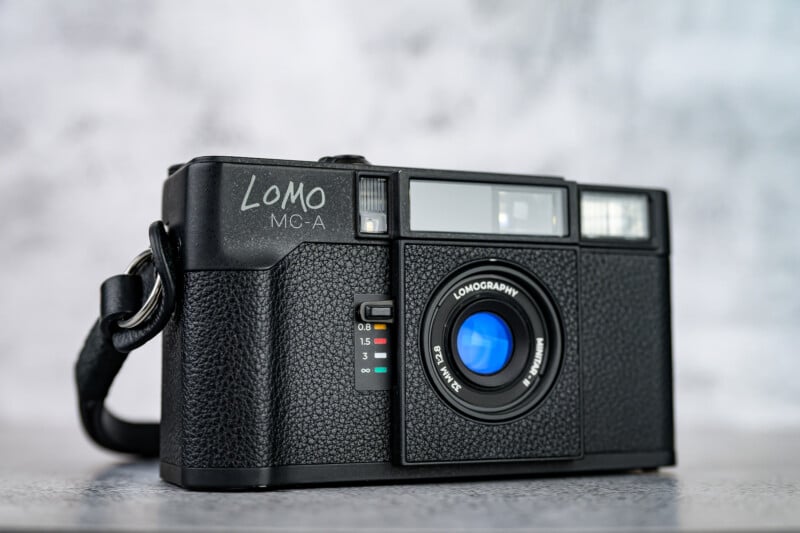 The light meter and autofocusing systems are all placed above the lens.
I think the only way to really make this proposition work is to create a product that is easy to use, has a novel design, and has a fun tactile experience to go with it. The Pentax 17 tried to achieve this and did find a small following. The Mint Rollei 35AF also achieved this, albeit at a much higher cost. Now Lomography seeks to also grab some of this market with its $549 Lomo MC-A.
 The MC-A provides a fun tactile experience, while also offering robust creative controls.
Lomo MC-A Review: How It Feels
The MC-A is not even close to the first attempt at a film camera by the Lomography brand. Lomo has made multiple instant film bodies over the years, and I remember selling the old Lomo LC-A back at The Camera Store, which was a cute and far more cost-effective 35mm film camera. However, I believe a camera really needs to bring manual control along with modern convenience, and I think the MC-A may have struck that perfect balance.
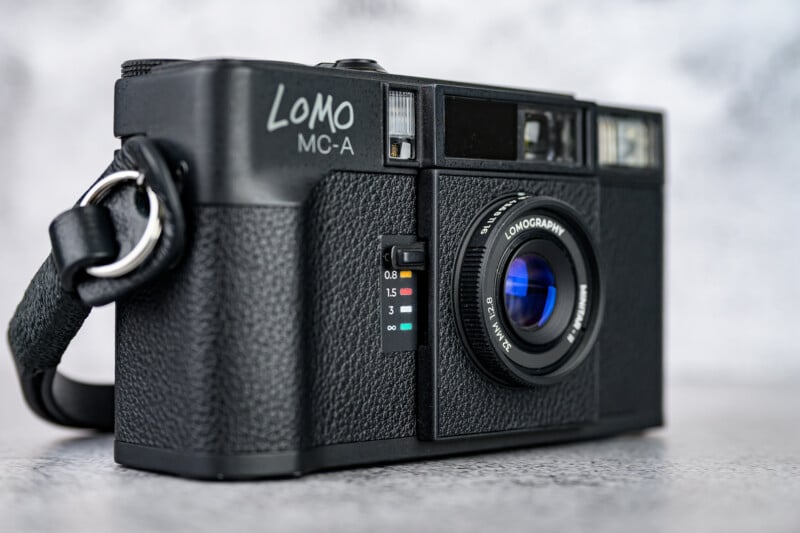 The Lomo MC-A is stylish and well-built, especially compared to earlier versions.
The boxy body is easy to pocket but also provides enough camera to hold on to. There is a slight lip at the front of the camera to grip and the whole thing only weighs 11.7 ounces (323 grams). There is no thumb rest on the back but you do get a very cool thumb winder, which delivers the fun tactile experience that I was hoping for.
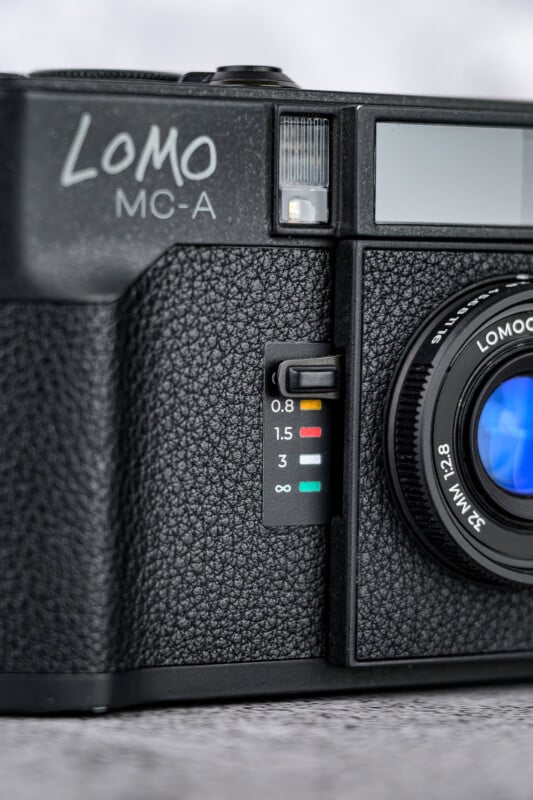 The boxy body shape does have a decent grip, and you can clearly see the focusing zones.
There is a basic optical viewfinder which provides the frame lines to match the lens. There is a pretty basic parallax adjustment for shooting up close to subjects; however, at the closest focusing distance, the frame is more of a guess than a certainty. You also have a small circle in the center of the frame, which indicates roughly where the camera will focus.
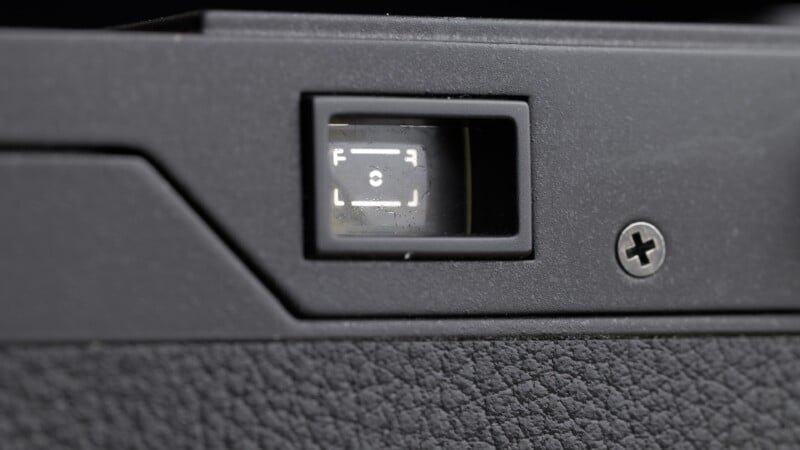 If you look carefully, you can see the slightly lower frame line option to use when shooting close up.
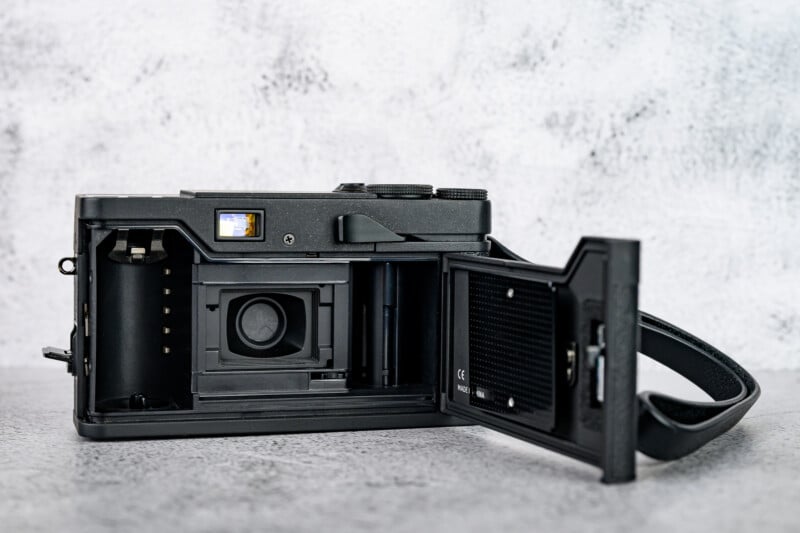 The loading gate is pretty standard, and you can see the basic viewfinder here.
On top of the camera, you will find the exposure compensation dial and shutter speed dial, the latter of which goes up to 1/500 second and down to 20 seconds in auto-metering mode. If you need longer exposures, there is a bulb setting on the camera. Rewinding the film is done with a push of the release button underneath the camera. I never found this button easy to accidentally push in, and the rewind lever is ruggedly built. However, I have to remember to wind the film counterclockwise, which always seems backwards to me.
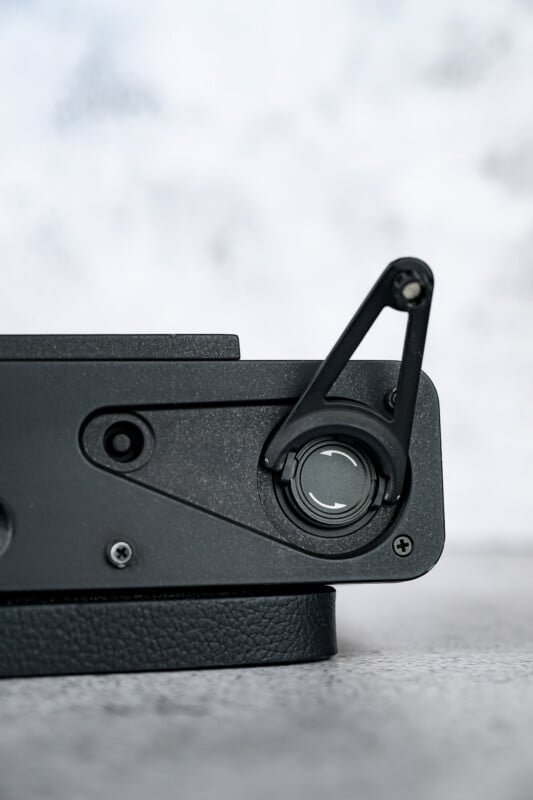 The rewind knob is located on the bottom of the camera, but remember to go counterclockwise.
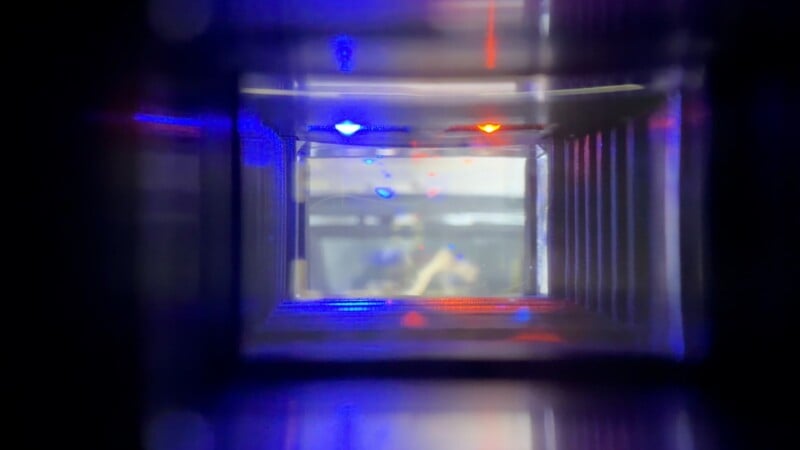 There is a series of lights to inform you when autofocus is confirmed and if exposure is usable.
The on/off switch has both an autofocusing position and a manual focus setting, which works by locking in a specific zone. Over five different settings, the MC-A can go from a minimum of 40cm to infinity. There is also a little button labelled MX; pushing this will allow for multiple exposures to be taken over the same image.
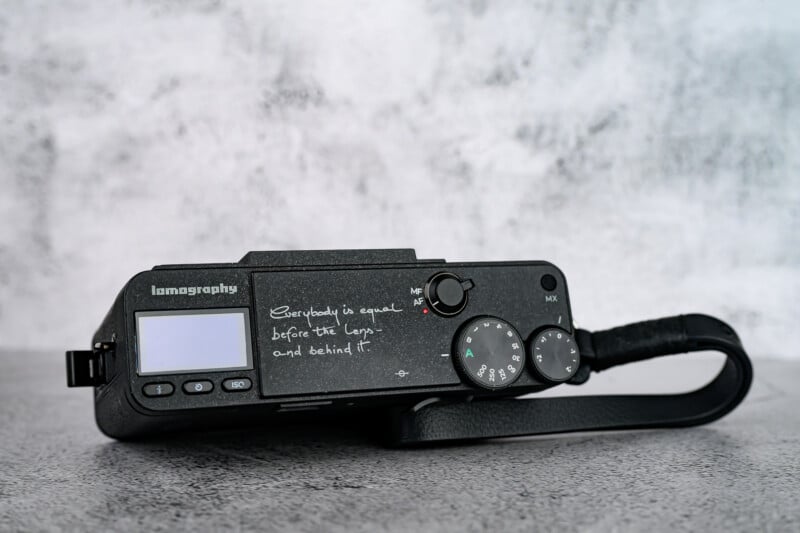 The top of the camera has a nice LCD panel to provide pertinent info. You also get full manual control on the MC-A.
The power supply is either a disposable CR2 lithium battery or, in some regions like North America, you get an adorable rechargeable CR2 battery with its own USB-C plug included with the camera. I really liked the convenience of having this rechargeable version, and it saves you money over the long run, too.
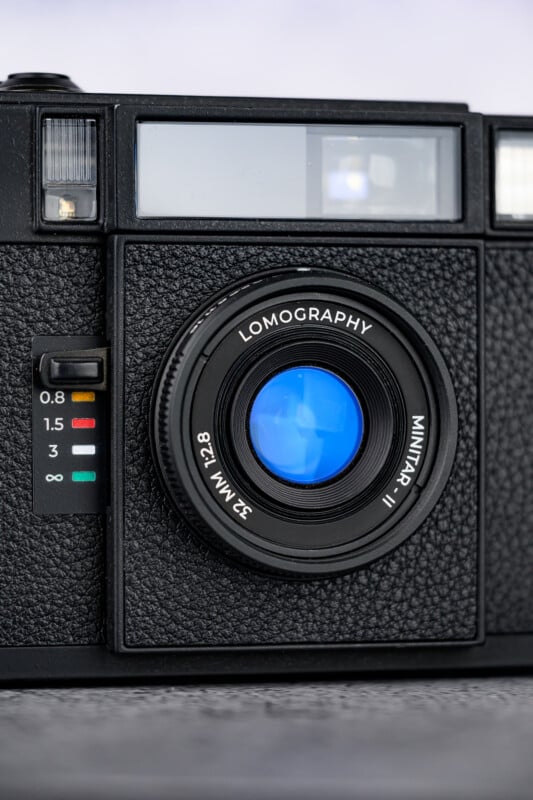 The lens is a pretty standard 32mm f/2.8 affair.
There is also a nice LCD panel that provides all the information about your camera setup. It will inform you about your current exposure frame, flash status, and battery life. You can also change your flash settings, ISO, and self-timer functions with the buttons directly below. Load some film, wind it on to the first exposure, and away you go.
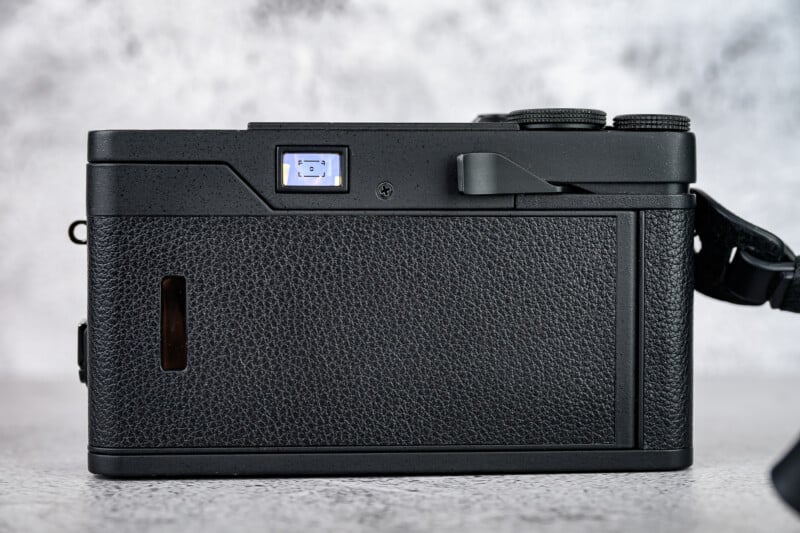 Having a thumb winder is tons of fun, and it feels solid enough. You have to wind patiently, though.
Lomo MC-A Review: How It Shoots
Unlike the LC-A, the MC-A has an autofocusing system and accomplishes this task quite quickly. It has an obnoxiously noisy motor, but even this sound brings back a wave of nostalgia. The camera will generally focus on what’s central and closest and you don’t always get ideal focus with subjects at multiple distances. Flicking to manual focus and taking your time can be more accurate in some situations.
 The Lomo MC-A is compact enough to travel around the city with.


There is an aperture ring right on the lens that goes from f/2.8 to f/16 in full-stop increments. You also have a fully auto program setting, and you can also go full manual when desired. The MC-A will give you a blue LED when the autofocus has acquired the subject, and you will also get an amber warning light when the exposure might have issues with slow shutter speeds or an inability to work within the desired exposure controls.
 Winding too quickly, too soon, caused some overlapping frames.


In manual exposure mode, the LCD on top of the camera will indicate if the exposure needs to go up or down, or if proper exposure has been achieved. Unfortunately, there is nothing in the viewfinder that indicates what shutter speed the camera might be choosing, although it does indicate this well on the top LCD panel. I often found myself trying to hold the camera towards a subject to get the exposure and then carefully lifting my eye to see what the chosen shutter speed was. This was a fairly awkward process, but I understand that placing a shutter speed display in the viewfinder is a complicated proposition.
 New Mexico was a beautiful place to shoot and the MC-A handled exposure quite well.


I found the lens to shoot fairly sharp images at f/2.8, but there is some noticeable vignetting in the corners. Stopping down the lens helps a bit with detail and contrast, but I enjoyed the overall vibe of the images with this lens. Flare can be a bit of an issue, and the lens tends to exhibit a fair amount of ghosting. A lens hood would help, but the front filter threads are 30.5mm across, and usable hoods at this size are hard to find.
 The 32mm lens has some optical issues but it suits the camera well.


The flash system is a proper Xenon-bulb light with all the stark deer-in-the-headlights look that is so popular right now. It will automatically adjust exposure but don’t expect it to light up a subject and the background too. You are provided a little set of color gels that slide in front of the flash and change the tone of the shots dramatically. I was also happy to see a classic PC sync port and hooked the MC-A up to studio flashes. For a basic point and shoot film camera, the MC-A offers a lot of creative room to grow.
The Lomo MC-A Is Fun and Capable
There are plenty of brand new, ultra-basic analog cameras available on the market. As affordable as these cameras might be, they aren’t built to last and have zero room to grow. The Lomo MC-A, on the other hand, offers manual control, flash compatibility, and full autofocusing without breaking the bank. At $549, the Lomo MC-A punches well above its weight and also looks stylish, too.
 You can insert tiny gel frames into the flash to change the color.
Are There Alternatives?
The Mint Rollei 35 AF is probably the closest new competitor to the Lomo. It is incredibly stylish and functional, but also has its own handling quirks and does not feel as solidly built. It is quite a bit more expensive too.
Should You buy It?
Yes. The Lomo MC-A provides a capable and stylish analog experience without breaking the bank. It brings a more capable level of analog photography to the masses.







 English (US) ·