
Sennheiser Momentum 5: two-minute review
The Sennheiser Momentum 5 are noise-cancelling headphones with lossless connectivity, spatial audio, and a promised battery life of 57 hours of battery life per charge with ANC engaged. They also offer heaps of sound personalization features, a smooth sliding scale between 100% noise cancelling and 100% transparent and customizable Sound Zones that allow you to automatically apply sound profiles and ANC settings when you enter predefined locations.
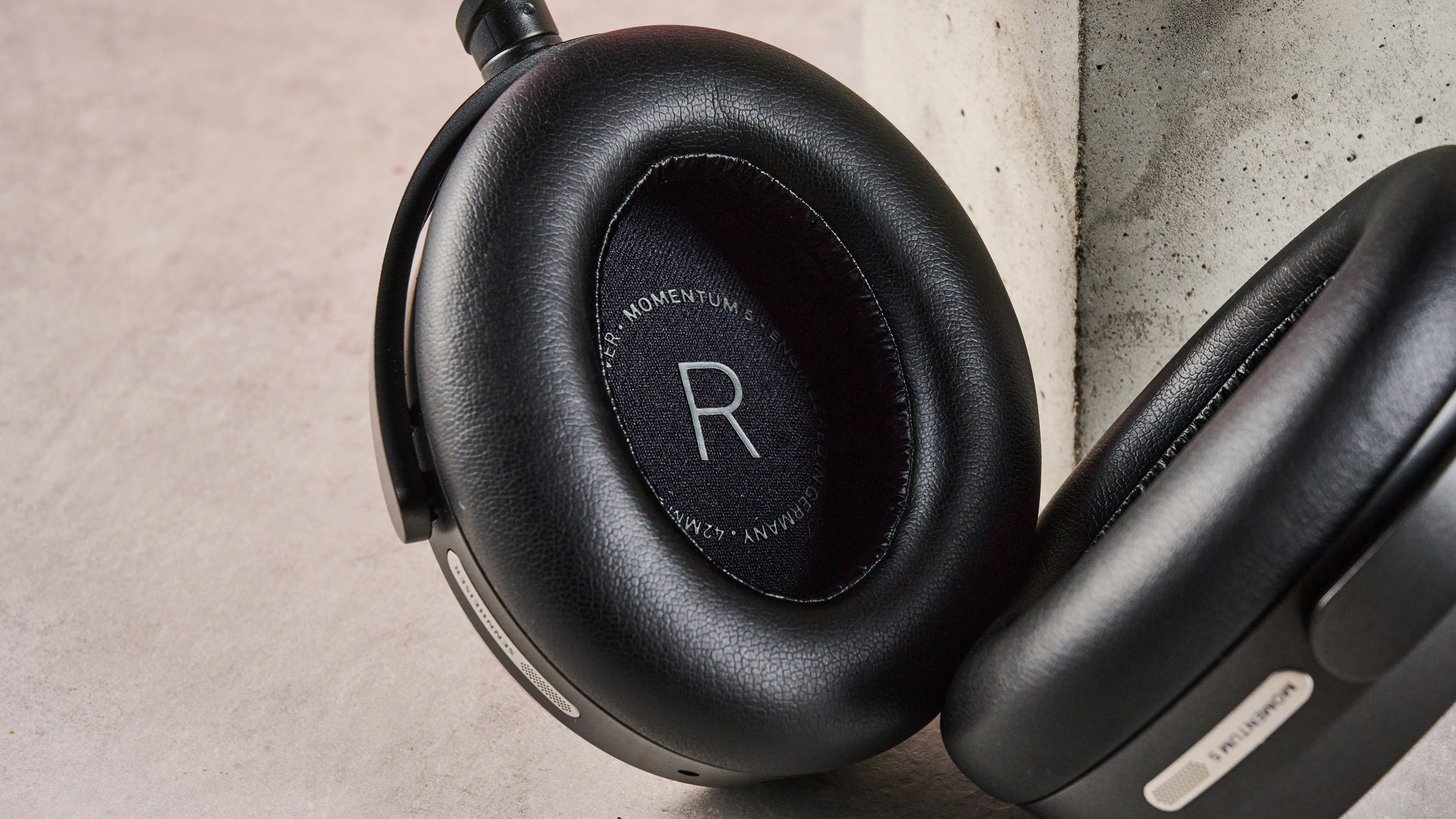
The Sennheiser Momentum 5’s look is clean overall, even if it’s not that adventurous a design, with a build mostly fashioned from plastic with metal highlights. The cushioned headband and faux leather ear cups do feel super comfortable, although I did find the slight ridge inside the cup made my ear to ache during long listening sessions. Otherwise though, they fit well and feel solidly built.
I’ve got to be honest though: when it comes to performance, I found the Sennheiser Momentum 5’s sound out of the box to be on the disappointing side, compared to the best headphones out there. Bass feels decent enough — I dropped Listen by Pola & Bryson & goddard. and not only did that distorted, snarling bass sound substantial, but the synths felt well rounded and there’s some good sub there, especially if you slip the headphones Bass Boost on.
Latest Videos From

However, when it comes to higher frequencies, the Momentum 5 too often felt like they were pulling punches. Rosewood by Bonobo sounded unusually muffled in the higher mids, with the usually punchy percussion and hats sounding really inert to me. Meanwhile, treble is similarly milquetoast, with the rhythmic static loops of The Gloaming by Radiohead lacking the crispness I’d expect and feeling unnecessarily rolled off.
Fortunately, this is something you can fix, thanks to the Momentum 5’s powerful EQ tools. There are eight EQ presets to choose from, including everything from Rock to Hip-Hop, but I found I was able to get far better results out of whipping up my own tunings.
Both Sound Check presets and Sound Personalization started the same way, allowing me to pick my favorite tweak by listening to three alternative tunings five times. Where they diverge is how you tweak the resultant profile, with the former letting you adjust it based on an eight-band EQ and the latter a matrix that lets you independently boost or duck bass and treble. With the latter I was able to get pretty great sound out of the Momentum 5, feeling warm in the low end while feeling crisp and dynamic in the high end — I just wish it didn’t require so much tweaking to get the Momentum 5 to sound their best.
On the plus side, the Momentum 5 offer an excellent soundstage. They give real breadth even to stereo mixes, with each instrument meticulously well positioned in the stereo field. And the headphones deftly handle Dolby Atmos — don’t get me wrong, some masters still feel a little hollow in this kind of spatial format, but Sennheiser’s cans do a fine job of situation each element in the space around you.
Speaking of being surrounded by sound, another area the Momentum 5 didn’t quite live up to my expectations was their noise cancelling. Now, not every set of headphones can quite live up to the Bose QuietComfort Ultra Headphones’ commotion-quashing capabilities but I found Sennheiser’s often struggled to fully hush everyday conversation or completely stifle traffic noise. Sadly, they can’t compete with much of the market on this front.
Elsewhere, though, the Momentum 5’s features are more impressive. Connectivity is strong — they’re Bluetooth 6 ready, with the standard due to to come to the headphones in a future update, and they offer aptX Lossless, which means those with compatible phones can effectively stream CD quality sound on the go. And Sennheiser's Sound Zones is also a fun feature, allowing you to set the Momentum 5 to switch to certain EQ and ANC profiles automatically based on your location.
One last thing that warrants a special mention is the Momentum 5's battery life. While the Sony WH-1000XM6 offer a decent 30 hours and the AirPods Max 2 offer a pretty disappointing 20 hours with ANC on, Sennheiser's headphones blow right past them, offering up to 57 hours. This was consistent with my testing, meaning you can absolutely rely on these cans to last you days and days without needing a top up.
All told, the Sennheiser Momentum 5 are a solid set of noise-cancelling headphones, with some impressive features, long-lasting battery and spacious high-quality sound. But they’re also frustrating, as without certain missteps like their unbalanced default tuning and weaker ANC, they could be something truly remarkable. As they stand, they’re a good pair of headphones for their price, particularly once you’ve tailored their sound to your taste, but they won’t topple the best noise-cancelling headphones out there.
Sennheiser Momentum 5 review: price and availability
- Launched June 16, 2026
- List price of $399.95 / £329 / AU$749
- Available in Black, White, and Denim
Launched on June 16, the Sennheiser Momentum 5 are available now. They’re available for a list price of $399.99 / £329 / AU$749 — that definitely puts them in the higher-end bracket, although they’re obviously nowhere near as premium as the $549 / £499 / AU$999 AirPods Max 2 or the $649 / £550 / AU$999.95 Sony 1000X The Collexion.
They come in three colorways: Black, White, and Denim. Before you get too worried about having to match that last one to your outfit, don’t: it’s really just a dark indigo hue. All three colorways look decent enough to me, although I definitely think Sennheiser could have given us a little more choice here — at least one stand-out option like mauve or mint might have just helped provide an option for those that like to stand out from the crowd.
Sennheiser Momentum 5 review: specs
Swipe to scroll horizontally
Drivers | 42mm dynamic driver |
Active noise cancellation | Yes (Hybrid Adaptive ANC) |
Battery life | 57 hours (ANC on) |
Weight | 290g |
Connectivity | Bluetooth 5.4 (Bluetooth 6 ready), USB-C |
Frequency response | 6Hz – 40kHz (Wireless/USB), 6Hz – 22kHz (Analog) |
Sennheiser Momentum 5 review: features
- aptX Lossless compatible — but no LDAC or ALAC
- Versatile EQ & sound personalization
- Sound zones
First off, let’s take a look at what they’ve got going on under the hood. The Momentum 5 are rocking the same 42mm transducers as their predecessor — that’s a considerable step up compared to something like the Sony WH-1000XM6’s 30mm dynamic drivers and even an improvement over the Bowers & Wilkins Px8 S2’s 40mm. Hopefully that should mean the Momentum 5 can muster up more substantial bass and a broader soundstage.
Connectivity is very strong on the Momentum 5 too, especially if you’re listening from an aptX compatible device. Not only do they currently run Bluetooth 5.4, they’re Bluetooth 6.0 ready, with it due to arrive by a future firmware update. It’s compatible with AptX Lossless, which gives you access to near CD-level quality playback — although sadly not ALAC or LDAC, which means you won’t be enjoying lossless audio on your Apple or Samsung device.
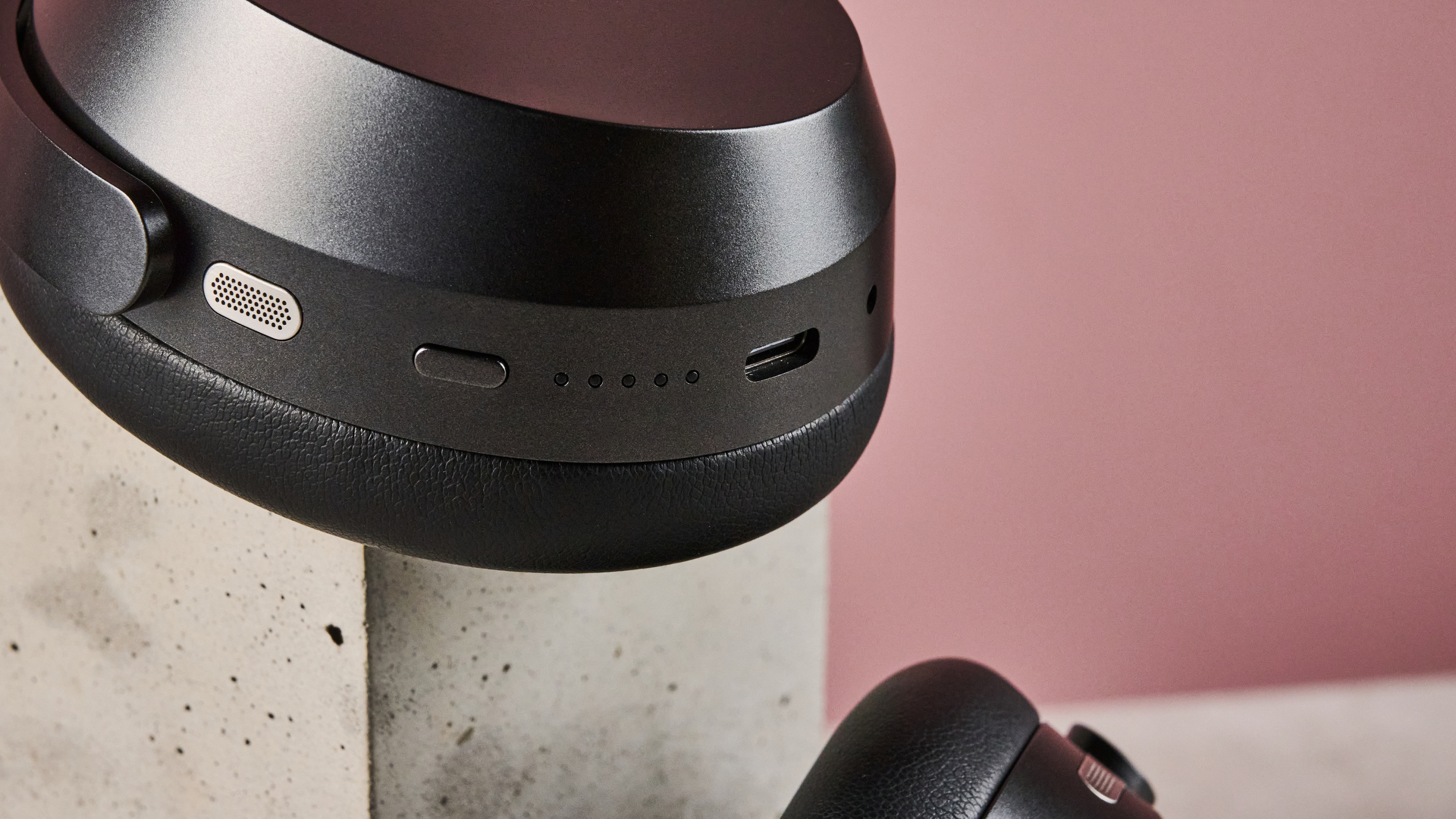
The Momentum 5’s touch controls are easy enough to use and feel pretty intuitive. A single tap to play / pause, swiping forward and back to skip forward and back, up and down to increase / decrease the volume, each control is intuitive and easy to activate… in fact, possibly too easy to activate. As can often be the case with headphones that rely on touch control, it’s really easy to trigger functions on the Momentum 5 when you’re adjusting them or removing them from your head and I’d often pick them up from my desk and realize I’d already set them playing.
The touch controls aren’t the only way to control the Momentum 5 though. Once you’ve paired them with your phone, Sennheiser’s SmartControlPlus app gives you more granular control over many of the headphones settings. As well as switching Dolby Atmos content on and off, you can also use it to tailor noise cancelling to your preferred level — it offers a smooth slider that allows you to gradually shift from 100% ANC to 100% transparency, as well as offering a toggle to turn on Anti-Wind mode in ANC.
You can use one of eight EQ presets from Dance to Jazz or you can create your own using its eight-band EQ. More unique though is Sennheiser’s Sound Check EQ presets: basically it allows you to pick which you prefer out of multiple different profiles like an eyetest for your ears. After you’ve selected your preferred option five times, it shows you the resultant preset. This feels like a really neat idea, allowing people who aren’t au fait with tweaking audio frequencies to still create their own custom sound.
But even more flexible in my eyes is Sennheiser’s Sound Personalization feature, which has been carried over from the Sennheiser Momentum 4. It runs you through the same setup as the Sound Check EQ but rather than presenting you with a range of EQ bands to adjust after, it instead presents you with a matrix that allows you to independently boost or reduce the bass and treble frequencies to polish your own preferred sound profile. That feels nicely intuitive and seems far easier to tweak on the fly than a standard graphic equalizer.
Lastly, the inclusion of customizable Sound Zones isn’t unique to Sennheiser’s cans — for example, being offered by the last few generations of Sony’s WH-1000 line — but it still feels like a pretty neat feature. Being able to automatically set noise-cancelling to maximum when I hit the office, switch up to a bassier sound profile when I hit the gym or increase the transparency when I’m out of the house saves a lot of effort. While it’s not necessarily trailblazing, it’s useful and really helps to make the Momentum 5 feel very fully featured.
Finally, the Momentum 5’s battery life is seriously impressive, with Sennheiser claiming they’ll last you up to 57 hours with ANC enabled. To test out its claims, I set the Momentum 5 to play music continuously with ANC on at 50% volume for six hours, during which time their battery dropped just 10%. As a back of the envelope calculation, that would put their total life at 60 hours — even though battery discharge curves are rarely linear, 57 hours seems very credible to me.
All in all, the Momentum 5 has a very strong feature set. Perhaps none of them are truly groundbreaking but when taken together, they make these cans feel very well appointed and ensure that you’re getting a great user experience.
- Features score: 4.5 / 5

Sennheiser Momentum 5 review: sound quality
- Disappointing default tuning, with weak treble
- Impressive soundstage and Dolby Atmos
- Ineffectual ANC
As an audiophile, I’ve been a loyal user of Sennheiser’s headphones for years. A good part of the reason for this is that the brand’s cans are known for having a reliably balanced frequency balance, meaning that whether I’m listening to music or producing it, I’ve come to trust that Sennheiser headphones will give me a largely accurate picture of how recordings should sound.
In light of this, I’m a little surprised at how uneven I find the neutral tuning of the Sennheiser Momentum 5. I know preferences vary and some like more bass or more treble, say, but for me this goes beyond simple differences in taste. The default sound here feels like it has some actual deficits, which I find odd from a brand of Sennheiser’s pedigree.
Let’s focus on the most positive stuff first. Bass is pretty creditable here: for example, when listening to No Skin by Frameworks & Mild Minds, I found that the Momentum 5 gave its sustained bassline some wonderful warmth and while there wasn’t quite as much sub as you’ll get from the most premium headphones, it still felt dynamic and punchy enough, especially with the Momentum 5’s bass booster on.
Higher up in the spectrum though, things feel more unbalanced. Playing You Can Call Me Al by Paul Simon, all of the elements are present and correct but feel slightly muffled — particularly the toms and the exuberant brass section feel slightly rolled off, with their upper-mid frequencies feeling like they’ve been sanded off. And this is even more noticeable in the treble range: in 236e jour by Marc Leclair: the bouncing, scrape-edged synths end up feeling far duller than they should, while the shuffling hats just lose a little of their cut through.
Now you can obviously go someway toward ameliorating this using EQ. While I found Go Your Own Way by Fleetwood Mac to be pretty dull in places on the neutral tuning, with the vocals in particular feeling totally enfeebled, I was able to cast around in the EQ settings to improve it. The Rock preset, if anything, made the problem worse, making the sound even more baggy and focused around the middle. But creating a Sound Check EQ profile, I was able to crisp up the high-end a little and reintroduce some of the presence it had lost.
By far the best results I achieved though was when using Sennheiser’s Sound Personalization algorithm. After running through the five steps, sound already felt a little more balanced — but it was during fine tuning that I was able to add a bit more warmth to the bass and a soupçon more brightness to the treble. The difference was like having my ears syringed: Outside (Parra for Cuva Remix) by Henry Green suddenly sounded like the sustained bassline was more resonant and satisfying, while the snare and hats punctured through the mix far better.
So the Sennheiser Momentum 5 can absolutely sound strong for their price, if you’re prepared to put the work in. But I do find it a little frustrating that they require you to spend so much time redressing sonic missteps in their engineered sound when other headphones in this price bracket like the Bowers & Wilkins Px7 S3 put their best foot forward with their default sound.
Once I’d found a sound profile I was happy with though, my experiences of the rest of the Sennheiser’s audio quality was far more positive.
For example, the audio feels very clear and expressive, even over lower quality connections. Even using the lossy AAC codec via Apple Music on my MacBook Pro and iPhone 16 Pro, the vocal, strings and piano of Wasting My Young Years by London Grammar shared the spotlight graciously, avoiding sounding over-compressed. But when listening to it using aptX Lossless via Tidal, it feels like there’s even more dynamic range, allowing far more space for that gorgeous vocal to rise up above the rest of the mix without smothering the rest of the instrumentation.
The Momentum 5 also have a really impressive soundstage, even compared to headphones like the Bowers & Wilkins Px7 S3 that are known for their agile handling of mixes. When I listened to Recomposed by Max Richter: Vivaldi, The Four Seasons: Spring 1 (2012) by Max Richter, Daniel Hope, Konzerthaus Kammerorchester Berlin & André de Ridder, the way the stirring, dancing strings are spread out across the stereo field is stunning. It genuinely does feel a lot like being sat right in front with the orchestra pit spread out in front of you.
And this extends to their handling of Dolby Atmos mixes. For example, Blue Monday (2023 Digital Master) by New Order sounds appropriately immersive, with its drum rolls scattering around you and its riser-style FX before the final drop swirling a full 180 degrees. All in all, its spatial audio effect is probably even more pronounced than that of the AirPods Max, although the latter doesn’t succumb to the one shortcoming of the Momentum 5’s Atmos: a slight void that opens up in front of you, a not uncommon effect on some headphones when elements from a stereo mix are spatialized.
So the Momentum 5 do still have some serious talents when it comes to making noise. However, it’s a shame that they’re not as talented at its antithesis: nixing background sound. Their ANC can just about cope with typing noise or reducing my boiling kettle while I’m streaming content while cooking. But riding the bus home from work a few days ago, I was subjected to every detail of a conversation about the sex lives of some of my fellow passengers’ colleagues. C’mon, Momentum 5: you’re supposed to protect me from things like this.
This isn’t an isolated event either: I can often overhear fellow TechRadarian’s conversations in the office, even with noise cancelling dialed up to 100%. Even the AirPods Max, not known for their unimpeachable noise cancelling, recently totally saved me at a festival by silencing the enormous Funktion-One rig I was camped 100 feet from, whereas the Momentum 5 struggle with conversations some 50dB quieter.
- Sound quality score: 3.5 / 5
Sennheiser Momentum 5 review: design
- Refined if unadventurous looks
- Super-flat profile
- Wearing for long sessions made my ears ache
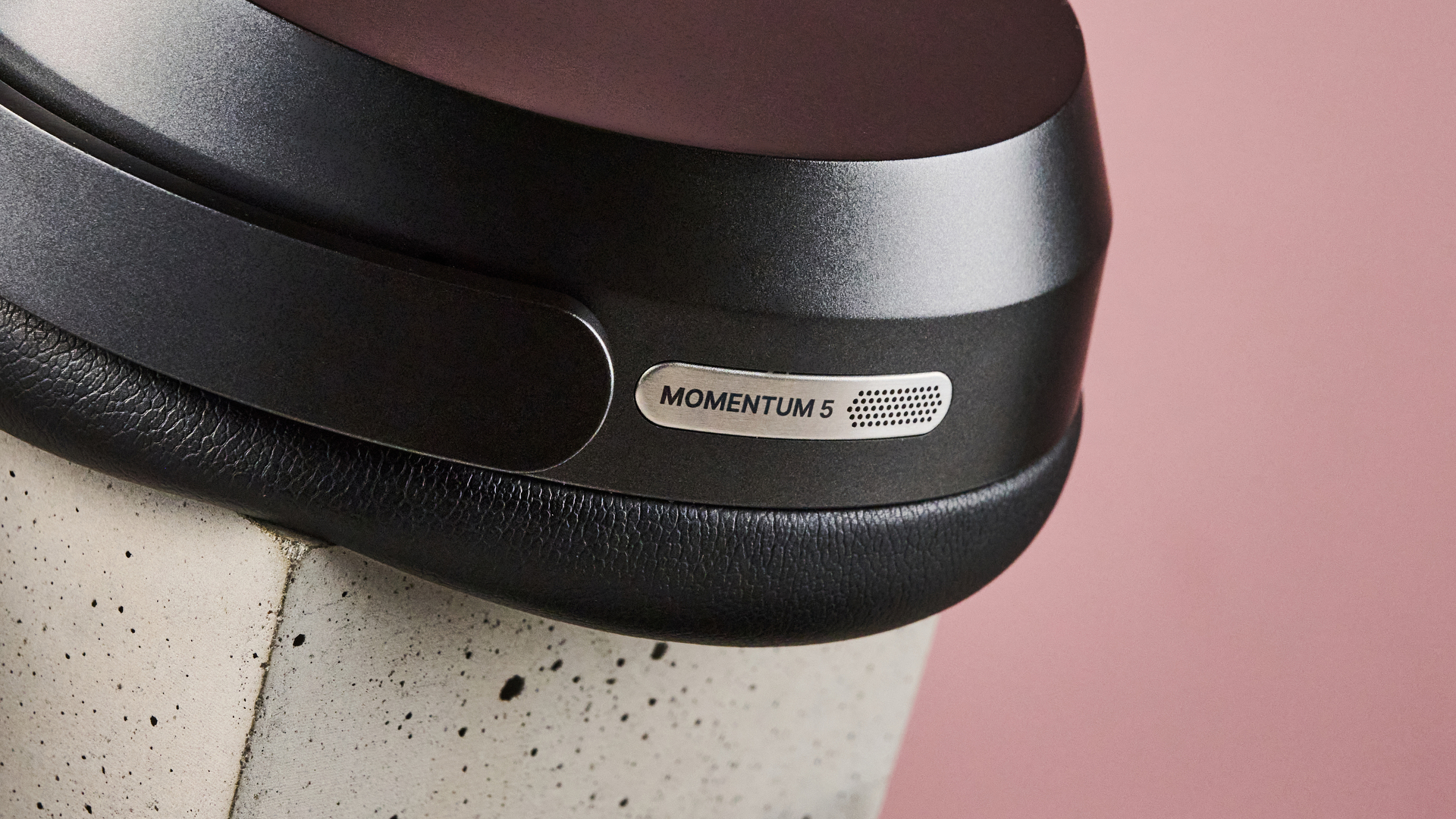
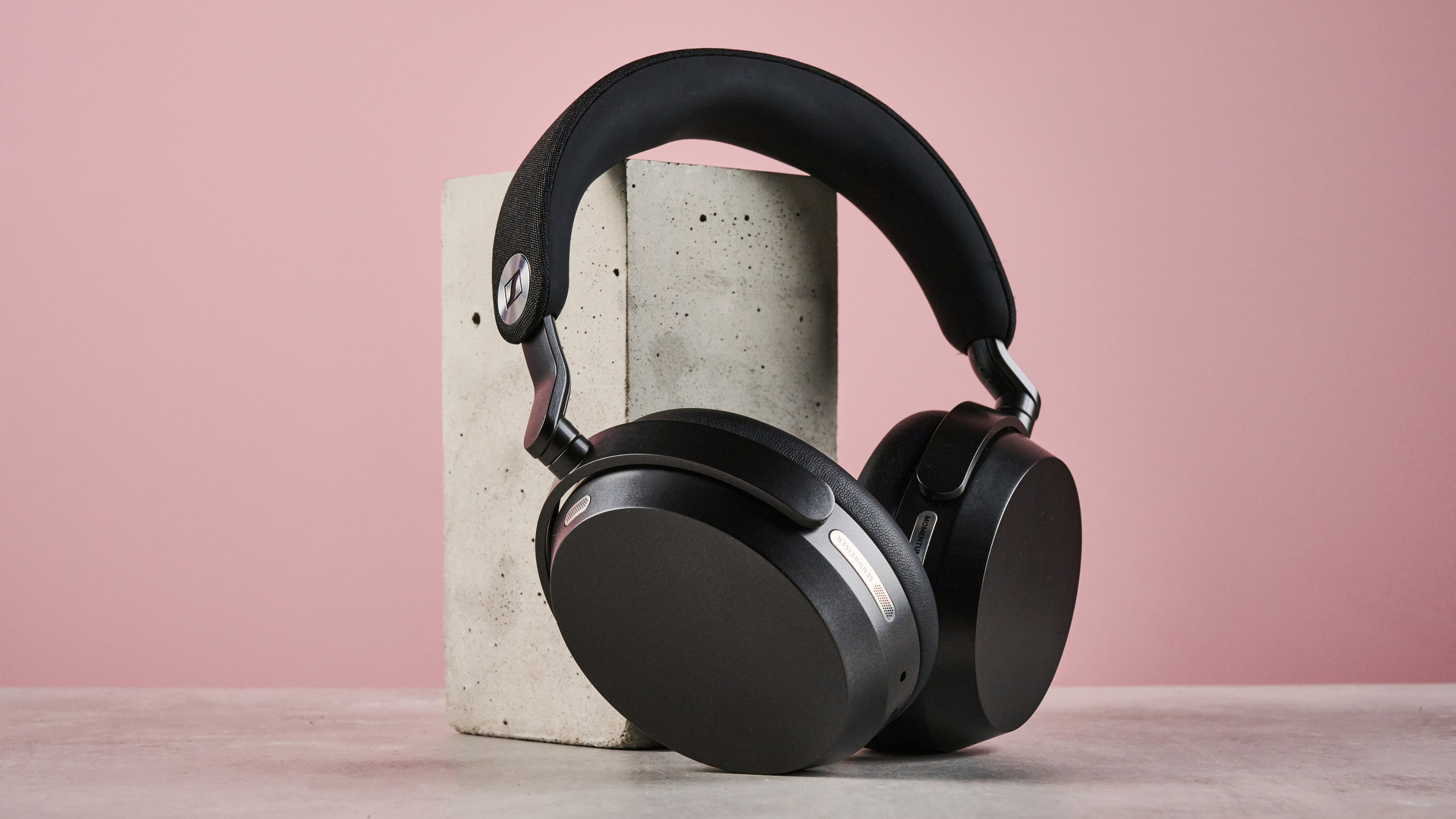
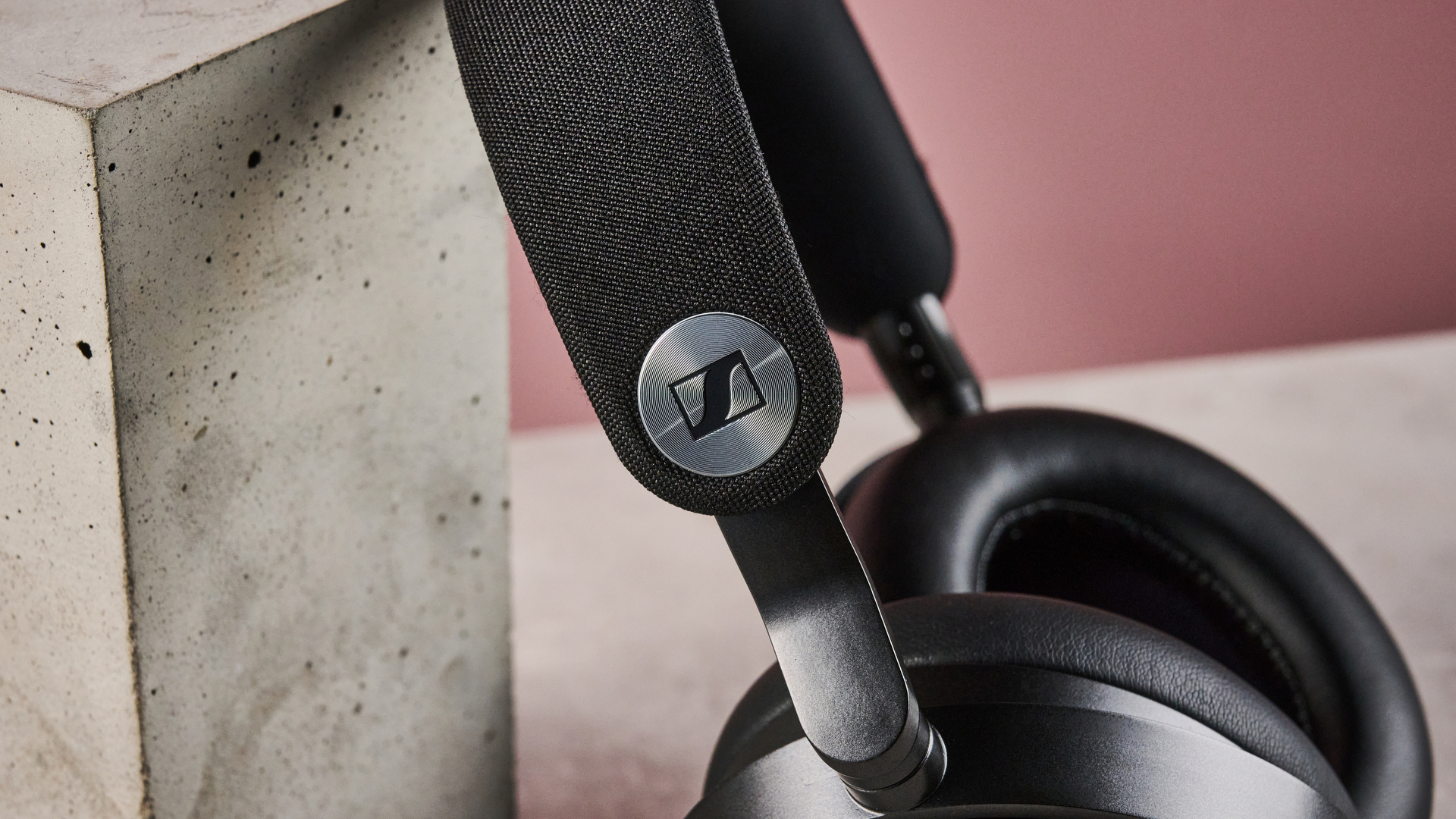
Unlike the huge redesign from the Sennheiser Momentum 3 to the Momentum 4, there’s not been a massive revolution when it comes to the Momentum 5’s looks. The oval-shaped groove that ran around the exterior side of the earcups has been banished, giving them a cleaner look. Meanwhile, Sennheiser’s logo has been updated with a circular badge, while the grilles covering the ANC mics have been picked out in metal. But if you’ve spent any time with the Momentum 4, you largely know what to expect here.
Broadly speaking, I really like the look of the Momentum 5. Don’t get me wrong: they’re not going to win any prizes for originality, having a slight whiff of Sony’s WH-1000XM6 about them. But this is a common trope in the headphones space — if you disagree with me, see how you get on with our spot the difference between the Sonos Ace and the Sony 1000X The Collexion. And the Momentum 5 still have the most refined look Sennheiser has given its wireless headphones to date, so I’m definitely here for it.
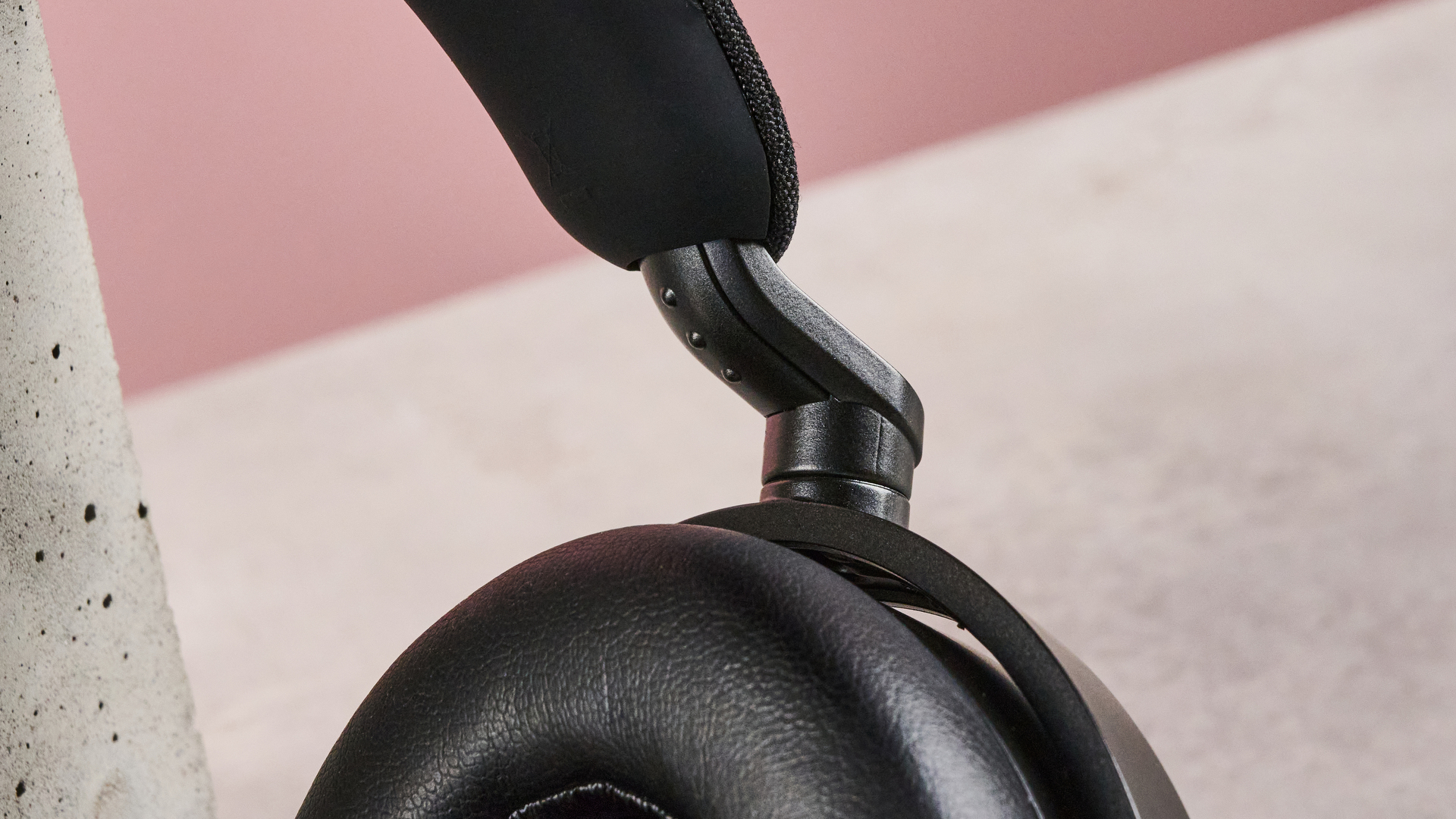
Both the padded faux leather ear cups and cushioned headband feel pleasantly soft, while they have sufficient clamping force that they felt stable on my head without applying excessive pressure. Adjusting their fit is also super easy, even while they’re on your head — their arms extend smoothly and can cater for a wide range of head sizes, whether you’re more new potato or pumpkin-headed.
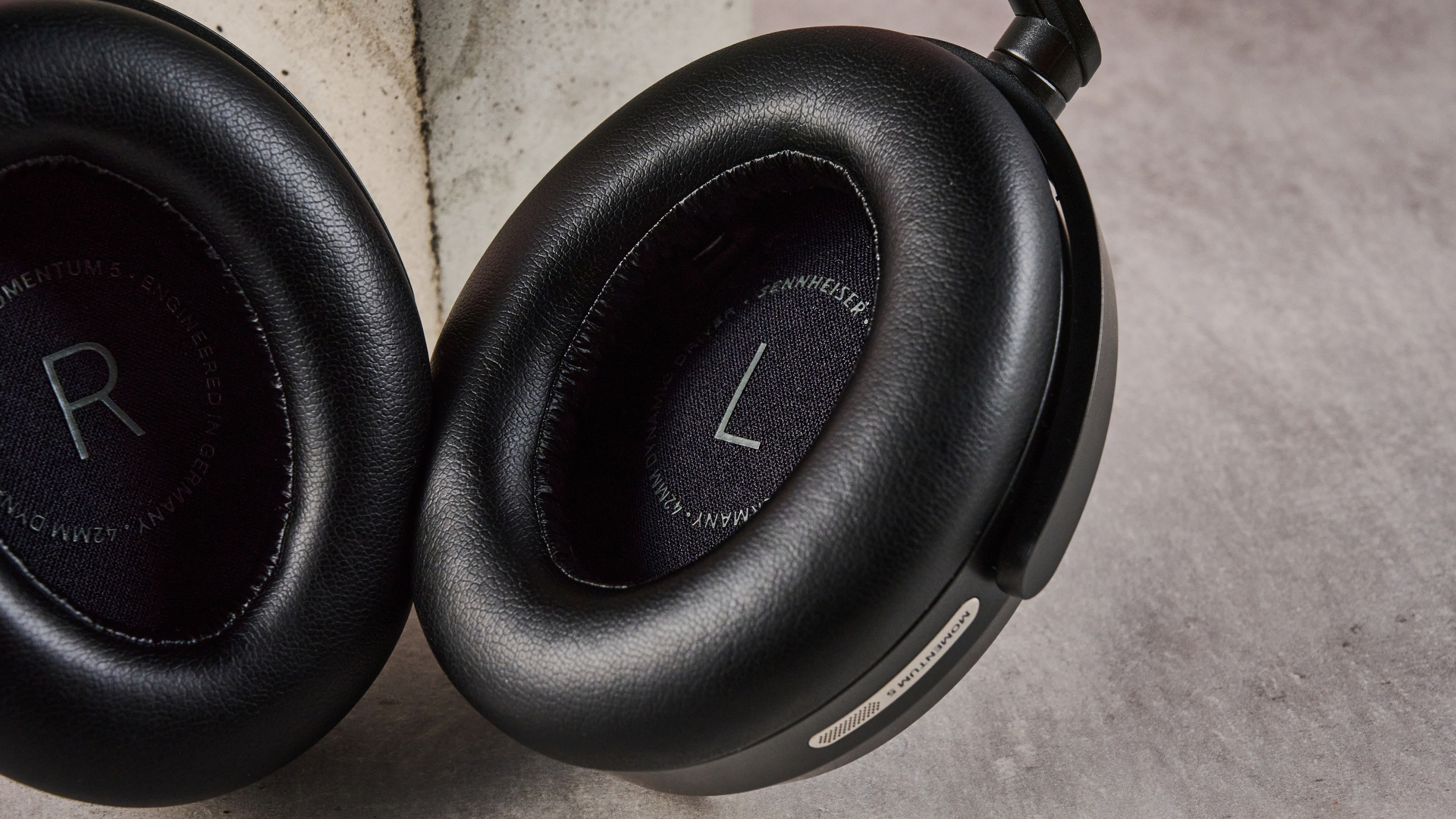
However, an ongoing issue I have with Sennheiser’s headphones is that they tend to make my ear cartilage ache during extended wear, thanks to odd lumps on the inside of the earcup, and the Momentum 5 are no different. None of the mid-range headphones from other brands I’ve used over the last five years have suffered from this issue, so it does make me wonder why Sennheiser continues to stick weird ridges and hard lumps on the inside of its cans.
I have a bit of a love-hate relationship with headphone cases. They seem to veer wildly between the neat — the Sony WH1000XM6’s handy magnetic holder — and the ridiculous — the AirPods Max’s ludicrous handbag. So when I say I’m a big fan of the Momentum 5’s case, know that’s high praise indeed.
Like the AirPods Max, the Momentum 5 don’t so much fold up as fold flat, but, thanks to the earcups’ low profile, that is really rather flat indeed. As a result, even though they don’t concertina up into a compact package, their case has a very slim profile, making it much easier to slip alongside your laptop and tablet in your bag. It doesn’t have loads of padding, so you might not want to be slinging your bag around like it contains a bunch of bricks, but the case should protect your headphones from most damage.
- Design score: 4 / 5

Should I buy the Sennheiser Momentum 5?
Swipe to scroll horizontally
Features | Crammed with features. Clever EQ and sound personalization tools, as well as really granular ANC / transparency slider. Absurdly lengthy battery. Touch controls easy to trigger by accident. | 4.5 / 5 |
Sound quality | Default tuning feels disappointingly off; although bass is strong, upper mids and treble lack in presence. Flexible sound personalization tools necessary to fix sound. Fantastic stereo field and lossless performance, while Dolby Atmos audio is solid. ANC is surprisingly weak. | 3.5 / 5 |
Design | Streamlined looks, even if they’re not revolutionary. Feel well made and are easily adjustable, although they cause my ears to ache when used over long periods. Fold super flat and case has a very shallow profile. | 4 / 5 |
Value | When properly tuned, they offer great features and very creditable performance for their price. But dodgy default tuning, weak ANC and funky on-ear detection stops them excelling quite as much as they should. | 4 / 5 |
Buy them if…
You want a superb soundstage
Not only do the Momentum 5 present excellent separation of various elements when you’re listening to lossless audio but their stereo field is phenomenal, doing an excellent job of positioning instruments in space.
You want a fantastic feature set
Whether it’s super flexible sound personalization, assignable Sound Zones or lossless connectivity, the Momentum 5 come absolutely crammed with features.
Don’t buy them if…
You want great sound out of the box
Unlike headphones from brands like Bowers & Wilkins that sound great from the get go, these need a lot of tuning to achieve their best output.
You want to banish background noise
For upper-mid tier headphones, the Momentum 5 have underwhelming noise-cancelling. I’m not expecting Bose levels of noise-nixing per se but far too often they failed to hush traffic noise or even conversations.
Sennheiser Momentum 5 review: also consider
Swipe to scroll horizontally
Drivers | 42mm dynamic | 40mm dynamic bio-cellulose | 30mm dynamic |
Active noise cancellation | Yes | Yes | Yes |
Battery life (ANC on) | 57 hours | 30 hours | 30 hours |
Weight | 290g | 300g | 254g |
Connectivity | Bluetooth 5.4 (Bluetooth 6 ready), USB-C | Bluetooth 5.3, USB-C, 3.5mm | Bluetooth 5.3, 3.5mm |
Frequency response | 6Hz – 40kHz | 10Hz - 20kHz | 20Hz - 20kHz |
Bowers & Wilkins Px7 S3
Although they originally retailed for a list price much the same as the Sennheiser Momentum 5, the Px7 S3 now go from $429.99 / £319 / $467.76, improving their value proposition — especially as they offer unerringly precise audio even on their out-of-the-box tuning and more convincing noise cancelling. Admittedly, the Momentum 5’s bass is a touch better and the Px7 S3’s features aren’t quite as impressive but these are still great cans given how much they cost. Read our full Bowers & Wilkins Px7 S3 review.
Sony WH-1000XM6
There’s a reason the Sony WH-1000XM6 currently sit at the top of our list of the best headphones out there. It’s not just because they do a lot of things well — although, they do, with fantastic noise cancellation, superb sonic performance and great features like cupping the right earcup to temporarily enable transparency mode. But it’s also because there are very few areas where they fall short, offering above average performance in every area. Read our full Sony WH-1000XM6 review.

How I tested the Sennheiser Momentum 5
- Tested over two weeks
- Tried them out with a wide range of genres
- Tested different bit-rates and listened to multiple Dolby Atmos mixes
I tested the Sennheiser Momentum 5 over the course of several weeks. When it comes to sound quality, I made sure to test them out with a range of different quality streams, from aptX Lossless from Tidal to AAC from Apple Music. To get a sense of how they performed with a wide variety of frequencies, I made sure to try them out with a wide variety of genres across the TechRadar testing playlist and my own go-to testing tracks, whether that’s rock, EDM or classical.
To try out the Momentum 5’s features, I spent a lot of time trying out different EQ and sound personalization profiles with different artists. I assessed Dolby Atmos performance by listening to a variety of Spatial Audio tunes from Apple Music, and I tested their noise cancelling in a range of settings, from TechRadar’s chatty offices to walks along busy roads. Finally, I tested their battery by playing music constantly with ANC on for 6 hours and using how much battery they lost to extrapolate how long they could last.
In terms of personal experience, I’ve spent years assessing the performance of audio gadgets, with a particular focus on headphones and speakers. On top of this, I produce music in my free time, which has given me a keen understanding of balancing frequencies and how to assess the dynamic performance of audio.
- Read more about how we test
- First reviewed: June 2026







 English (US) ·