
 3 weeks ago
39
3 weeks ago
39
Now it’s an arms race between OEMs locking down chips and tuners trying to crack them.
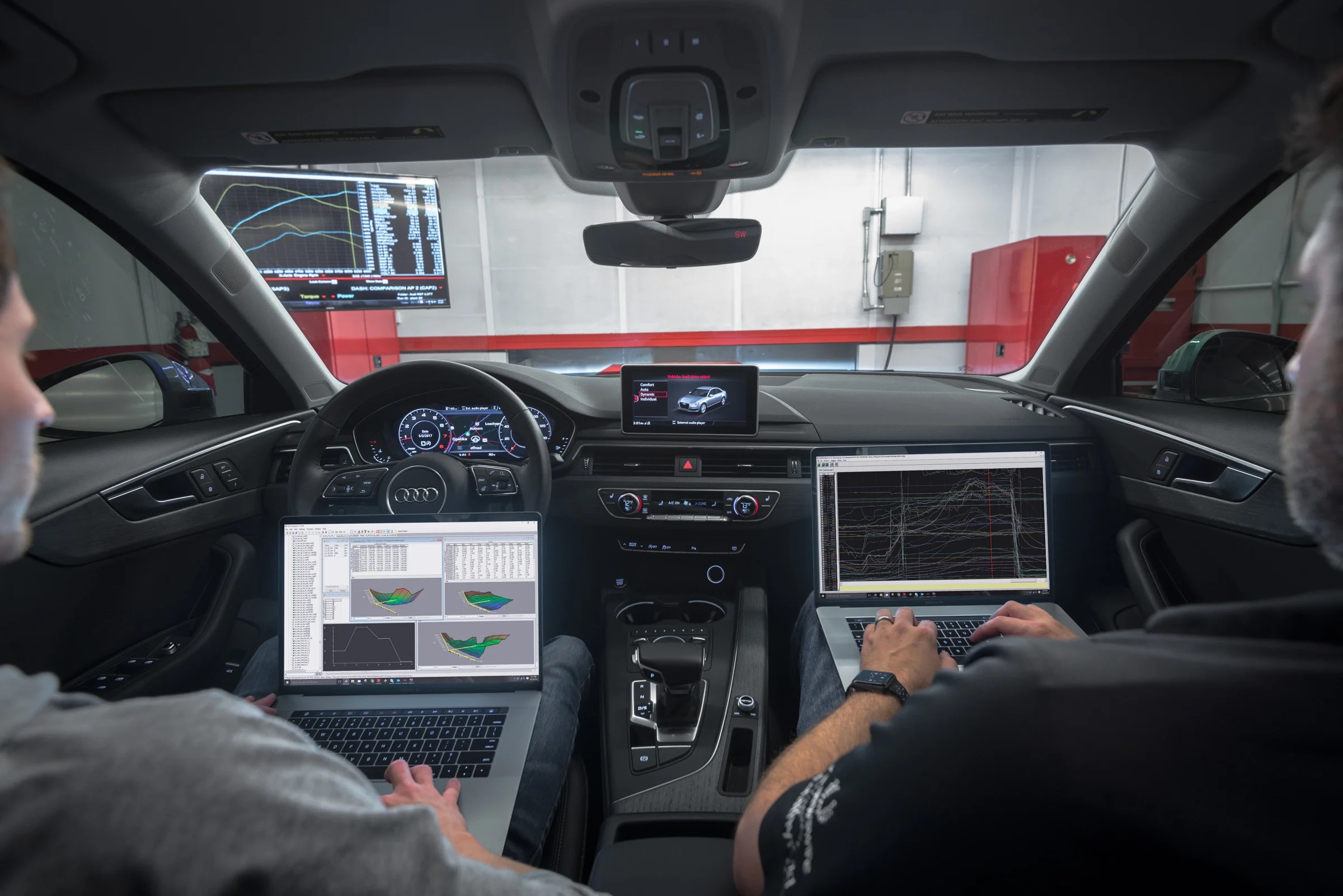
APR's engineers tune an Audi on a rolling road. Credit: APR
APR's engineers tune an Audi on a rolling road. Credit: APR
Anyone who has followed the aftermarket automotive performance industry for long enough can tell you just how dramatically it has changed over the past few decades. What once required mechanical tinkering and a lot of know-how can now be done in mere minutes via an electric control unit (ECU), which can extract significant boosts in horsepower and torque from naturally aspirated, turbocharged, or supercharged engines.
In some ways, though, the process has become much more difficult.
Just ask Alabama-based Audi Performance & Racing, more prominently known as APR. As modern vehicles become increasingly software-driven and OEMs continue to tighten security, the company has had to work harder each year to offer ECU tuning that delivers more power while staying within factory parameters for overall reliability. It’s a far more arduous process now than it was in the early aughts, when my own B5-generation Audi S4 was still fresh on the market.
I recently spoke with APR engineers to discuss the transition and learn more about the fascinating history of ECU tuning—including why unlocking more boost, advanced ignition timing, and other performance gains once felt more like entering a cheat code in a video game.
Simpler times
People have been modifying engine air/fuel ratios and ignition timing since the term “automobile” became commonplace. The early hot rod and muscle car eras stand out as high points, as do the early days of turbocharging.
Fast-forward to the ’90s, and aftermarket tuners were routinely cracking open an engine’s computer, removing the appropriate memory chip, inserting it into a reader, and writing lines of code to a new chip. From there, they could make the changes they wanted: letting the turbo (or turbos) build more boost before dumping it all out the wastegates, adding fuel to accommodate the extra boost pressure, and more.
In the early 2000s, APR went further with its Enhanced Modular Chipping System, or EMCS.
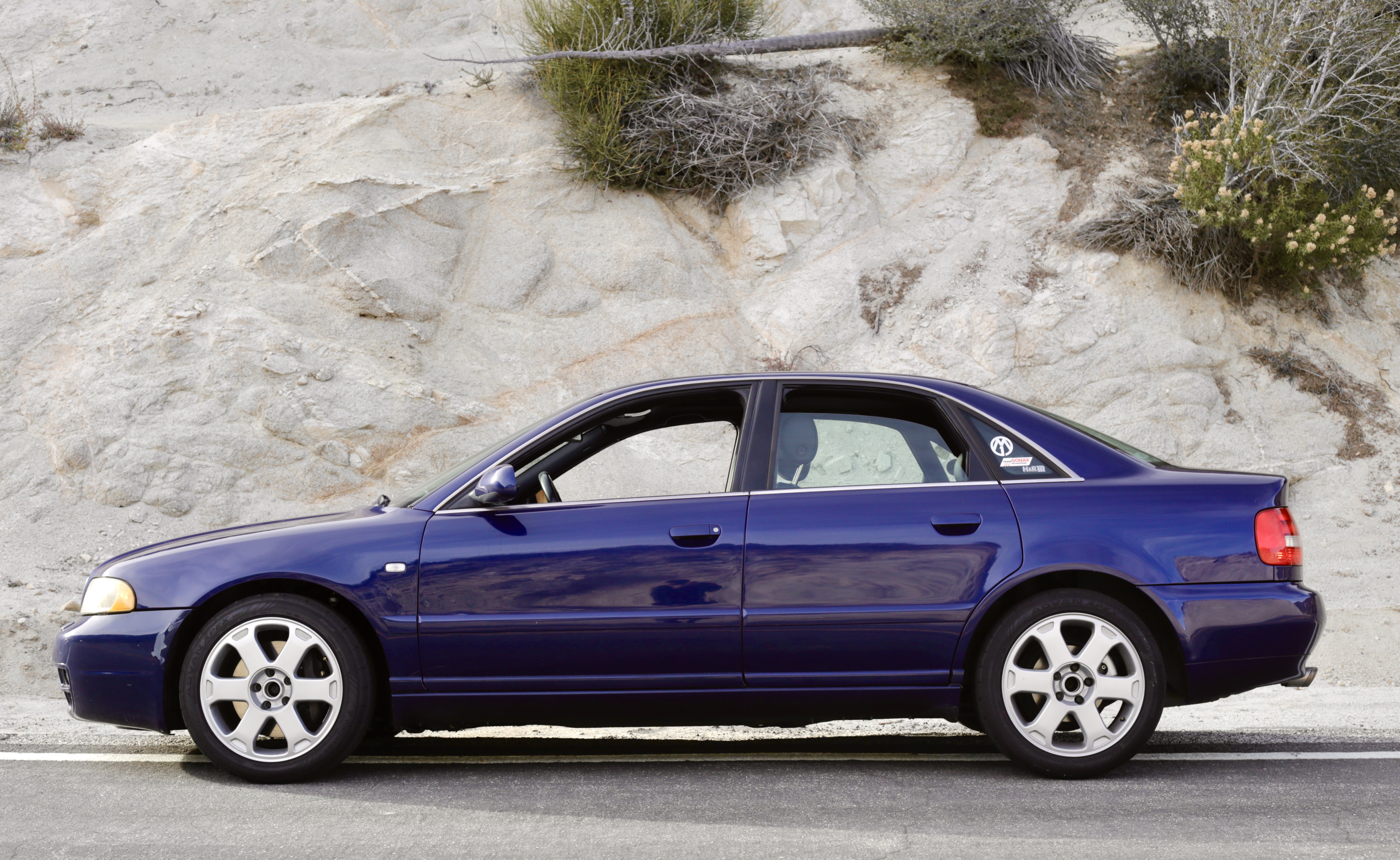
The author’s Audi S4.
Credit: Peter Nelson
The author’s Audi S4. Credit: Peter Nelson
The EMCS had its own processor and memory, with four times the memory and four engine maps: one for 91 octane fuel, one for 93 or 100 octane, and others, each with its own advantages. Its processor could even tell the ECU to check whether it should use a different map.
How could it do this? As APR Calibration Engineer Chas Gorton explained, around the turn of the century, “Somebody had the bright idea: ‘Hey, we have the cruise control; what if we add a sequence of events that causes that window to move?’ That’s where program switching started.”
Before that, an early version relied on a physical switch on the side of the ECU, a cumbersome setup that meant popping the hood, removing trim, and flipping a switch. Eventually, somebody sat down and reverse-engineered a better solution, Gorton explained.
“What do I have access to, what can I see from this other controller that we just added to the ECU to know when the user is doing something?” Gorton said.
By digging into the system, APR could monitor the state of the cruise control, so it wrote code to change maps, clear fault codes, and perform other functions when a specific sequence of inputs was made via the cruise control stalk.
That’s why it’s like a cheat code—simply perform some basic, easy-to-remember actions while the engine is off, and you can increase the factory boost a few PSI over stock for extra performance or control.
My interest in tuning started when I picked up a used (and presumably very old) APR-chipped ECU for my S4’s twin-turbo 2.7-liter V6. The first map is the factory tune, while the second increases the factory max boost pressure from around 9 PSI to 14.5 (1 bar) on 91 octane. The third map runs 1 bar on 100 octane. Because that fuel resists knock, ignition timing can be advanced quite a bit to take advantage of the boost.
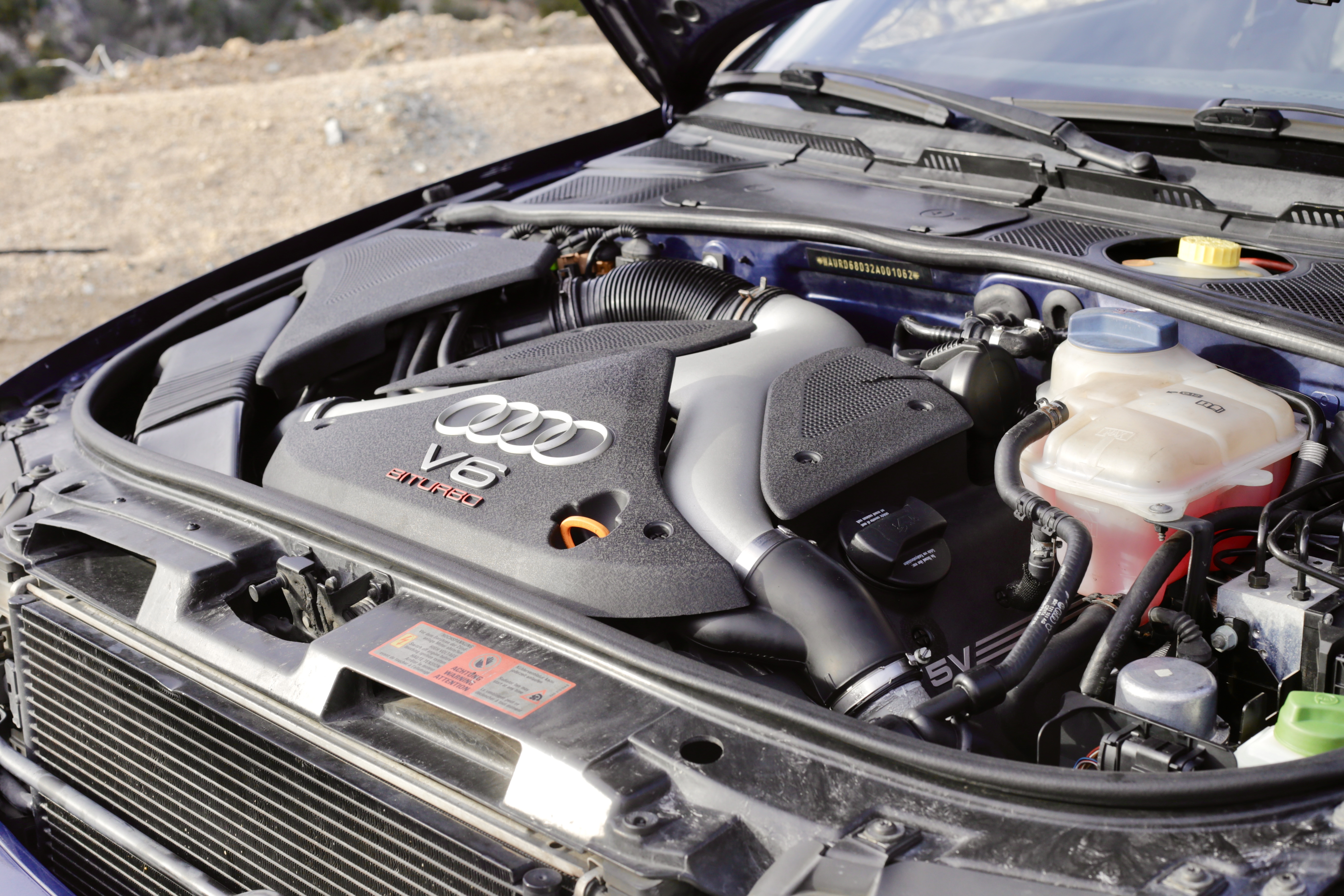
The S4’s engine bay, now with APR power.
Credit: Peter Nelson
The S4’s engine bay, now with APR power. Credit: Peter Nelson
On just the 91 map, my little sedan pulls as it should have from the factory. 250 hp (186 kW) and 258 lb-ft (350 Nm) was respectable for the turn of the century, but come on—this thing has two turbos. The 100 map, on the other hand, pushes it into modern premium sport-compact territory. I have yet to subject it to a dyno test, but I wouldn’t be surprised if output was closer to just over 300 each at the wheels.
After the floodgates
The introduction of the onboard diagnostics (OBD2) port in 1996 not only benefitted consumers and automakers from a serviceability standpoint; it also, in Gorton’s words, “opened the floodgates” for aftermarket ECU tuners. One of the mandates of OBD2 was the ability to update factory ECU software via the port—this also gave tuners an easier way to work their magic.
As Gorton and other APR engineers told me, they technically had the ability to plug in and start making changes as early as 1996, when OBD2 was implemented, but no one had yet figured out the security measures the OEMs put in place. It was still easier to pop the chip out and make changes from the bench, including installing the EMCS when it debuted.
That opened the door for tuners to later make changes as needed via the port. Around 2005, advances in technology meant it was no longer necessary to physically access the ECU, and work could be done directly through the port. By 2008, VW/Audi had significantly tightened security, forcing tuners to return to the drawing board. That’s when the true cat-and-mouse game between OEM security and the aftermarket began.
Beyond security measures, the increasing complexity of OEM software didn’t help, either. It gradually became physically impossible to fit different maps into the system. At one point, it was possible to apply only the changes between maps, but features like radar cruise control and other modern technological amenities put an end to that. Then the software itself was relocated across different areas of the ECU. Over time, the calibration strategy changed significantly.
When APR and other tuners are working on a new tune, there are so many unknowns that require extensive poking and prodding. “I can’t even roadmap how many layers of security we have to break through, let alone how long it’s going to take to break through,” said Gorton. “Up until the day it’s released, we honestly don’t know how long we have until it’s ready because there are so many unknowns.”
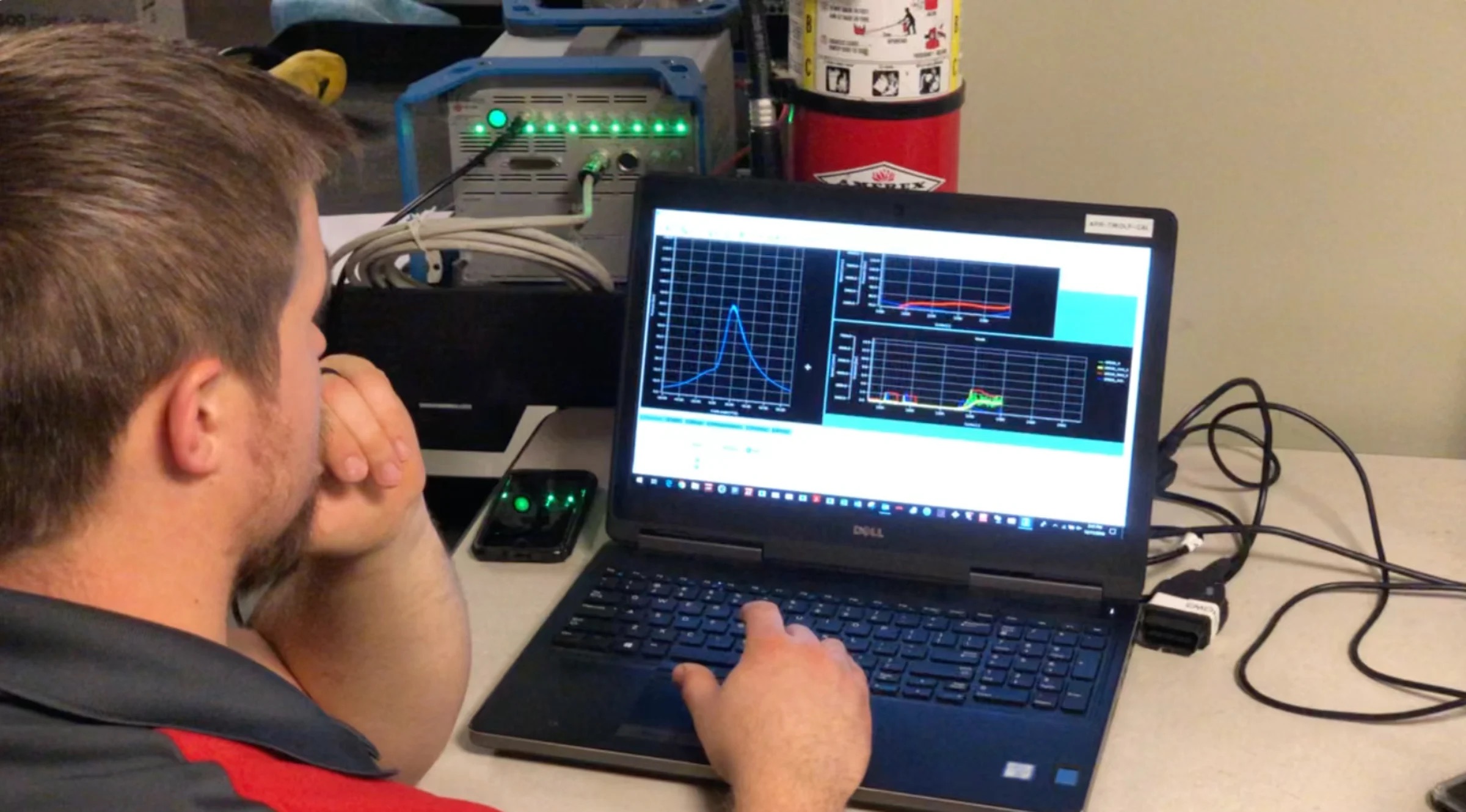
An APR engineer working on a tune.
Credit: APR
An APR engineer working on a tune. Credit: APR
“The biggest challenge that we run into is that whenever [APR’s reverse engineering team] finds a new vulnerability, 99.9 percent of those end up as a dead-end,” said Jamie Harvey, software engineering manager and powertrain calibration engineer at APR. “And you have to do some serious legwork to get to that dead-end.” That process repeats over and over and can be very disheartening to the team.
“What we have to do is look at how the code executes and goes through its steps and basically look at it at every step along the way and go, ‘Can I make it do something out of the ordinary at that step?'” Gorton said. “And if I can, can I then make the next step do something out of the ordinary that works with that previous step? How do we set up these little blocks to jump on to get around the security?”
Part of the process is to tell the ECU how much data is being flashed, something both Gorton and Harvey described in detail. You’re basically saying, “I’m going to send you a 4 megabyte file and I need you to start here and end here.”
But then there’s the question of whether tuners even need to tell the ECU where the endpoint is—maybe it does the math itself. So what happens if you give it an unusually small or large number? How does it handle bad data at that step, and what does it do with it? “Will it unlock another path that we can use?” Gorton said.
The process is tedious, to say the least.
It can even brick the ECU. As Harvey noted with a chuckle, APR ends up making a lot of “$1,800 lawn ornaments.” He also clarified that the company often holds on to them, as they could potentially be recovered and used for future R&D.
Sheer complexity
Mapping out a safe tune that preserves factory protections, such as fault codes, has always been hard work, but it has only become more challenging as technology has progressed.
This reflects the increasing complexity of modern fuel-injection systems. For the B5 Audi S4, there were only 10 to 15 things that needed adjustment, APR said. By contrast, the 2005 Volkswagen GTI required 90. “Current production stuff? We’re well-north of a couple hundred changes,” said Gorton—about 225 for the 2022 GTI and over 400 for the current Porsche 911 Carrera.
“We’re over 500 on the latest product that’s coming out,” Harvey added. As he explained, turning one knob can cause 50 others to react, so you have to find the sweet spot for each parameter to ensure everything works in harmony.
Factory ECU calibrations are also now global, meaning variables like fuel quality and operation environment must be accounted for in a single file. Tuners often don’t know which parts of the code correspond to their region, so APR says its software is designed to work no matter your location.
Then there are the surprising differences between models that share the same engine, like an 8V-generation Audi A3 and a Mk7-generation VW GTI. Each development team has its own philosophy for how the car should drive and perform.
Torque management is a prominent concern—should the model be tuned to err on the side of efficiency, or should it be more snappy and fun? Those differences make APR’s job harder because even with identical engines, “the two teams came at the same problem from opposite directions, and nothing lines up,” Gorton said.
Modern ECU tuning as a push-to-pass on the track
Despite the growing complexity of ECU tuning, it has brought some advantages to motorsports. The first year APR fielded a race team in the Grand-Am KONI Challenge Series (IMSA’s Michelin Pilot Challenge is the modern equivalent), it had a calibration engineer present at every event. “If he needed to, he could make a change to the file in the car to meet the conditions,” Gorton said.
In the second year, the company began adjusting the boost levels. Because of how complex modern ECUs are, you can’t just add a manual boost controller anymore since the system is constantly monitoring conditions and will respond by triggering errors or going into limp mode.
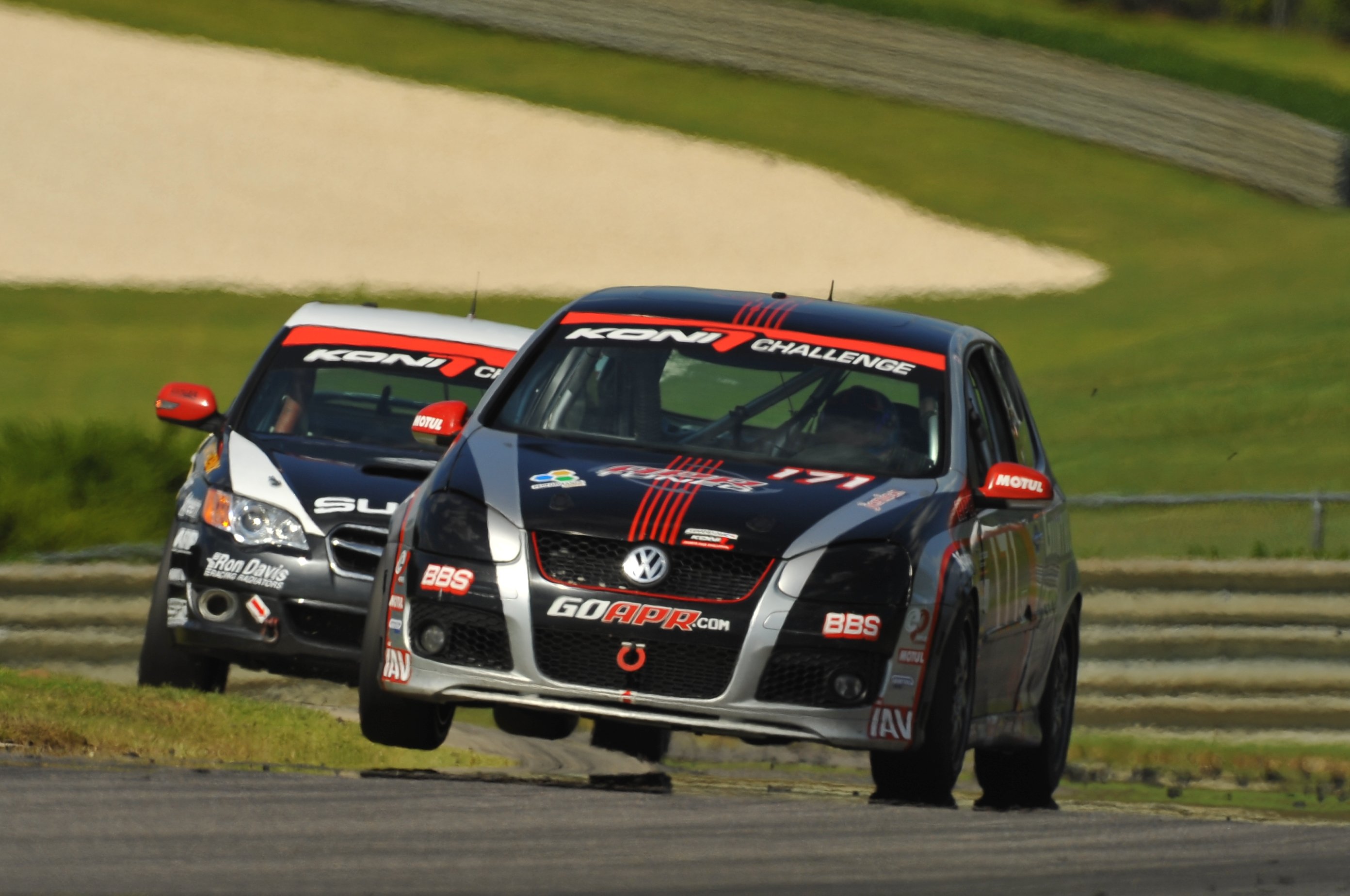
APR’s Koni Challenge race car.
Credit: APR
APR’s Koni Challenge race car. Credit: APR
“One year, we did some creative interpretation of the rules,” said Ian Baas, marketing coordinator and in-house hot shoe at APR (including during the 2008 and 2009 Koni Challenge seasons). “Basically, we were able to put a push-to-pass system in our vehicle that would over-boost it for a certain period of time without actually sending any red flags.”
If a driver had a bad exit out of a corner, they could quickly pull the cruise-control stalk and get a few more PS—and therefore an extra slug of power—for a limited amount of time.
“In order to capitalize on it, you had to have incredibly good boost control by the calibrator,” Harvey added. “Every moment you went over that line, a timer would start clicking every millisecond you were over it. If we didn’t cross that line, that was in reserve for the moment that the driver needed it.”
This level of precision carried over to its street products—APR has long emphasized the effort it has put into its boost control.
Of course, the first time this push-to-pass function was used, it raised some eyebrows. At one event, “I was faster than the GS [meaning, the fastest class] cars,” Baas shared with a laugh. “We were fastest overall in one [practice] session.”
What’s next?
As technology advances, new models arrive, and new powertrains—including hybridized ones—enter the market, giving tuners more software than ever to dig into and modify. But not before breaking through the constantly evolving security measures that OEMs implement.
And even when automakers use the same hardware, each approaches security in its own way. BMWs were once easy to break into and tune, but once that changed, it took tuners a long time to regain entry. The same is true for Ford, which has recently begun implementing more robust security measures. APR’s sister companies under the Holley umbrella have run into the same problems, and while APR can share general approaches to cracking, it can’t provide specifics since the process varies so much by manufacturer.
During our chat, the team understandably couldn’t share details of what’s next. But as Gorton put it, “You gotta keep pushing the envelope. You can’t just sit back and do what you’ve been doing and expect the business to keep growing.”







 English (US) ·