
 2 hours ago
8
2 hours ago
8
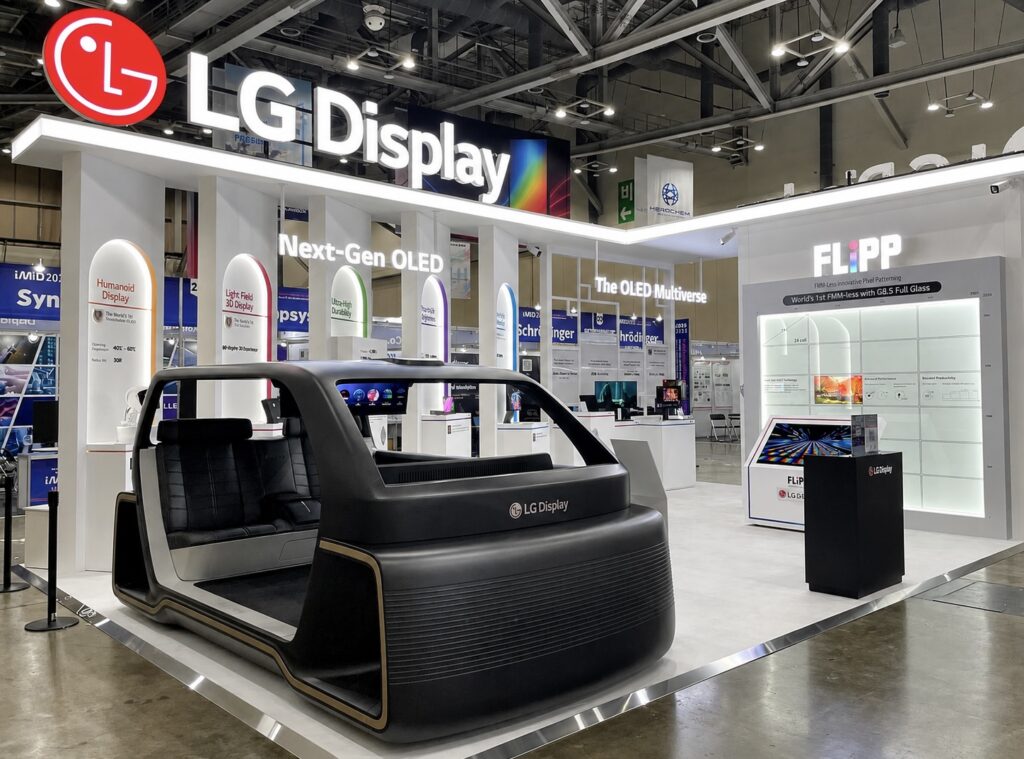
LG Display has just unveiled perhaps the biggest innovation in OLED manufacturing in a while, aptly called "FLiPP" or FMM-less Innovative Pixel Patterning. FMM stands for Fine Metal Masks, and they're required as a stencil to deposit organic LEDs onto a glass substrate. FLiPP gets rid of these and instead relies on photolithography to vaporize unneeded areas from an RGB subpixel to produce a brighter panel that takes less power to drive and is ultimately cheaper to produce.
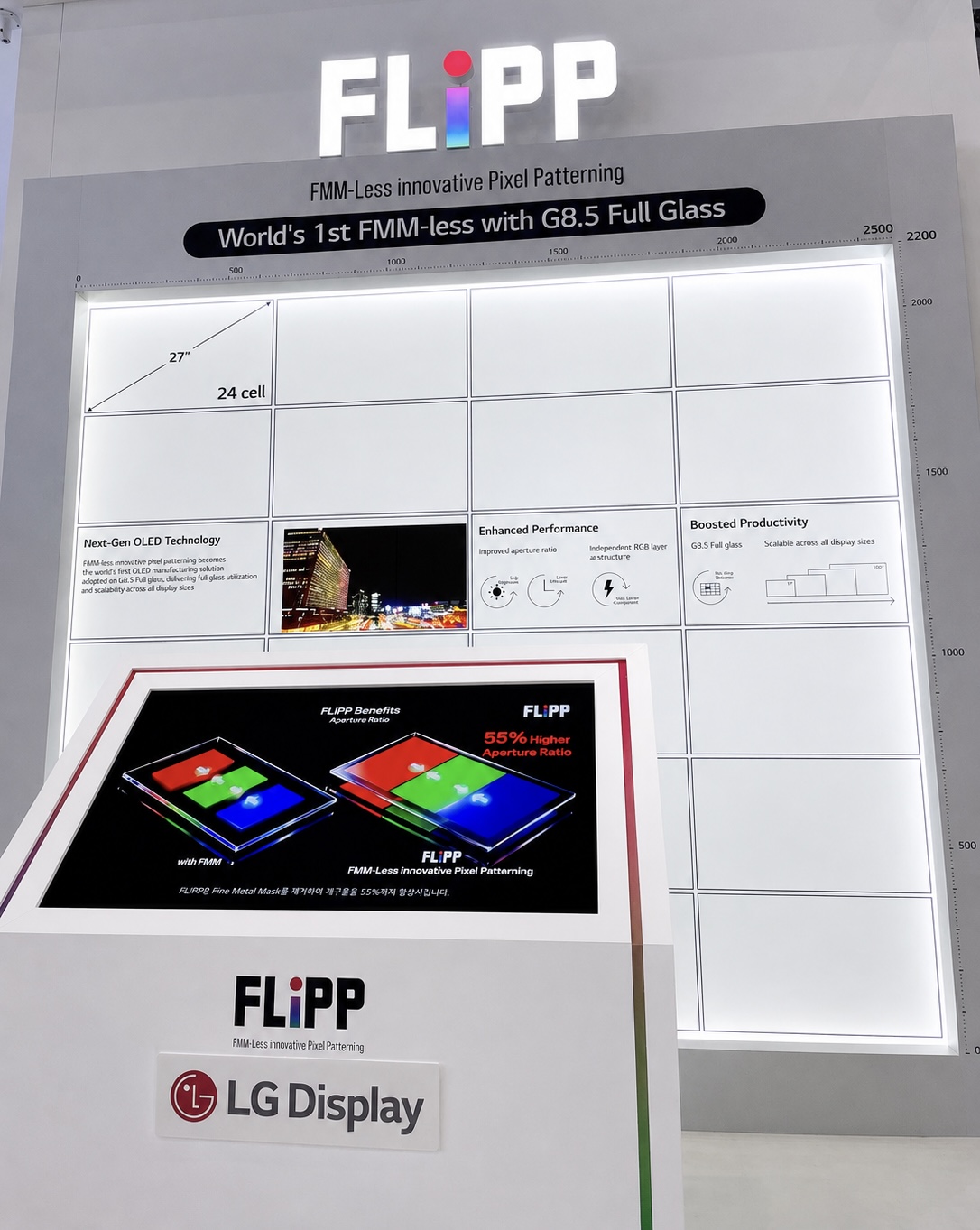
The main benefit of FLiPP is how it increases the subpixel surface area in an OLED stack. Instead of the metal mask taking up space, the subpixels are spread out much closer to each other, which improves their "aperture ratio" by up to 55%. In reality, that translates to 1.6x brighter panels with 2.4x longer lifespans. Since the panel doesn't have to work as hard to drive the pixels, its power consumption drops by 13% as well.
A metal mask is also heavy and can thus sag in the middle, leading to panel uniformity or color blending issues. It's expensive to make, too, because it features tiny holes that scale up in precision depending on resolution and size. FLiPP eliminates those constraints entirely, as it can, in theory, produce panels ranging from 1-100 inches for a broad range of devices and applications with any resolution in mind.
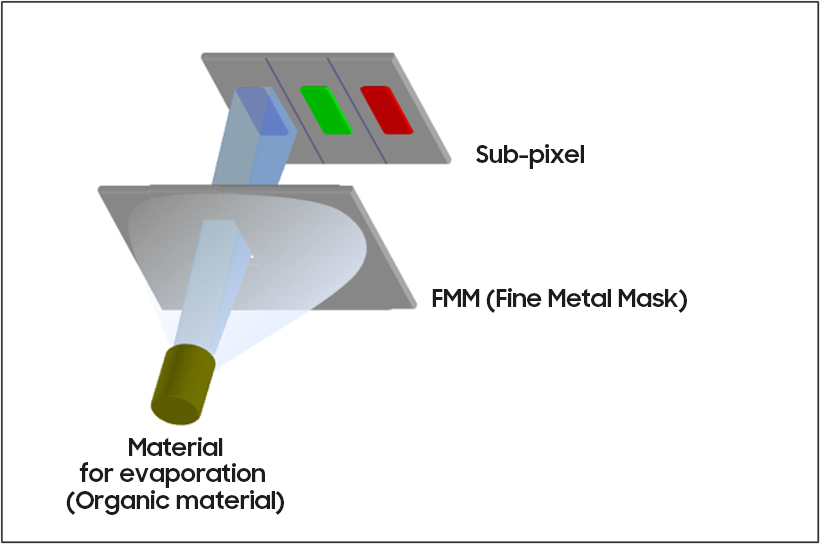
For instance, whenever new panel tech emerges, a new metal mask needs to be created to specifically accommodate its subpixel layout. A majority of the OLED materials are wasted during the stencil process; only about 30% make it through the stencil on the motherglass. Moreover, the motherglass needs to be cut in half for larger displays because of the mask's unstable structure just so be joined back together after deposition.
FLiPP uses a process akin to semiconductor manufacturing where UV light reacts with a photoresist layer through a micron-sharp photomask. A bed of organic material, such as the red subpixels, is first deposited, and a photoresist layer is applied on top. The UV changes the chemical bonds of the areas that should have red subpixels, hardening and locking them into place. The glass then goes through a chemical bath to dissolve away everything else.
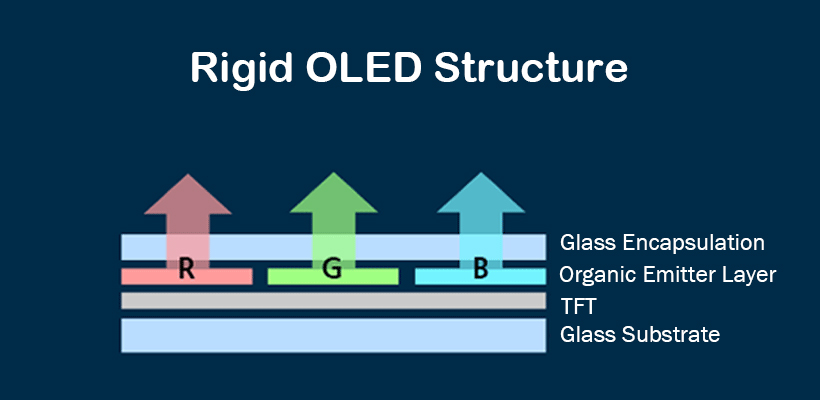
The process is repeated for the green and blue subpixels until the desired layout is achieved. LG says this method utilizes 64% more of the motherglass when producing laptop-sized panels, leading to less wastage, which will make displays cheaper. The company has already internally produced an OLED panel that used an entire 8.5-Gen motherglass through FLiPP, which measures at 2,200mm x 2,500mm.
LG is currently looking to apply FLiPP to its RGB OLED technology, which means self-emissive red, green, and blue subpixels will be deposited directly onto a motherglass. Otherwise, in Samsung's QD-OLED and LG's WOLED, white (or blue) LEDs pass through color filters to produce red, green, and blue, instead. Therefore, the combination of RGB OLED and FLiPP could lead to panels with exceptional color volume and gamut coverage — traditionally weaknesses of OLED.
FLiPP is not the only FMM-less OLED deposition technique on the market, but it does seem to be the first to be commercialized on a massive scale. Japan Display Inc.'s eLEAP is actually the pioneer of maskless OLED photolithography, and LG was said to enter into some sort of partnership with them last year, though FLiPP is marketed entirely as an LG invention. China's Visionox also has its own version that it plans to release next year.
Inkjet printing is increasingly gaining traction in the OLED world as an alternative method, too, and TCL CSOT is currently at the forefront of its development. As far as FLiPP is concerned, LG promises to invest 3 trillion Won, or $2.15 billion, to begin production using this tech by late 2027. Laptops and monitors will be the first recipients of FLiPP OLED screens before expanding to smartwatches and ultra-large TVs.

Follow Tom's Hardware on Google News, or add us as a preferred source, to get our latest news, analysis, & reviews in your feeds.





 English (US) ·