
 1 day ago
14
1 day ago
14
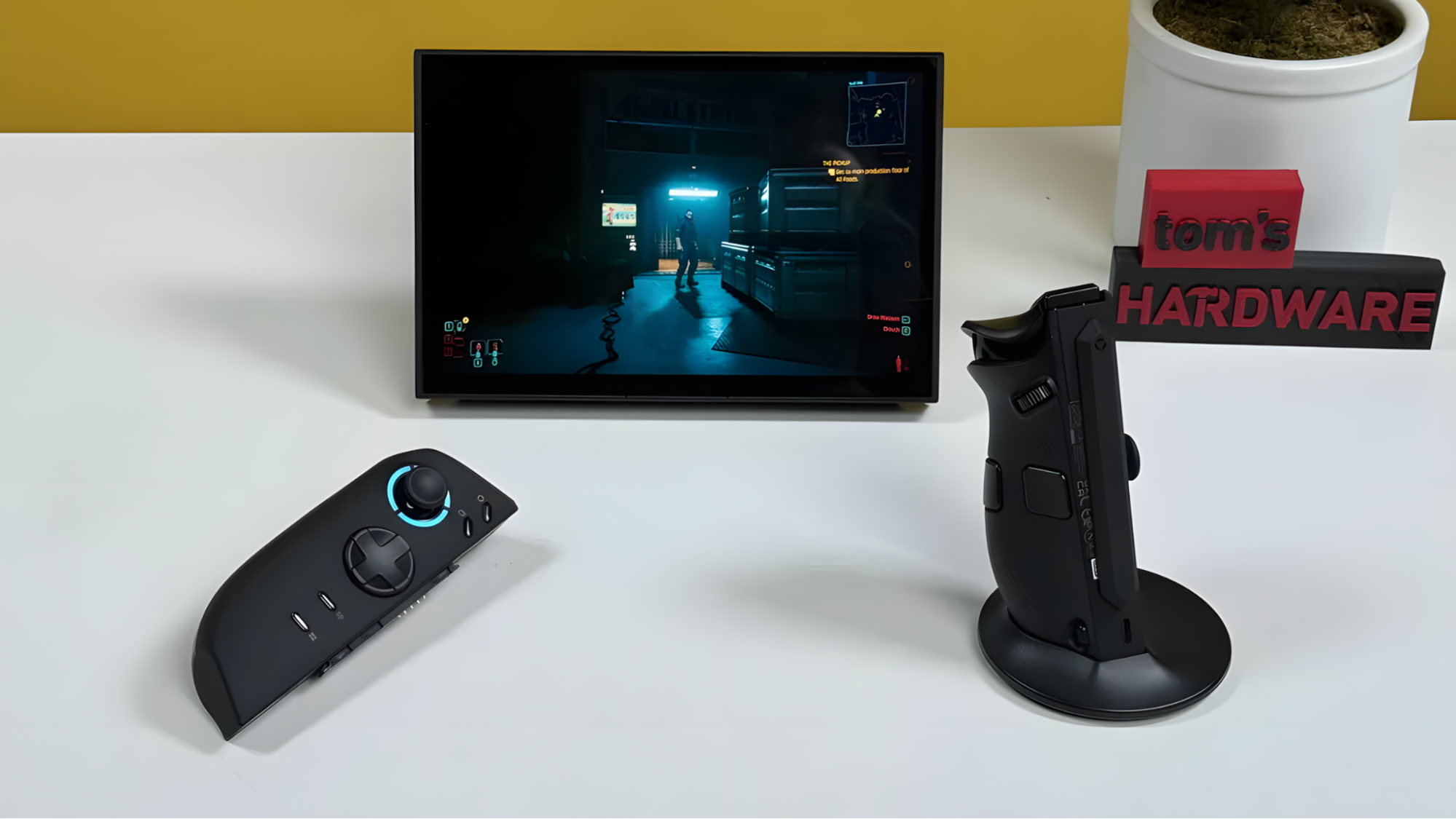
Lenovo is giving AMD’s Ryzen Z2 Extreme official SteamOS support for the first time. The Legion Go 2 launched in October last year, bringing the Z2 Extreme to the mobile gaming market and fixing many of the issues with Lenovo’s first handheld outing. Now, you can get it with official SteamOS support, combining the best aspects of the Legion Go 2 and Lenovo’s Legion Go S.
SteamOS is available directly from Valve for a DIY install, and Linux distros like Bazzite do a good job emulating Valve’s handheld interface. However, official support brings some perks. As we saw with the Legion Go S, SteamOS provides significantly better performance across games than Windows 11, even when comparing the exact same hardware inside the same chassis.
Swipe to scroll horizontally
Processor | Up to AMD Ryzen Z2 Extreme |
OS | SteamOS 3 |
Memory | Up to 32GB LPDDR5x-8000 |
Audio | 2x 2W speakers |
Storage | Up to 2TB M.2 2242 PCIe Gen 4 |
Display | 8.8-inch OLED, 1920 x 1200, 144Hz |
Battery | 74WHr |
Ports | 2x USB-C (USB4), 1x microSD card reader (up to 2TB), 3.5mm combo audio |
Wireless Connectivity | Wi-Fi 6E, Bluetooth 5.3 |
Weight | 2.2 pounds (920 grams) |
Size | 11.64 x 5.38 x 1.66 inches (295.6 x 136.7 x 42.25mm) |
AMD’s Z2 Extreme is still at the heart of the Legion Go 2 with SteamOS. It’s an eight-core chip that leverages three Zen 5 cores and five Zen 5c cores, the latter of which trade peak clock speed for a space-optimized design. The Zen 5 cores can boost up to 5GHz while the Zen 5c cores top out at 3.3GHz. It defaults to a 28W TDP, though it has an adjustable TDP range from 15W up to 35W. The gaming grunt comes from the integrated RDNA 3.5 GPU, which sports 16 CUs.
Alongside AMD’s chip, Lenovo offers up to 32GB of LPDDR5x memory and 2TB of storage, plus an additional 2TB available through the microSD card slot. The memory is clocked at 8000 MT/s for the 32GB model and 7500 MT/s for the 16GB model. Lenovo is using the same OLED screen featured on the Windows 11 version of the Legion Go 2, which is an 8.8-inch screen with a resolution of 1920 x 1200, a 144Hz refresh rate, 10-point touch support, variable refresh rate, and a certification for VESA’s DisplayHDR True Black 1000.
Everything about the SteamOS Legion Go 2 is identical to the original model, short of the operating system. You still get dual USB 4 ports for charging or accessories, detachable controllers, a touchpad, six programmable buttons, and Hall Effect joysticks.
Lenovo says the Legion Go 2 with SteamOS should be available in June, starting at $1,199. The Legion Go 2 with Windows 11 is listed at $1,349 for the 32GB model, so the 32GB model of the SteamOS version should land somewhere around that price. It’s worth highlighting that the SteamOS version of the Legion Go S has a slightly lower price than the Windows 11 version, so hopefully that trend continues with the Legion Go 2. But with the way RAM prices are right now, who can predict what pricing might be like in six months?
Refreshed Legion laptops with new AMD branding
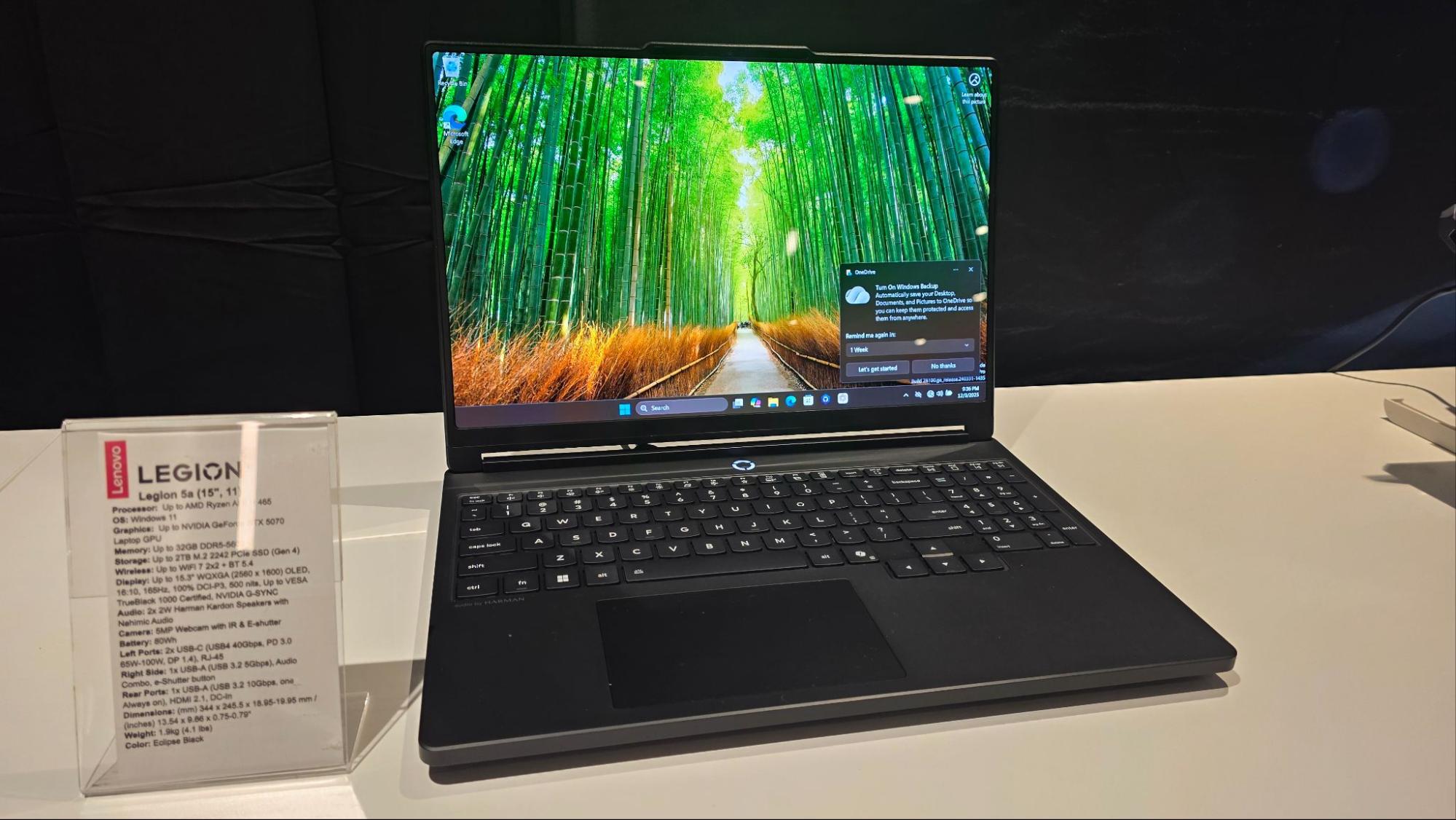
Lenovo is refreshing its Legion 5 and 7 ranges, and for the first time ever, properly noting configurations that come with an AMD CPU. Lenovo usually notes configurations with an Intel processor with an “i,” such as the Lenovo Legion 5i, while the AMD configuration would normally be called the Lenovo Legion 5. Now, Lenovo is adding an “a,” turning the Lenovo Legion 5 into the Legion 5a.
Naming aside, Lenovo is updating the Legion 7a, Legion 5i, and Legion 5a. The higher-end Legion 7a includes one of AMD’s new Ryzen AI 400 ‘Gorgon Point’ CPUs. The laptop carries up to an AMD Ryzen AI 9 HX 470, which features 12 cores (4x Zen 5 / 8x Zen 5c) and an RDNA 3.5 iGPU with 16 CUs. You can also pack in up to an Nvidia RTX 5060 mobile GPU, 64GB of LPDDR5x-8533 (capped at 8000 MT/s), and 2TB of storage split across two M.2 2242 PCIe Gen 4 slots.
Swipe to scroll horizontally
| Row 0 - Cell 0 | Legion 7a (2026) |
CPU | Up to AMD Ryzen AI 9 HX 470 |
GPU | Up to Nvidia RTX 5060 mobile |
Memory | Up to LPDDR5x-8533 (capped at 8000 MT/s) |
Storage | Up to 2TB PCIe Gen 4 (2x 1TB) |
Display | Up to 16-inch OLED, 2560 x 1600, 240Hz, G-Sync, DisplayHDR True Black 1000 |
Battery | 84WHr |
Webcam | 5MP w/ E-Shutter and Windows Hello |
Audio | 4x 2W Harman speakers (2x woofer, 2x tweeter) |
Ports | 2x USB-C (USB4), 2x USB-A 3.2, SD card reader, HDMI 2.1, audio combo jack |
Wireless Connectivity | Wi-Fi 7, Bluetooth 5.4 |
Weight | 4.07 pounds (1.85 kg) |
Size | 14.23 x 10.01 x 0.61 - 0.67 inches (361.35 x 254.16 x 15.5 - 16.9 mm) |
Although the design of the Legion 7a remains mostly unchanged, Lenovo claims the laptop is 10% lighter and up to 5% thinner than the previous generation.
The Legion 5 range tops out slightly lower. The Legion 5i carries one of Intel’s new Panther Lake CPUs, the 16-core Core Ultra 9 386H. It’s not technically the flagship SKU, which is a title claimed by the Core Ultra X9 388H with its beefy integrated GPU. The Core Ultra 9 386H is almost identical outside of the GPU, however, sporting 16 total cores split across four performance cores, eight efficiency cores, and four low-power efficiency cores, along with a 4.9 GHz maximum boost clock on the P-cores.
For the Legion 5a, Lenovo is releasing two versions – one tops out with a new Ryzen AI 9 465 with 10 cores and 12 RDNA 3.5 CUs, while the other uses the older Ryzen 7 250; a Zen 4-based chip with eight cores. All three configurations top out with an RTX 5060, up to 32GB of DDR5-5600 memory, and 2TB of PCIe Gen 4 storage.
Swipe to scroll horizontally
| Row 0 - Cell 0 | Legion 5a (2026) | Legion 5i (2026) |
CPU | Up to AMD Ryzen AI 9 465 / AMD Ryzen 7 250 | Up to Intel Core Ultra 9 386H |
GPU | Up to Nvidia RTX 5060 mobile | Up to Nvidia RTX 5060 mobile |
Memory | Up to 32GB DDR5-5600 | Up to 32GB DDR5-5600 |
Storage | Up to 2TB PCIe Gen 4 | Up to 2TB (2x 1TB) PCIe Gen 4 |
Display | 15.3-inch OLED, 2560 x 1600, 165Hz, DisplayHDR True Black 600 | 15.3-inch OLED, 2560 x 1600, 165Hz, DisplayHDR True Black 600 |
Battery | 80WHr | 80WHr |
Webcam | 5MP w/ E-Shutter and Windows Hello | 5MP w/ E-Shutter and Windows Hello |
Audio | 2x 2W Harman speakers | 2x 2W Harman speakers |
Ports | 2x USB-C (USB4), 2x USB-A 3.2, RJ45, audio combo jack, HDMI 2.1 | 1x Thunderbolt 4, 1x USB-C 3.2 10 Gbps, 2x USB-A 3.2 10 Gbps, RJ45, audio combo jack, HDMI 2.1 |
Wireless Connectivity | Up to Wi-Fi 7, Bluetooth 5.4 | Up to Wi-Fi 7, Bluetooth 5.4 |
Weight | 4.1 pounds (1.88 kg) | 4.1 pounds (1.88 kg) |
Size | 13.54 x 9.66 x 0.75 - 0.79 inches (344 x 245.5 x 18.95 - 19.95 mm) | 13.54 x 9.66 x 0.75 - 0.79 inches (344 x 245.5 x 18.95 - 19.95 mm) |
You can configure all of the laptops with one of Lenovo’s TrueSight OLED displays. The Legion 5 models use a 15.3-inch panel with a 2560 x 1600 resolution and 165Hz refresh rate, while the Legion 7a comes with a 16-inch panel with the same resolution and a 240Hz refresh rate. The Legion 5s carry a VESA DisplayHDR True Black 600 certification, while the Legion 7a holds a coveted DisplayHDR True Black 1000 badge.
Lenovo says all four variants should be available by April. The Legion 7a starts at $1,999, and the Legion 5a starts at $1,499 with Gorgon Point and $1,299 with Hawk Point Refresh. The Legion 5i is slightly more expensive, starting at $1,549.
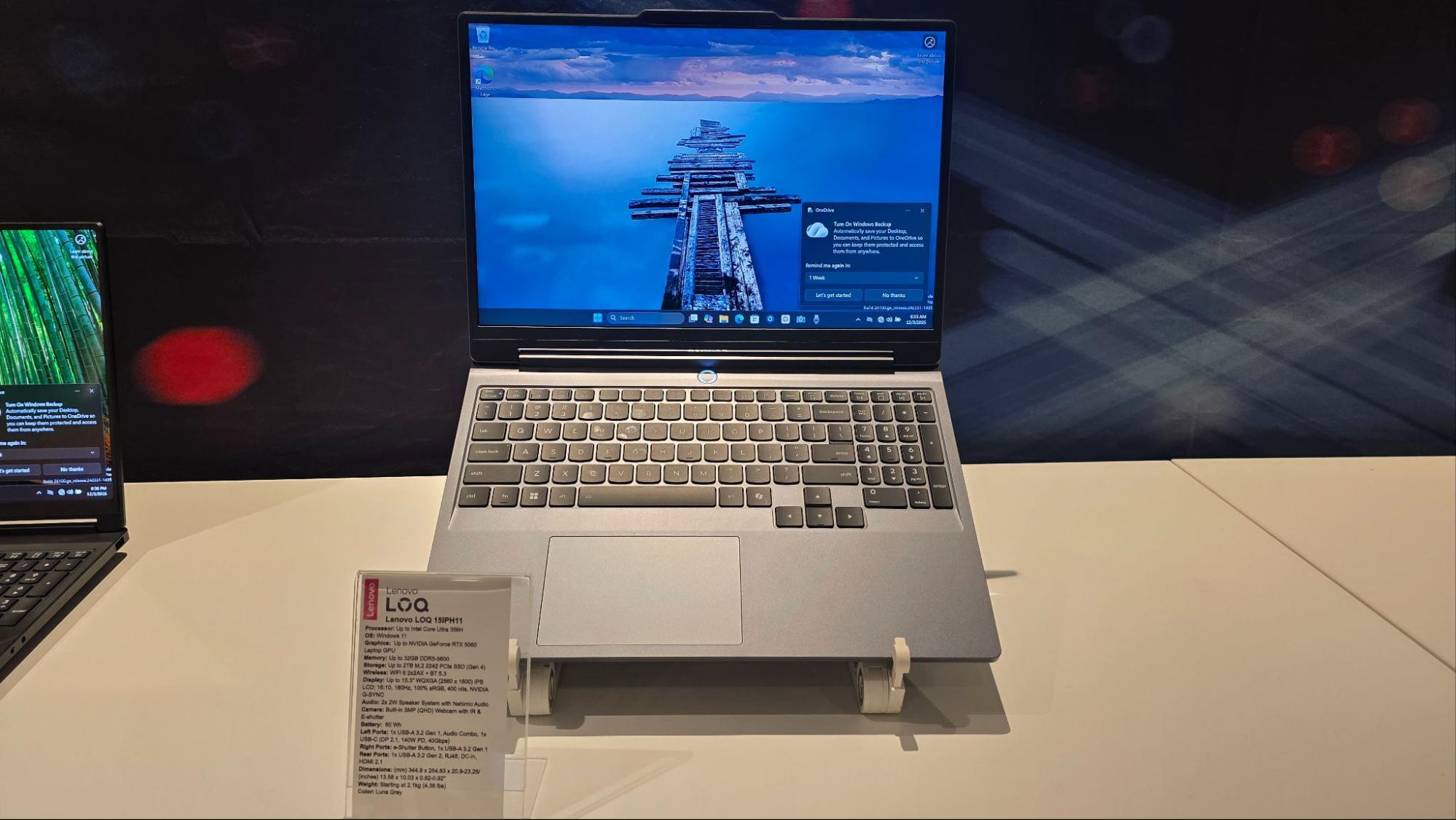
In addition to Legion refreshes, the budget-focused LOQ range is getting a refresh with the LOQ15AHP11, starting at $1,149 with an AMD Ryzen 7 250, as well as up to an RTX 5060 mobile GPU and 32GB of DDR5-5600 memory. It’s a name bump alone, as this model already carries these same specs. Lenovo revealed the LOQ15IPH11, as well, which features one of Intel’s new Core Ultra 7 356H CPUs. However, Lenovo isn’t selling this model in the U.S.

Follow Tom's Hardware on Google News, or add us as a preferred source, to get our latest news, analysis, & reviews in your feeds.


 English (US) ·