
- Lenovo and HP show no readily purchasable RTX 5090 desktop configurations
- Amazon advertises an available ASUS RTX 5090 graphics card for $7,679.80
- Several retailers list RTX 5090 cards at more than twice launch prices
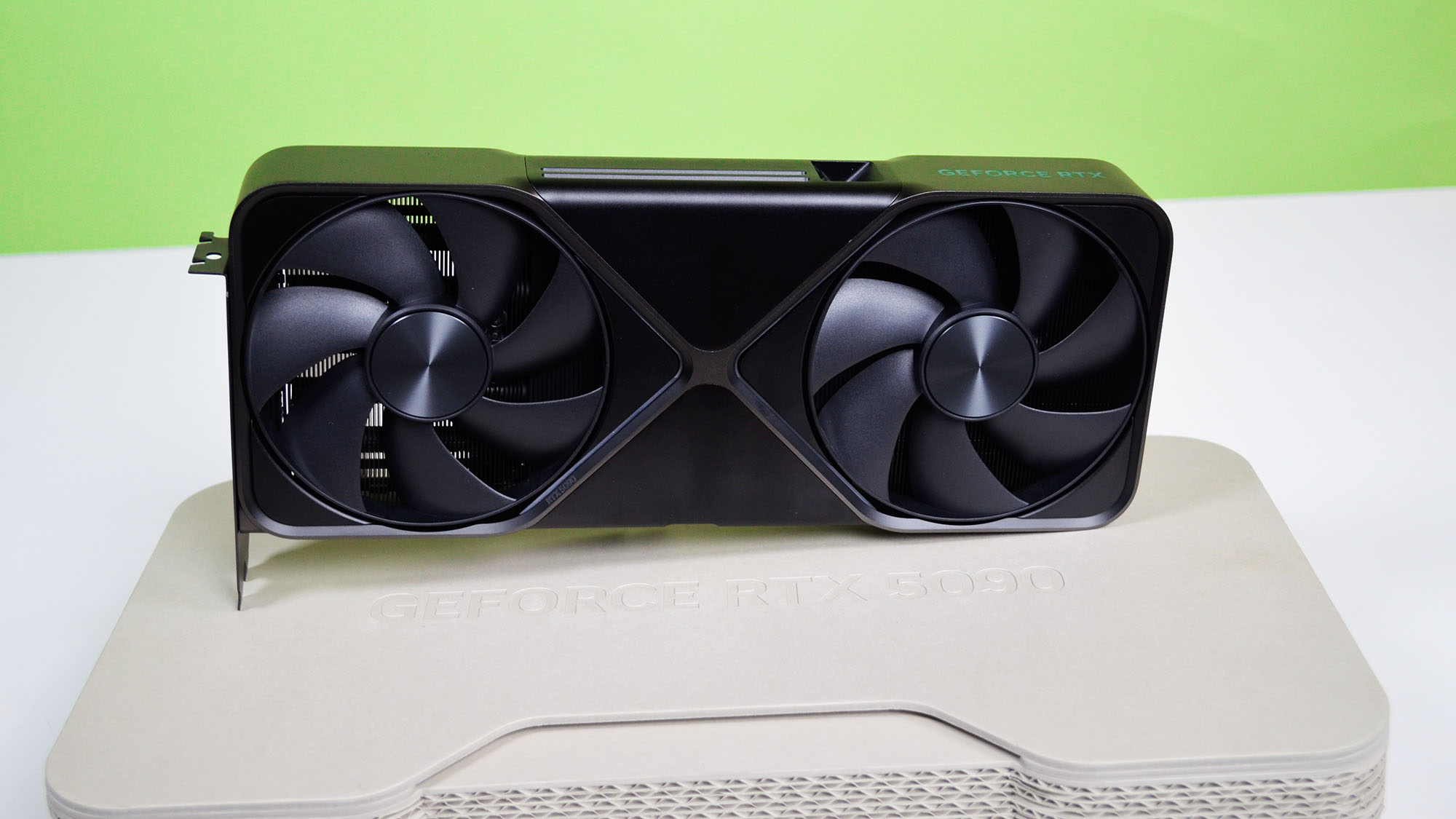
Nvidia's GeForce RTX 5090 is becoming increasingly difficult to purchase across the United States, with Lenovo and HP facing availability problems affecting their premium desktop computers.
A quick check of both manufacturers' US online stores found no readily purchasable desktop configurations equipped with Nvidia's flagship consumer graphics processor.
The situation extends beyond manufacturer websites, as several major retailers are also displaying expensive standalone RTX 5090 graphics cards as unavailable.
Lenovo and HP struggle with RTX 5090 availability
HP's OMEN MAX 45L illustrates the high cost of obtaining a complete computer equipped with the graphics processor through manufacturer-operated stores.
The company lists its RTX 5090 configuration at $7,999.99, offering an AMD Ryzen 9 processor, 64GB memory, and 4TB of combined storage.
Despite its premium specifications, HP's US website identifies the desktop as out of stock, preventing customers from purchasing the advertised configuration.
Lenovo's US online store also showed no readily purchasable RTX 5090-equipped desktops during the availability investigation.
The difficulties extend to standalone graphics cards, which offer consumers an alternative to purchasing expensive complete computers from established manufacturers.
The growing scarcity of Nvidia's RTX 5090 is driving substantial price increases, with graphics cards originally launched at $1,999 now appearing at several retailers for considerably higher amounts.
Newegg lists several RTX 5090 graphics cards sold directly by the retailer as unavailable, including MSI's Suprim model and ASUS's TUF Gaming edition.
Although neither card is currently available directly from the retailer, their listed prices stand at $5,899.99 and $5,099.99, representing increases of approximately 195% and 155%, respectively.
B&H Photo Video reports similar availability problems, with its ASUS TUF and MSI Gaming Trio OC RTX 5090 models temporarily out of stock.
The retailer lists the two graphics cards at $4,599.99 and $4,499.99, respectively, representing increases of approximately 130% and 125% over Nvidia's original launch price.
Amazon currently has the ASUS TUF Gaming RTX 5090 available for purchase at $7,679.80, approximately 284% above Nvidia's original launch price.
Independent manufacturers still offer expensive alternatives
However, the availability problems affecting Lenovo and HP do not mean US consumers can no longer purchase complete computers containing RTX 5090 graphics cards.
Best Buy continues advertising several configurations from independent computer manufacturers, including Skytech and CLX, with available purchasing options.
One Skytech Tempest desktop combines an AMD Ryzen 7 9800X3D processor, 32GB memory and the RTX 5090 for $8,999.99.
Another Skytech Blaze 5 configuration costs $9,379.99, while a CLX SET desktop featuring an AMD Ryzen 9 9900X3D carries a $9,849.99 price.
Newegg also advertises Skytech computers containing the graphics processor, including configurations priced between $9,299.99 and $9,699.99.
Dell similarly maintains RTX 5090 availability through its Alienware Area-51 desktop range, although some configurations exceed $10,000.
One version featuring Intel's Core Ultra 9 285K processor, 32GB memory and 2TB of storage costs $10,499.99.
Another configuration featuring an AMD Ryzen 9 9950X3D2 processor, 64GB memory and 4TB of storage carries a $13,499.99 price.
The growing difficulty of purchasing individual graphics cards also matters because the RTX 5090 serves professional computing applications beyond conventional gaming.
Its 32GB GDDR7 memory makes the graphics processor attractive for local AI development, graphics rendering, and other demanding computing workloads.
Although Nvidia has not officially confirmed permanently ending RTX 5090 production, consumers increasingly face fewer reasonably priced purchasing opportunities.
The shortage therefore affects gamers and professionals seeking powerful computing hardware, particularly those preferring individual graphics cards instead of expensive prebuilt computers.

Follow TechRadar on Google News and add us as a preferred source to get our expert news, reviews, and opinion in your feeds.






 English (US) ·