Legendary Qualcomm, Apple, and Nuvia alumni form new CPU startup — Nuvacore promises to 'rewrite the rules of silicon'
2 hours ago
6
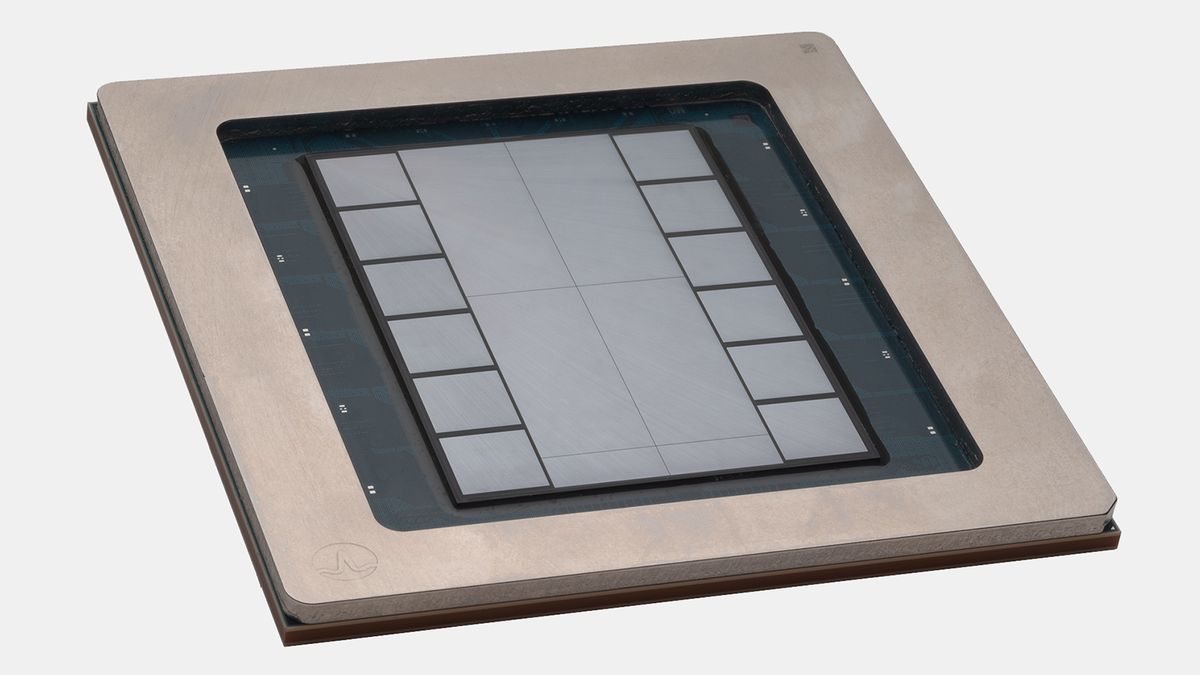
(Image credit: Nuvacore)
Just several months after leaving Qualcomm, distinguished CPU and system architects Gerard Williams, John Bruno, and Ram Srinivasan, who are celebrated for their high-performance processors developed at Apple, Nuvia, and, more recently, Qualcomm, established a new CPU startup — Nuvacore — that promises no less than to 'rewrite the rules of silicon.' The new general-purpose CPU core set to be developed by Nuvacore is projected to excel in all data center AI workloads, and the motto of the new company is 'Engineered for Altitude.'
"For decades, the semiconductor industry has been dominated by an 'old guard,' titans of tech that design for the ground, iterating on yesterday's architecture," a statement by Nuvacore reads. "But as artificial intelligence and core infrastructure demands skyrocket, iteration is no longer enough."
Based on the description on Nuvacore's website, the company is developing a new general-purpose CPU core designed from scratch for data center and AI infrastructure, and the key focus of the all-new design is maximizing performance and area efficiency. The new high-throughput core will be optimized to efficiently sustain long-running, compute-intensive tasks, including always-on workloads such as advanced AI systems and agentic computing. The startup is funded by Sequoia Capital.
Article continues below
One would notice that all modern server CPUs are explicitly designed for 24/7 operation, high utilization, and long-running workloads. Sustained quality-of-service (i.e., performance and latency), reliability, and efficiency under continuous load are compulsory characteristics in the data center. However, Nuvacore positions its upcoming design as one optimized for AI-heavy, continuously saturated environments, not just general-purpose server CPUs.
Whether that translates into something materially different from existing CPUs is an open question, as the statement itself looks more like marketing than a fundamentally new characteristic of a data center processor. Perhaps, the design will be very clean and feature optimizations for working alongside AI accelerators, and/or special features to handle vast amounts of data common for AI systems.
One thing Nuvacore does not disclose is the instruction set architecture of its upcoming CPUs. Arm is certainly among the options, particularly because many hyperscalers use custom Arm-based processors for their emerging AI workloads.
Gerard Williams III is renowned for his high-performance breakthrough 64-bit Arm-based CPU cores for Apple iPhone and iPad, as well as Mac computers spanning from the Cyclone generation in 2013 (Apple A7, iPhone 5S) all the way to the Firestorm generation (M1-series CPUs, A14 application processors). At Apple, Gerard Williams worked closely with John Bruno, who was responsible for system architecture; Ram Srinivasan, a specialist in system-on-chip architecture; and Manu Gulati, who was the lead SoC architect for multiple iPhone and iPad generations from 2009 to 2017.
Get Tom's Hardware's best news and in-depth reviews, straight to your inbox.
Having developed multiple generations of successful client platforms, Williams, Bruno, and Gulati founded Nuvia to develop high-performance Arm-based data center-grade CPU cores. Nuvia was acquired by Qualcomm in 2021 with the aim of using its technologies primarily for client applications, though it is highly likely that eventually architectures developed by the ex-Nuvia team will be used for the company's data center products.
Now, Williams, Bruno, and Srinivasan plan to develop an all-new clean-sheet general-purpose CPU design specifically for 'intense, continuous demands of advanced AI systems and agentic computing.' Perhaps it is about time now that most hyperscalers have their own custom silicon programs aimed at developing compute platforms aimed specifically at diverse AI workloads. All of these companies, already investing tens of billions of dollars in their AI infrastructure, will be tremendously interested in getting their hands on a clean-sheet CPU core design better tailored for AI than general-purpose competitors.
Anton Shilov is a contributing writer at Tom’s Hardware. Over the past couple of decades, he has covered everything from CPUs and GPUs to supercomputers and from modern process technologies and latest fab tools to high-tech industry trends.

 2 hours ago
6
2 hours ago
6








 English (US) ·