
 3 weeks ago
27
3 weeks ago
27
Keeping the band together
It seems that every week we're reporting on news of another wave of layoffs at a big game studio. In March alone, we saw 1000 staff let go at Epic Games, 124 at Eidos Montreal, and over 100 at Ubisoft's Red Storm Entertainment. And those are just the ones I can name without needing to rack my brain.
In some cases, these "reorganisations" are to keep investors happy, in others they're painted as necessary for a studio to keep the lights on until its next paycheck. But every time a team loses members, they lose something that can't be replaced if the money ever begins to flow again. The shorthand and trust that develops between staff who work together for a long time, the institutional knowledge of what's been tried in the past and worked (or didn't), these only come from teams that remain intact.
Many have sung the praises of institutional knowledge and holding a team together before, but in the wake of layoffs like we're seeing at the moment, it seems worth providing an example of why letting a team mature together makes for better games.
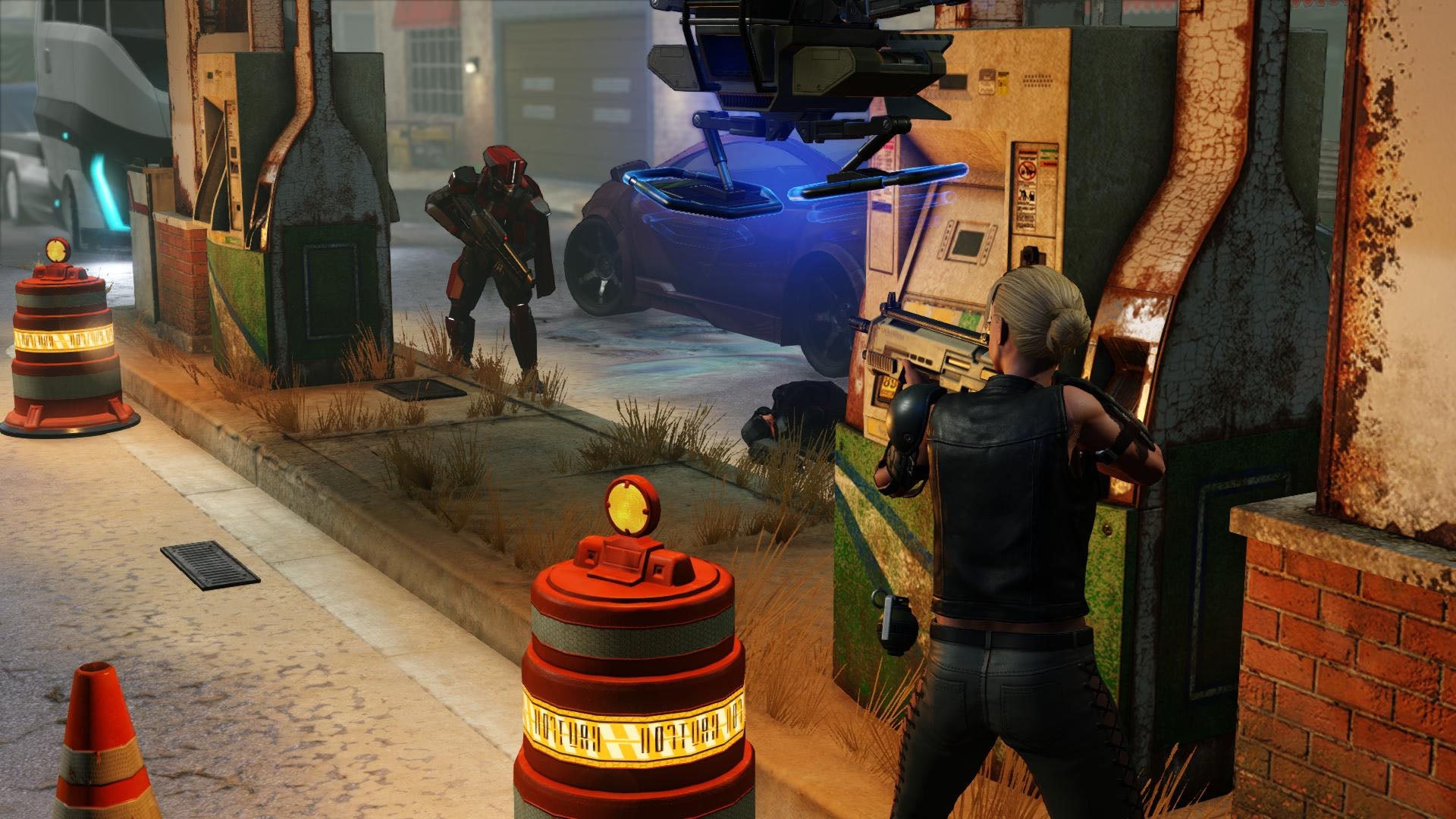
When I spoke to Greg Foertsch, founder of Bit Reactor and creative director on Star Wars Zero Company, it wasn't to hear about his turn-based tactics spinoff of George Lucas's sci-fi opera. I wanted to hear about XCOM 2, which celebrated its tenth anniversary in February. Foertsch was art director on both XCOM: Enemy Unknown and its sequel before moving onto Marvel's Midnight Suns. An unexpected thread that ran through our conversation was what the strength that came from holding the creative team together.
Before working on Enemy Unknown, Foertsch was the art lead on 2006's Sid Meier's Railroads! If you compare the credits between the two games you can see just how many of the same names appear. "My team on XCOM was largely my team from Railroads," Foertsch says. "So we already had some institutional knowledge and shared experiences and that made XCOM Enemy Unknown a little easier." But the benefit of keeping the team together for nearly 15 years showed up in XCOM 2.
"Our goal was to keep the team together."Shortly after the successful launch of XCOM: Enemy Unknown in 2012, 2K Games gave Firaxis the greenlight to start work on its sequel. Rather than downsize to a small pre-production group, the bulk of the team worked on a DLC expansion for Enemy Unknown while the leads began work on the sequel. "The way that we did it at Firaxis was we used expansions and DLC to let somebody else get leadership experience," Foertsch explains, though he adds that there was another motive: "Our goal was to keep the team together."
Foertsch knew going into the sequel that they would face a significant challenge on the art side. While Enemy Unknown and XCOM 2 are both built in Unreal Engine 3, for the sequel Firaxis implemented new rendering technology that meant they weren't able to reuse assets from the first game. Rather than see this as a problem, it was also an opportunity for the art team to show off what they had learned making the first game.
"With XCOM, I directed to what I thought the team could do in the timeframe," Foertsch says. "The original previsualisation was a little more realistic [but] we landed in that more stylized, chunky miniature feel [because of] two factors: the time we had and what I thought the team could deliver."
Foertsch is quick to add that it's "not that they weren't talented", but because so much of what the team was doing in XCOM: Enemy Unknown was new. They were making an isometric turn-based tactical game where the camera could at any moment zoom down into over-the-shoulder glam cam shots of a soldier making an impressive shot, all while working in a new engine. "Trying to figure out the challenge of the camera being anywhe...," Foertsch says. "How do you make art that holds up? Enemy Unknown was largely a response to that."
With XCOM 2, Foertsch knew his team could work to a higher level. So when the design team decided to change all the character classes from Enemy Unknown and refine the abilities and functions of all the game's enemies, the art team recreated every model to better capture those changes. It wasn't a return to the realism of Foertsch's original XCOM previsualisation, but an exaggeration of the style they landed on for the first game. "We went from miniatures to GI Joe action figures in the second game," he explains.
"The difference between XCOM and XCOM 2 is like watching a team grow up right in front of your eyes."The berserker in Enemy Unknown, for instance, looked fairly similar to a muton; both were chunky aliens in battle armour. While one couldn't be mistaken for the other, they were cut from the same cloth. So in XCOM 2, Foertsch's team turned the berserker into a screaming, roaring creature with scaly red and white skin that barrels towards your soldiers looking like a bear crossed with a steam train. Meanwhile, the muton became more humanoid, taller and muscular – a rugby player in full kevlar.
"The difference between XCOM and XCOM 2 is like watching a team grow up right in front of your eyes," Foertsch says. "That's a huge takeaway for the industry right now."
XCOM 2's development was not without its problems. Describing the game as the team's "teen years," Foertsch says that "maybe the swings were a little too big”. Just months before release, the team decided they needed more than an hour of cinematics, so he and other artists were pulled off to storyboard and animate videos that would connect up the different missions of the game. "If we hadn't all been through the other projects together, there's no way that you have that trust and that relationship with everybody on the team to go 'Okay, I gotta focus on this thing,” Foertsch explains “Take care of [this] and we'll all meet in the middle at the end."
In the years since Foertsch’s 2019 departure from the studio, Firaxis haven't been immune from layoffs. In 2023, more than 30 staff were laid off with 2K describing the redundancies as a "sharpening of focus, enhancements of efficiencies, and an alignment of our talent against our highest priorities." Then again in September 2025, there was a second round of layoffs. This time 2K said it was part of the studio's efforts to "optimize its development process for adaptability, collaboration, and creativity."
"Keeping teams together doesn't seem to matter to people, but for us it did."Foertsch founded Bit Reactor in 2021 to start work on Star Wars Zero Company. There he's surrounded himself with people he worked with on the XCOM series. Concept artists, programmers, designers, people who carry some of the institutional knowledge and trust fostered over more than a decade working in the same rooms on the same projects.
Speaking about his and the other leaders of the XCOM team's efforts to keep their staff together between Enemy Unknown and its sequel, Foertsch says "It's so rare that we see teams stick together because institutional knowledge isn't valued at all. Keeping teams together doesn't seem to matter to people, but for us it did."




 English (US) ·