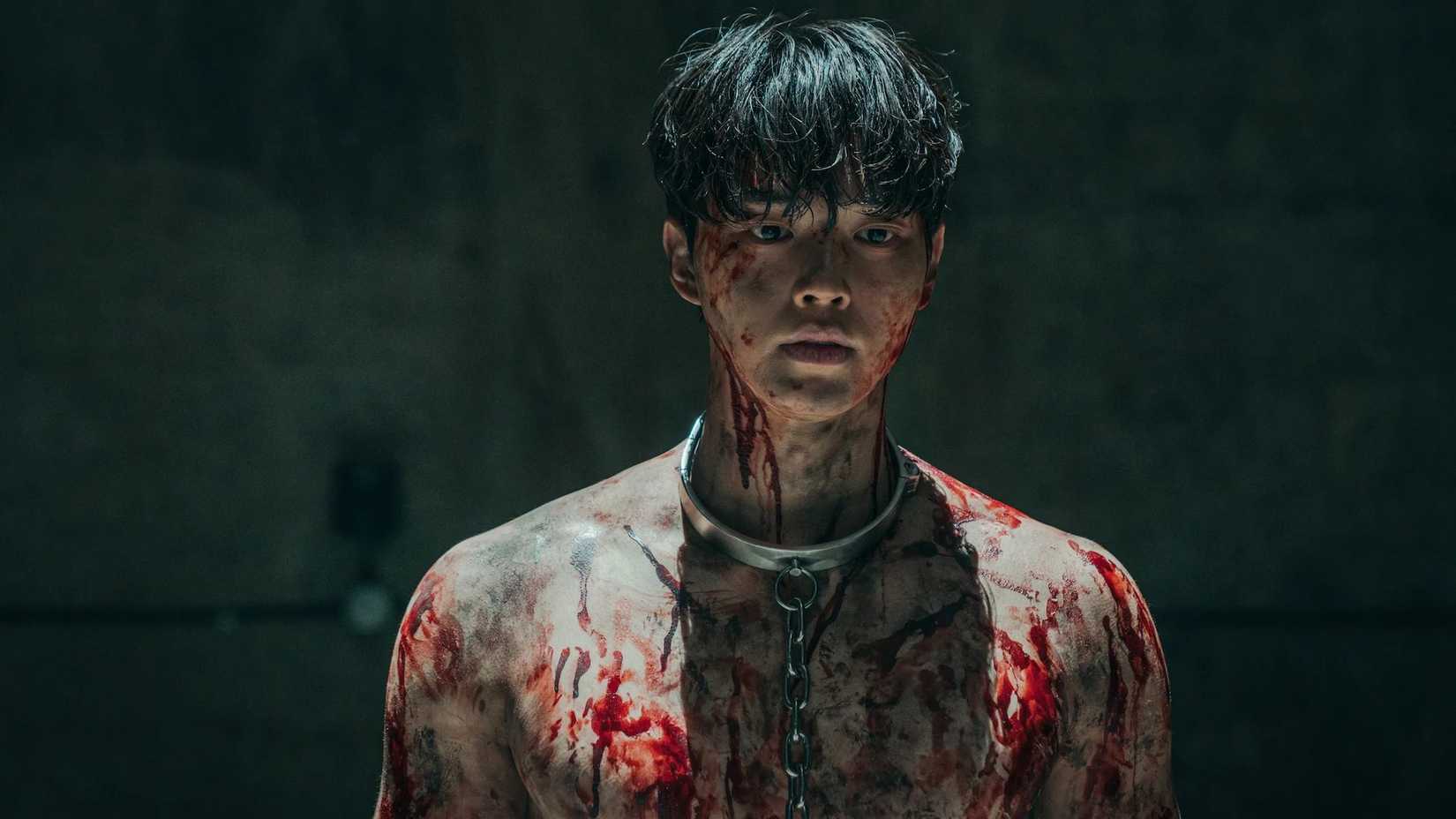
Even after all these years, The Walking Dead franchise is showing no signs of slowing down and has seemingly found a way to reinvent itself with every new spin-off. Viewers who love both The Walking Dead and Jujutsu Kaisen and look forward to their upcoming installments will particularly like Netflix's Sweet Home. In its three-season runtime, the incredible Netflix K-drama seemingly combines the best of both series' worlds.
Netflix's Sweet Home Combines The Best Aspects Of Jujutsu Kaisen & The Walking Dead
In its early chapters, Sweet Home seems reminiscent of The Walking Dead in more ways than one because of its focus on a desperate community locked away from a ruined world. Just like The Walking Dead makes good use of its Atlanta Camp/Prison setting to explore how fear and isolation slowly reshape human behavior, Sweet Home primarily remains confined to the Green Home apartment complex.
There is always a looming threat from the external "monsters" in both shows. However, their true tension lies in the fragile politics that keep their little central societies together. Both shows use the external threat as a mere narrative device to highlight the true nature of humanity.
While the survivors in both are supposed to be more human than the monsters and the zombies they protect themselves from, they often crack under pressure and display more cruelty and selfishness than the creatures they fear.
The K-drama's Jujutsu Kaisen parallels emerge when, unlike The Walking Dead, it completely abandons conventional zombie thriller tropes and gives its drama a more supernatural spin. Just like curses in Jujutsu Kaisen are portrayed as manifestations of human malice and greed, the "monsterization" in Sweet Home is treated as a curse triggered by one's darkest traits and desires.
For instance, a man literally turns into a gigantic muscle monster in Sweet Home because of his previous obsession with wanting to look buff. Similarly, a mother turns into a giant, protective fetus because of her inability to save her own baby in the past.
While Sweet Home is packed with the agonizing, slow-burning psychological dread that makes The Walking Dead so incredible, it also riffs on quite a few shōnen anime tropes and does not shy away from going all-out with its fantastical aspects. Owing to this, it seems fair to call it the perfect combination of Jujutsu Kaisen and The Walking Dead.
Sweet Home Is The Perfect Show For Fans Of Gritty K-Dramas Like Squid Game
Considering its wildly fantastical aspects, Sweet Home may seem nothing like Squid Game. However, beyond its over-the-top portrayal of monsters, Sweet Home is nothing but an almost gamified portrayal of human survival. Its primary setting almost comes off as a bottleneck survival arena where characters must often "eliminate" others to increase their odds of survival.
Similar to Squid Game, Sweet Home is also packed with socio-economic commentary about desperation and inequality. Its primary setting in itself is a crumbling, low-income apartment complex. Like the characters in Squid Game, the ones in Sweet Home are also outcasts who you end up both hating and loving as the show progresses.
When it comes to visual spectacle, Sweet Home even beats Squid Game with its portrayal of high-stakes survival situations and wildly imaginative monsters. With the Netflix K-drama having so much in common with shows like Squid Game, Jujutsu Kaisen, and The Walking Dead, it is surprising that Sweet Home has still not achieved the same level of mainstream recognition as those genre giants.









 English (US) ·