
 Image courtesy of MovieStillsDb
Published Aug 1, 2026, 6:01 PM EDT
Cathal Gunning has been writing about movies, television, culture, and politics online and in print since 2017. He worked as a Senior Editor in Adbusters Media Foundation from 2018-2019 and wrote for WhatCulture in early 2020. He has been a Senior Features Writer for ScreenRant since 2020.
Sign in to your ScreenRant account
Since the Star Trek franchise has changed immeasurably in the years since The Original Series wrapped up, it might be hard for fans to believe how long it took the show to drop one element of its reliable formula early on. The Star Trek franchise has no new shows in production right now, but this is partially an inevitable result of how incredibly prolific the series has been in the years since its last theatrical movie, 2016’s Star Trek Beyond, was released.
In the decade since then, Discovery, Short Treks, Picard, Lower Decks, Strange New Worlds, and Prodigy have all been released, as well as the two-season series Starfleet Academy and the TV movie Star Trek: Section 31. While Starfleet Academy divided fans and Star Trek: Section 31 was hated by critics, the success of the prequel Strange New Worlds proves that this era hasn’t been a failure by any means. What this modern Star Trek era has done, however, is innovate.
For better or worse, every new Star Trek show and movie of the last decade has come burdened with big promises to revolutionize the formula of the series. One was aimed at a teen audience, one was an animated show for kids, one was the Star Trek franchise’s first outright comedic effort, and one was an ambitious sequel that aimed to expand on the lore established by The Next Generation’s story. However, what all these projects have in common is a desire to break from the mold, which is surprising considering how much The Original Series relied on its formula.
"Specter Of The Gun" Is One Of Star Trek Season 3's Better Episodes
 Paramount Television
As surprising as it might sound, season 3, episode 6, "Specter of the Gun" was the first episode of The Original Series to end with the Enterprise heading toward an alien planet rather than away from one. This was because the entire plot had been about the aliens testing the human crew, so it was only when they passed this elaborate test that the show's heroes were finally allowed to land on the planet at the center of the episode’s plot.
Written by former The Original Series showrunner Gene Coon, "Specter of the Gun” is a trippy effort wherein the crew of the Enterprise make contact with an alien race known as the Melkotians, only to find themselves transported into a bizarro version of a Wild West setting. Mixing tropes from the popular Western TV shows of the ‘60s with Star Trek’s usual setup, the episode drops the crew members into a recreation of the real-life Gunfight at O.K. Corral.
In this elaborate landscape created by the reality-warping Melkotians, the Wild West town is an oddly stage-y, artificial space complete with flat wooden facades for its buildings, and the crew’s phases are transformed into six-shooter guns from the era. Kirk becomes the iconic outlaw Ike Clanton, McCoy turns into McLaury, and the rest of the crew are suddenly transformed into other members of the infamously doomed gang, the Cowboys.
As the clock ticks and the time for the fatal gunfight draws near, the group desperately tries to work out how to escape their fate. This article won’t explain their ploy, but suffice to say that, like the previous episode of The Original Series, “Is There No Truth In Beauty?,” the episode ends up relying on the crew displaying their mental fortitude to get out of this trap.
Thus, in the first fun subversion of the show’s usual formula, “Specter of the Gun” ends not with the crew leaving this alien race’s planet, but instead finally arriving there for the first time having successfully passed their twisted alternate history test. In doing so, The Original Series broke with the Star Trek franchise’s mold just a little early on.
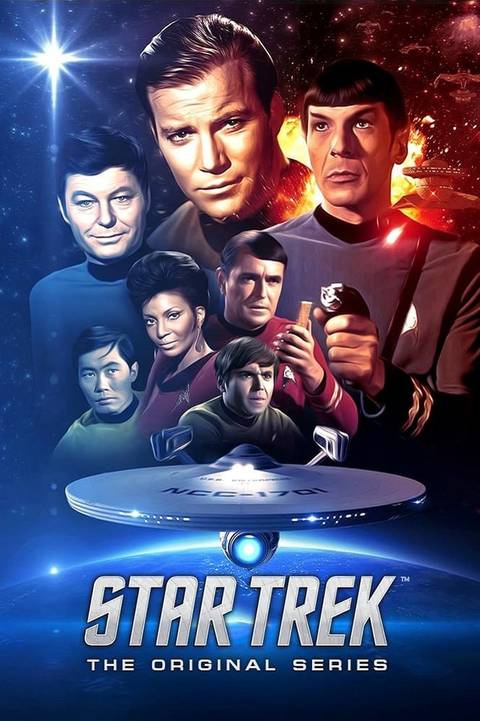
Release Date 1966 - 1969-00-00
Showrunner Gene Roddenberry
Directors Marc Daniels, Joseph Pevney, Ralph Senensky, Vincent McEveety, Herb Wallerstein, Jud Taylor, Marvin J. Chomsky, David Alexander, Gerd Oswald, Herschel Daugherty, James Goldstone, Robert Butler, Anton Leader, Gene Nelson, Harvey Hart, Herbert Kenwith, James Komack, John Erman, John Newland, Joseph Sargent, Lawrence Dobkin, Leo Penn, Michael O'Herlihy, Murray Golden
Writers D.C. Fontana, Jerome Bixby, Arthur Heinemann, David Gerrold, Jerry Sohl, Oliver Crawford, Robert Bloch, David P. Harmon, Don Ingalls, Paul Schneider, Shimon Wincelberg, Steven W. Carabatsos, Theodore Sturgeon, Jean Lisette Aroeste, Art Wallace, Adrian Spies, Barry Trivers, Don Mankiewicz, Edward J. Lakso, Fredric Brown, George Clayton Johnson, George F. Slavin, Gilbert Ralston, Harlan Ellison


![[Virtual Event] Building a Secure AI Strategy for the Enterprise](https://eu-images.contentstack.com/v3/assets/blt6d90778a997de1cd/blt11afeac15e7adbb9/6a921187f8aef68330d6ae57/DRIW-AI-Strategy-VE-Oct26.jpg?width=720&quality=80&disable=upscale)


 English (US) ·