
 3 hours ago
5
3 hours ago
5
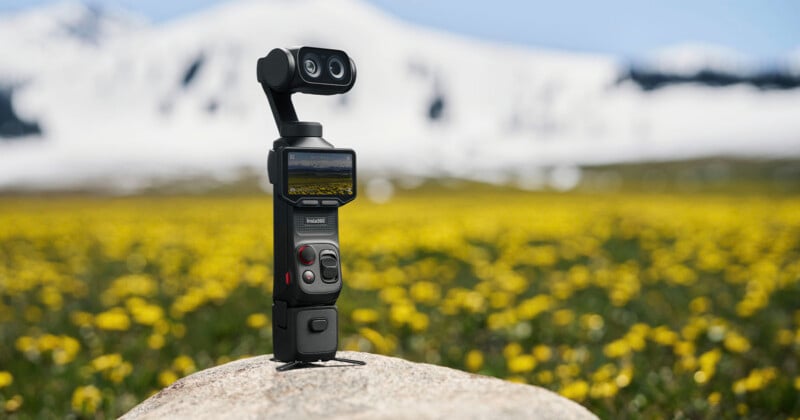
Insta360’s founder, Liu Jingkang, known as JK Liu, shared exciting new insights into the development process and philosophy behind the company’s new Osmo Pocket competitors, the Insta360 Luna and dual-lens version, the Luna Ultra.
In an interview with Japanese imaging blog, DC.Watch, Liu explained how and why Insta360 built the Luna series gimbal cameras, a significant new product launch that increases the temperature of Insta360’s intense rivalry with DJI.
As DC.Watch explains that Luna’s arrival comes at an interesting time. Thanks in large part to the Osmo Pocket, DJI utterly dominates the video camera market. So why did Insta360 enter the fray?
“Actually, we started developing a gimbal camera about five years ago,” Liu tells DC.Watch in a translated interview. “Initially, we were exploring a modular design like the One R, and it only had one lens. We have a vision of ‘enriching people’s lives through video,’ and we wanted to increase the variety of cameras beyond just 360° cameras.”
JK Liu says the product began with an initial investment of around 30 million yuan, about $4.4 million at current exchange rates. It’s a safe bet these costs quickly ballooned as the project became increasingly serious. Developing new products is expensive, especially when they eventually become an all-new product segment for a company.
The original modular design proved technologically challenging and had thermal management issues, so it was abandoned. In its place, something much closer to the final Luna and Luna Ultra arrived.
Liu says the Luna could have launched six months earlier, but he insisted on the Luna’s detachable display and controller unit, which took longer to implement.
“A detachable touchscreen can significantly improve the user experience,” Liu says. “For example, it allows for angle adjustments when shooting vlogs or telephoto shots with the camera positioned at a distance. Unlike many cameras, there’s no need to link it to a smartphone; the fact that you can detach it from the camera and use it immediately is extremely convenient.”
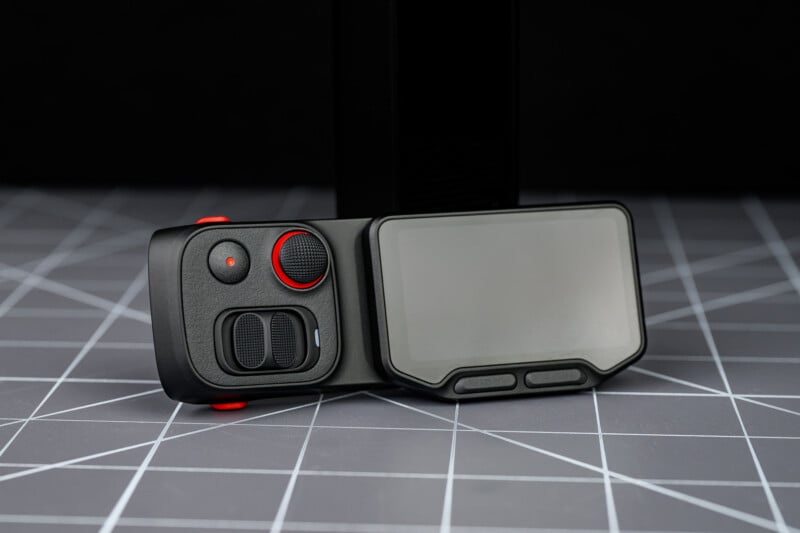 You can remove the screen and controller to make the Insta360 a fully remote camera system. | Photo by Erin Thomson for PetaPixel
Not everyone at Insta360 was on board with this unique feature. It increased costs and lengthened the development time. But Liu is confident it was the right choice, making the Luna easier to use and differentiating it from its primary competitor.
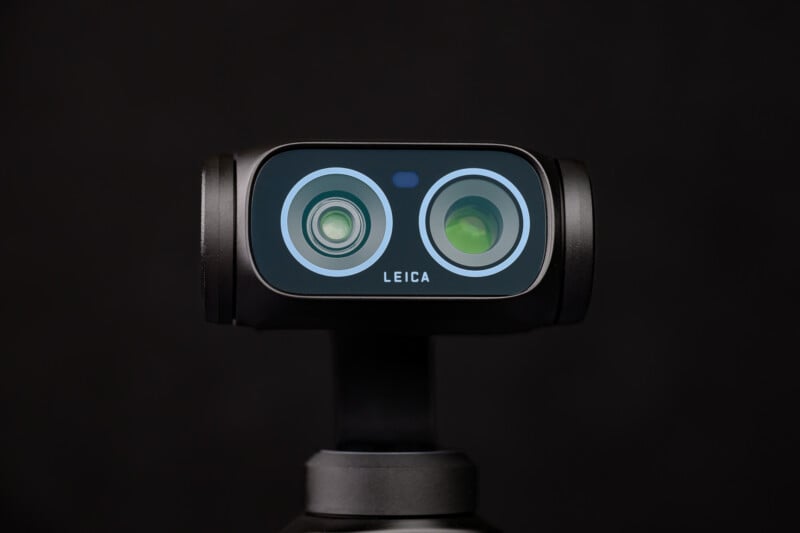 Photo by Erin Thomson for PetaPixel
Leica’s involvement with the Luna is well documented. Insta360 and Leica have partnered on imaging technology and products for six years now, and extended their agreement just last year. For the Luna Ultra specifically, new Leica color profiles, Leica’s log profile, and a new Leica-engineered lens are key features.
The Luna Ultra has two built-in cameras, one with a 20mm equivalent Leica lens and another with a 60mm equivalent Leica lens. The Leica name is front and center on the Luna Ultra, positioned between the two lenses. On Insta360’s website, “Co-engineered with Leica” is front and center. The lenses even have Leica’s legendary “Summicron” name.
“Our goal was to achieve the same level of image quality and color reproduction as Leica’s ‘Summicron’ lens, but in a very compact form factor. To achieve the characteristic bokeh of the Summicron while precisely suppressing chromatic aberration, we deliberately adopted an ‘f/1.8’ aperture instead of the conventional f/2. Leica and I agreed that image rendering performance is more important to the user than adhering to the traditional f/2 naming convention,” Liu explains.
Image credits: Insta360 unless otherwise noted.







 English (US) ·