
 2 weeks ago
20
2 weeks ago
20
A quarter of a century ago, Finnish software company MadOnion released its third iteration of a certain benchmark tool called 3DMark, and together with the launch of Nvidia's GeForce 3 series of graphics cards, 3DMark2001 showcased the potential of shaders in DirectX-powered games. For myself, it was the start of a period in my life which ultimately saw me working for the company, rebranded as Futuremark Corporation, and becoming neck-deep in everything gaming and graphics.
While I don't feel especially different 25 years on, comparing the graphics tests in 3DMark2001 to today's games shows just how much things have changed. Not just in terms of raw visual fidelity, but also in how much more complex rendering has become, replete with numbers that would have blown my tiny mind to pieces if I'd known what things would be like, all that time ago.
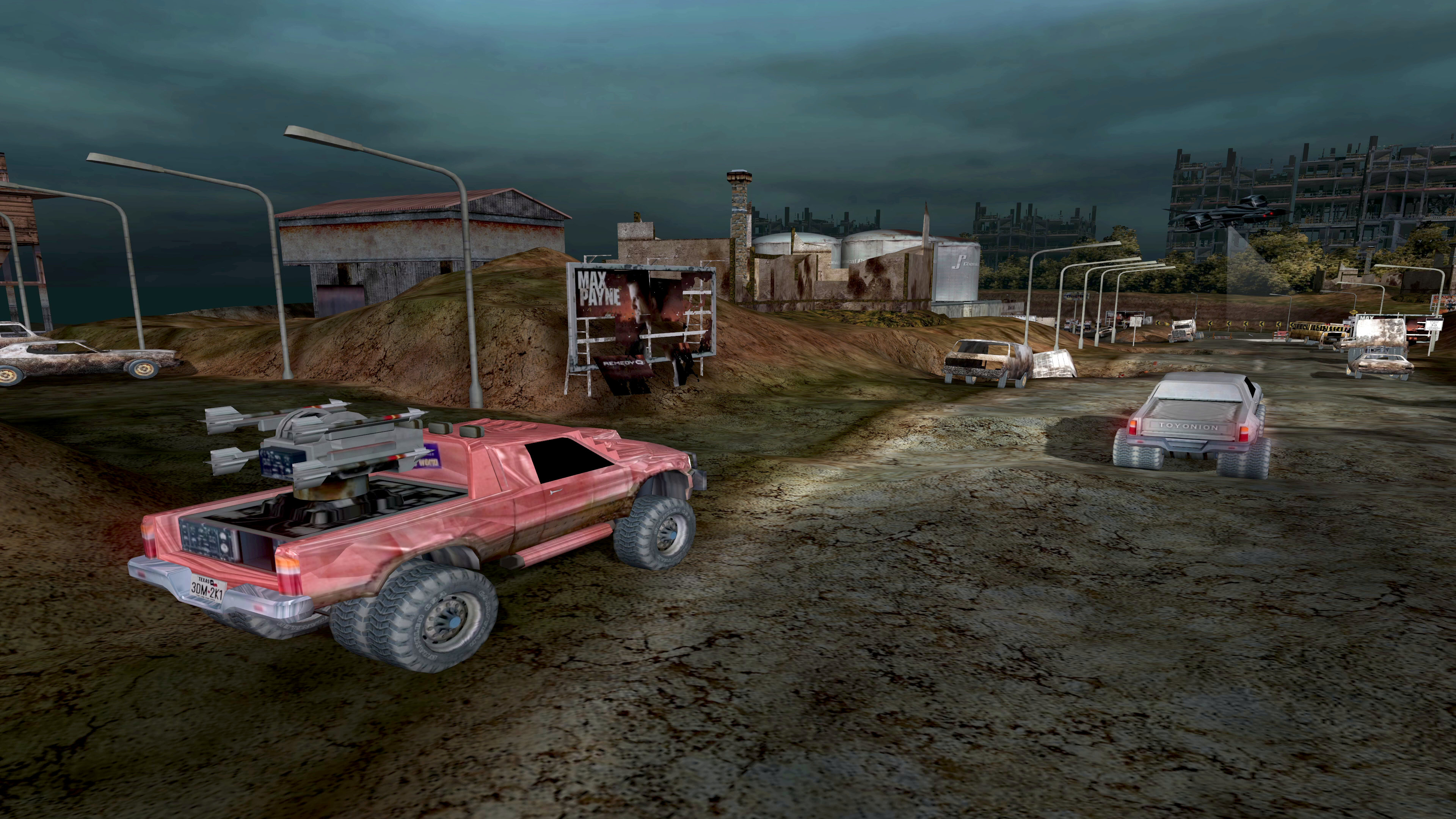
Take the very first graphics test in 3DMark2001. With overtones of Terminator 2, it follows a beefy truck, bouncing through a destroyed land, dodging attacks from gigantic, stomping robots. For each graphics test, 3DMark ran two versions, low and high detail, but in the video below, I've only included the high one.
Article continues below
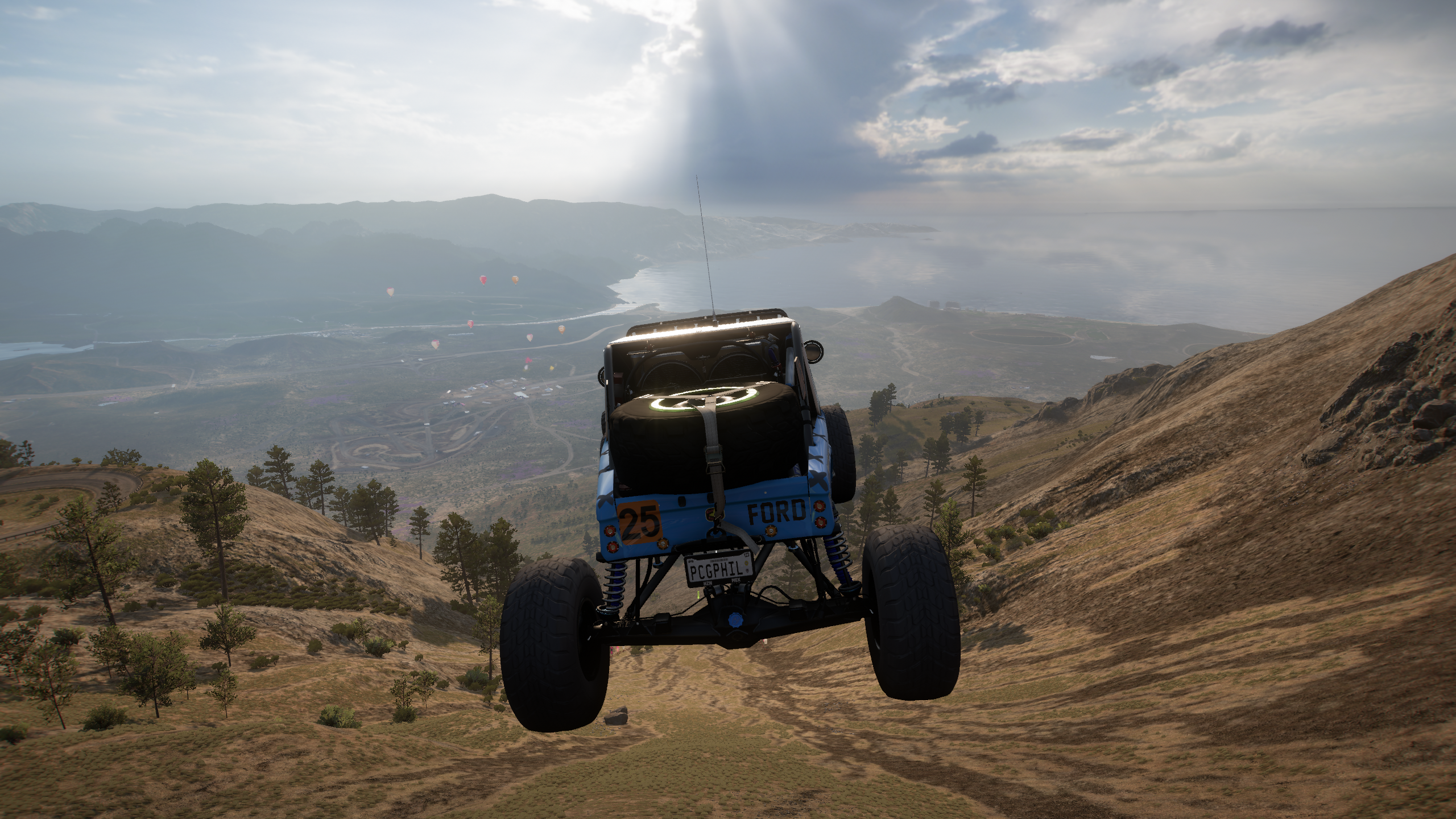
With an average of 68,000 triangles per frame in the test, it was a serious workout for any graphics card back then. Now, you'll see two or three times as many polygons, just for a single vehicle in Forza Horizon 5. And it's a similar story with textures: 3DMark2001 uses around 16 MB per frame in the first test, whereas today's games use several hundred times more.
I mention Forza simply because it was the first game that popped into my head when trying to think of a modern game with trucks bouncing around a world, but it highlights another massive change since 2001. Back then, most 3D games were very limited in how much detail they could show in a scene, typically called draw distance, due to the limitations of early GPUs.
Now, game worlds like that in Forza, plus so many open-world RPGs, give you richly filled landscapes, with vistas that are no mere backdrops. If you can see it, you can often go and explore it.
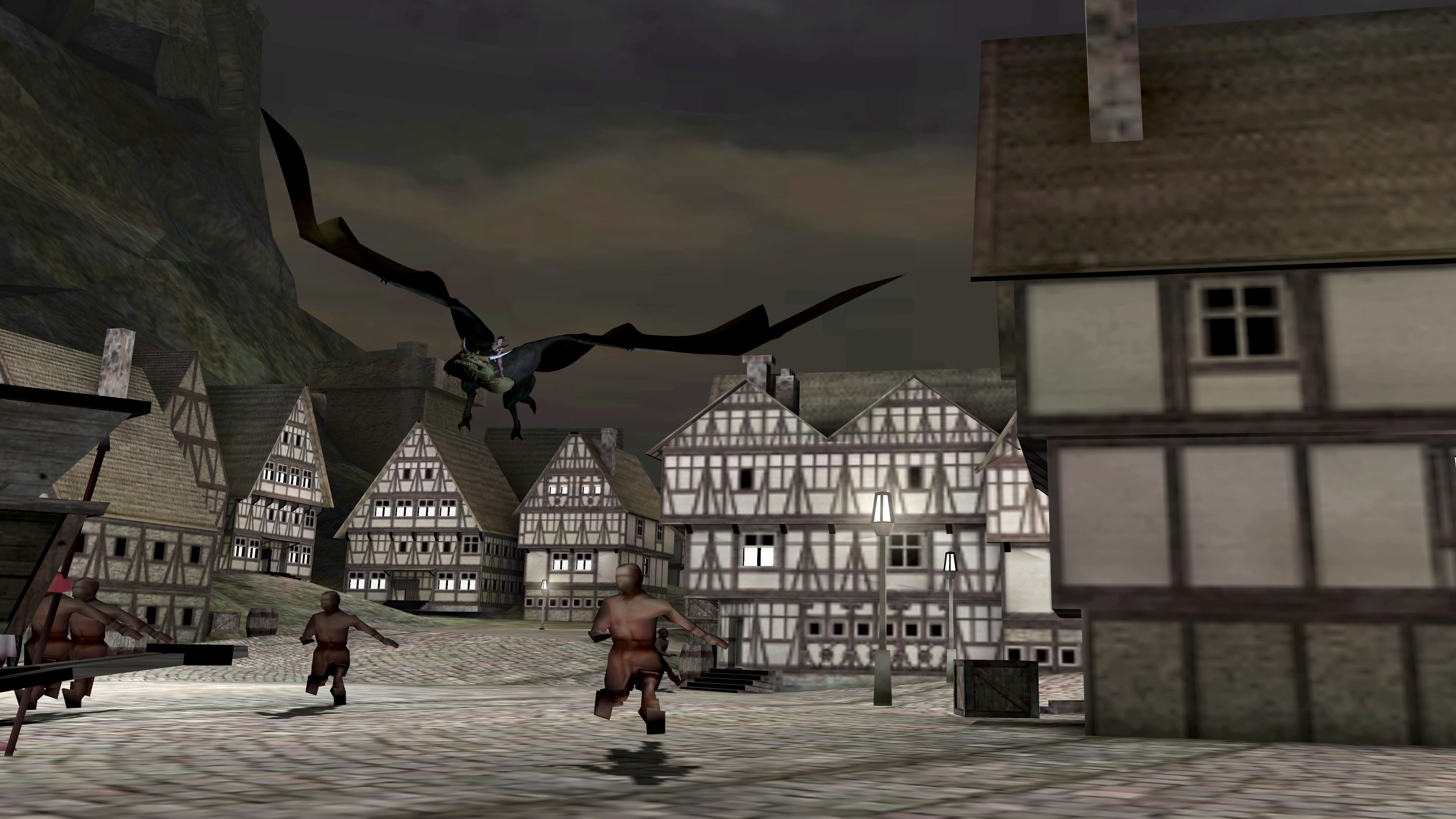
The second graphics test in 3DMark2001 involves a medieval-like town, being attacked by a scantily-clad, low-polygon person atop a fire-breathing dragon. For the most part, some of the graphics still hold up quite well, partly because each frame comprises around 100,000 triangles on average.
However, the character details instantly show the test's age, especially the people fleeing from the dragon on the ground. Very low in polygon count, the blocky figures also look especially poor because of their basic animations.
Fast forward 25 years to Kingdom Come: Deliverance 2, and you've got performance, motion, and facial captures being used everywhere, even for NPCs wandering through the city.
Sure, the triangle and texture count are way higher, but it's really the motion of the people that truly shows how much better rendering has become. It also shows just how much more complex game development is, too, because to get those ultra-realistic animations, studios need to spend endless hours and dollars on actors, directors, motion capture rigs, and so on.
Animation and character models date the third graphics test of 3DMark2001 as well. Heavily inspired by the famous lobby scene of The Matrix, this test is actually lower in triangle count and texture loads than the first two tests (42,000 and 6 MB, on average per frame, respectively). But it was still a tough test at the time, because of the use of floor reflections, dynamic shadows, particle effects, and vertex skinning to animate the characters.
Just as 3DMark2001 was used to showcase what could be achieved with DirectX 8's vertex shader system, Remedy's Control was very much a ray tracing demonstration. Though, if I can be honest, it's not a particularly good one at times, as for the footage shown above, I had to disable it to stop the textures from looking like they were from 2001.
But look how much more detail there is in the office confines of Control compared to 3DMark, with a huge amount of it being interactive and destructible. Interestingly, these two aspects are something that we don't always see very much, even now, and there's nothing more immersion-breaking than spraying bullets everywhere and leaving nary a hint of damage.
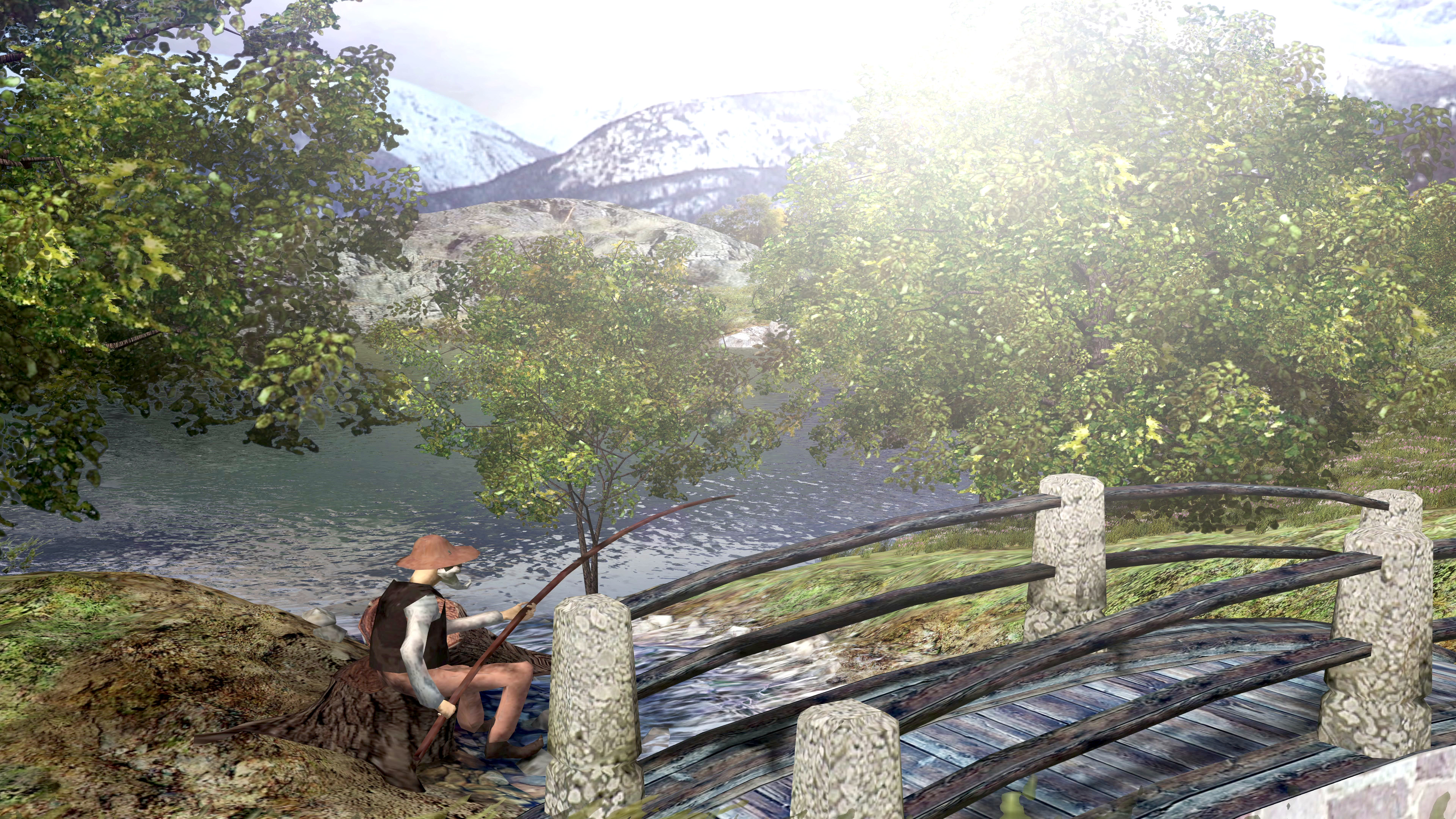
My favourite graphics test in 3DMark2001, and one that I spent countless hours repeating over and over with multiple GPUs, is the Nature scene. During its development, MadOnion didn't have access to shader-capable hardware until very late in the whole process, so much of this had to be done in software. While pixel-perfect in terms of rendering, the performance was…err…not good.
Anyway, you've got vertex shaders being used for the motion of leaves, trees, butterflies, and the fisherman, plus pixel shaders for water surface reflection, using cube maps to reflect the environment. All very simple in comparison to massive shaders used today, but they were enough to make the GeForce 3 sweat buckets at the time.
Just six years later, we got Crysis, which pretty much set the bar for nature scenes in games for a very long time. MadOnion's attempt still looks very nice—basic, of course, and certainly not physically dynamic in any way, but you only have to look at Assassin's Creed Shadows to see that getting water just right isn't easy.
That game does look fantastic, but where its trees and foliage effects massively outshine those in 3DMark2001, the water doesn't look a whole lot better. It is physically more correct, and by a huge margin, but it lacks the fizz of old-school lake reflections to my old eyes.



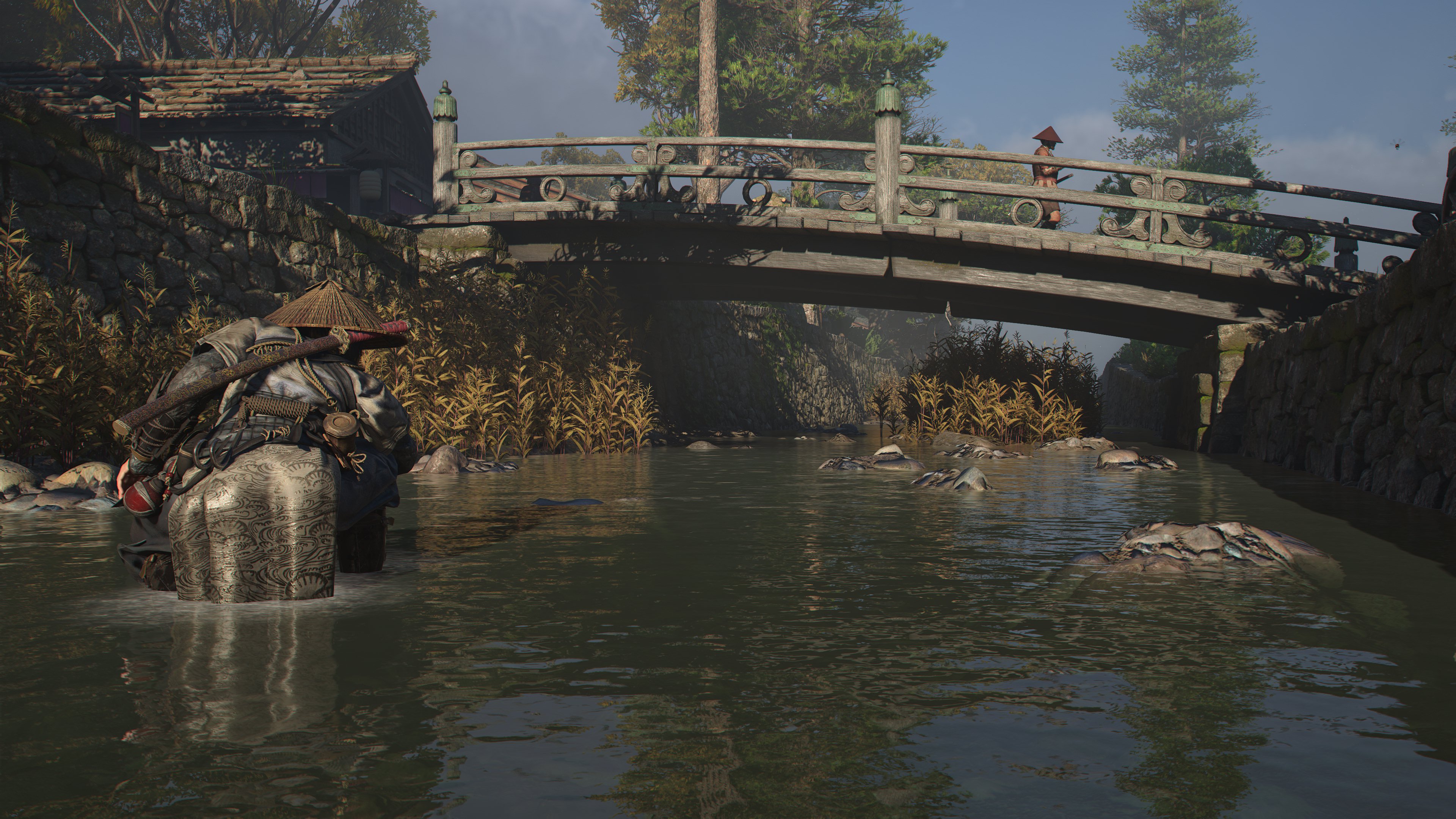
That said, when it comes to outdoor scenery, Kingdom Come: Deliverance 2 is perhaps the very best you can find right now. Its forests feel more real than in any other game, and I don't mean in terms of just lighting or shadows, or how many polygons have been used; it's almost as if the developers took a local woodland and copied it, stick-for-stick, to go in their game.
Naturally, today's games should look massively better than any GPU-stressing graphics benchmark from 25 years ago. After all, we've gone through something like 15 generations of graphics processors over that time, and even a current $250 entry-level card would make the best rendering systems at the start of the millennium look utterly useless, in comparison.
But it's still nice to look back and think about what seemed absolutely incredible at the time, but now appears incredibly basic. We're using millions of triangles, gigabytes of textures, and months of motion capture to create worlds that feel real, lived in, and open to be explored.
While the sense of excitement over each new piece of rendering technology has lessened over the years, I still feel a bit giddy as to what things could be like in another 25 years.








 English (US) ·