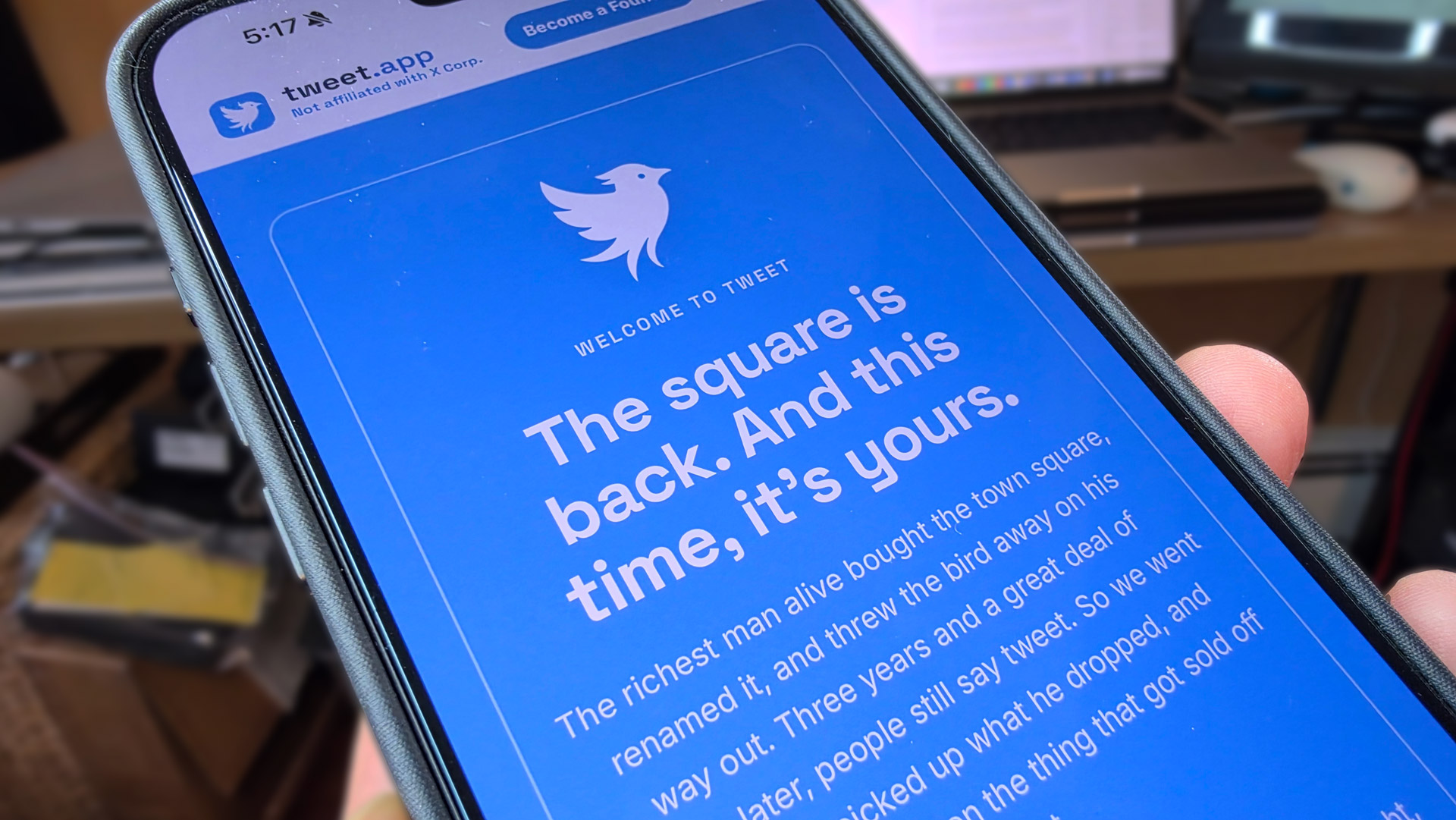
Twitter is not back, and we'll surely never see the likes of it again. In its place, we have X, and now, Tweet.app. You can be forgiven for the confusion. Many who still use X think their posts are tweets, but the still-pay-to-play platform from Bluebird, Inc. is now called Tweet.
It's a tale far too rich to contain in, say, a classic 140-character tweet, but I'll attempt to unpack it here, with insights from Bluebird, Inc. President and General Counsel Stephen Coates.
"I call it the 'Tweenix,' " Coates tells me, after I noted that Tweet.app's new blue logo looks a little like a phoenix. The imagery is apt. It signifies classic Twitter rising from the ashes, but also Bluebird's initial success and then failure to revive 'Twitter', before ultimately launching Tweet.app a few weeks ago.
Two years ago, Bluebird began the skunkworks project to revive Twitter, a brand Elon Musk effectively killed when he bought Twitter in 2022 and then in 2023 rebranded it to X, leaving vestiges of the old 'Twitter' scattered throughout the services, a fact that played a crucial role in Bluebird's ability to revive the brand.
Coates told me that after his company tried to file for a cancellation of the 'Tweet' and 'Twitter' trademarks in December of last year, X quickly filed a federal injunction. In the meantime, Bluebird launched Twitter.now. Months later, the judge ruled that because X still had "formerly Twitter" on the Apple App Store listing, it had brand rights. Coates called the ruling surprising, but Bluebird quickly pivoted and rebranded to Tweet.
The company, he told me, has no plans to go after the iconic Twitter bird logo, even though it's not well protected as a brand by X. Hence, the Tweenix.
Tweet, though, still seems like a risky name. Coates told me, "We're optimistic... It seems highly likely we’ll prevail on 'Tweet'."
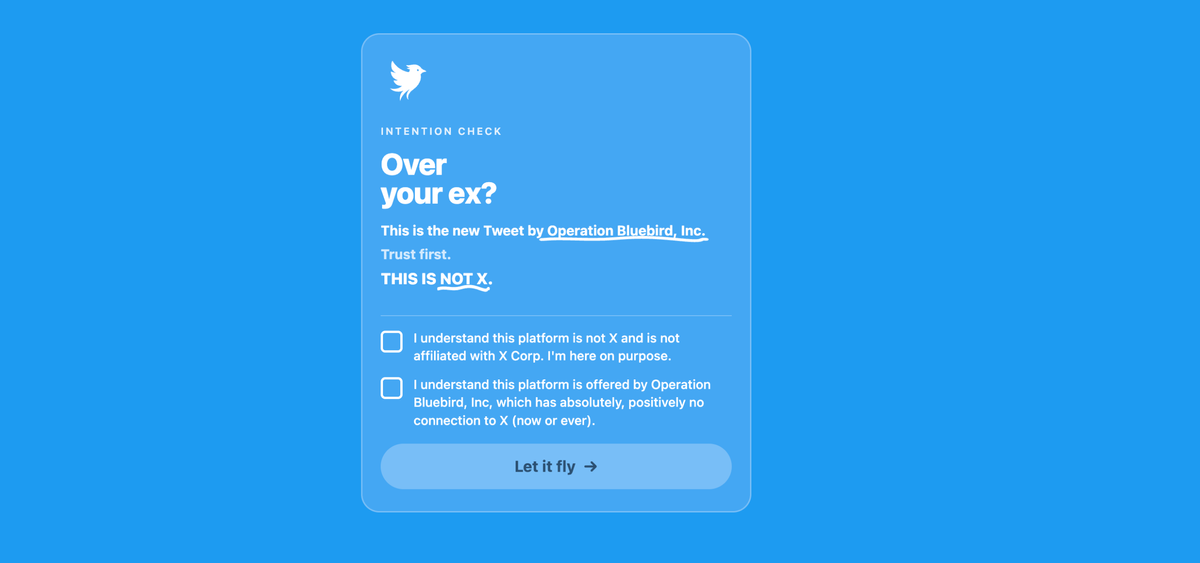
That remains to be seen. When you sign up for Tweet, you must acknowledge that you know it's not affiliated with X. Search Tweet in the App Store, and the first result is still X. However, Tweet.app operating relatively under the radar might help it avoid further scrutiny from X and Elon Musk.
It has, by Coates' measure, just about 8,000 users. "[That's] pretty good, considering it's paid," Coates told me. The platform is so small that you could conceivably read all the tweets — I'm not sure that's a selling point, but Coates said there are "already community and inside jokes."
The company is using the income from those users to pay its small team of 10 employees and contractors as it builds the platform and tweaks the moderation filters, something Coates considers of critical importance.
Tweet.app, which does resemble old-school Twitter, is currently using AI to scale its moderation, including its still-in-beta Vera tool, which measures content for misinformation and applies a score. Eventually, Tweet.app members will have a dial connected to those ratings to automatically filter out their desired level of misinformation.
That's right, Tweet.app won't be in the business of rooting out all fake news. The creed will be, "Freedom of speech but not freedom of reach," said Coates.
Image 1 of 3

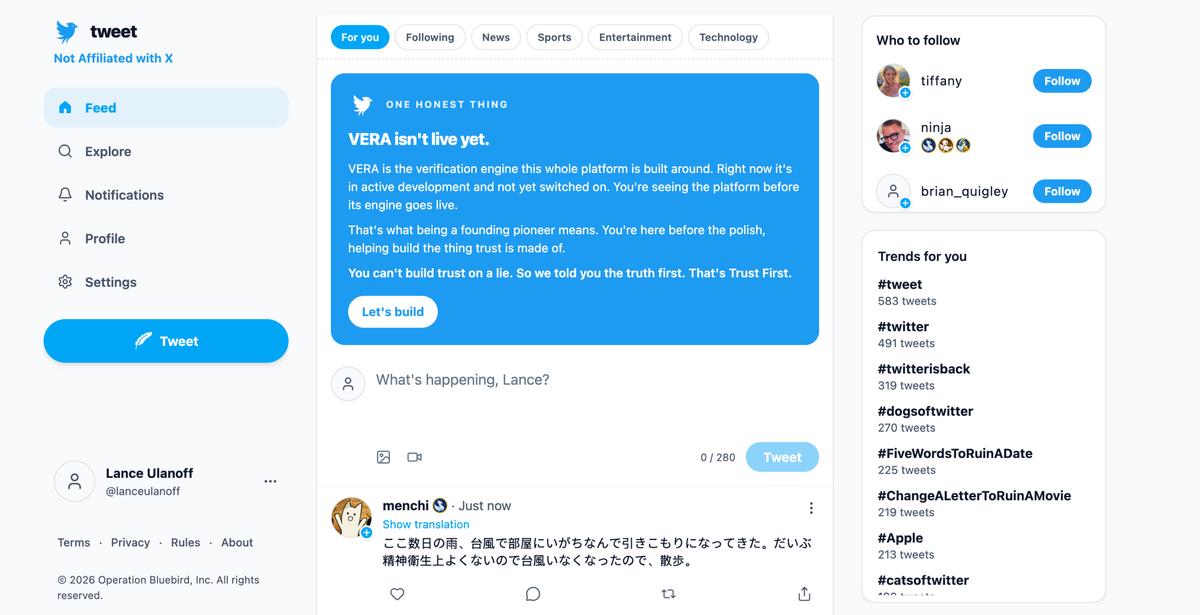
Where Twitter, under former CEO Dick Costolo, whom Coates worked under, struggled with how to be a town square when there was one guy shouting obscenities in the corner, Tweet.com will let the guy shout, but also let users hide the obscenities they don't want to see in their feeds.
If it works, all of it will be powered by this AI. "I call it AI for good. We're not creating tools that will create AI outputs," said Coates, who has worked as counsel for Meta, Reddit, and TikTok.
None of this, of course, ensures success. Classic social media, including Twitter, was built on viral moments, like the Arab Spring, the killing of Osama Bin Laden, and selfies that broke the internet.
I call it AI for good. We're not creating tools that will create AI outputs
Stephen CoatesCoates acknowledged the power of these "inflection" moments, but reminded me that you can't predict them. Tweet.app is happy to grow slowly. Coates knows that paying members will be more deeply engaged than people who simply hop on the platform for free. "At some point will it be open to everyone? I certainly hope so," he told me.
I asked Coates why we need this or any other new social media. He told me that he sees room for reinvention, with space for social media that gives users control. "We're empowering them to control the algorithm," which is an idea that well-established social media platforms have only recently approached.
As the other upstart micro-blogging social media platform, Bluesky, moves away from the town square concept, Coates sees an opportunity to build an alternative to the only other big open platform: X.
"There's room for more. I think people will come for the nostalgia of Twitter and tweeting and stay for the control and experience. It’s a grand experiment."
Follow TechRadar on Google News and add us as a preferred source to get our expert news, reviews, and opinion in your feeds.




 English (US) ·