
 Disney (via MovieStillsDb)

Published Nov 21, 2026, 2:40 PM EST
Ana Dumaraog is a Writer and Editor at Screen Rant, where she expertly covers Network TV offerings, among other things
She has spearheaded the effort to make the site an authority on broadcast shows, initially starting with The Big Bang Theory franchise, NCIS, and One Chicago before taking on the specialization in general.
Ana has also covered a wide-spread of topics in the past — from franchises like, the MCU and Star Wars, to classic TV favorites, such as Frasier and MASH.
Ana brings clarity and enthusiasm to every story she tackles—whether reporting on new releases or offering deep dives into fan-favorite franchises. Her coverage translates complex entertainment developments into engaging, audience-focused content.
As the Marvel Cinematic Universe prepares for another culmination, Iron Man from 2008 is worth revisiting for its coldest line, in relation to what's happening with DC's own movie and TV franchise. 2026 is shaping up to be another big year for the MCU, despite a rather slow last few years. It's no secret that the franchise has struggled to find its footing after the record-breaking Avengers: Endgame in 2019. While there were big hits, the MCU's Multiverse Saga hasn't been as seamless as the Infinity Saga was.
Now, all eyes are on Robert Downey Jr.'s return to the MCU after Tony Stark's heroic death to defeat Thanos in Avengers: Endgame. This time, however, he's playing an entirely new character — Doctor Von Doom, the main villain of Avengers: Doomsday. Kevin Feige and his team have smartly put Downey at the forefront of the movie's marketing, knowing full well the love long-time fans have for the actor. Ahead of Avengers: Doomsday, however, the unexpected overhaul of Warner Bros.' DC Universe makes it the perfect time to revisit the original Iron Man film.
Obadiah Stane's Iron Man Line Perfectly Encapsulates The Start Of The MCU

Directed by Jon Favreau, much has been said about Iron Man's legendary production. After Marvel mortgaged the rest of its catalog to finance the film, it took a bigger risk with casting Downey, who was still rehabilitating his industry image from years of personal woes. Somehow, Iron Man was able to assemble a great cast, with Gwyneth Paltrow, Terrence Howard, and Jeff Bridges, whose Obadiah Stane's intense line somehow becomes more relevant now than ever. Frustrated with the continued failure of his attempt to replicate Stark's Mark I, he famously berated Peter Billingsley's William Ginter Riva saying: “Tony Stark was able to build this in a cave! With a box of scraps!”
Zooming out of Iron Man's accolades, the line is arguably more apt with what Feige has been able to make out of the MCU. It's easy to forget that on top of all the odds in producing their own films, the MCU began with no access to its biggest characters. Sony, Fox, and Universal had exclusive rights to Spider-Man, the X-Men, the Fantastic Four, and others, as well as and the Hulk — essentially their most popular characters. As beloved as Iron Man and the rest of the Avengers are now, they were secondary and even tertiary characters in the comics before they gained widespread popularity through the MCU.
The success of Marvel Studios is already fascinating as it is. However comparing it to how much Warner Bros. has struggled to get DC's counterpart up makes the feat all the more brilliant as it is. Unlike Marvel, its rival has its full arsenal of characters in its disposal, including arguably some of the most popular and culturally-relevant superheroes ever in Superman and Batman. Backed by one of the biggest and longest-running studios, it's frustrating to see DC's move and TV universe fail continuously. It seemed like James Gunn and Peter Safran's 10-year plan was finally the key to the matter, but apparently not, considering their recent ouster. There are still a lot of questions about what the DC Universe would look like moving forward, but with Jeremy Latcham now at the top, expect another rebuild.
Can The Success Of The MCU's Infinity Saga Ever Be Replicated?
 Custom Image by Ana Dumaraog
Other studios have tried replicating Marvel Studios' creative and business format. Even non-superhero genres, such as Universal's contemporary Dark Universe, and just general prioritization of building an interconnected franchise became a very popular. That said, nothing has come close to the success of the MCU's first Three Phases — not even its succeeding ones. When talking about the phenomenon, Feige is often credited as the defining factor for it, which makes sense, considering that he's the architect of the franchise. He had a vision and he was able to fully realize it.
That being said, it's also worth noting that there were countless external factors that helped pave the way for the Infinity Saga's success. As great as Feige was as a leader, he couldn't control every aspect that factored into the MCU's early years. The first three phases of the franchise was lucky to overcome every single hurdle, including almost losing the producer extraordinaire during the development of Captain America: Civil War. The harsh truth is, it would be difficult to replicate the magic of the Infinity Saga, and this doesn't only apply to the MCU's competitors. Marvel Studios may likely never be able to execture a decade's worth of storytelling with very minimal issues. What they and other studios can do is reinvent the wheel to offer something new to the public.
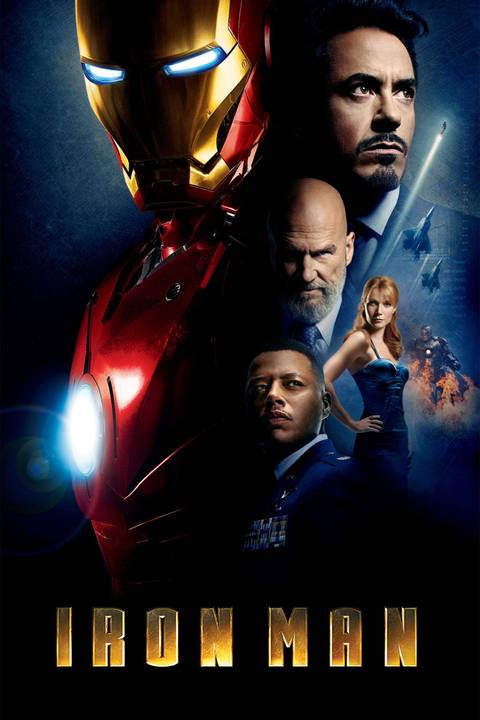
Iron Man
Release Date April 30, 2008
Runtime 126 minutes
Writers Mark Fergus, Matt Holloway, Art Marcum, Hawk Ostby






 English (US) ·