
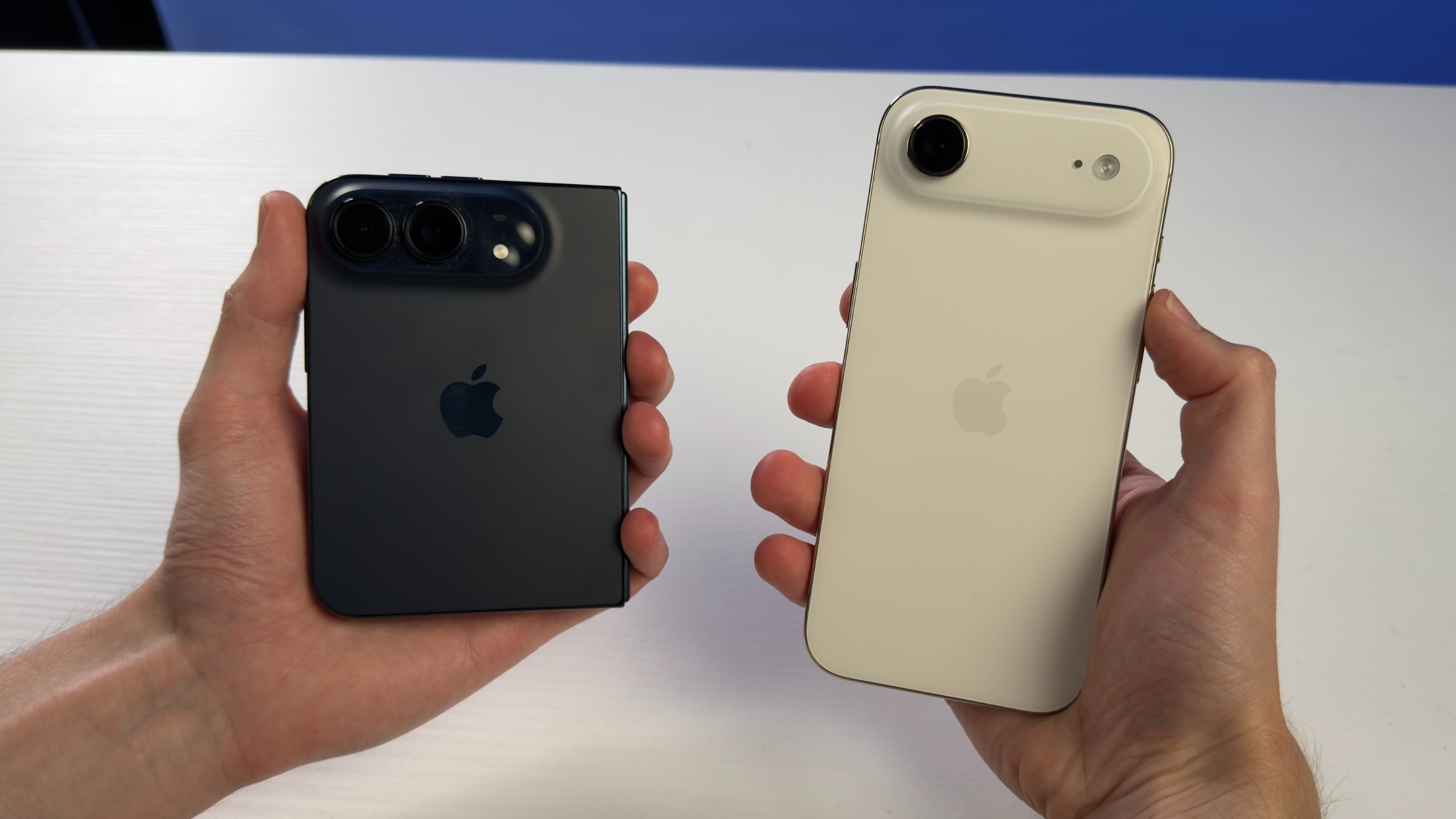
The iPhone Duo is far more versatile than the iPhone Air thanks to its second, tablet-sized screen. But it's also heavier and much more expensive.
Pros
- Two screens
- More cameras
- Better battery life
Cons
- Far more expensive
- Heavier
- No Face ID
The iPhone Air is slim, stylish, lightweight, and a much cheaper option than the iPhone Duo, but it can't match Apple's foldable for photography or versatility.
Pros
- Slim and light
- Relatively affordable
- High-quality screen
Cons
- Only one rear camera
- Low battery capacity
- Less powerful
The iPhone Duo and iPhone Air are both oddities in Apple’s current smartphone lineup. There’s only one of each, and they meet fundamentally different user needs.
Sure, they're both extremely sleek and slim (assuming we’re talking about the iPhone Duo in its unfolded form), and they share some other similarities. But for the most part, these two iPhones couldn't be more distinct.
In this article, then, we’ve compared the iPhone Duo and iPhone Duo in full, to help you decide which model is right for you.
iPhone Duo vs iPhone Air: specs comparison
Image 1 of 2

The chart below shows the core specs of both handsets, so you can see at a glance how they compare.
Swipe to scroll horizontally
Dimensions: |
117.8 x 84.1 x 11.3mm (folded) / 117.8 x 164.6 x 5.2mm (unfolded) |
156.2 x 74.7 x 5.6mm |
Weight: |
254g |
165g |
Display: |
7.6-inch Super Retina XDR OLED (foldable) / 5.4-inch Super Retina XDR OLED (cover) |
6.5-inch Super Retina XDR OLED |
Refresh rate: |
1Hz–120Hz |
1Hz–120Hz |
Peak brightness: |
3,000 nits |
3,000 nits |
Chipset: |
A20 Pro |
A19 Pro |
RAM: |
12GB |
12GB |
Rear cameras: |
48MP main, 48MP ultra-wide |
48MP main |
Front camera: |
12MP cover, 4MP under-display |
18MP |
Battery: |
4,883mAh |
3,149mAh |
Charging: |
50% in 20 minutes |
50% in 30 minutes |
Storage: |
256GB / 512GB / 1TB / 2TB |
256GB / 512GB / 1TB |
iPhone Duo vs iPhone Air: price and availability
Image 1 of 2
The iPhone Duo was announced in September 2026 and began shipping in October, with the phone now widely available globally.
The iPhone Air is a bit older, having launched back in September 2025, but with no successor yet available, you can still buy it.
The Duo comes in four configurations, with the cheapest being a 256GB option for $1,999 / £1,999 / AU$3,499. Next up, there’s a 512GB version for $2,199 / £2,199 / AU$3,899, with a 1TB model costing $2,599 / £2,599 / AU$4,699, and a 2TB configuration coming in at $3,199 / £3,199 / AU$5,899.
The iPhone Air also starts in a 256GB configuration, costing $1,099 / £1,099 / AU$1,899, while the 512GB model is $1,299 / £1,299 / AU$2,299, and the 1TB version is $1,699 / £1,699 / AU$3,099. There’s no 2TB version of this phone.
So, the iPhone Duo’s starting price is some $900 / £900 / AU$1,600 higher than the iPhone Air’s, and to be honest, you're unlikely to need to pay full price for Apple's super slim handset. It's regularly on sale at third-party retailers including Amazon, so the price gap between it and the iPhone Duo is $900 / £900 / AU$1,600 at worst.
With the money you’d be saving by buying the Air, you could also buy an iPhone 17 or an iPad Air, which speaks to how expensive Apple's first foldable phone is.
Swipe to scroll horizontally
256GB |
$1,999.99 |
£1,999 |
AU$3,499 |
512GB |
$2,199 |
£2,199 |
AU$3,899 |
1TB |
$2,599 |
£2,599 |
AU$4,699 |
2TB |
$3,199 |
£3,199 |
AU$5,899 |
Swipe to scroll horizontally
256GB |
$1,099 |
£1,099 |
AU$1,899 |
512GB |
$1,299 |
£1,299 |
AU$2,299 |
1TB |
$1,699 |
£1,699 |
AU$3,099 |
iPhone Duo vs iPhone Air: design
Image 1 of 2
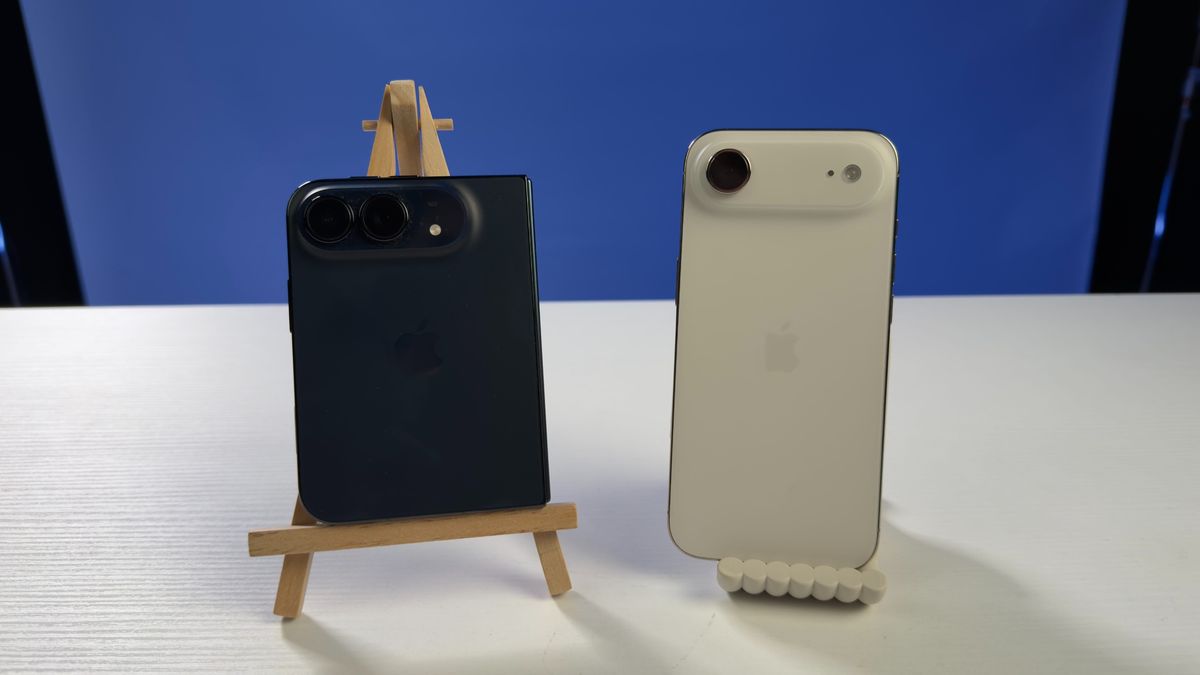
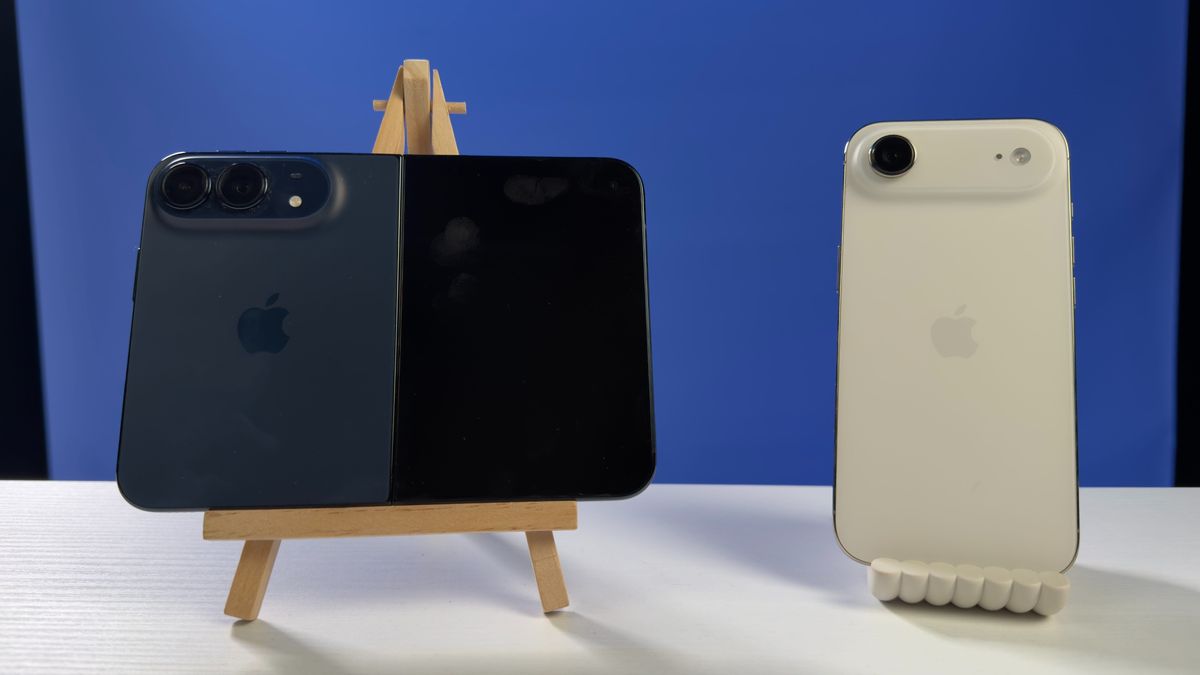
Both of these phones are, first and foremost, examples of beautiful design.
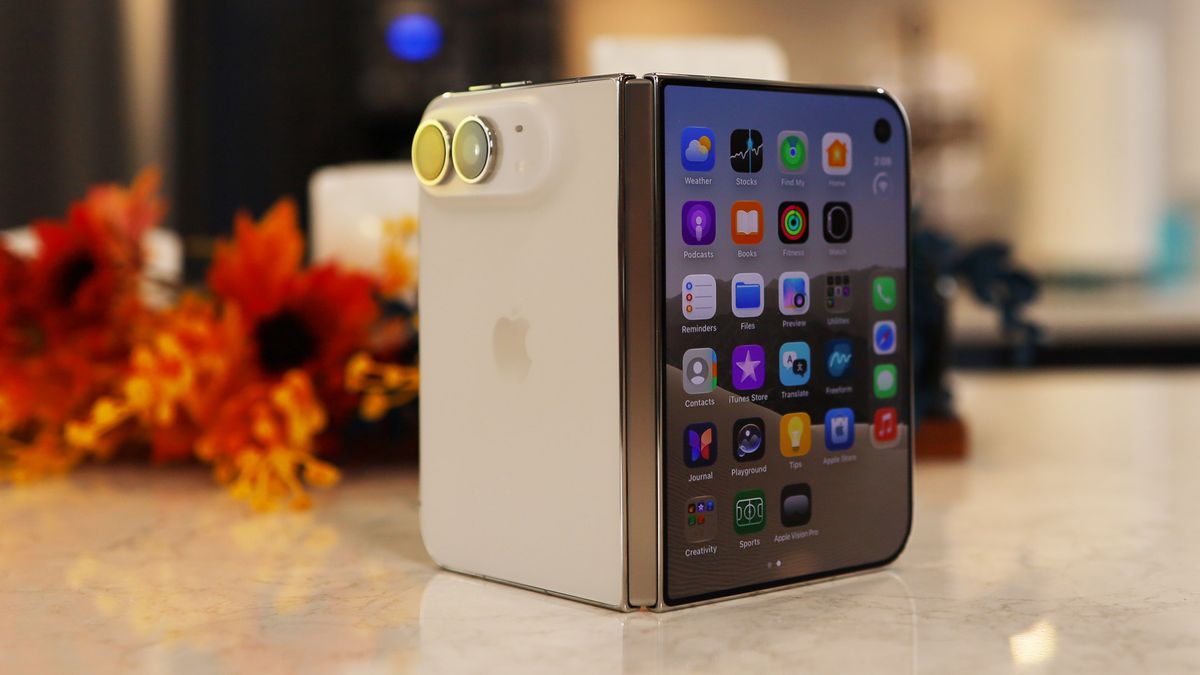
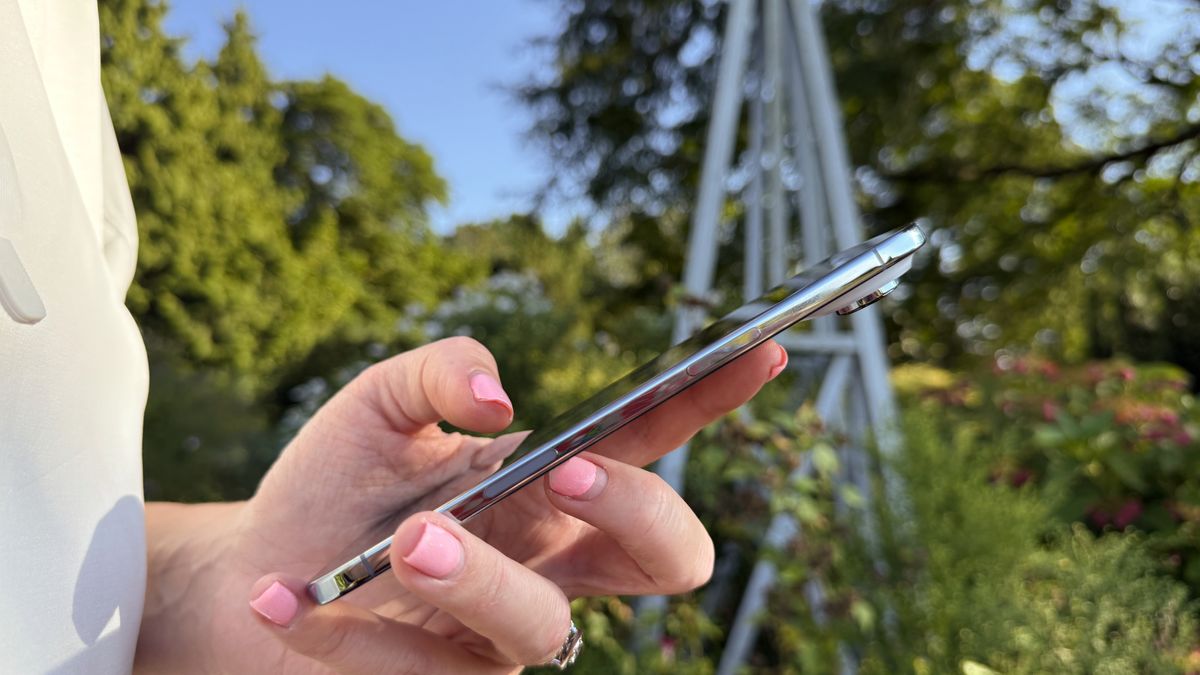
With the iPhone Duo, Apple managed to make a remarkably slim phone that’s just 117.8 x 164.6 x 5.2mm when unfolded. That makes it even thinner than the 156.2 x 74.7 x 5.6mm iPhone Air — a phone that has a slim design as one of its main selling points.
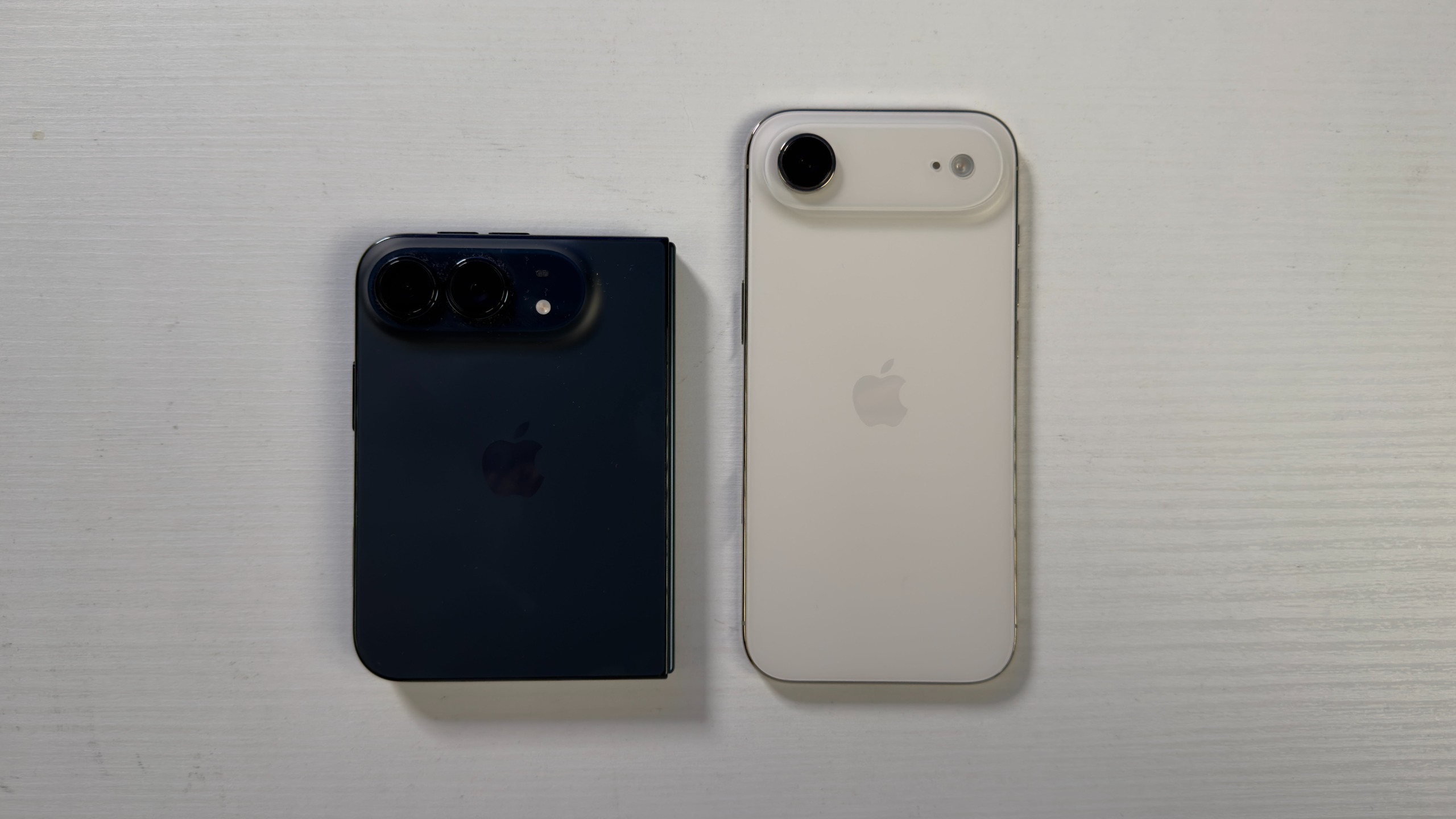
Of course, when folded shut — as it will be in your pocket — the iPhone Duo is rather chunkier at 117.8 x 84.1 x 11.3mm. At 254g, the Duo also weighs a lot more than the Air, which clocks in at a remarkably light 165g.
Before we move on, it's worth reiterating that these measurements make the Air one of the most comfortable phones to use and hold over long periods. Its slimness might seem like a gimmick, but there's a lot to be said for using a phone that feels almost weightless in your hand and pocket.
The Duo is equally well-crafted and impressively thin when unfolded, but in day-to-day use, it feels significantly heavier and chunkier than the Air. But then, with two screens, that was inevitable.
Image 1 of 2
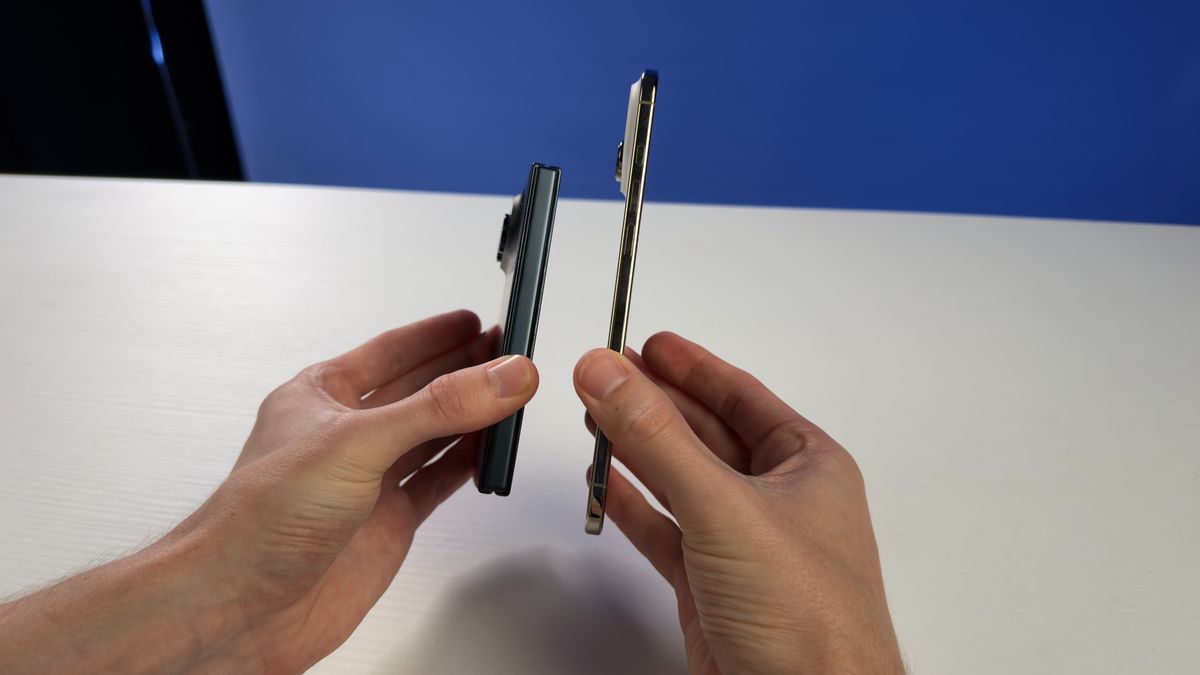
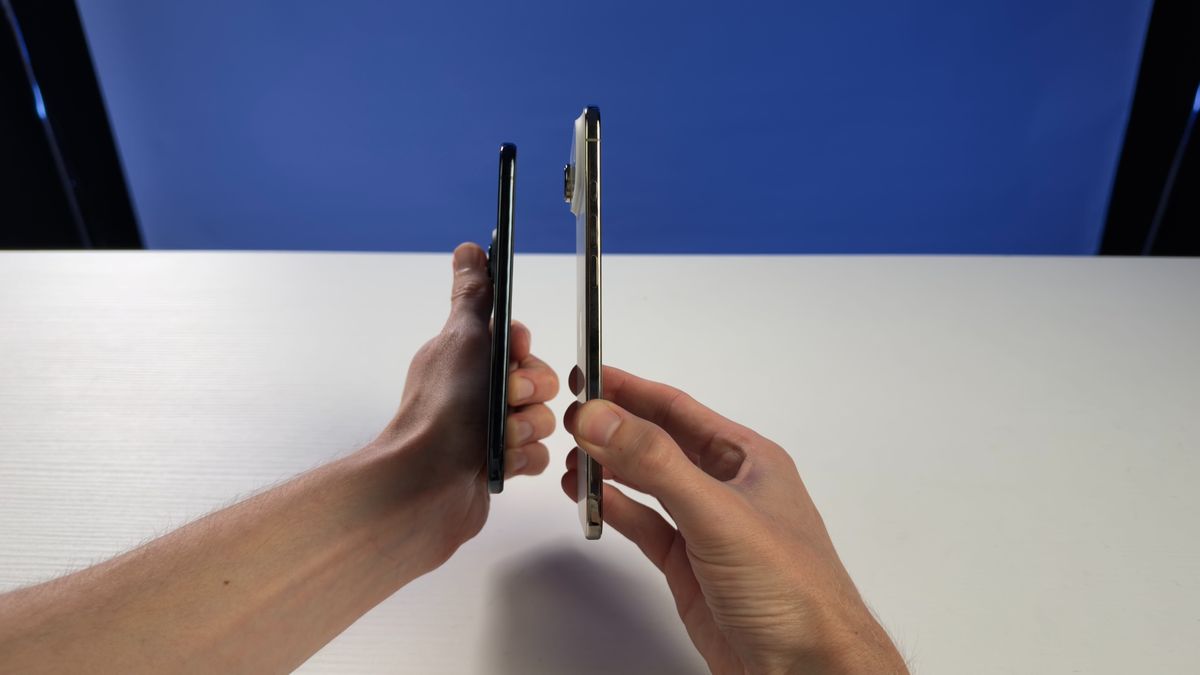
As far as durability goes, both phones have a Ceramic Shield 2 glass front, a Ceramic Shield glass back, and a titanium frame, and both also have an IP68 rating for dust and water resistance.
Of course, foldables are inherently more fragile than single-screen phones like the iPhone Air, but you needn't worry about the Duo breaking after a few folds — Apple has confirmed to TechRadar that the phone's viral screen-cracking issue only affected a "small number of units" at launch.
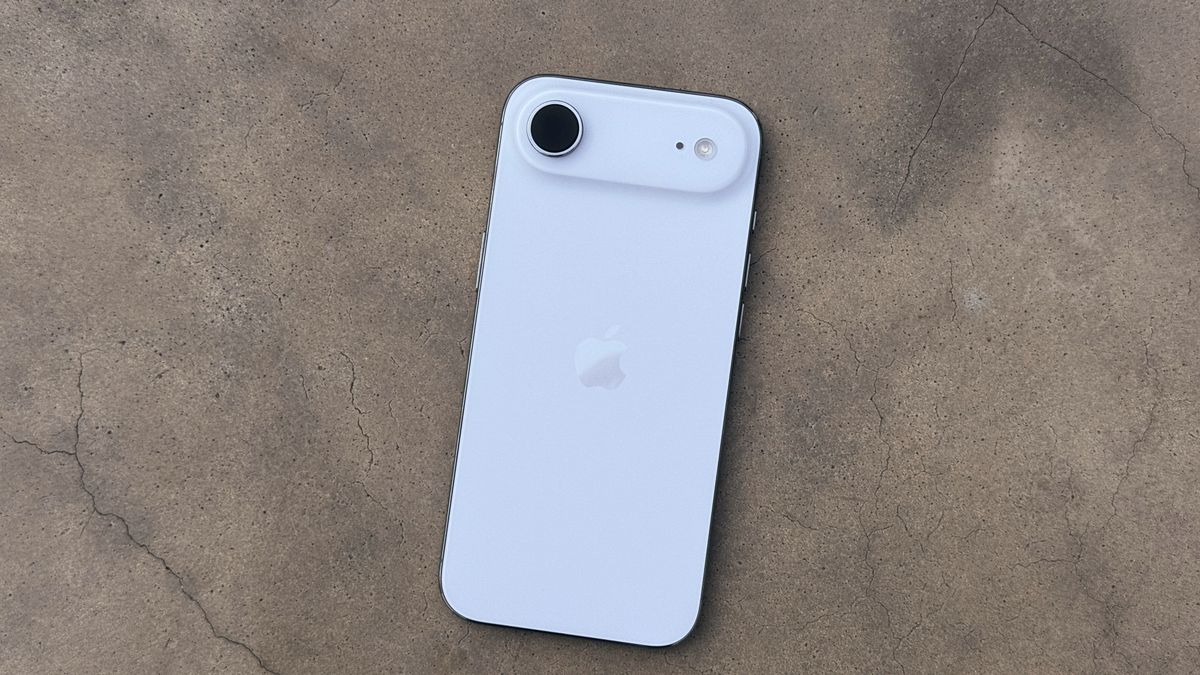
The iPhone Duo and iPhone Air also look somewhat similar from the back, with both having a horizontal camera block — though this block houses two lenses on the iPhone Duo, and just one on the iPhone Air.
On the front, the Air has larger cutouts in its screen, allowing for Face ID — something the iPhone Duo lacks. And the two phones come in different colors, with the iPhone Duo being available in Night Sky and Star White shades, while the iPhone Air is sold in Space Black, Cloud White, Light Gold, and Sky Blue shades.
So, there are as many differences as similarities here, but the designs of both phones shine, with our iPhone Duo review praising Apple's foldable as “beautifully designed and engineered,” while our iPhone Air review called it “the freshest look that Apple has delivered in years.” These are two great-looking products.
iPhone Duo vs iPhone Air: display
Image 1 of 2
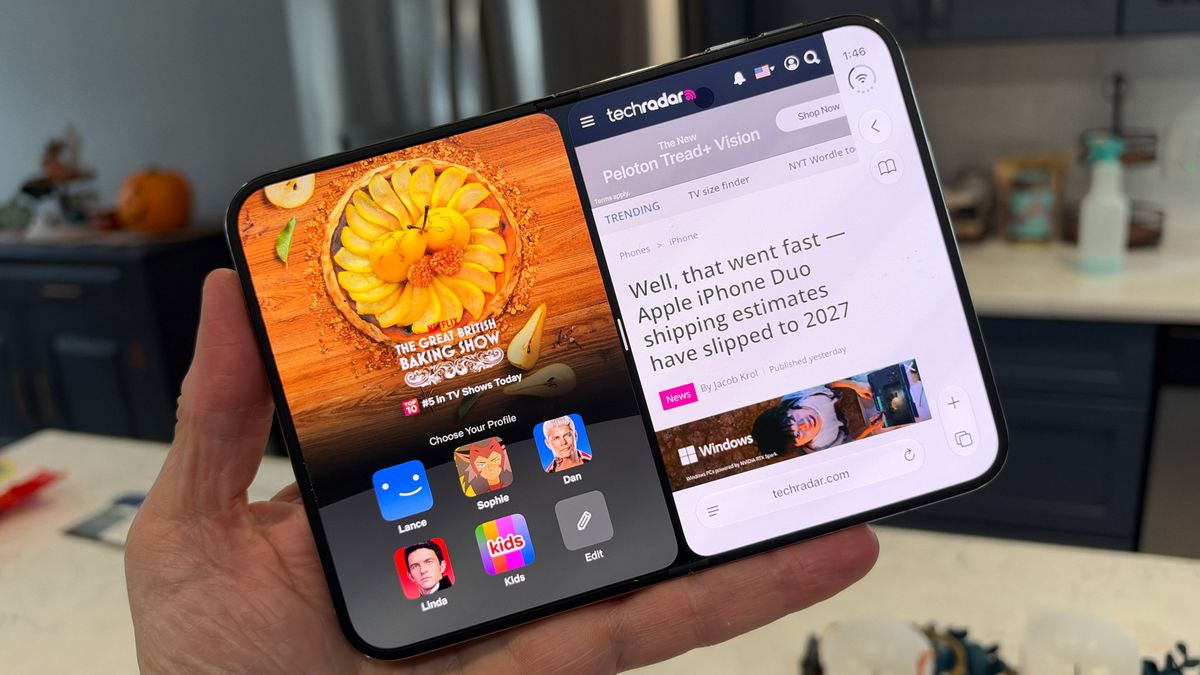

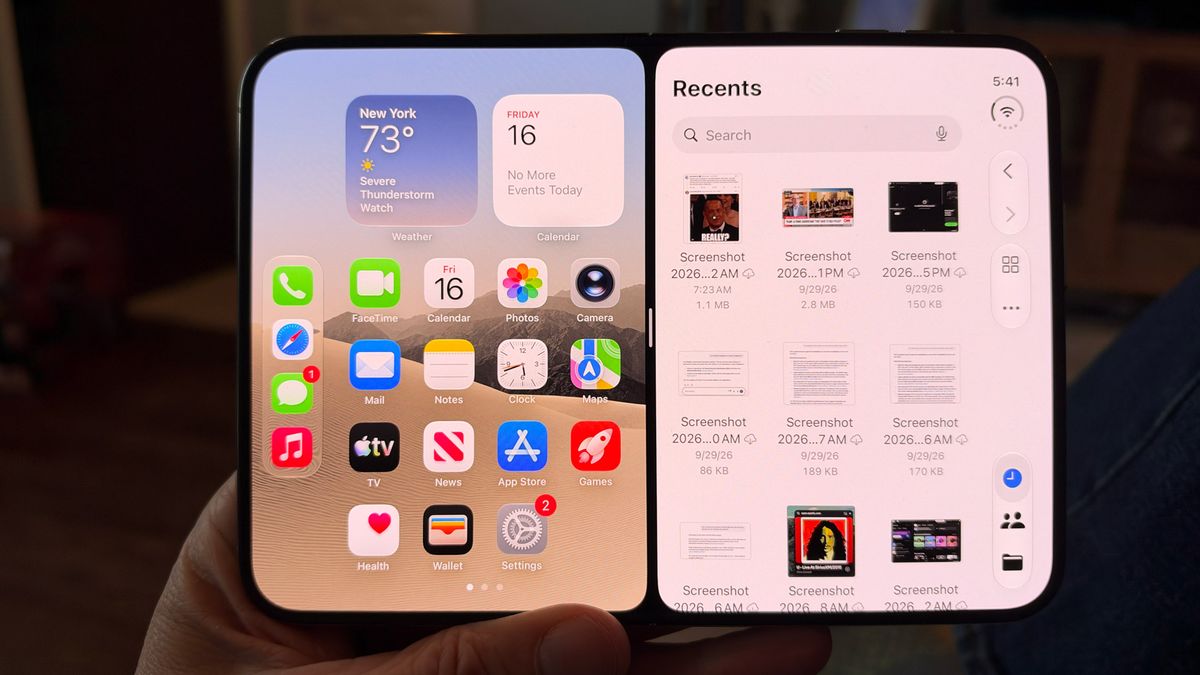
You may not have noticed, but the iPhone Duo has two screens.
Its main foldable display is a 7.6-inch 1878 x 2670 LTPO Super Retina XDR OLED panel with 430 pixels per inch, a 120Hz refresh rate, a peak brightness of 3,000 nits, and an anti-glare nano-texture finish.
Its smaller cover screen is a 5.4-inch 1398 x 2034 LTPO Super Retina XDR OLED panel with 60 pixels per inch, a 120Hz refresh rate, and a peak brightness of 3,000 nits.
The iPhone Air, of course, just has one screen — a 6.5-inch 1260 x 2736 Super Retina XDR OLED panel with 460 pixels per inch, a 120Hz refresh rate, and a peak brightness of 3,000 nits.
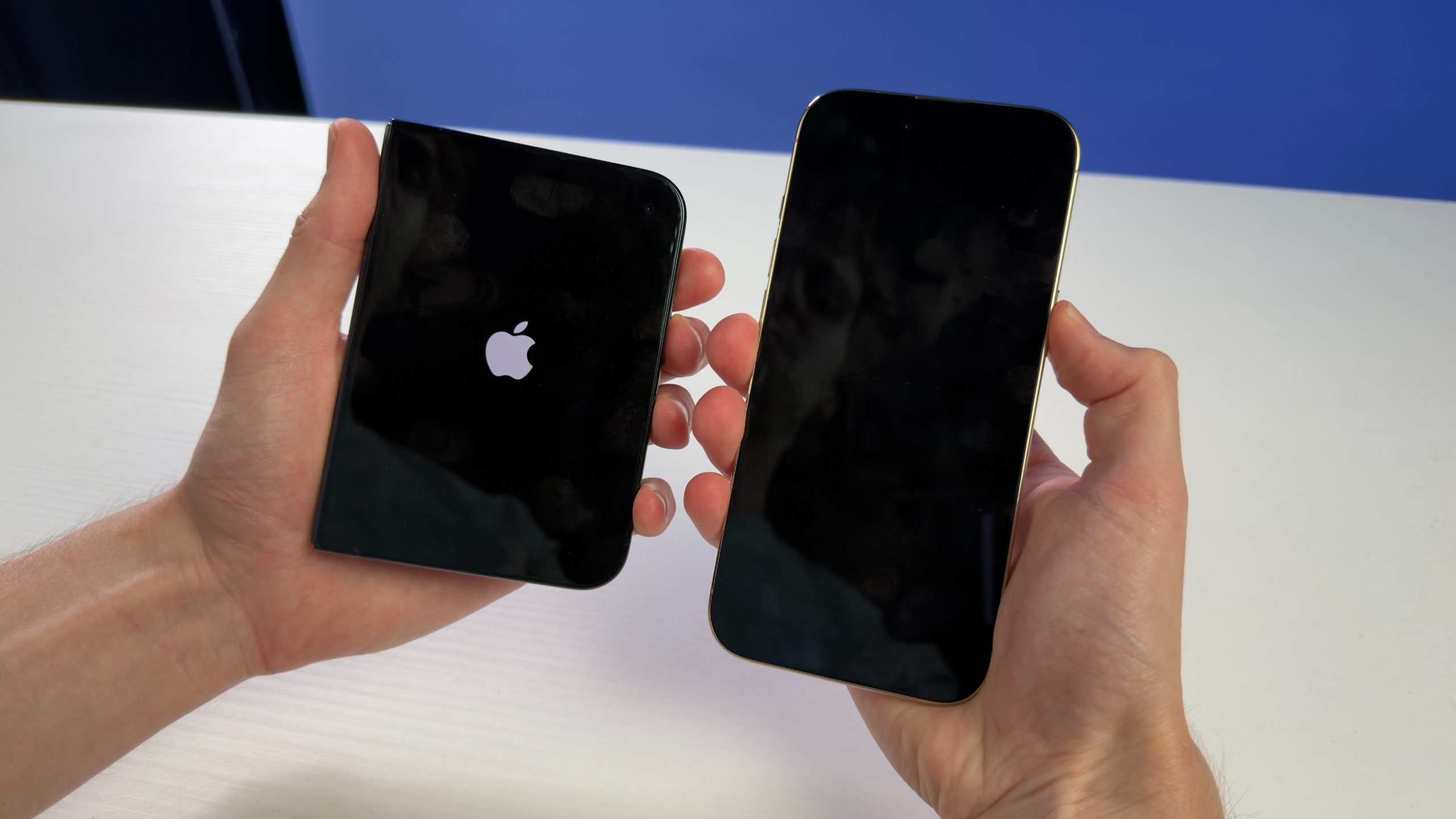
The specs and quality of both phones' front screens are similar, with our iPhone Duo review saying it has a “bright, sharp, fluid display,” and our iPhone Air review calling its screen “punchy, sharp, and smooth.” So you’re mostly just choosing whether you want one screen or two, and what size(s) you want.
That said, having two displays undeniably makes the iPhone Duo more versatile, as it’s suited to both large-screen and small-screen tasks — it also supports the Apple Pencil, which the iPhone Air doesn’t.
The nano-texture finish on the Duo's inner screen is a sight to behold, too. It does an excellent job of preventing glare, and an even better job of hiding the phone's crease when viewed straight-on. This crease is, of course, still visible when viewed at an angle, but that doesn't really matter if it's not visible when the Duo is in use.
iPhone Duo vs iPhone Air: cameras
Image 1 of 2
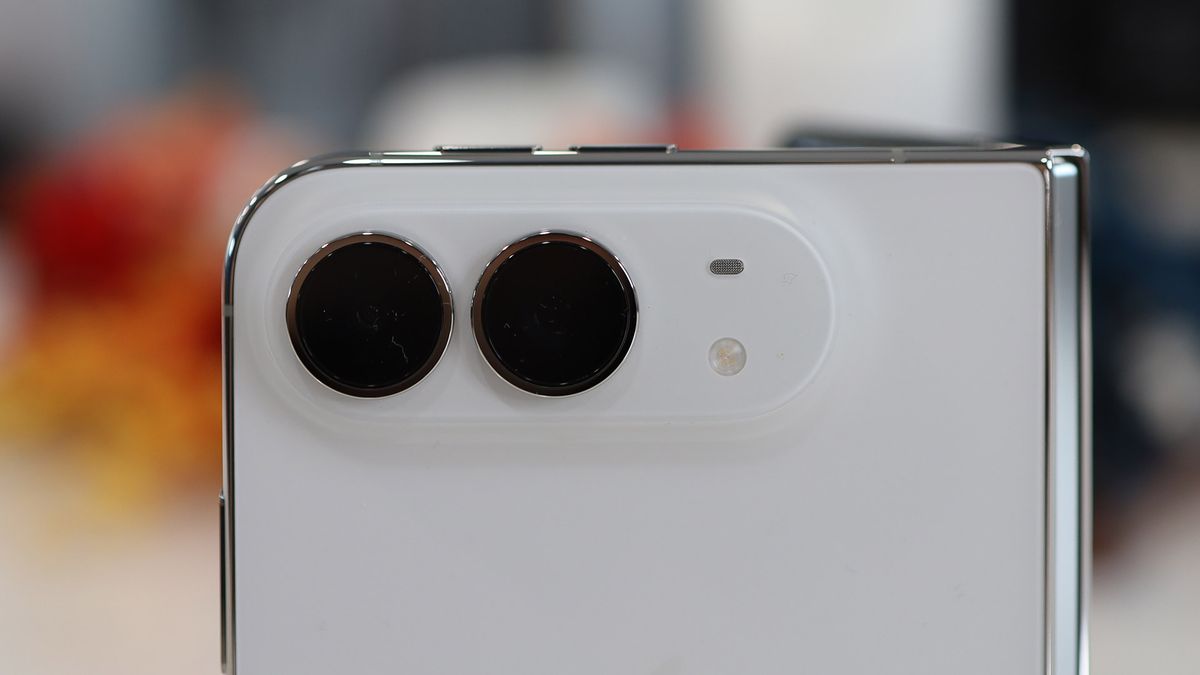
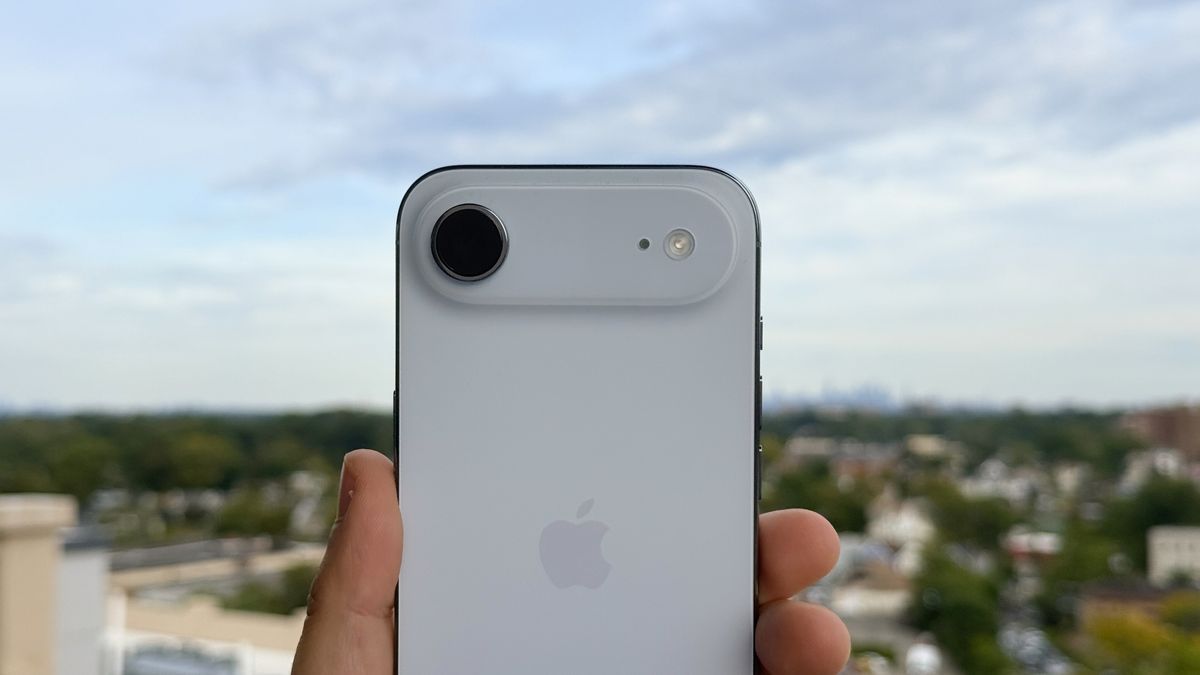
iPhones tend to excel at photography, but arguably neither of these devices ranks among Apple’s best. Still, of the two, the iPhone Duo has the edge by virtue of having more cameras.
On the back, it has a 48MP f/1.6 wide camera and a 48MP f/2.2 ultra-wide one (with a 120-degree field of view). Then, on the cover screen, it has a 12MP f/2.2 punch-hole camera, and on the foldable screen, it has a 4MP f/1.8 under-display one.
The iPhone Air, on the other hand, has a solitary 48 MP f/1.6 wide camera on the back, and an 18MP f/1.9 camera on the front.
So the main difference here is that there’s no ultra-wide lens on the iPhone Air, making the Duo more versatile for photography. But the Air does have a superior selfie camera, even if the Duo has two front-facing snappers (the 4MP inner-display camera is really not very good).
All that said, both phones are still capable ot taking excellent shots. In our iPhone Duo review, we said it has “two strong 48MP lenses and an above-average Center Stage selfie camera,” while in our iPhone Air review, we said its camera “delivers sharp, natural photos and impressive portraits, but lacks the versatility found on other models.”
iPhone Duo camera samples
Image 1 of 23























iPhone Air camera samples
Image 1 of 12












iPhone Duo vs iPhone Air: performance and software
Image 1 of 2
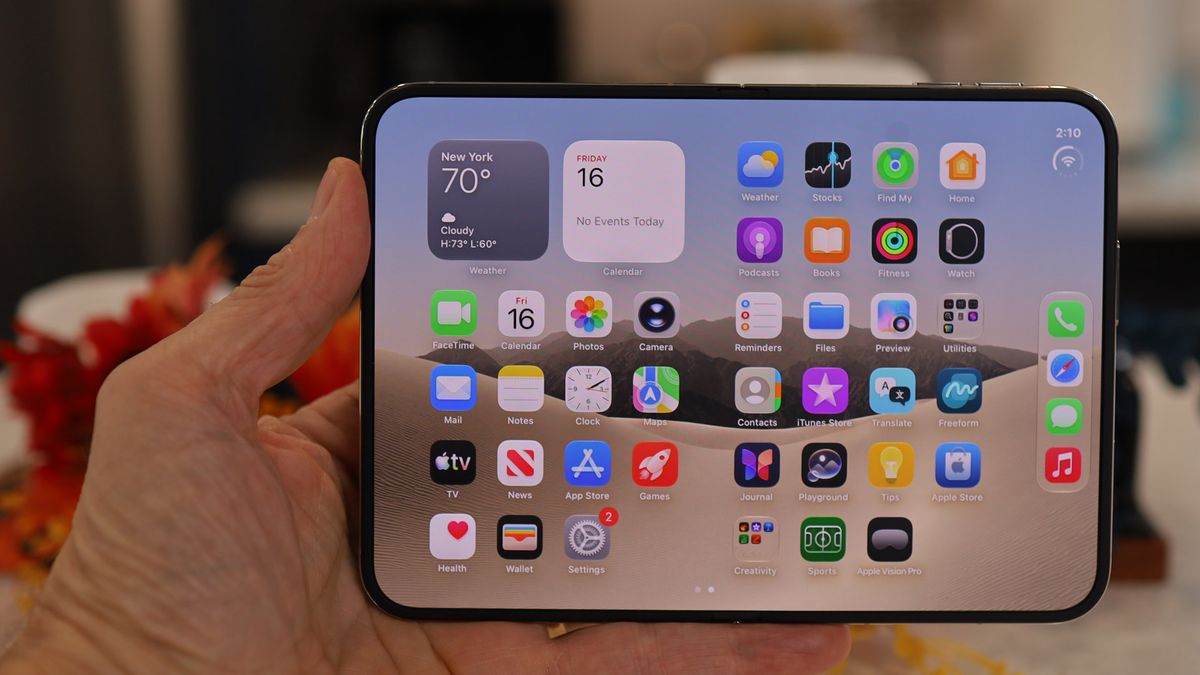

The iPhone Duo has an A20 Pro chipset, 12GB of RAM, and a vapor chamber, putting it in line with the performance of the iPhone 18 Pro series. The iPhone Air is a step down from that, with an A19 Pro chipset, 12GB of RAM, and no vapor chamber.
As such, the Air isn’t quite as high-performing, though unless you’re really pushing it with high-end games or other demanding tasks, you’re unlikely to notice much of a difference, and both phones are speedy.
This was reflected in our use of the two devices, with our iPhone Duo review finding that it offered “smooth performance across the board,” while our iPhone Air review said it “feels fast and smooth in daily use, though it can warm up under sustained heavy gaming.” The Air occasionally heats up during FaceTime calls, too.
Image 1 of 2
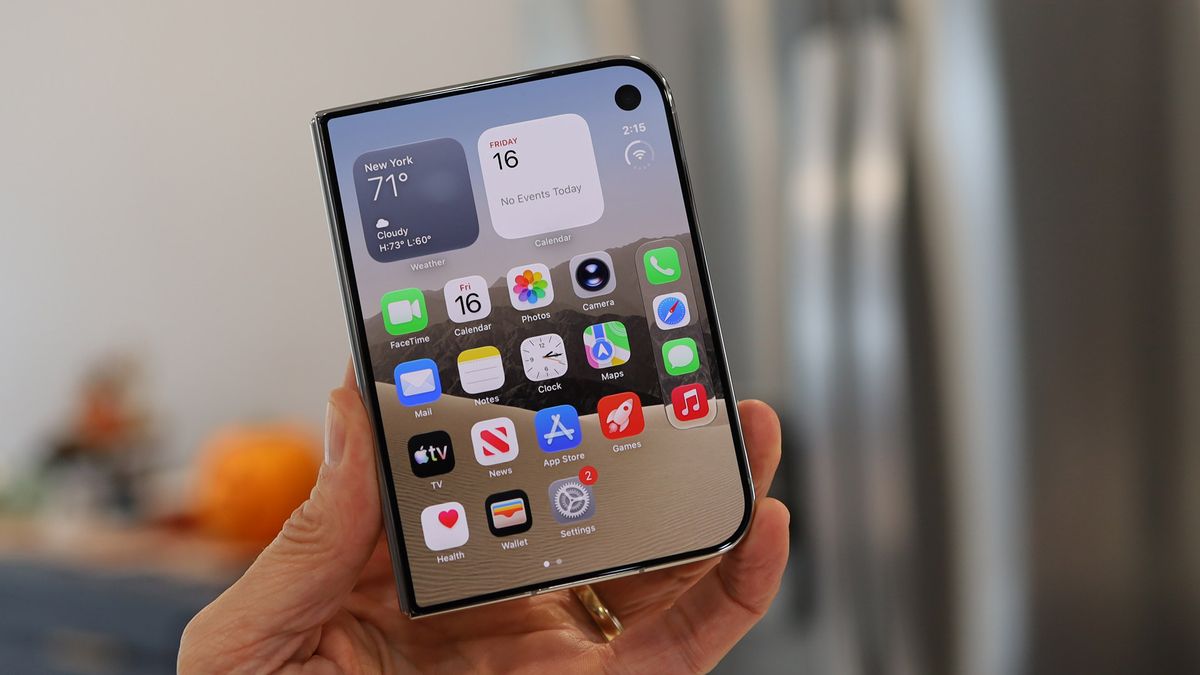
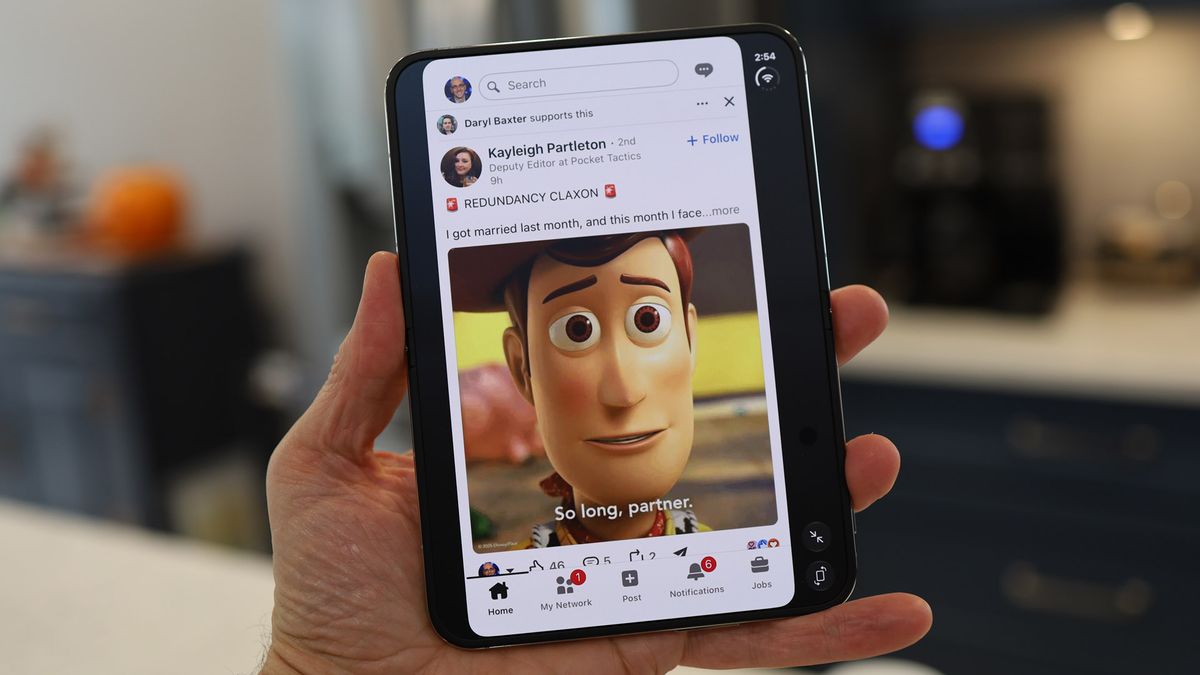
As for software, the iPhone Duo launched with iOS 27.1 out of the box, while the iPhone Air — being older — shipped with iOS 26. But both phones can be updated to iOS 27.2 at the time of writing, so there’s not much to choose between them here, though the Duo does feature some unique touches like a side-positioned dock.
However, it’s worth noting that it might take a while for all apps to be optimized for the iPhone Duo’s form factor. First-party apps like Messages and Mail look great on either Duo screen, but third-party apps like YouTube and Instagram still need work.
This early-stage clunkiness may well be resolved by the time you're reading this, but don't be surprised if you encounter some software-related oddities on the iPhone Duo.
iPhone Duo vs iPhone Air: battery
Image 1 of 2
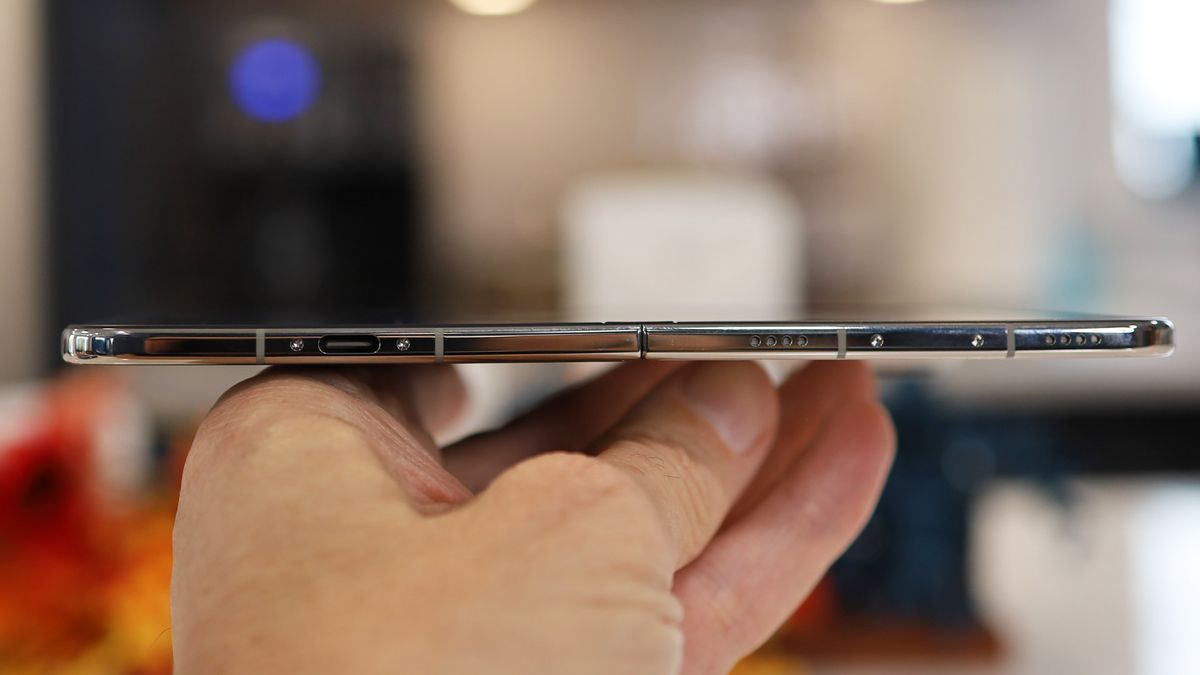
The iPhone Duo has a 4,883mAh battery, while the iPhone Air has a far lower-capacity 3,149mAh cell. This, unsurprisingly, also means the iPhone Duo lasts longer, with Apple claiming you’ll get 44 hours of video playback from it when using the cover screen or 31 hours with the foldable display, while the iPhone Air is quoted at 27 hours.
This largely tallies with our test results. In the case of the iPhone Duo, our reviewer found that “all-day battery life is virtually assured,” while for the iPhone Air we found that it “should last a workday, but heavy users will need to recharge.”
And when you do recharge, the iPhone Duo can reach 50% in roughly 20 minutes with a 60W or higher charger, or if you’re using wireless charging, it can get to 50% in around 30 minutes with a 35W or higher MagSafe charger.
The iPhone Air takes about 30 minutes to reach a 50% charge whether using wired or wireless charging, so it’s slightly slower here.
iPhone Duo vs iPhone Air: verdict
The iPhone Duo is far more expensive than the iPhone Air, and that price difference is probably the main thing you need to consider when choosing between them — especially as you could buy the iPhone Air and an iPad for less money than the iPhone Duo.
Of course, there are advantages to having two devices in one, and the iPhone Duo is a better phone than the Air in various ways too — it boasts slightly better performance, longer battery life, an extra camera, and, of course, that all-important second screen.
Both phones have sumptuous designs, though, and the iPhone Air can hold its own for screen quality — it also features Face ID, which the iPhone Duo lacks.
So, if you want a more affordable, beautiful-to-use iPhone that works like every other iPhone you've ever owned, go for the Air. If you're willing to try something new — and happy to pay for the privilege of doing so — the Duo is the obvious choice.

Follow TechRadar on Google News and add us as a preferred source to get our expert news, reviews, and opinion in your feeds.







 English (US) ·