
Ionna — one of the newest EV fast-charging networks in the US — has had a heck of a growth spurt during its first year of operation. This week, it announced that it now has more than 180 live sites nationwide, more than doubling its footprint since the start of 2026. According to the company’s reckoning, that makes Ionna “the largest 400-kilowatt fast charging network in the US,” a very specific claim worth examining.
I spoke with Ionna CEO Seth Cutler about the network’s rapid expansion, the new features rolling out and what Ionna is doing to make DC fast charging even more affordable for EV drivers.
Ionna was founded in July 2023 as a joint venture among seven major automakers: BMW, General Motors, Honda, Hyundai, Kia, Mercedes-Benz and Stellantis. Later, in July 2024, Toyota joined the venture as an investor, bringing the total to eight companies on the board. The fledgling network opened its first “Rechargery” — the brand’s name for its brightly colored, retro-styled fast charging stations — in Apex, North Carolina, in December 2024.
Less than two years later, Ionna’s network now includes more than 180 stations with over 1,500 charging ports across 30 states.
Largest 400 kW network*
From that first station in Apex, every Ionna Rechargery site has featured plugs for both the Combined Charging System and the North American Charging Standard, reducing the need to fiddle with adapters. The Rechargeries are also noteworthy for their standardization of high-powered 400-kW charging stalls. That’s faster than the average EV on sale in the US can accept, so drivers are less likely to find their charging sessions throttled when plugging in.
“We’ve built out a network for the future at 400 kilowatts,” Cutler told me during a video call. “New vehicles are coming with much higher native charging speeds — the BMW iX3 is a good example, as well as some Lexus and Toyota products coming to market soon. This network is built for them. Right now, we’re the largest 400 kW network and expect to continue to be for some time.”
That “largest 400 kW network” boast is an interesting one. Ionna is far from the largest DC fast charging network in the US. Tesla’s Supercharger network has had a 12-year head start and comprises over 3,000 locations — about half of all DC fast-charging ports in the country — across all 50 states. Second and third places go to EVgo and Electrify America, with about 1,200 and 1,000 sites, respectively.
However, those networks typically top out at around 325-350 kW, with some older stalls as low as 50-150 kW. That’s good enough for most of today’s EVs, but Ionna’s higher-powered bet may matter more down the road. Plus, it’s a very specific “largest” trophy for the brand to claim.
No app, no problem
During my recent EV road trip, I decided to stop by one of Ionna’s new Rechargeries in Sacramento, California. Before setting out, I tried to grab the requisite app and set up my account — as you would with every other EV charging network — and was amused to find that Ionna doesn’t have a proprietary app. There’s a web portal where you can search for stations, but the entire payment process takes place at the plug. Cutler says this decision was all about removing friction.
“When we first started the company, we asked, ‘What’s the first thing you need?’ and everyone put their hands up and said, ‘We need a charging app,’” Cutler recalled. “The problem we had was quantifying the why. Why do you need an app? What we’ve found is that the No. 1 reason people ask about an app is to know where our chargers are, but no one’s asking for an app because they want to pay better or pay more easily. We really want to remove friction, not add friction to the ecosystem.”
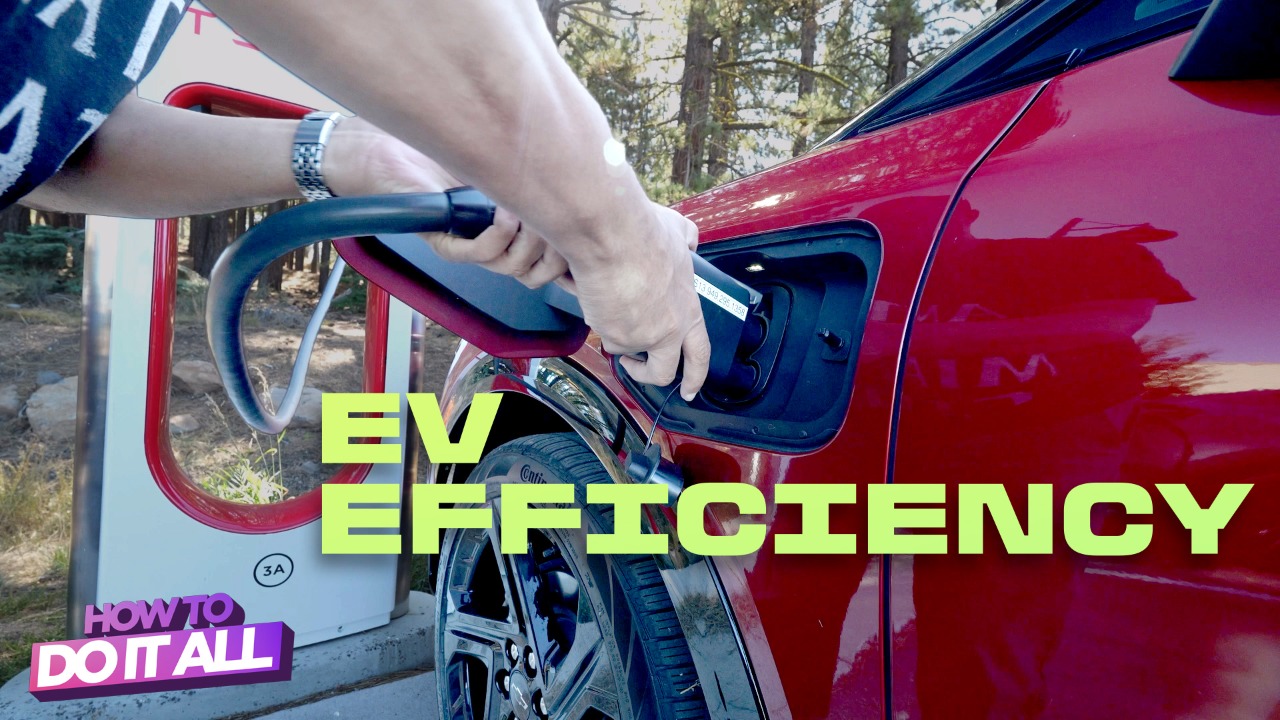
 Ionna stations support both NACS (pictured) and CCS charging standards at up to 400 kW.Ionna
Instead, Ionna chose to work on integrating with 19 partner platforms, including recently announced collaborations with Presto, ChargeHub and EV Connect. For payments, the network focused on Plug & Charge support and Tap to Pay. Plug & Charge is a payment tech that lets drivers start charging and automatically pay simply by plugging their car into a compatible station. Ionna announced that it’s enabling compatibility with Volvo Cars, with Toyota and Lexus to follow in October. That will bring the total to nine automakers that can Plug & Charge, including Rivian, which is not on the Ionna board.
The new Driver Dashboard
Drivers also have the option to simply tap a credit card at the stall. (As a reviewer who is often charging fleet vehicles, this is my preferred method, and the Rechargeries I’ve visited are about as close to a gas station payment experience as I’ve had with an EV.)
Cutler told me that most drivers who use Ionna stations use their automakers’ apps to monitor their charging session from afar, but for drivers who don’t want to do even that, it has introduced a new Driver’s Dashboard which can be accessed via a QR code displayed on the charger. The code opens a web portal that tracks the current session, with no download, account or password required.
“So you can walk away and at least see what state of charge your vehicle is in and when your car will be done, or how much power you’re pulling,” Cutler said.
 Many partner automakers have begun offering discounts to drivers who use Plug & Charge at Ionna stations.Ionna
Making charging more affordable
Ionna also announced on Wednesday that Hyundai and Mercedes-Benz will soon offer drivers discounted energy rates (around 10% off) through their apps when charging at an Ionna Rechargery via Plug & Charge. The brands join BMW (20%) and GM (10%) in offering their own discounts, with more automakers potentially to come.
Ionna’s current maximum base rate of 39 cents per kWh (plus applicable taxes) across its entire network is already a pretty good deal compared to competitors charging up to 65 cents per kWh at peak. For context, on my recent EV road trip, a 10-80% charge for a Chevy Equinox EV cost $43.27 at a Tesla Supercharger, while my next 20-80% charge at a Rechargery was just $16.47 without the GM discount.
“We believe at Ionna that our job is to build out a quality-at-scale charging network to unlock adoption of EVs,” Cutler said. “And part of that has to be the affordability of charging, because if it’s too expensive, it totally changes the equation of total cost of ownership of owning an EV versus an internal combustion engine.”
I asked Cutler what more Ionna could be doing for urban drivers who often rely exclusively on public charging — those stuck paying what experts call the “Renters’ Penalty,” spending up to six times more for charging than homeowners who can charge cheaply at home.
“We are piloting time-of-use rates in a couple of locations, and we’re having conversations about expanding that more broadly next year as another tool in our chest,” Cutler said. “We’re finding levers to pull from an affordability standpoint, and we’re not done yet in terms of driving progress there.”

Antuan Goodwin
Senior Writer, Electrified Cars
Antuan has nearly 20 years of expertise and experience testing hundreds of cars, including electric, hybrid, plug-in hybrid, hydrogen, and traditional combustion vehicles. See full bio







 English (US) ·