Intel's big $5 billion bet on Ireland aims to right the wrongs of the cancelled Magdeburg, Germany complex — Fab 34's proven pipeline and Intel 3 node should help the company meet insatiable HPC demand
3 weeks ago
55
(Image credit: Getty Images / Justin Sullivan)
Intel announced a €5 billion ($5.7 billion) investment on Monday to expand chip production at its Leixlip campus in County Kildare, Ireland, upgrading existing fabs to increase output of Intel 3 wafers for Xeon 6 and next-gen server processors. The program accounts for roughly 30% of Intel's planned 2026 capital expenditure of about $17 billion, adds several hundred permanent roles to a 4,900-strong Irish workforce, and is scheduled to be substantially deployed by the end of 2027. Naga Chandrasekaran, Intel's chief technology and operations officer and general manager of Intel Foundry, told Reuters that "the demand for servers, the demand for AI is driving a significant increase in the need for Intel 3 wafers."
The announcement comes just shy of a year after CEO Lip-Bu Tan cancelled Intel's planned €30 billion fab complex in Magdeburg, Germany, and a €4.6 billion assembly and test plant in Wrocław, Poland. Those cancellations came with a memo in which Tan wrote that Intel had "invested too much, too soon – without adequate demand."
The Ireland program, however, passes the test Magdeburg failed on every measure that Intel boss Lip-bu Tan set: It uses cleanrooms that already exist; it's funded from Intel's own capex with no announced state aid; and it expands an already shipping revenue product into a demand pipeline Intel says currently exceeds its supply.
What €5 billion buys
(Image credit: Intel)
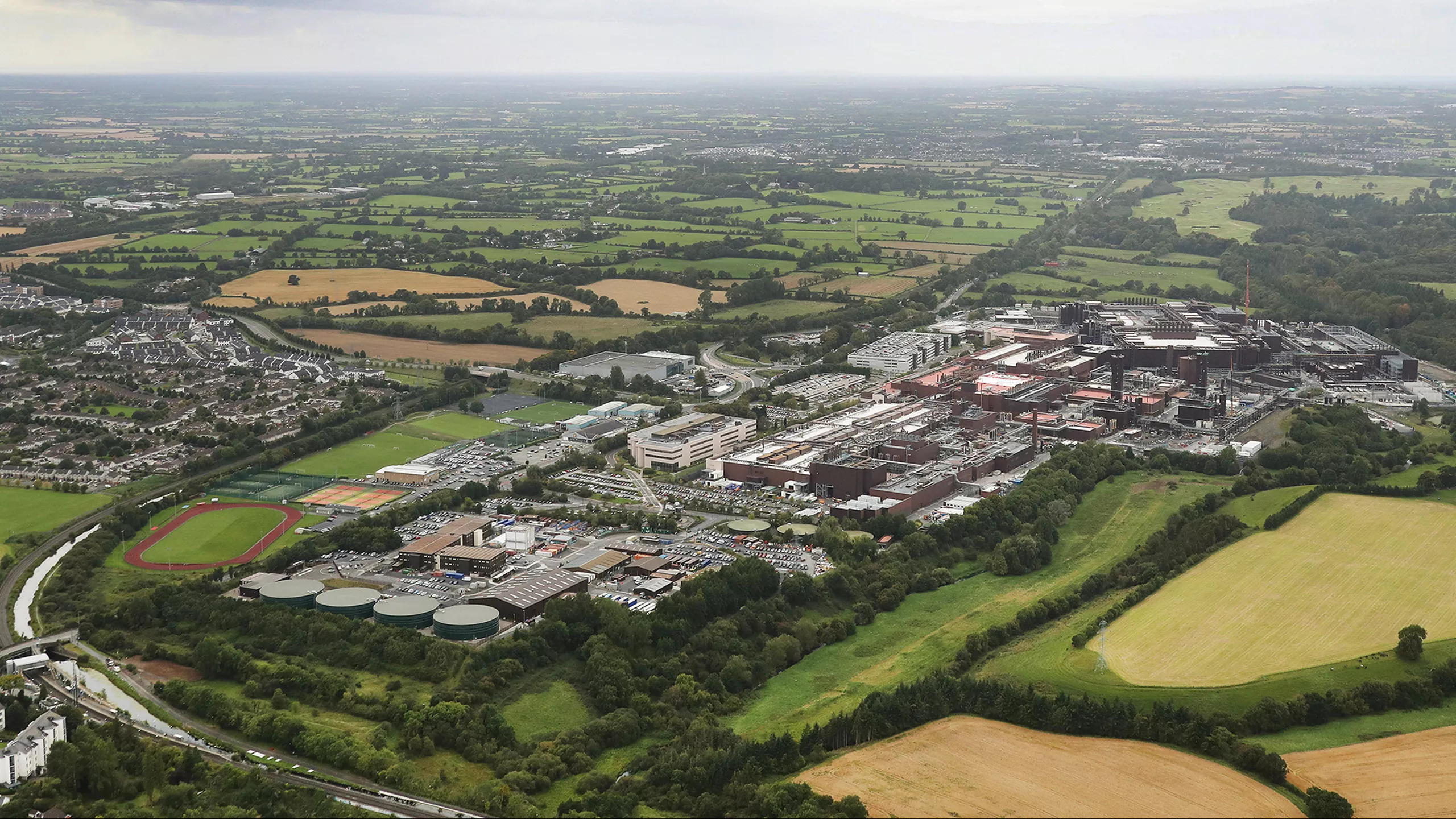
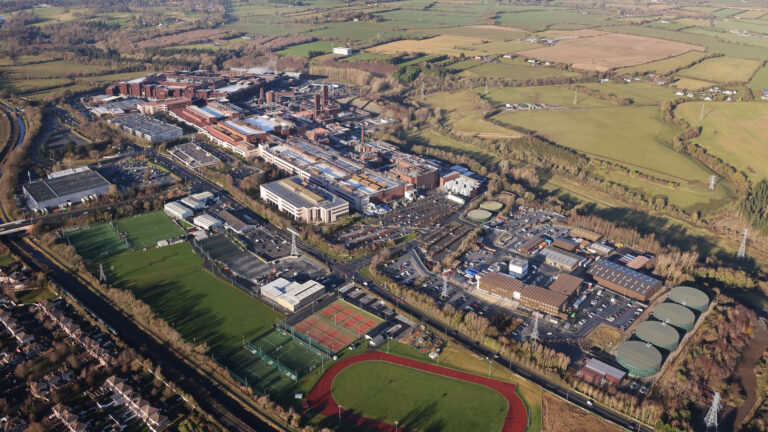
It’s understood that no new manufacturing plants are part of the program, with the money instead going to upgrades of existing fab facilities, installation of leading-edge production equipment, and an expansion of the automated track system that links the campus's manufacturing modules into a single production flow. Intel said the work began earlier this year and will employ around 2,000 specialized tradespeople during the build-out, on top of the permanent hires.
Fab 34 is the focal point of the spending, with Chandrasekaran telling the Irish Times that "Ireland is our centre of excellence for Intel 3; we are not running Intel 3 in any other Intel manufacturing facilities." The fab began high-volume production on Intel 4 in September 2023, as the first EUV facility in Europe, and it now runs both Intel 4 and Intel 3, producing compute tiles for Core Ultra parts and Xeon 6 server processors. Intel has spent more than €30 billion in Ireland since 1989, over half of it between 2019 and 2023, doubling the campus's manufacturing footprint.
The spending follows directly from a transaction Intel closed in April, when it bought back the 49% stake in the Fab 34 joint venture it had sold to Apollo-managed funds for $11.2 billion in 2024, paying $14.2 billion to reclaim it. Apollo walked away with a roughly 27% gain in under two years. Intel now owns 100% of every wafer Leixlip produces, so each additional Intel 3 wafer the €5 billion generates flows entirely to Intel's own margin, rather than being shared with an outside capital partner.
The projects Intel cancelled
Magdeburg had roughly €9.9 billion in pledged German subsidies attached when Tan killed it, and Wroclaw had €1.9 billion in approved EU state aid. Fab 38 in Kiryat Gat, Israel, remains paused, and the Ohio site has slipped to around 2030. Every leading-edge wafer Intel produces for the foreseeable future comes from three U.S. states and one Irish campus, a concentration that made Leixlip the only European site left to expand and the cheapest place anywhere in Intel's network to add advanced capacity quickly, since the shells, EUV tools, and workforce are already in place.
Intel's Data Center and AI revenue rose 22% year over year to $5.1 billion in Q1 2026, and CFO David Zinsner told analysts on the April earnings call that Intel faces "unprecedented demand for silicon," with demand exceeding supply across the company's server lines. Intel Foundry revenue grew 16% to $5.4 billion in the same quarter, but external foundry revenue was just $174 million against a $2.4 billion operating loss, so the wafers that pay for Leixlip's tools are overwhelmingly Intel's own Xeon chips, rather than customer designs. A single campus running the entirety of a revenue-critical node also concentrates risk: Any disruption at Leixlip has no second source, because Intel 3 exists nowhere else.
Europe's most advanced node, without European money
(Image credit: Intel)
Intel 3 is now the most advanced process technology manufactured anywhere in Europe, and Chandrasekaran told the Irish Times the expansion provides "a technology sovereignty within the EU that the EU is targeting." Interestingly, no EU or Irish state aid accompanied the announcement, which distinguishes it from TSMC's €10 billion ESMC fab in Dresden, where the European Commission approved a €5 billion funding package for a plant producing 28/22nm and 16/12nm chips for automotive and industrial customers, scheduled to be operational from late 2027. Europe's only leading-edge logic production is self-funded by an American company for its own products, while its subsidized flagship project makes trailing-edge silicon.
Commercial electricity in Ireland runs up to twice the rates Intel pays in Arizona or Taiwan. Intel warned Irish ministers in August 2025 that its competitiveness was under threat from energy costs, and the company flagged up to 195 mandatory redundancies at Leixlip in mid-2025 as part of its global workforce reduction. IDA Ireland paid Intel €30 million in 2023 to offset elevated EU power bills, so that "self-funded" framing has at least one recent caveat.
Meanwhile, Intel's 14A node is being developed in Oregon; no Irish role in it has been announced, and two prospective 14A customers will decide the node's fate in commitments expected between late 2026 and early 2027. Ultimately, the €5 billion makes Leixlip the fully-loaded workhorse of a node Intel will eventually move past, not a contender for the leading edge. Whether Europe gets anything newer than Intel 3 remains to be seen.
Luke James is a freelance writer and journalist. Although his background is in legal, he has a personal interest in all things tech, especially hardware and microelectronics, and anything regulatory.
Intel's big $5 billion bet on Ireland aims to right the wrongs of the cancelled Magdeburg, Germany complex — Fab 34's proven pipeline and Intel 3 node should help the company meet insatiable HPC demand

 3 weeks ago
55
3 weeks ago
55








 English (US) ·