
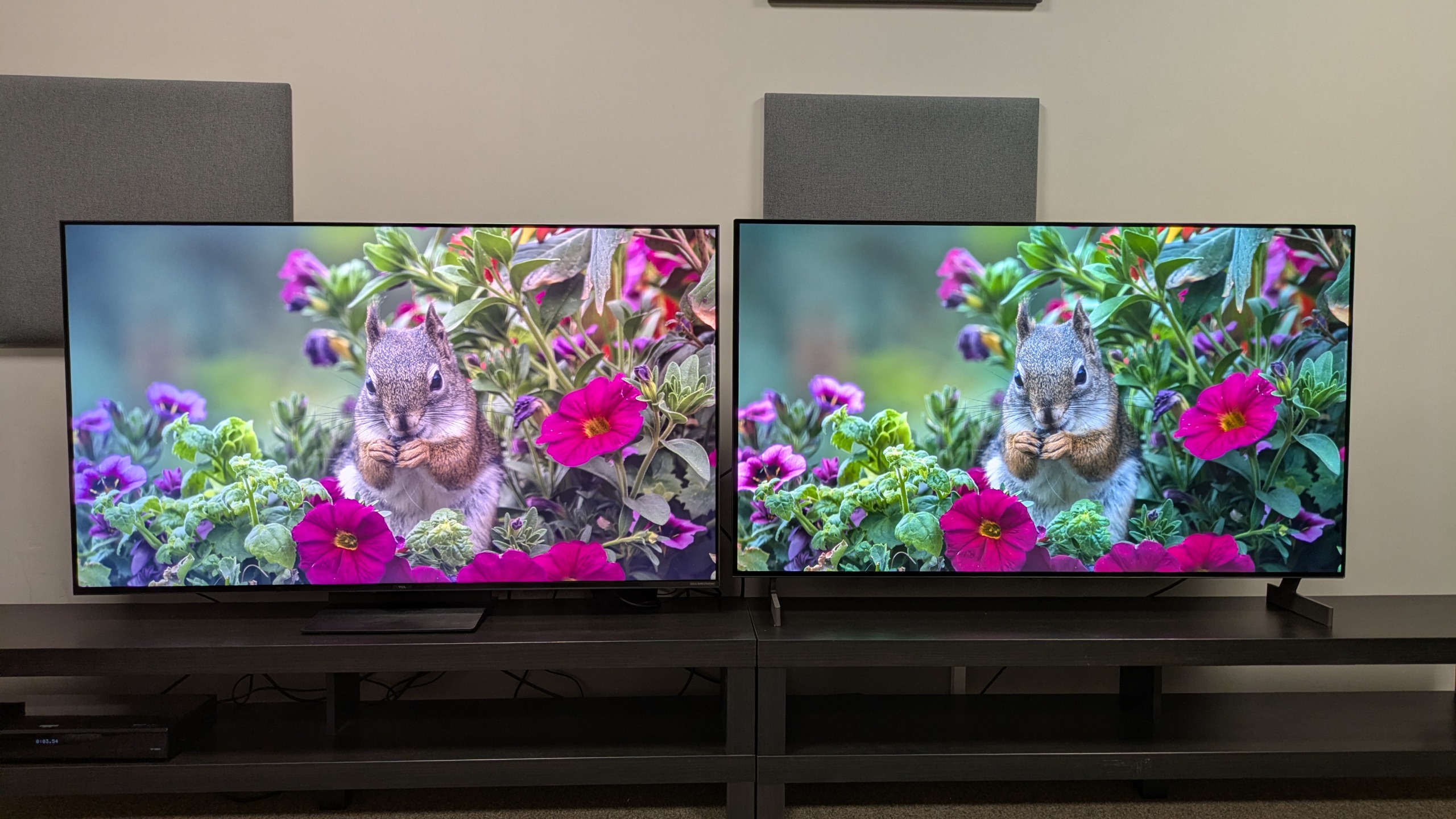
Mini-LED vs OLED has been a battle in the TV world for a few years now. While mini-LED always provided more brightness and better bright room viewing and OLED delivered better black levels, thanks to its self-dimming pixels, that has changed in recent times, with both TV techs managing to cover more bases.
Both LG and TCL make some of the best TVs you can get, with the former delivering some of the best OLED TVs and the latter offering up some of the best mini-LED TVs. Both also deliver great value for the price you pay, especially TCL.
The LG B6 is one of the best OLEDs I’ve tested this year, offering great performance for a more affordable price. Now, the TCL C7L (this is the UK model — the TCL QM7L is the US equivalent) has arrived in our testing lab so I thought I’d compare the C7L, the brand’s mid-range SQD mini-LED for 2026, against LG’s most entry-level OLED, as they’re available for similar prices.
Can the mini-LED hold its own against OLED? A quick note that we’re using the LG B6E, a cheaper B6 that performs the same other than missing some AI picture modes, and with a different back panel.
Brightness
Flagship and mid-range OLED TVs have seen a brightness boost over the years, with one example being the near 1,000-nit peak HDR brightness increase between the LG G4 (1,489 nits) from 2024, and its 2026 successor the LG G6 (2,475 nits). It’s taken until this year for entry-level OLED to get a brightness boost: and it’s not as significant as that.
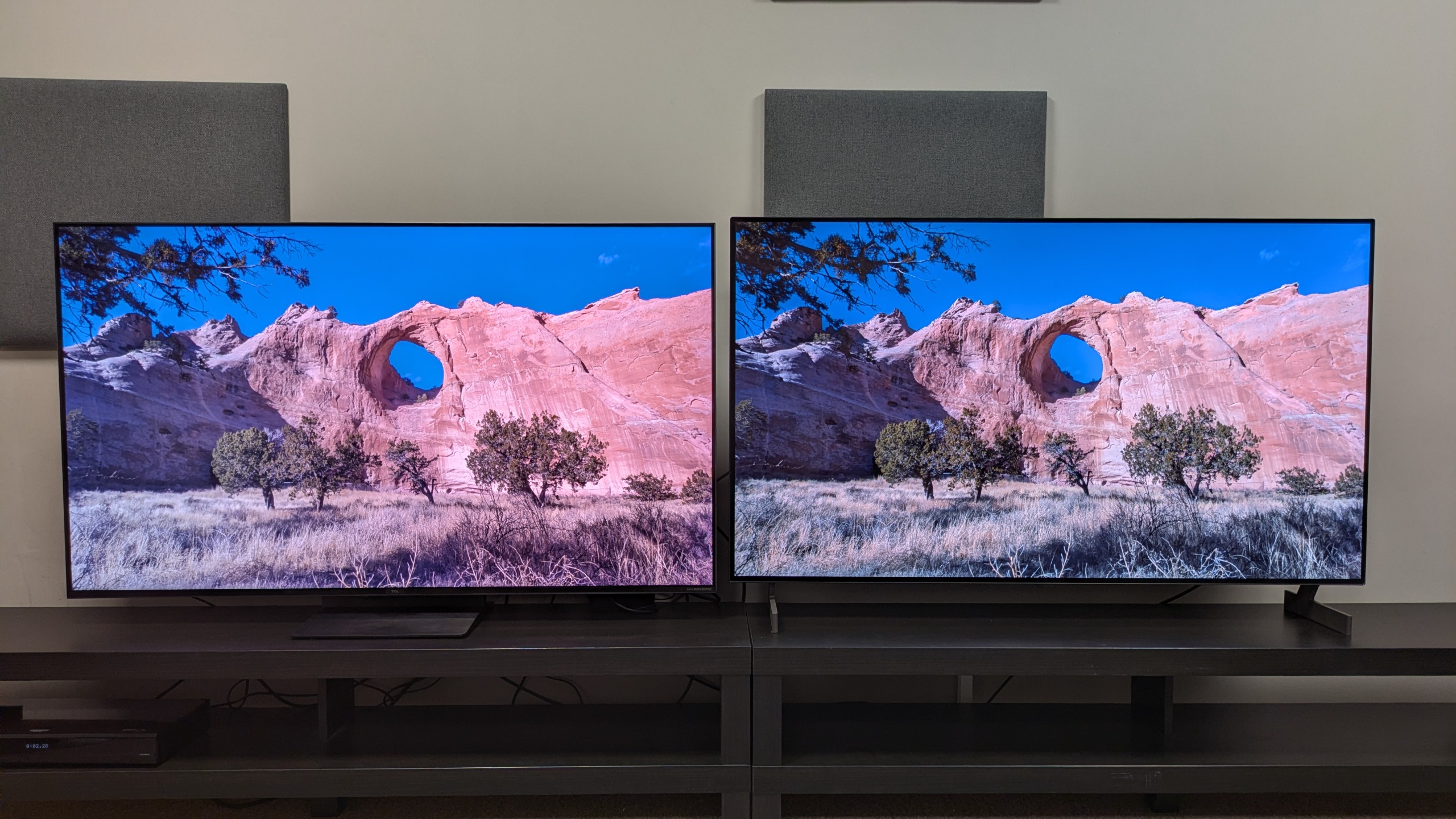
The LG B6E measured 808 nits HDR peak brightness (10% window pattern) in Filmmaker Mode in my tests: a nice boost over the B5’s 668 nits. However, this 808 nits pales in comparison to the 2,083 nits peak HDR brightness achieved by the C7L in its Filmmaker Mode. Mini-LED has always been the brighter tech, but do these results reflect real-life?
In practically every scene I tested, the answer was a resounding yes. With both TVs set to Dolby Vision Filmmaker, in a scene where Lawrence and his guide are by a well in the desert in Lawrence of Arabia, the white sands and blue skies were much more impactful on the C7L, showing off the brightness advantage. The B6E did a good job with the picture, but next to the C7L it looked dim in comparison. Switching to the B6E’s Cinema Home mode did give it a boost in brightness, but still the C7L’s picture dazzled in comparison.
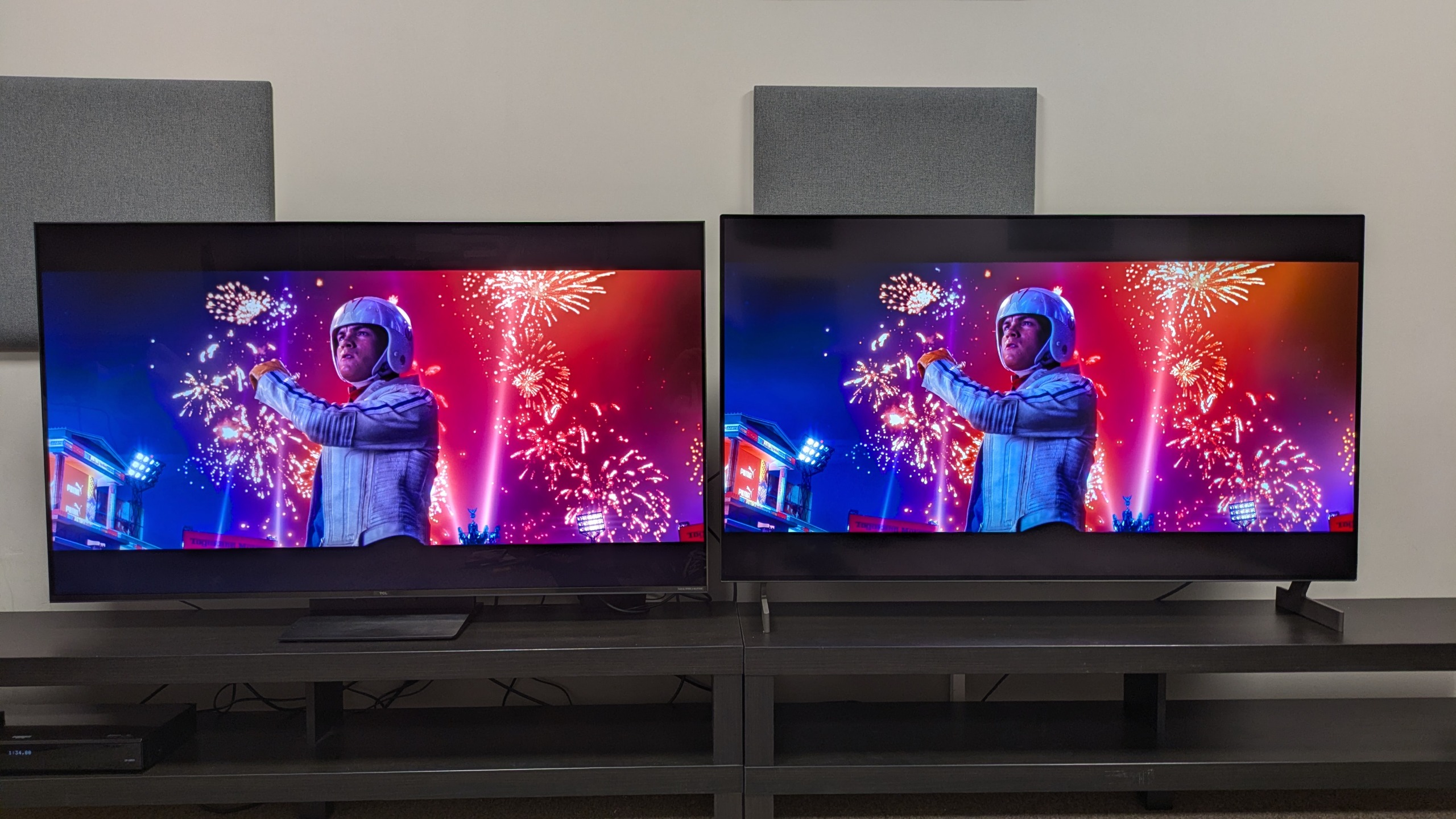
This was also apparent in HDR highlights in other movies. In Speed Racer, the brilliant white of the Mach 5 was much punchier on the C7L than the B6E, though the gap in luminance wasn’t quite as obvious as it had been in Lawrence of Arabia.
For bright-room viewing, neither TV was perfect, with both showing mirror-like reflections. The C7L did a better job in brighter conditions, thanks to that added brightness — it's the clear winner for pure brightness, and for visibility in strongly lit rooms
Contrast and dark scenes
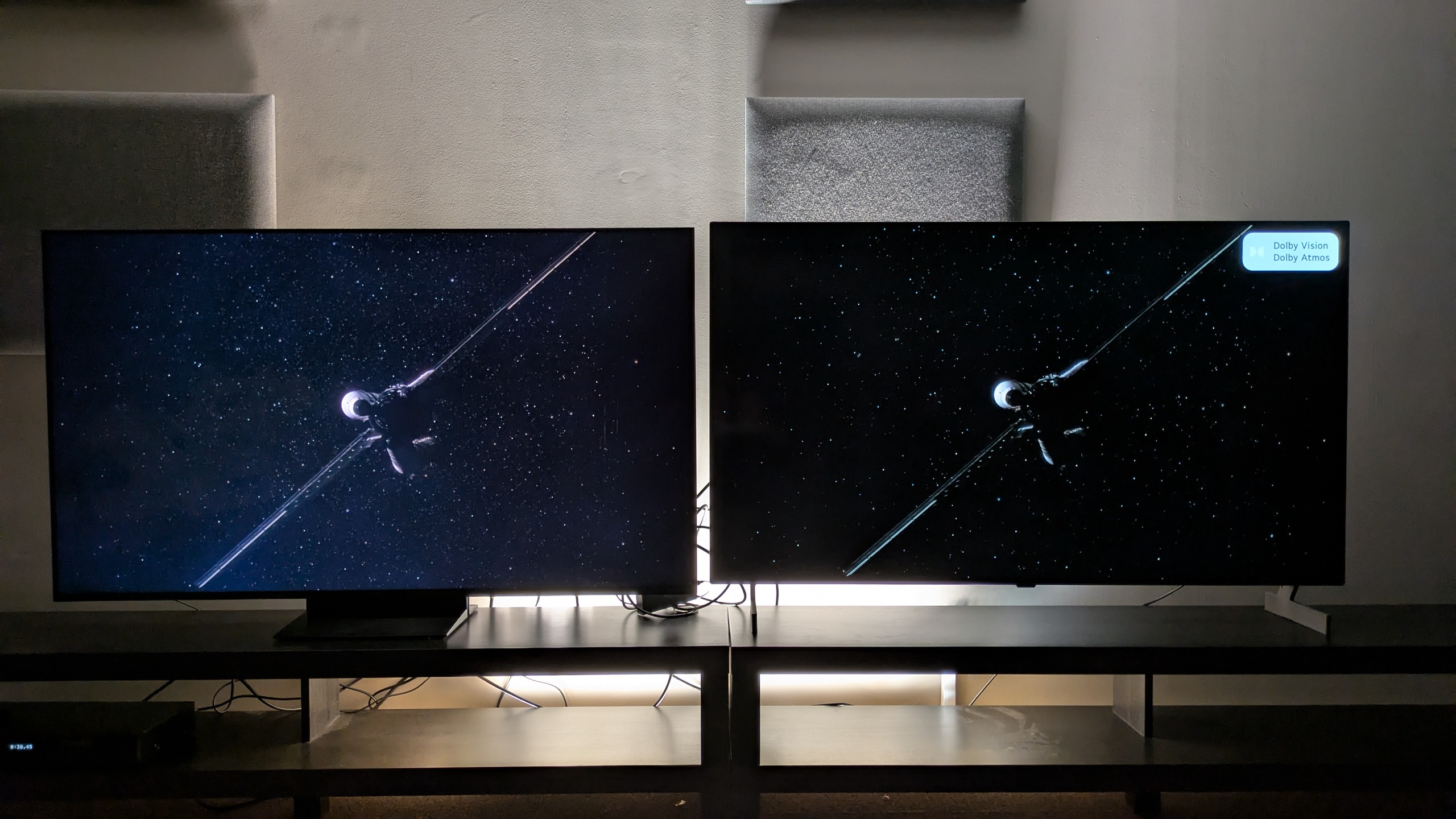
OLED’s advantage when it comes to darker, more contrast-y scenes is its self-dimming pixels. As it doesn’t rely on a backlight and it can turn off individual pixels, this produces much deeper black tones that most mini-LEDs can achieve, and with precise borders between light and dark. However, more mini-LED TVs are demonstrating better backlight control and more impressive black tones.
In my time testing the C7L, I’ve been impressed with its black levels: especially for a mid-range mini-LED. Yes, there’s still some blooming going on, but it’s greatly reduced from the previous generations of TCL’s TVs I’ve tested before — not that long ago, this would've been premium performance. Still, when it comes to black handling, OLED is king.
Watching any space scenes from Project Hail Mary, the B6E clearly produces richer, deeper black tones that are consistently strong throughout. The C7L, while rendering strong black tones of its own, don’t quite have the same consistency, as some shots of the stars in space demonstrate blooming, a common occurrence with backlit TVs.
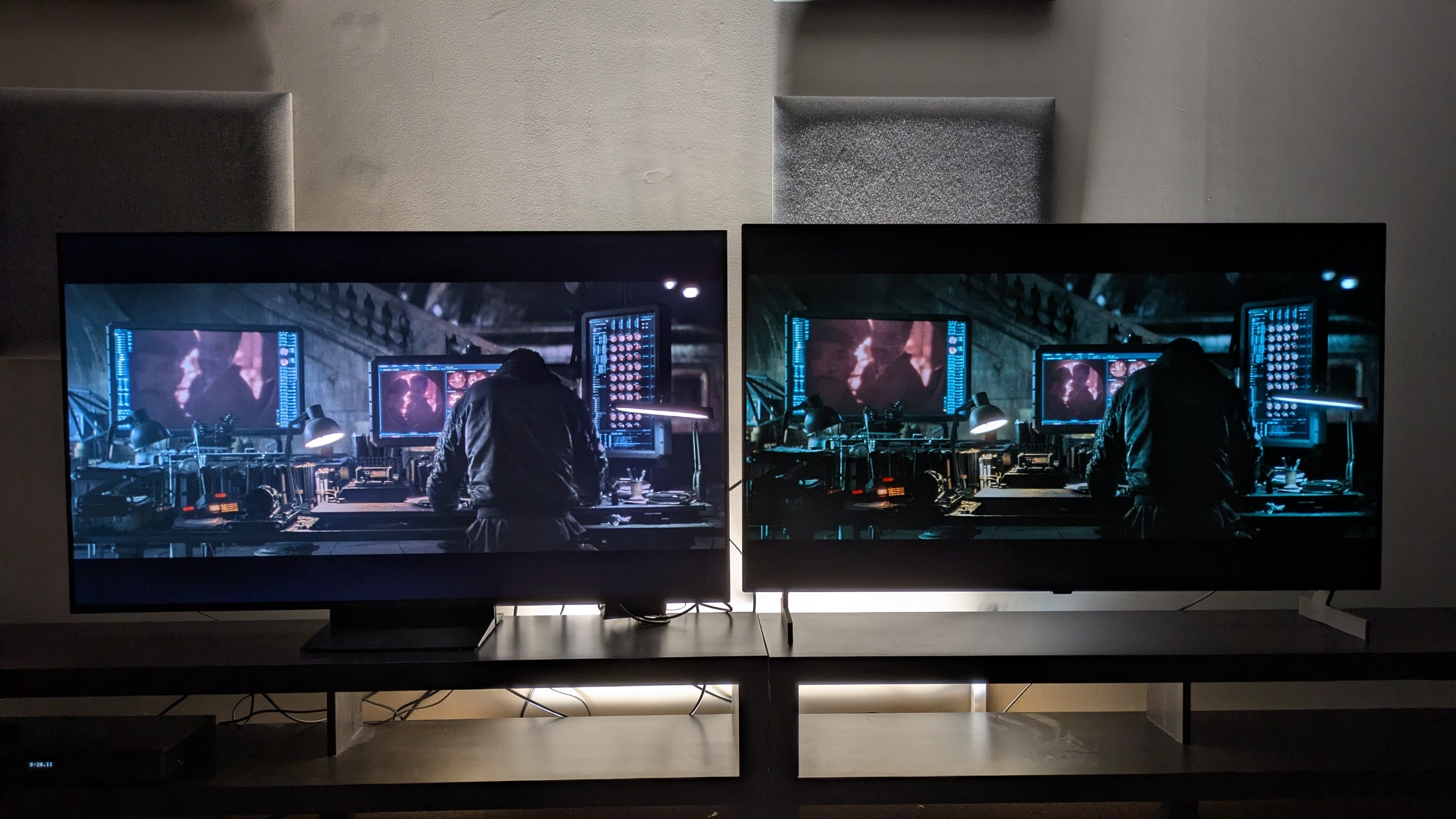
When it comes to contrast and shadows however, there’s a bit of give-and-take. Watching The Batman, with its array of contrast-rich scenes, the B6E clearly produces a more balanced image thanks to its deeper dark tones and well-handled bright tones. The TCL’s picture however is more impactful thanks to those punchier highlights. As Bruce works at his desk in the Batcave, the dark crevices and wood of the desk blend well with the lamps and monitors on both TVs.
In fact, some black tones can actually look crushed on the B6E, leading to a loss of shadow detail, such as the wall at the rear of a subway platform in The Batman. The same surface is much more legible on the C7L. Switching from Filmmaker to Cinema Home on the B6E does rectify this, without compromising significantly on dark tones.
The Batman has proven to be a challenge for backlit TVs in my time testing, due to its low brightness. While The C7L did a great job overall, occasional blooming would appear behind bright objects, which was more noticeable when viewed in dimmed conditions. For dark scenes and dark rooms, the B6E proved to be the better choice.
Color
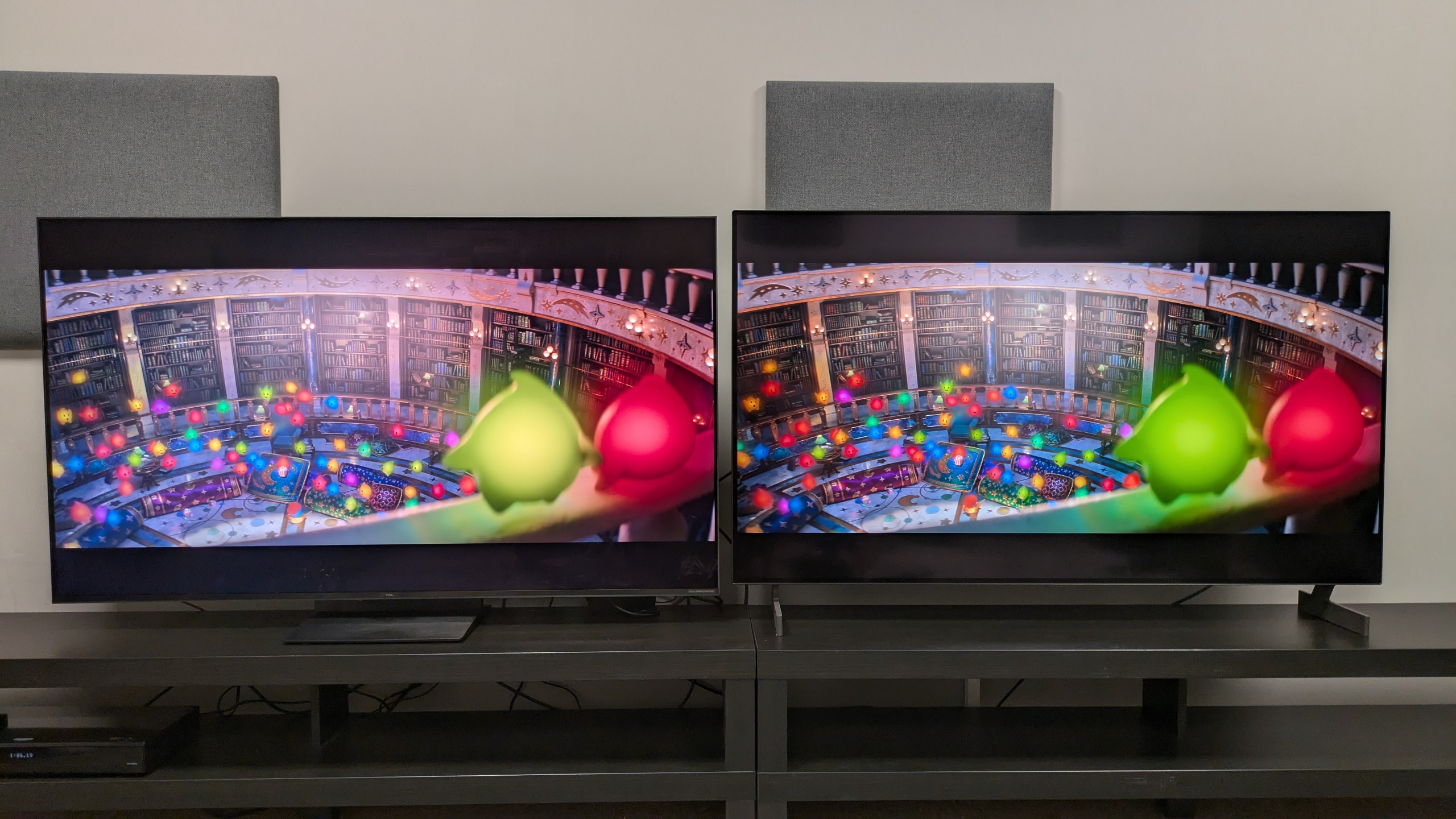
Color is probably the most contentious subject when it comes to mini-LED vs OLED, as both tech can deliver great colors in their own way, and I found this to be true putting these two TVs side-by-side.
Watching The Super Mario Galaxy Movie, both TVs deliver vibrant, bold colors that accurately delivered the pop you’d want from this movie. The C7L’s colors were punchier overall, thanks to that higher brightness, but the B6E’s colors looked richer, with more depth. This was obvious whenever the Lumas were on screen, where they had more of a 3D-look on the B6E, but were much brighter on the C7L. Mario and Luigi’s overalls showed that both TVs delivered great colors, but the B6E’s looked that bit more 3D and solid.
Switching to Speed Racer, both TVs again captured the cartoon-ish, candy-colored aesthetic of the movie well. The C7L had the more shimmering colors, but the B6E’s were more true-to-life, as shown by the grass in Trixie’s flashback early in the movie. I also found that different colors looked better on different TVs, with reds and greens standing out more on the B6E, but yellow and orange looked better on the C7L.
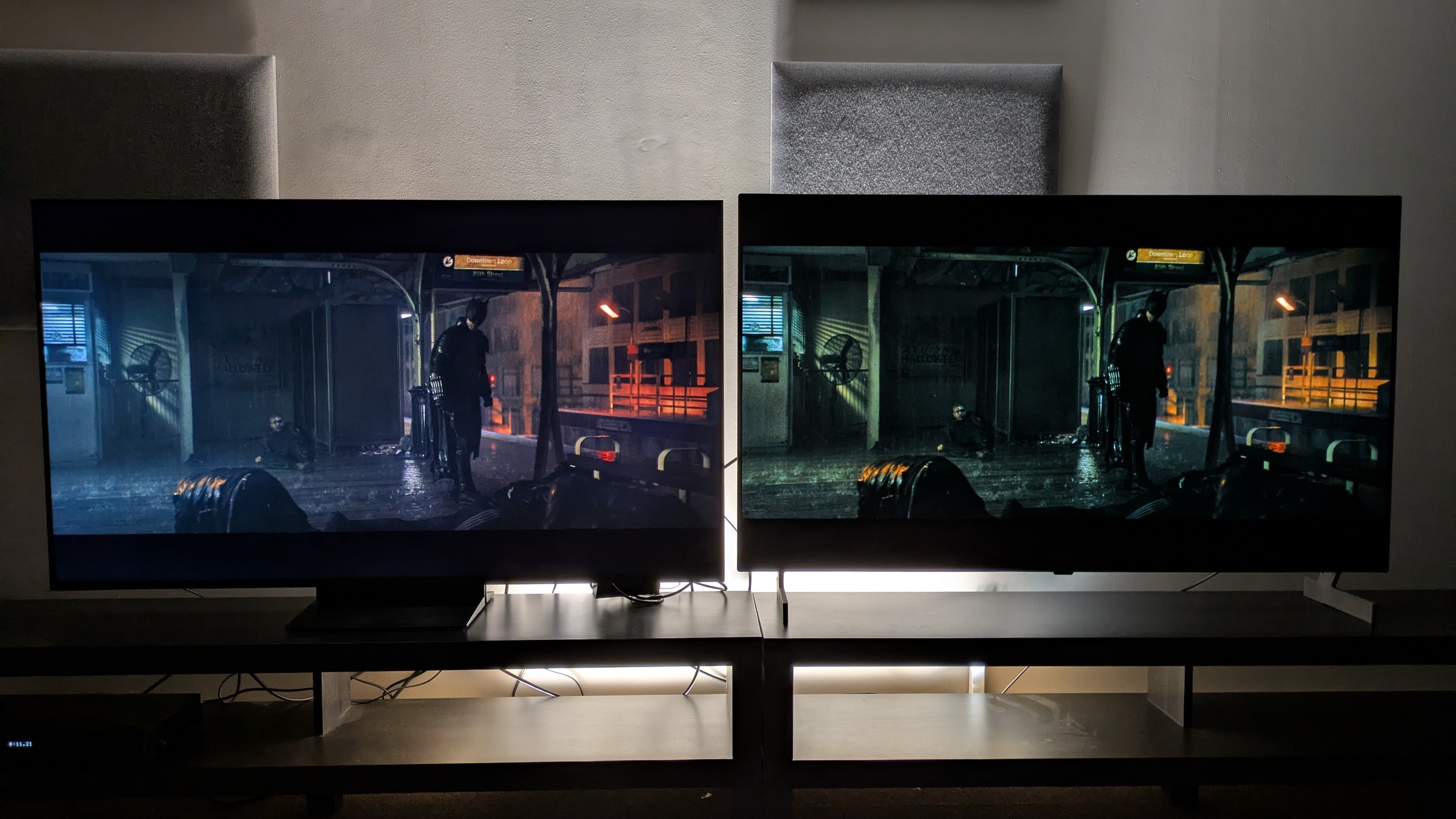
One advantage that the C7L did have was in its color temperature accuracy. The B6E demonstrated a green tint in comparison, which can be an issue for some OLEDs. In isolated viewing this isn't so obvious, but next to the C7L, it was noticeable. In the subway scene in The Batman, the surroundings had a green hue to them on the B6E visible above, but the C7L’s cooler color temperature helped render more accurate gray tones.
This scene was the most obvious case of the B6E’s green tint I found during my testing, and it wasn’t legible in other movies such as Project Hail Mary and Speed Racer.
In terms of which TV delivers the better color, they both have their strengths and both have great color reproduction overall, but if I had to pick one, it would be the B6E purely because I prefer the richer color profile. But the C7L’s colors were very good.
The best buy
When it comes to value for money, both these TVs tick plenty of boxes. Both TVs have a feature set up there with the best gaming TVs, with 4K 120Hz, variable refresh rate, auto low latency mode and Dolby Vision gaming supported, although the B6E has four HDMI 2.1 ports to the C7L’s two — but they both have razor-sharp performance.
Picture quality comes down to preference, and both deliver adequate built-in sound, though both could benefit from one of the best soundbars.
When it comes to price, it's close in most places. For the 55-inch models I tested, you’ll be looking to pay $799 for both in the US, with the QM7L going for $100 cheaper in the larger 65-inch size. In the UK and Australia, the C7L is better value, with the 55-inch costing £899 / AU$1,495 while the 55-inch B6E costs roughly £1,099 in the UK (though it has dropped to £999 before) and the standard B6 costs £1,199 / AU$2,495.
Honestly, you can’t really go wrong with either TV. The TCL is the much better pick for bright rooms, while the B6E is the better choice for darker, cinematic viewing and I really am torn on which is the better pick, as this was such a close contest.
Purely from a price standpoint, the TCL is the winner (especially when you go beyond 65 inches — mini-LED's price advantage grows as sizes do), and is the more practical choice for a bright room.
But if you can get the B6E for a good price and you'll watch in a room with controlled lighting, then the better contrast and color depth make it my pick.
Thinking of buying a new TV?
Try our TV size and model finder! You tell it how far you sit from your TV, we'll tell you what size to buy based on viewing angle advice from image quality experts, and we'll recommend our three top TVs at that size for different prices.

Follow TechRadar on Google News and add us as a preferred source to get our expert news, reviews, and opinion in your feeds.




 English (US) ·