
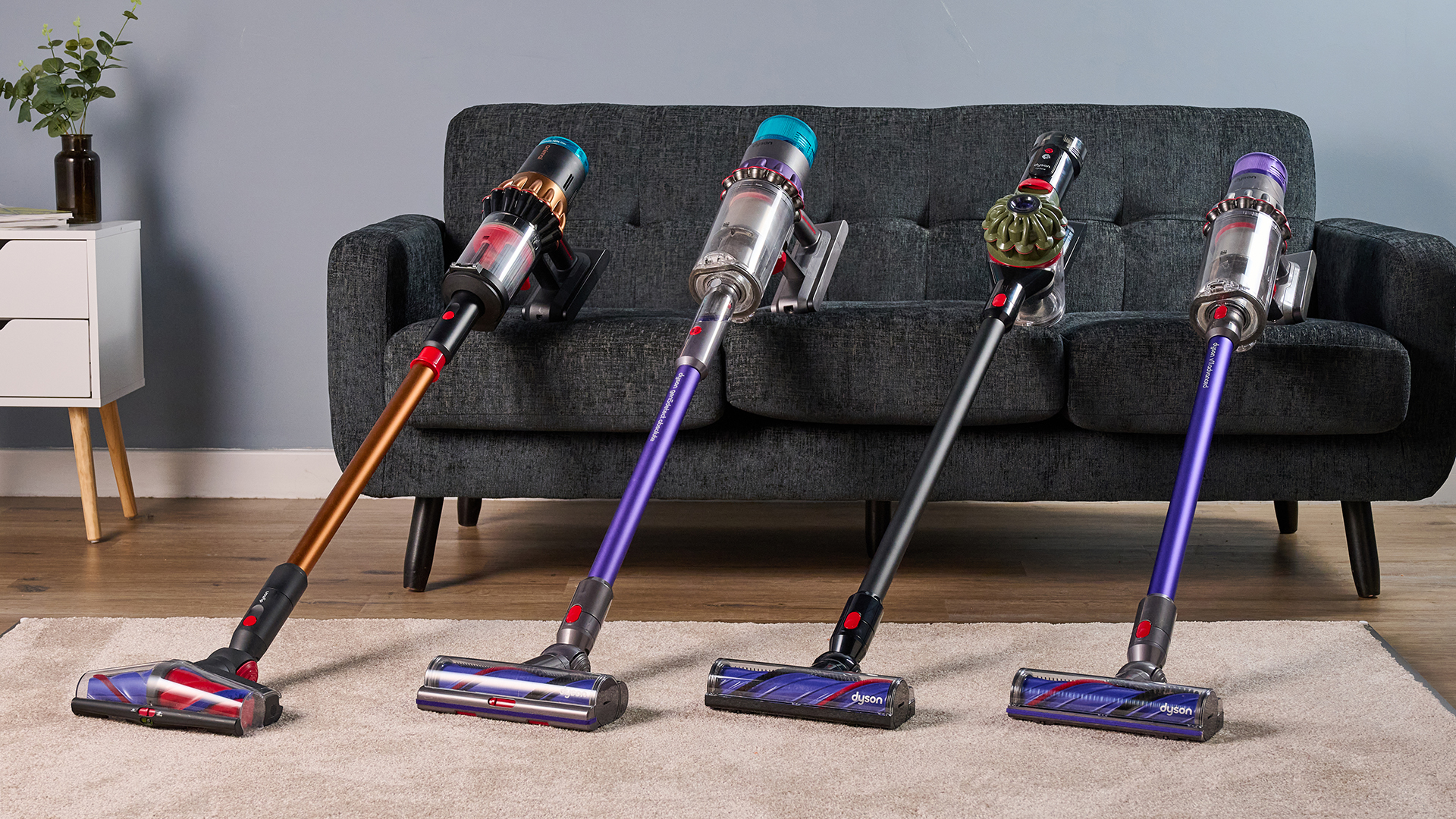
Most of Dyson's vacuums look pretty much the same, so figuring out what the differences are – and crucially, if those differences will translate to cleaner floors and a less demanding housework session for you – can be tricky. To help you out, I ran side-by-side tests with some of Dyson's newest vacuums, comparing everything from suction to battery life to design, features and price, to make it clear how the different options compare.
In this test, I used four vacuums from across the range. I started with the brand's two most recent flagship models: the Dyson V16 Piston Animal (released in September 2025 and the best Dyson vacuum based on specs) and the Dyson Gen5detect (released 2022). Those are both ultra-premium options, so for a bit of balance I also included the Dyson V11, which is one of the oldest models in the current range (released 2019). Finally, I tested the Dyson V8 Cyclone, a refreshed-for-2025 version of the classic V8, one of the cheapest and most basic Dyson vacs (not yet available in the US).
This comparison was part of a larger group test including models from various other brands – you can see how these models stacked up against competitor efforts in my guide to the best cordless vacuums on the market. Alternatively, read on for my main takeaways from this Dyson vacuum showdown, plus the scorecards from my tests.
#1. The cleaning is stellar...
With one glaring exception (which I will cover in my next point), all the Dyson vacuums I tested offered excellent cleaning. Even the cheapest model (the V8 Cyclone), and the oldest (the V11 Advanced) sailed though my cleaning tests. I've included a score breakdown below, if you're interested.
Mid-pile carpet cleaning performance was uniformly great, with the V8 Cyclone, V11 and Gen5detect all delivering near-perfect pickup in Auto or Med mode, on everything from fine dust to chunky particles to pet hair. It's notable that I didn't see better performance on the models that had automatic suction adjustment, compared to the ones that did not.
That holds true for my deep-pile carpet tests, too: these three vacuums all have ample suction to pull dust from within thick carpet fibers. A bigger reason for docking of points in my deep carpet tests was a lack of air intake slider on the floorhead. If a vacuum has a lot of suction but no way to allow more air in, it becomes almost impossible to push on deep pile. This was an issue on both the V8 Cylcone and V11 Advanced.
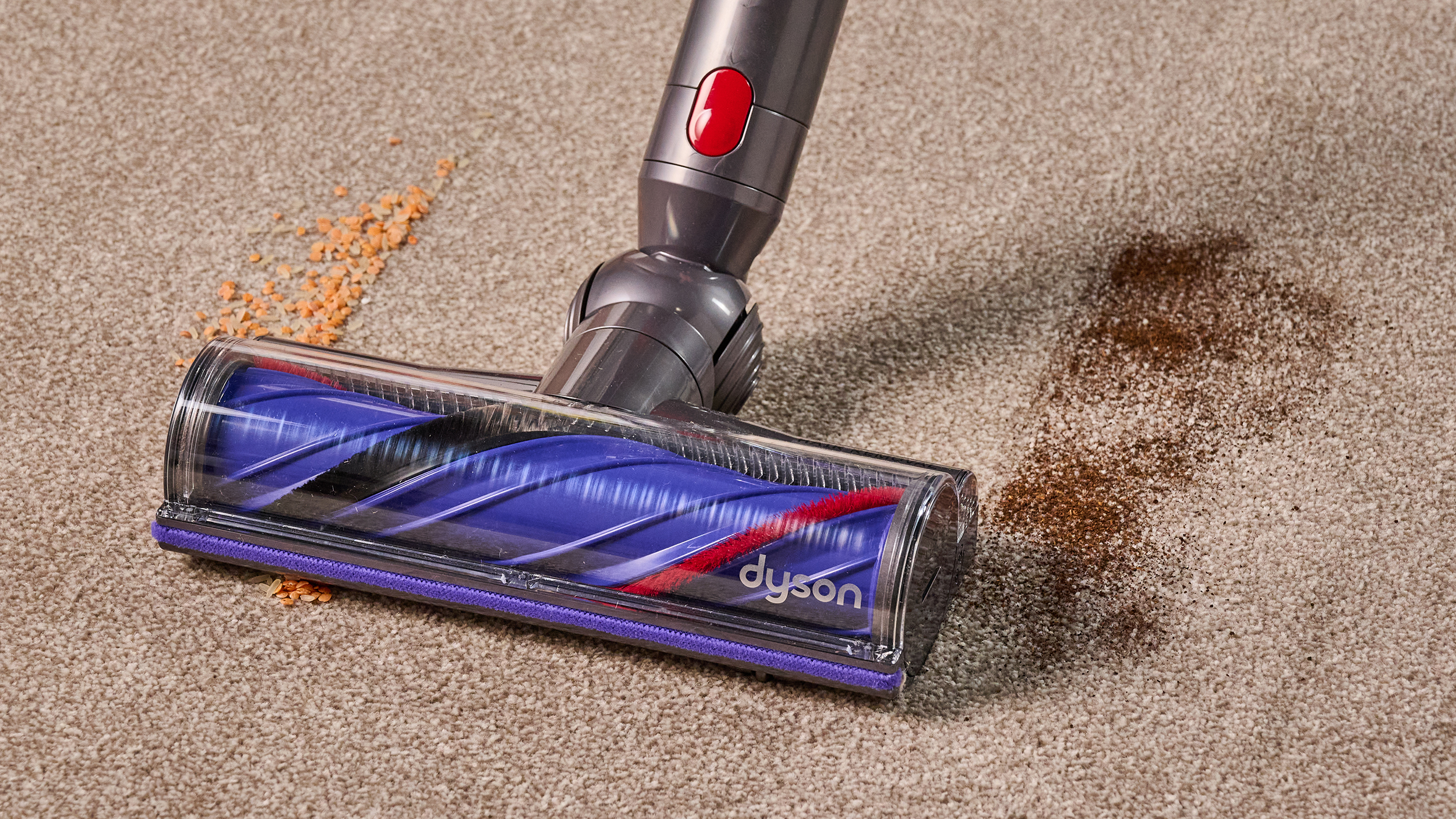
Hard flooring is less of a challenge for vacuums because all the dust is sat right there on the surface. Again, scores were generally great. The reason for the not-quite-perfect scores was generally due to the design of the floorhead causing debris to ping around a bit, or pool up when reversed over the particles (the only vacuum I've used that doesn't have the latter issue is the Shark PowerDetect Cordless). If you have delicate hard floors, opt for the Gen5detect, which comes with a soft floorhead specifically for this situation.
#2. ... with one glaring exception
As you may have spied in the table above, the V16 Piston Animal earned far lower scores in my cleaning tests. It's a little baffling, because this is the newest flagship model and based on specs it should be the most powerful. I'm not sure if something is going wrong elsewhere too, but what's obvious to me is that the redesigned floorhead is not helping matters.
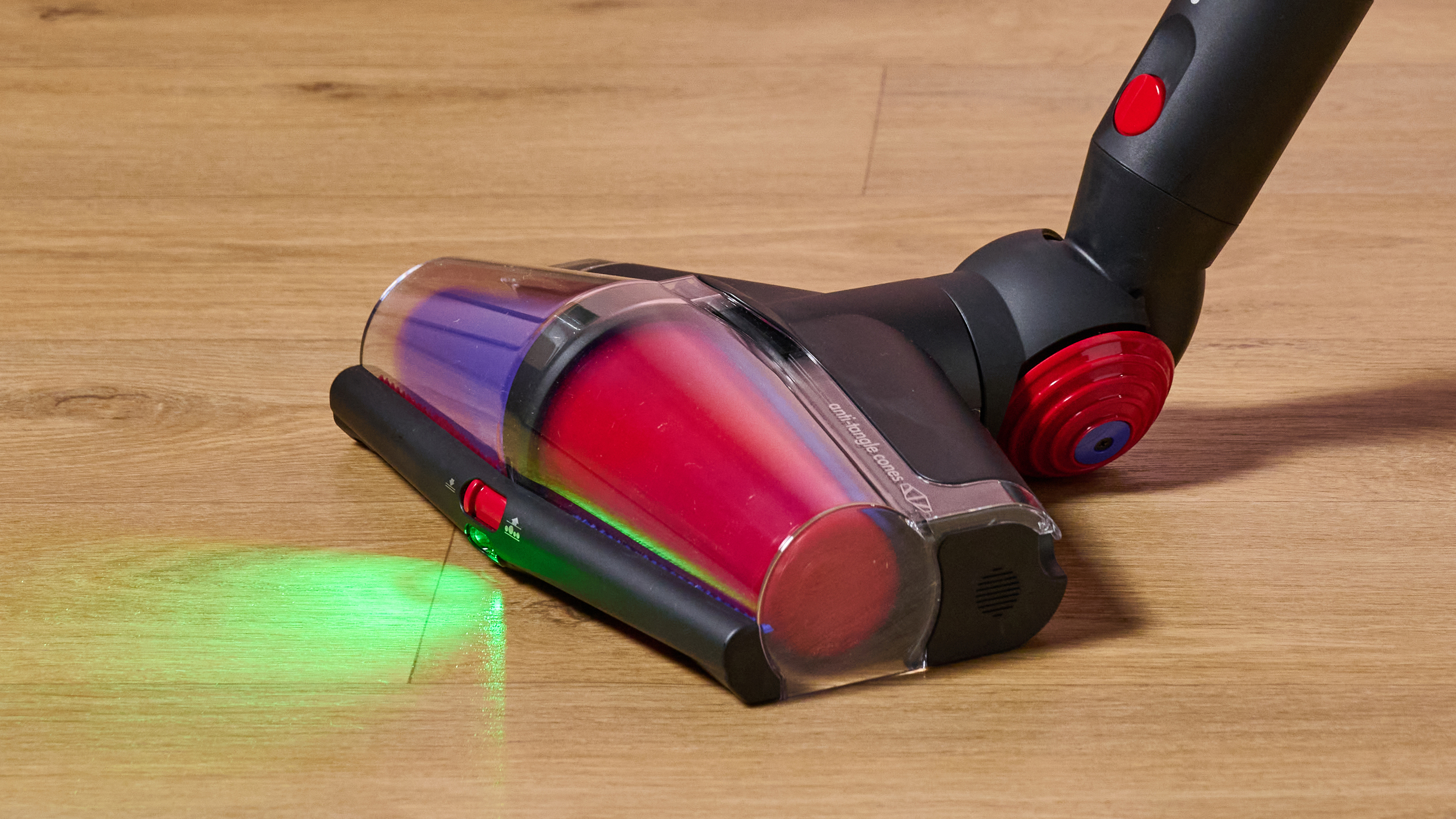
For this model, Dyson has swapped the already-excellent Motorbar floorhead for a new All Floors Cones Sense floorhead, whose impressively unmemorable name is but the first in a long list of disappointments. The two cone-shaped rollers are joined in the center by a big chunk of plastic that blocks anything beneath it from being sucked up, and the front edge of the floorhead comes to a slight point, which means it can't get flush to walls.
If you want to get more into the V16's cleaning powers, watch my full video review below, or head to this article where I filmed side-by-side cleaning tests using the three newest Dyson flagship vacuums.
Dyson V16 Piston Animal review: powerful vacuum let down by a poorly designed floorhead - YouTube
#3. The newest flagships are very user-friendly
So the cleaning might be much of a muchness, but where the pricier Dyson vacuums really stand out is user-friendliness. The addition of an info screen makes the biggest difference here – it's present on all but the V8 Cyclone.
This screen not only spells out (in words) which mode you're using, so there can be no doubt, but it also tells you exactly how much cleaning time you have left in your current mode with your currently attached tool. And if anything gets blocked or needs attention, it'll clue you in on that, too.
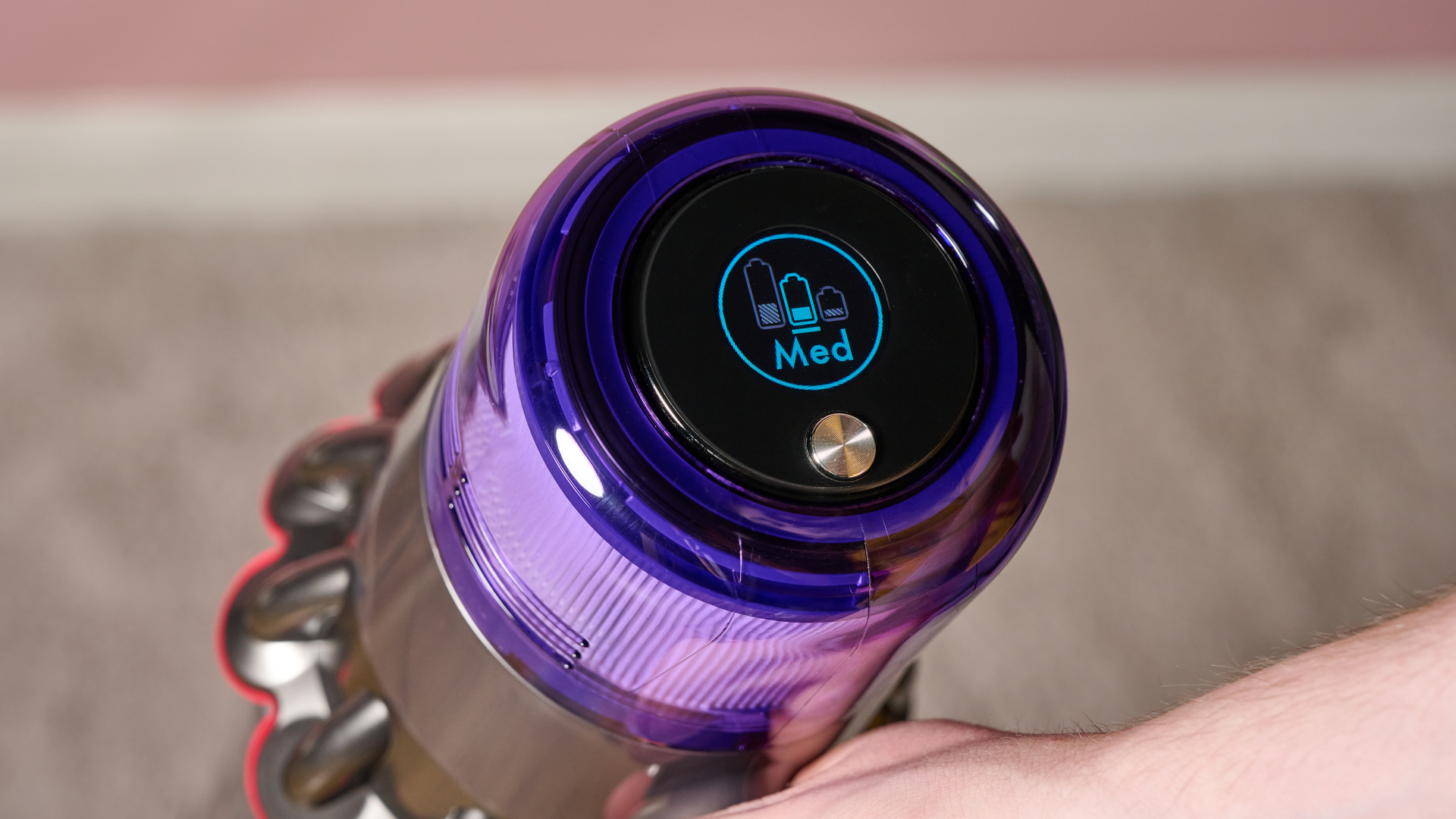
Switching down to the screen-less V8 Cyclone, I was struck by how much information I was missing. The suction mode is indicated by a colored LED ("Is that blue or green?", "Hold on, what does blue stand for anyway?") and battery levels are largely up to you to guess – the only indications of charge occur when the machine is about to run flat, or when it's fully juiced-up.
The most advanced options (the Gen5detect and V16) offer up automatic suction adjustment based on dirt detected. Their screens also display a moving bar graph of the size and volume of particles being sucked up as you clean, which is a neat way to highlight dirt hotspots and flag when there's still dirt on the floor, so you know a few more passes are needed.
In fact, the V16 has further advancements that aid with user-friendliness. There's a dust compactor on the bin, to help you fit more in without having to traipse to the trash. The main cleaner heads also have a quick-release mechanism that means you can swap them over without having to bend down.
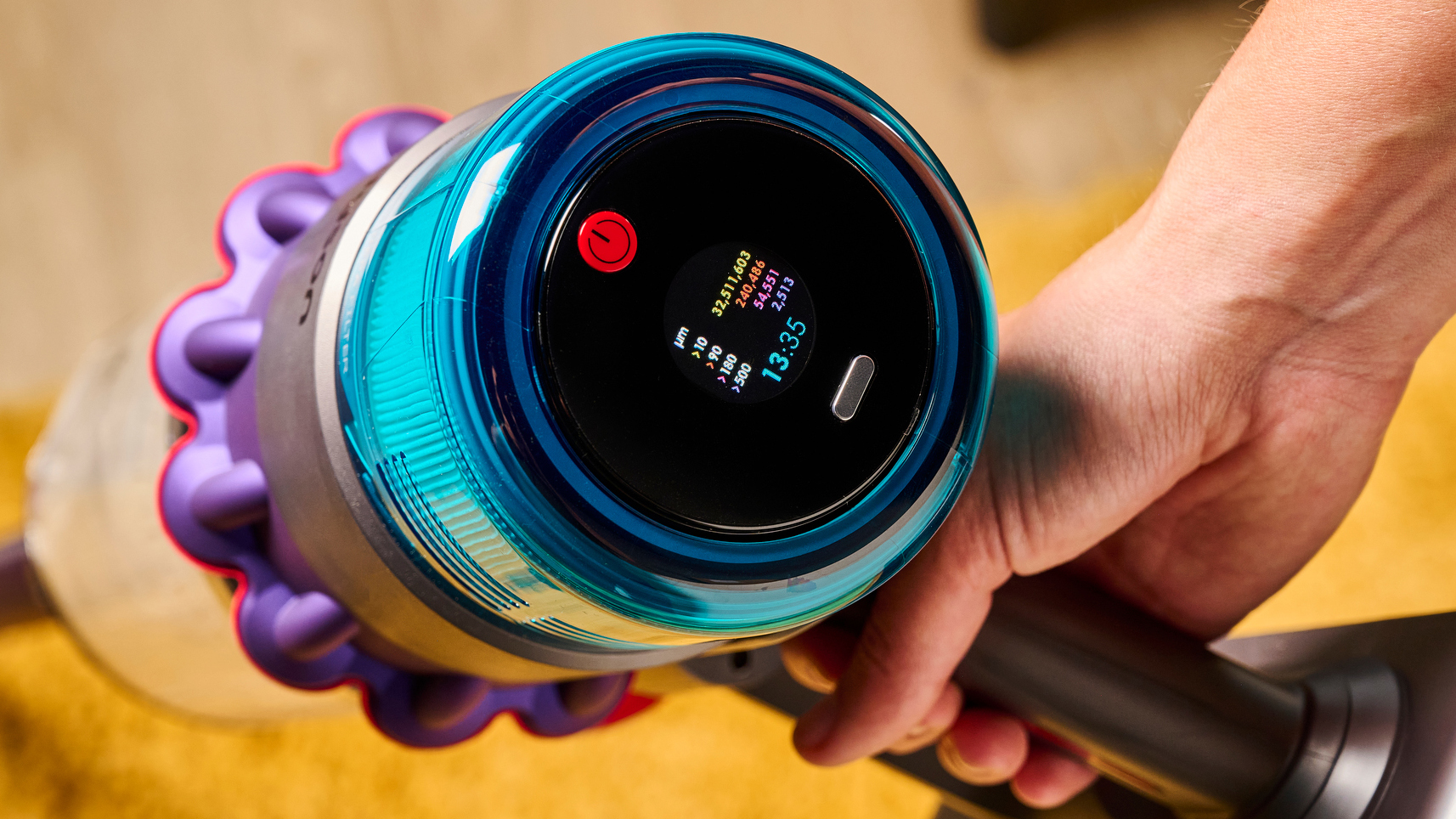
My only real usability complaint is that Dyson hasn't really nailed the control setup yet on any of its vacuums. The Gen5detect, V16 and V8 Cyclone all switch on and off with a one-press button, but said button isn't reachable from the hand grip, so you'll have to keep your other hand free at all times.
The V11 uses a trigger, and while that's better for quick cleanups, having to keep it compressed is awkward and uncomfortable when using the vacuum for long periods. The ideal would be a trigger, with a lock for continual running, but no Dyson vacuum has this setup.
#4. Dyson needs to work on improving comfort
One area where Dyson consistently disappoints me is in its concessions to comfort. None of the vacuums here (or in Dyson's wider range) have any shaping on the handle to make it more ergonomic.
That's a particular issue with the fanciest models (the Gen5detect and V16), which are both amongst the heaviest cordless stick vacuums I've used. The top section is also rather elongated, which makes it especially unwieldy when used as a handheld. Shaping the handle might help deliver a more secure grip. To its credit, Dyson has added a padded section above the handle, to cushion this area a bit.
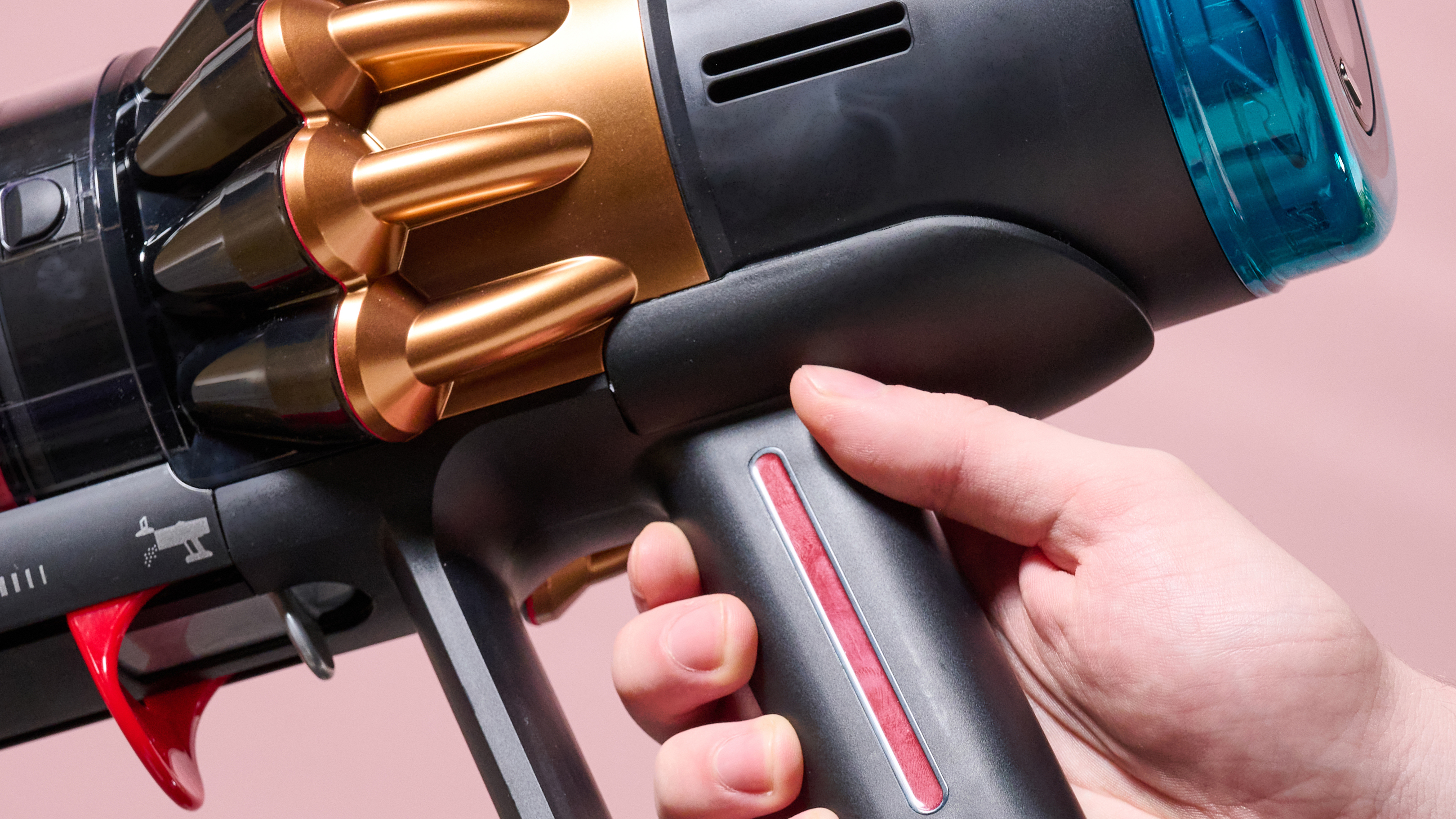
That padding is absent, however, on the lighter V11 and the V8 Cyclone. In both cases, I could have done with it, because I found the edge of the filter casing on the could rub on my thumb joint.
None of the Dyson models in my group test really shone in the comfort section – the Gen5detect earned the lowest average score and the V8 Cyclone the highest, but that was mainly determined by each vacuum's weight.
#5. For best value, shop middle of the range
None of these vacuums are especially cheap, so which one delivers the most bang for your buck? If excellent cleaning is your priority, I'd go for the V11. This vacuum earned the second-highest marks overall in this Dyson showdown, with especially strong scores on cleaning performance (pid-pile carpet and pet hair in particular) and battery life.
It didn't score below a 3/5 in any area, so it's a strong all-rounder. Because it's getting a little longer in the tooth now, excellent deals are relatively easy to find, and especially around sales events.
If you'd prefer something more hi-tech, you could stump up for the Gen5detect, which earned the highest overall score of the four vacuums, but is a decent jump up in price from the V11. Again, the cleaning scores were very impressive, and this model also earned marks for its various special features – most notably, Automatic suction adjustment.
(A quick side note: it wasn't part of this side-by-side test but for something similar but I'd recommend the Dyson V15 Detect – it has pretty much all the same features as the Gen5, the cleaning is still excellent, and it comes in slightly cheaper. See exactly how the two compare in my Dyson Gen5detect vs V15 Detect article.)
For those on an even tighter budget, the V8 Cyclone also earned strong overall scores, especially with regards to cleaning, although it lost points for shorter runtimes and a more basic design (specifically, the lack of screen is a hindrance). In short, avoid the V16 Piston Animal and you really can't go wrong.




 English (US) ·