
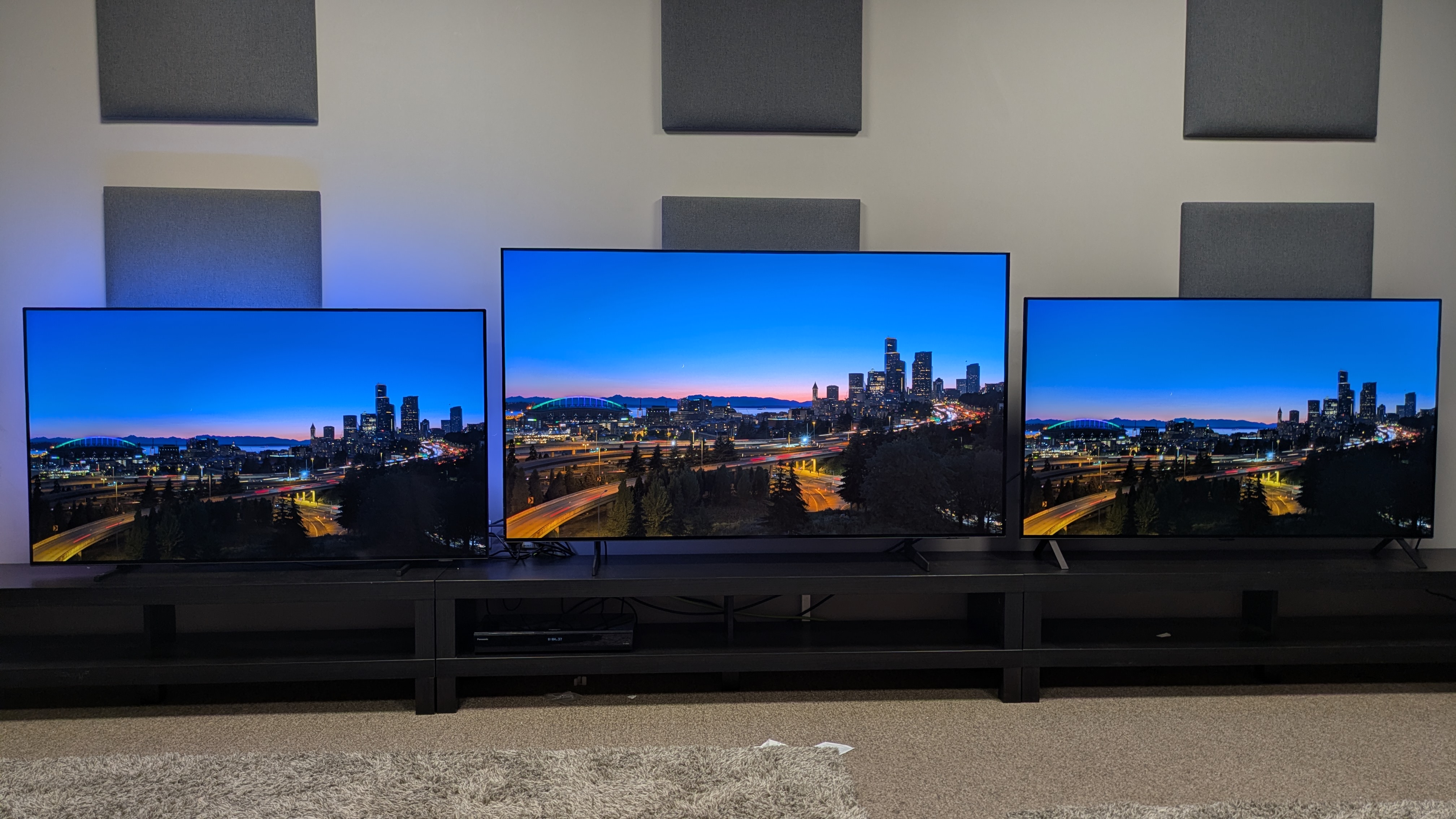
Budget OLED TVs used to make compromises in order to be more affordable, often missing key features, but that’s lessened in the past couple of years. LG’s B-series, ranked among the best OLED TVs year-on-year, have continually improved in terms of features offered each year, with last year’s B5 offering nearly the same level of gaming features as the step-up LG C5 and LG G5.
While LG’s B-series is arguably the most popular budget OLED each year, two other brands offer tempting rival options: Samsung and Philips. To combat the LG B5, these two brands released the Samsung S85F and Philips OLED760 respectively.
Samsung’s OLEDs have demonstrated great brightness and colour reproduction and Philips’ OLEDs have the secret weapon of Ambilight, something I’m a huge fan of. So I decided to test the B5, S85F and OLED760 side-by-side to find out which affordable OLED comes out on top.
1. Brightness
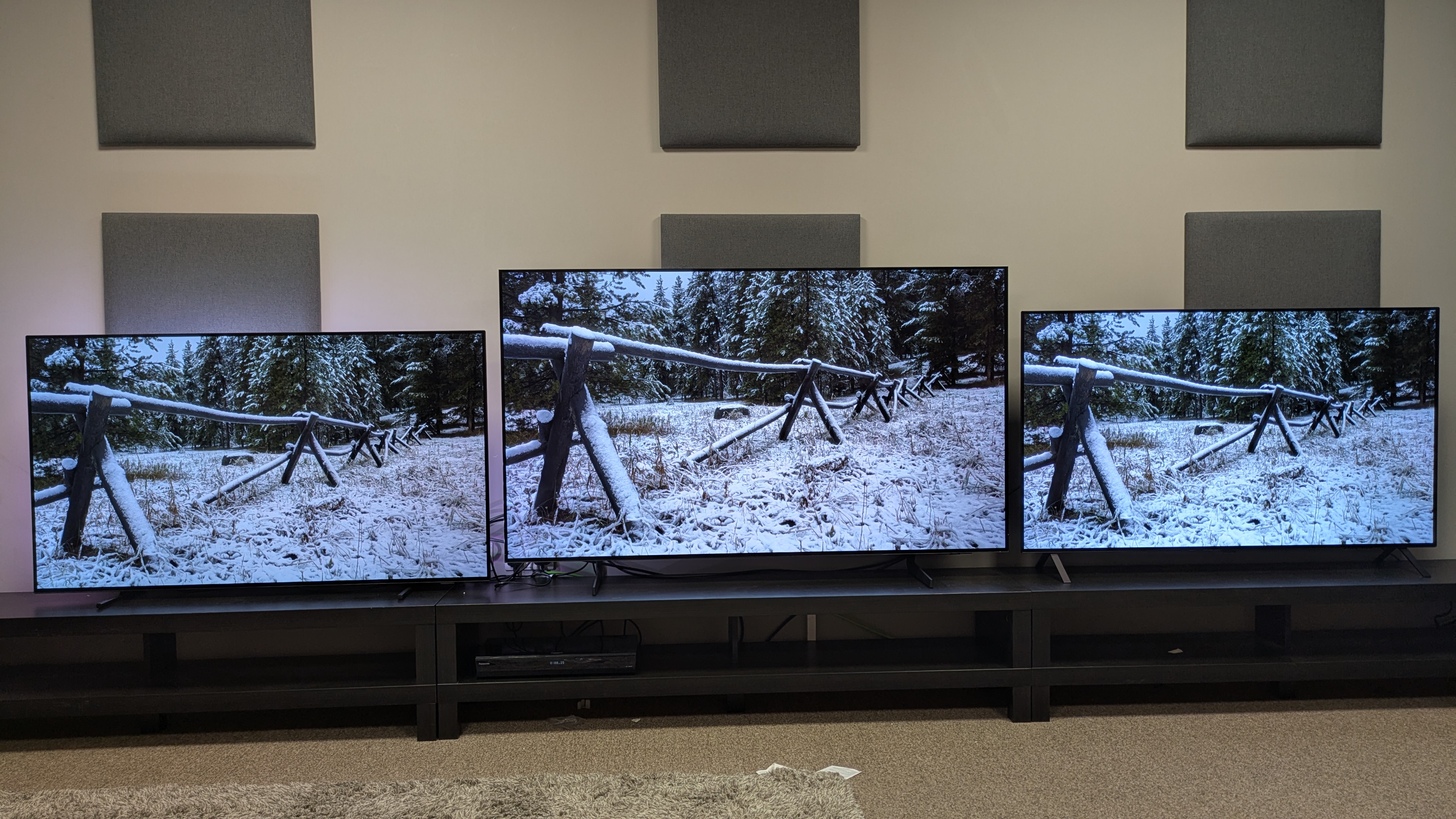
Before I get into the first category of comparison, a quick setup note. While I primarily use Filmmaker Mode when testing TVs, I used Movie/Cinema mode for this test due to all these TVs having relatively low brightness compared to premium OLEDs.
I also changed some of the Philips OLED760’s settings as they affected the picture. These were: texture enhancement (off), noise reduction (off), set colour temperature from Normal to Warm and finally set peak brightness to Maximum. These changes put the OLED760 more in-line with the other two TVs.
In terms of brightness, there was one clear winner: the Samsung S85F, which appeared much punchier during daytime and brighter scenes. Shots of snow looked crisp and bright on the S85F and while still decent on the other two TVs, there was a clear difference with the S85F.
During a scene in Wicked where Elphaba runs across a wheat field, the S85F showed the most vibrant yellow tones. The OLED760 was the dimmest and, while accurate, it lacked the vibrancy of the S85F. The B5 was a mid-point between the two. One thing I did find, still watching Wicked, was light that reflected off the sand-coloured buildings of Shiz did seem a little overblown on the S85F, with the OLED760 and B5 handling this better.
A trip to the settings revealed that a lot of the brightness heavy lifting for the S85F was from its Tone Mapping setting. Set to Active (the default in Movie mode) the picture was much brighter. Switched to Static, it was much dimmer and more in-line with the other two sets.
In terms of actual brightness measurements, the S85F was the standout. It hit 777 nits peak HDR brightness to the B5's 668 nits and the OLED760's 665 nits (all measured in Filmmaker Mode for the most comparable results). In terms of fullscreen HDR brightness, they all hit between 130-150 nits, but it's the higher peak figure that gives the S85F that extra vibrancy.
2. Colours
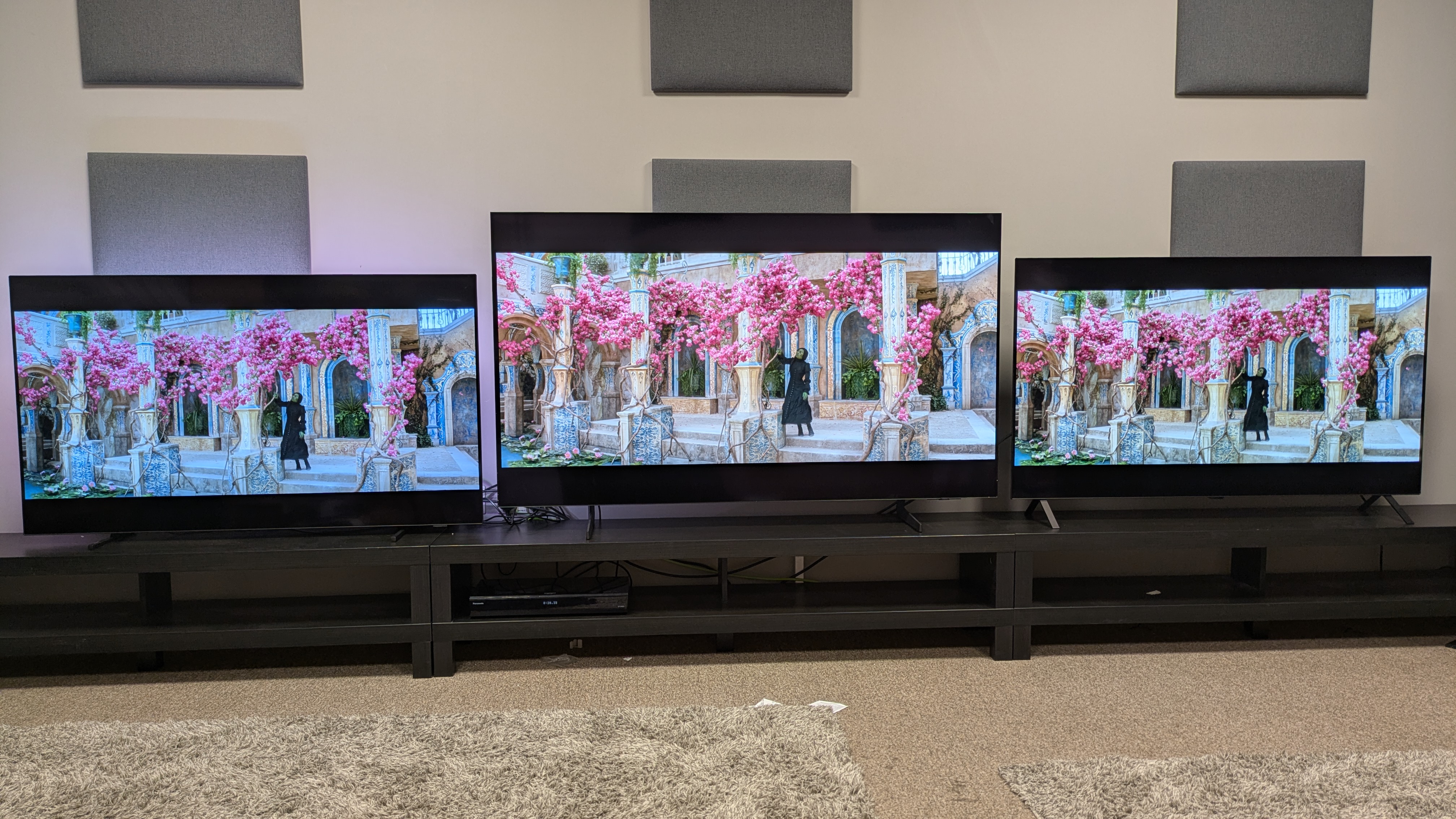
OLED TVs are loved for their rich colours, and while these budget models don’t quite have the vibrancy of the pricier sets, they all delivered excellent colour reproduction. Using the Wizard & I scene from Wicked, all three TVs captured the vivid look of the pink flowers in the tree Elphaba stands under. Thanks to its higher brightness, the S85F did have the boldest pinks overall, but the OLED760 and B5 looked more natural while still delivering a nice punch,
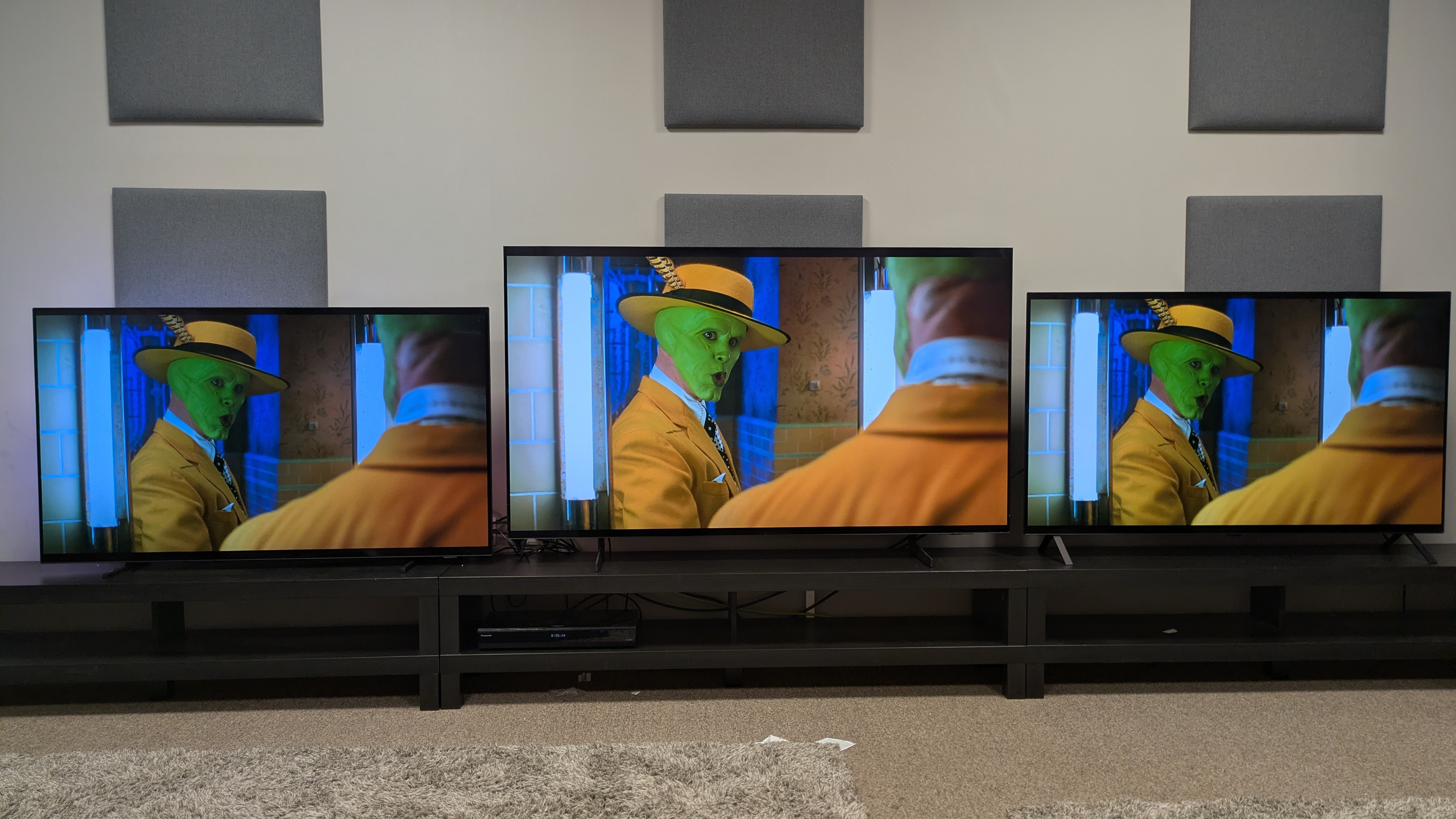
Moving onto The Mask, namely the bright and gaudy yellow suit of the titular character, the S85F again had the most pop, with the suit really scorching on screen. At times, it bordered on oversaturated.
The B5 had the most appealing colours of the three, balancing both vibrancy and accuracy. The OLED760, whose colours were the most natural and rich, was still hampered by its lower perceived brightness, which took away from the impact of the yellow suit and green mask.
In darker viewing conditions, the OLED760 shined thanks to its Ambilight feature. Scenes with bold colours – think Pixar, Star Wars – really do come to life on the OLED760, making movies feel more immersive and even making the screen feel bigger.
3. Contrast
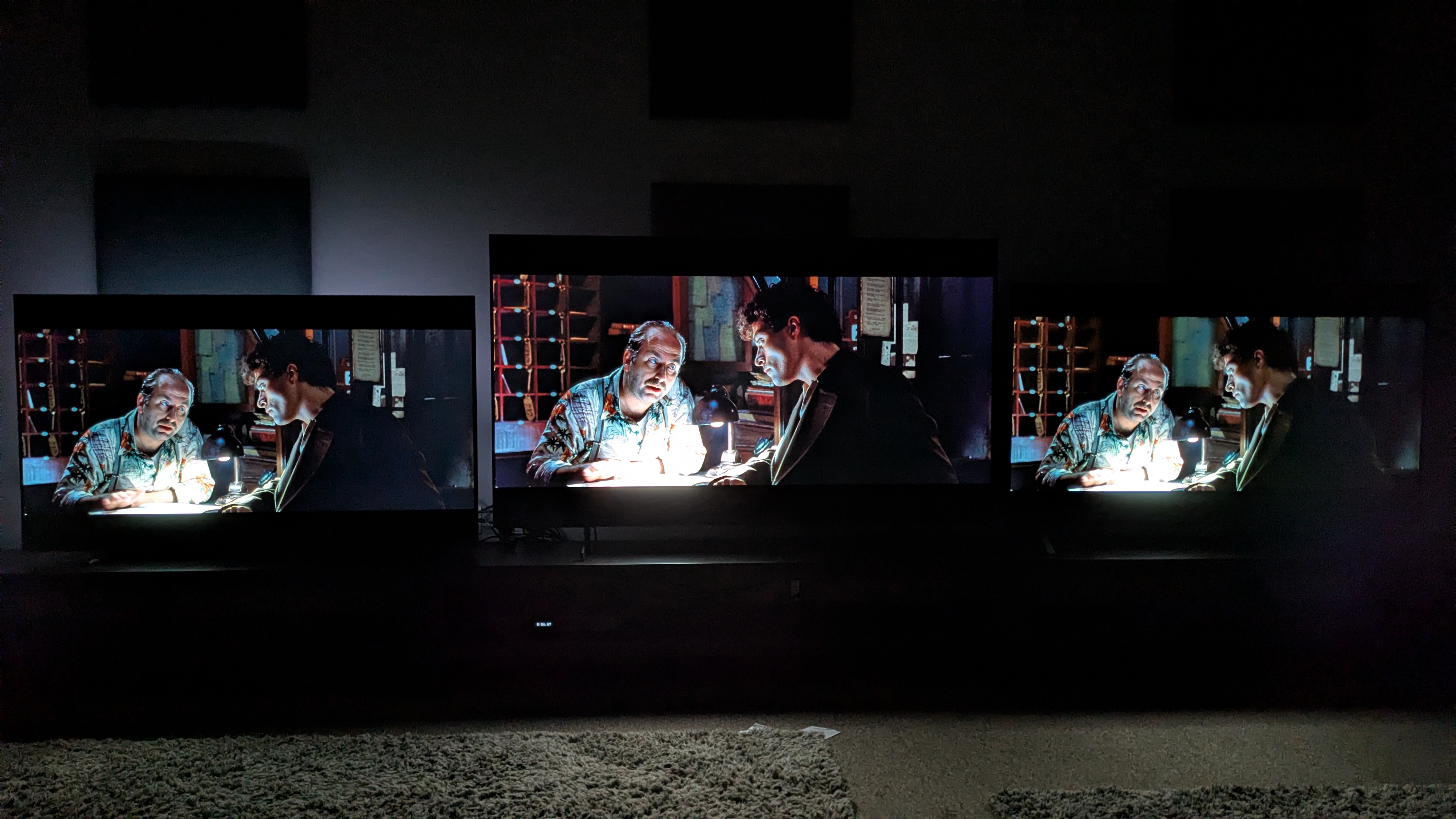
As you’d expect from three OLEDs, even at a more affordable level, contrast and blacks are superb on each one of these TVs. OLED’s ability to dim each individual pixel means there’s a great balance between light and dark tones throughout.
There were some obvious differences between the three, however. Once again, the S85F’s higher brightness meant it created the most dynamic-looking contrast. In Dark City, there are many shots of shadows cast onto people’s faces from lamps off-screen. With its higher brightness, the S85F had the boldest, most powerful dynamic range.
Looking past brightness, however, the OLED760 demonstrated the most ‘authentic’ contrast, looking more true-to-life. Both it and the B5 delivered a deeper range of black tones than the S85F, which suited the look of Dark City. The B5 once again sat between the other two, delivering a nice balance of light and dark.
Watching the opening scene of The Warriors, the lights of the subway platforms cut through the black tones of nightfall on all three TVs, but it’s the same story again. The S85F’s delivers the punchiest lights, but the OLED760’s black tones look more accurate, with the B5 striking a balance between the two. Though, I found on this disc, the B5 did have a slight green tint, which meant skin tones and contrast weren't quite as accurate.
4. Motion and upscaling
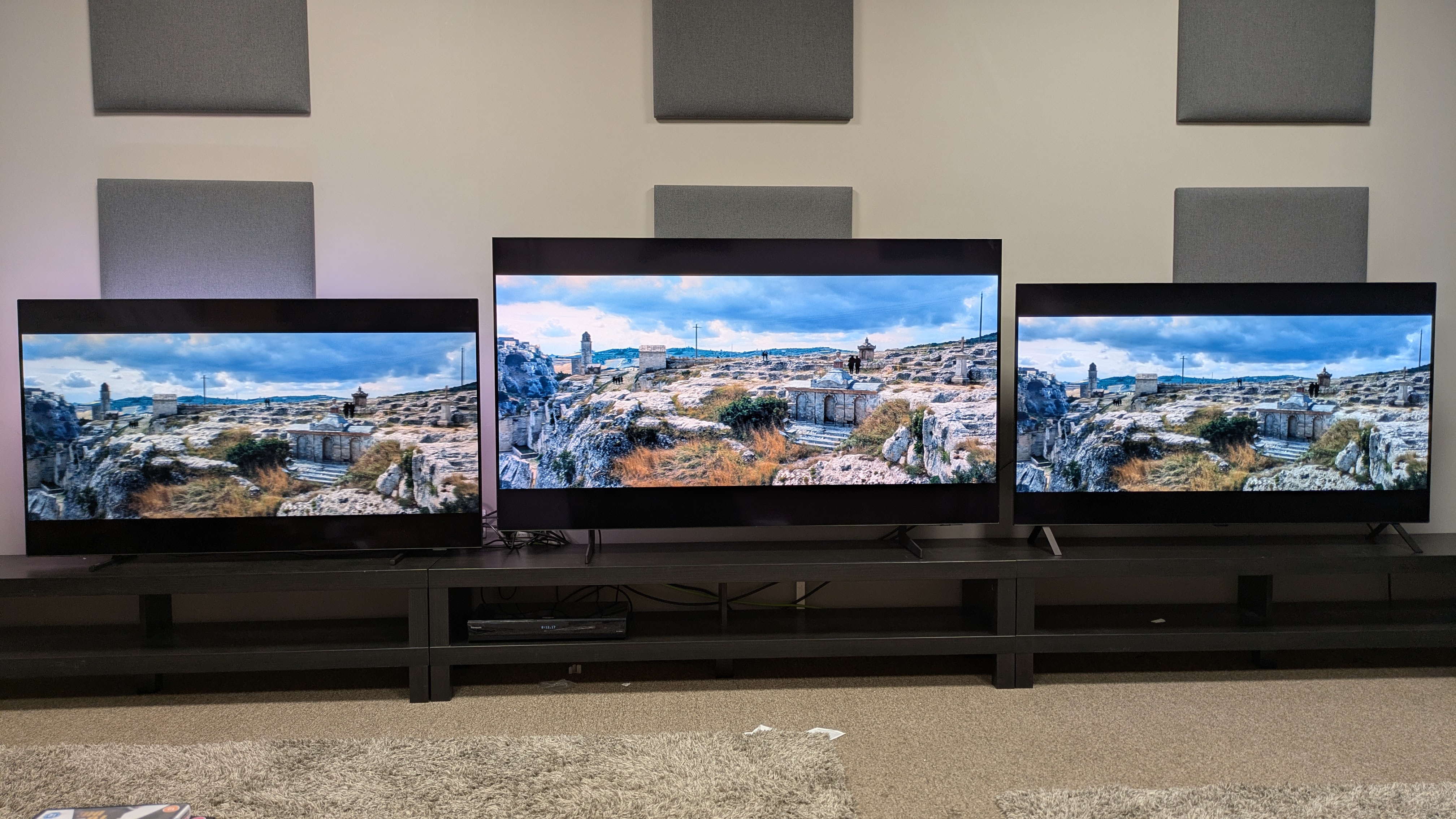
The biggest difference between these three TVs is in their motion handling. Watching a panning shot of a cliffside in No Time To Die, the B5, with Cinematic Movement activated, presented the most accurate motion: smooth, with minimal judder and no soap opera effect. The S85F, with judder set to 4 and blur set to 2, appeared smooth but delivered slightly more judder than the B5 and it didn’t look as natural.
The OLED760 on the other hand, struggled. With no motion processing, there was judder present as the camera slowly panned. Adding any motion smoothing, even at level 1, resulted in a strange blurring effect any time a camera panned or moved quickly, which affected textures. The OLED760 is better off viewed with judder.
A final test was how each TV fared with upscaling. Playing a DVD of Amazing Spider-Man, it was no surprise to see that the B5 delivered the best upscaling, making textures smoother while also improving colours and contrast – this was the story for the LG G5 in our four-way high-end OLED showdown too.
What was a surprise is that the brightest TV, in SDR, was the OLED760. It easily had the most vibrant colours and looked better in brighter scenes. However, its textures weren’t as clean and it still appeared muddied in a few places. The S85F did a good job overall, sitting nicely in between the B5 and OLED760, though it had the disadvantage of being a larger screen.
Conclusion
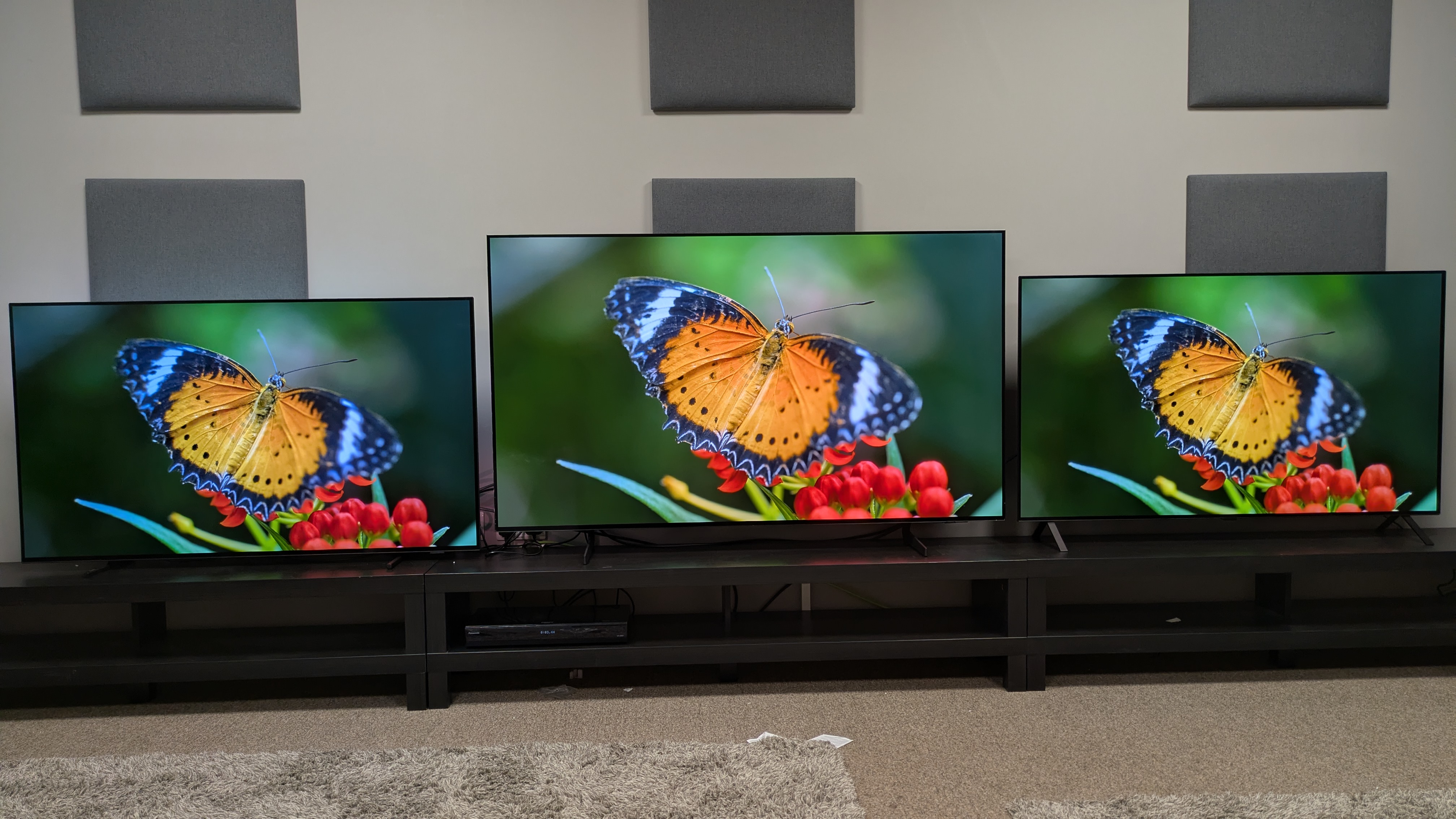
Honestly, all three of these TVs excelled in different areas and you’ll struggle to be disappointed with any. All three have a full suite of gaming features we’d expect from the best gaming TVs as well, so there’s nothing to separate them there.
It's worth noting that the Philips is the only one to support both HDR10+ and Dolby Vision HDR formats, with the Samsung offering HDR10+ only, and the LG offering Dolby Vision only.
Price wise, all three TVs sit between £899-999 so there’s nothing to separate them there either. So really, it comes down to what you watch and what you want from a TV.
For brightness and sheer vibrancy, you want the Samsung S85F. If you want accurate contrast and a unique feature in Ambilight that makes the screen feel bigger than it is, you want the Philips OLED760. If you want great motion and upscaling, with a nicely balanced picture, you want the B5.
An overall pick is tough, but I would have to say the B5 takes it by the skin of its teeth. The OLED760, while arguably the most accurate, is let down by its motion and the S85F is the brightest and boldest, but ventures into oversaturation. But honestly if any of these TVs have a great sales price that makes it cheaper than the others, you won’t be let down.
Follow TechRadar on Google News and add us as a preferred source to get our expert news, reviews, and opinion in your feeds. Make sure to click the Follow button!
And of course, you can also follow TechRadar on YouTube and TikTok for news, reviews, unboxings in video form, and get regular updates from us on WhatsApp too.







 English (US) ·