
Meta debuted its upgraded Meta AI chatbot this week, showing off plenty of tricks made possible by the new Muse Spark model embedded in the chatbot. The social media giant's AI can't deny its origins, behaving more than a little like a social media influencer who's not scrolling their feeds. It's notable when compared to ChatGPT's endless equivocating in the name of fairness.
I tested some of Meta AI's highlights against ChatGPT, and the split shows up fast when you ask for more than facts. The Muse Spark model has Meta AI reach for the social layer and all its opinions first, while ChatGPT keeps a cooler head.
1. The local fun radar
Meta AI's link to local social media became apparent in my first test about activities nearby. I asked both chatbots, “What are people doing for fun this summer in my area? Give me ideas based on what’s trending locally.”
Article continues below
Meta AI had a lot of specifics for my region, including sunset kayaking meetups at the local state park every Thursday at 6:30 p.m., the summer concert series at the Hopper House, and a cold brew tasting workshop this Saturday.
ChatGPT kept things high-level by comparison. It suggested categories of activities, like hikes, restaurants, and open mic nights, but only offered a hyperlink to the local tourism page instead of citing what people are talking about. The advice was solid, but it wasn’t anchored to a map or a calendar.
2. The summer fit check

Keeping up with the summer theme, I decided to inquire about what looks would be trendy and to see what they would look like on me based on an uploaded photo.
Specifically, I asked the chatbots to “Find out what the popular trending summer looks are going to be. Make an image of me wearing one of the looks.”
ChatGPT produced the image on the left: a relaxed beach boardwalk at sunset. It went with a butter yellow open short-sleeve shirt over a gray tank, color-blocked cargo pants, and round sunglasses. The AI described the look but didn't indicate much about why it was supposed to be a look of the summer.
Meta AI put me in a crisp white double-breasted suit, complete with a tennis racket and aviators. It discussed the “Tenniscore” and “old money summer” discussion that people in fashion are discussing on social media.
3. Influencing geography
Meta AI had hinted at a willingness to make a choice when presenting options by leveraging the Muse Spark model's multipagent approach. I told the two chatbots that “I’m deciding between working from home or going out to a café today. Help me choose based on productivity and mood.”
ChatGPT wrote out a somewhat traditional pros and cons list, discussing how being home offers control and fewer distractions, while cafés provide "environmental variety and social micro-interactions" that can make people feel better. Its recommendation was to experiment and track the results myself.
Meanwhile, Meta AI broke down productivity research about ambient noise and light in one thread, while another checked the weather and noted that my area had a nice day, perfect for a walk to a café. Meta AI didn't bother going over the benefits of staying home; it simply said that going to a café today wins and suggested a couple nearby.
The difference was agency. Meta AI is willing to stake a bet on telling me what's better, while ChatGPT just provided more details without much guidance.
4. Caffeine scores
For the next test, I wanted to see how Meta AI's coding compared to ChatGPT, with a creative twist.
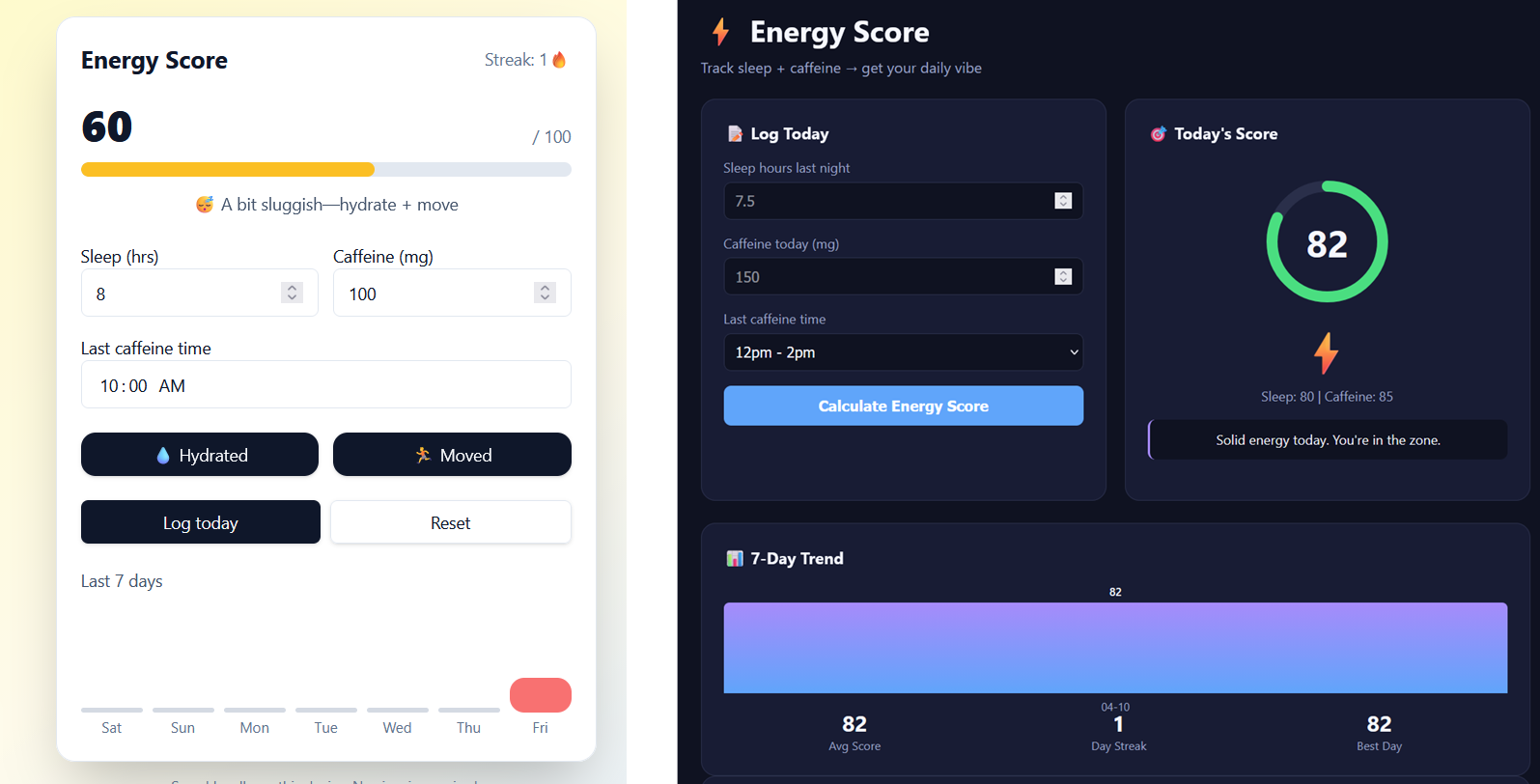
I wrote: “Make a small web app for tracking my sleep and caffeine habits that gives me a daily ‘energy score.’ Make it visual and a bit fun.
Meta AI took me at my word, and you can see the places for inserting sleep and caffeine intake on the right. ChatGPT responded with something pretty similar, albeit with an extra option for exercise and water. The design was still neat and readable. Despite Meta AI's boasts, though, the results came out pretty similar.
5. Direct dishwasher help
Finally, I tried to combine several of the previous elements, mixing some creativity with image creation.
So I asked the chatbots to “Put me in a fun, original mascot costume. Give it a unique, entertaining backstory.”
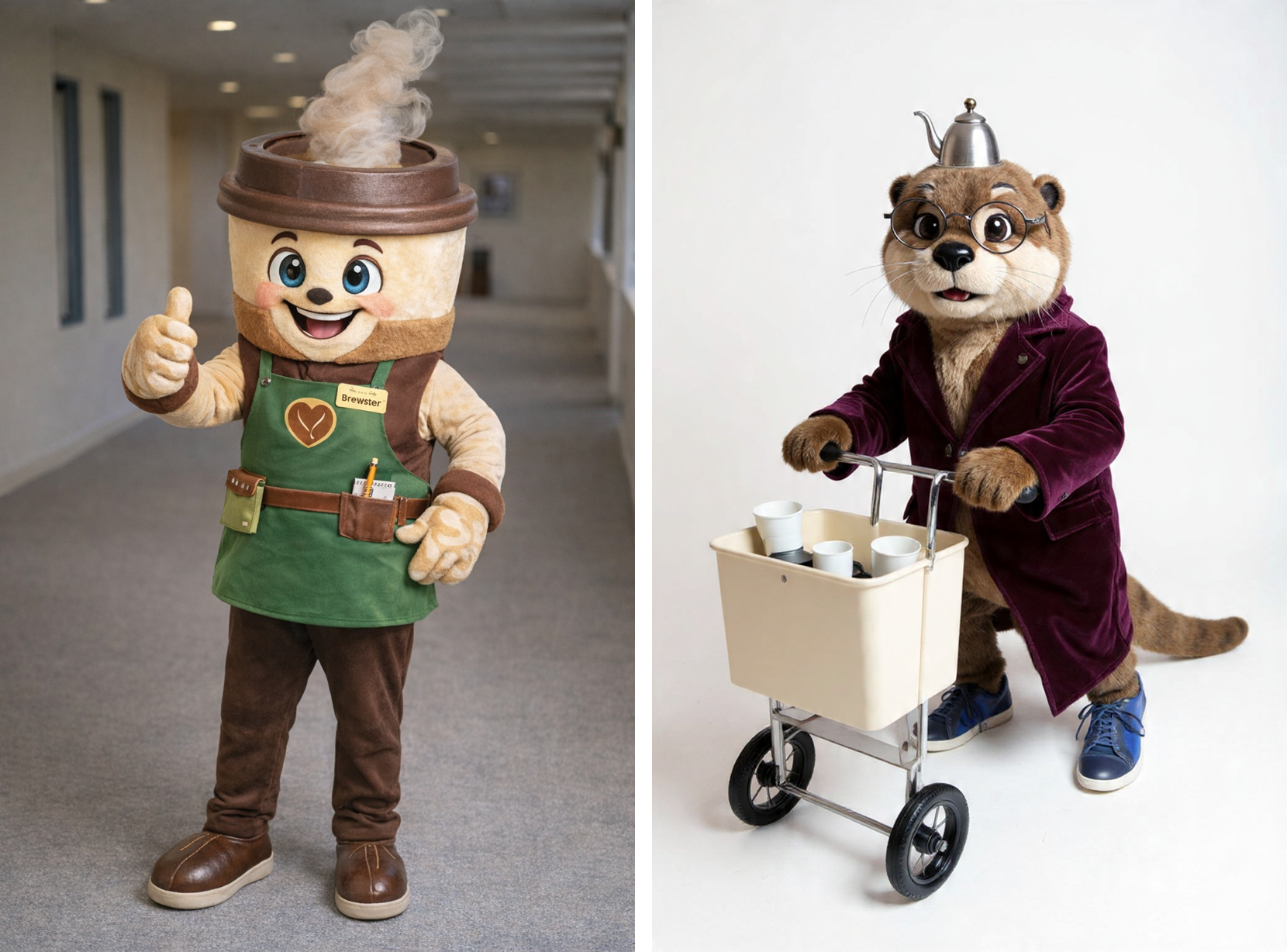
Meta AI immediately got theatrical. It turned me into “Sir Sips A Lot,” a velvet-robed otter who runs a traveling tea cart. The backstory said I left a productivity app and was pursuing herbalism and handing out chamomile to stressed commuters while reciting haikus about inbox zero. You can see the otter above, tiny kettle crown and all. It cited the popularity of both tea and otters to justify the choice.
ChatGPT took a slightly more grounded approach, but in a very odd coincidence, went with a hot beverage theme again. So there stood “Captain Brewster,” a cheerful coffee-themed character, complete with a textured lid and a subtle swirl of “steam” made from semi-transparent fabric.
Captain Brewster was described as a former café regular who became a local legend for always having the perfect advice at the perfect time, eventually transforming into a mascot that appears wherever people need a boost of focus.
Meta AI's more strongly expressed opinions stood out, but in most cases, the choice between it and ChatGPT depends on what kind of help feels most useful. Meta AI is at its best when trend awareness, locality, or a gentle push in one direction would help.
ChatGPT might be better when you want broad, neutral reasoning without any nudges. In practice, the ideal setup might involve both, switching between them depending on whether the day calls for a spark of inspiration or a steady hand.
Follow TechRadar on Google News and add us as a preferred source to get our expert news, reviews, and opinion in your feeds. Make sure to click the Follow button!
And of course you can also follow TechRadar on TikTok for news, reviews, unboxings in video form, and get regular updates from us on WhatsApp too.



 English (US) ·