I’m a camera expert: here’s why the iPhone 18 Pro Max’s rumored big camera feature probably won’t matter
3 weeks ago
55
Variable apertures historically haven’t made much of a difference to mobile photography
Apple
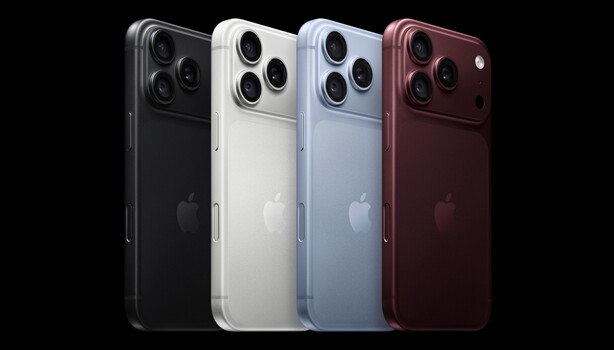
The rumor mill around Apple’s upcoming iPhones, set to be announced September 9, has been in full swing for months, and the word on the street is that there’s supposedly one big change coming to the new phone’s cameras: the iPhone 18 Pro Max will get a variable aperture on its main camera. While people have been making this prediction for years, Bloomberg‘s Mark Gurman, who has a pretty decent track record, recently threw his weight behind it.
As an iPhone nerd, there are a lot of things that interest me about this. The first is that it marks a return of Apple differentiating the camera on its biggest, most expensive* model. The Pro Max phones have historically received new camera updates first – the 15 Pro Max got the 5x telephoto camera a year before it came to the standard Pro – but we’ve been in a stretch where the cameras on the Pro models have been exactly the same. If this rumor is true, that’s about to change.
But as a photographer and camera reviewer, I’m skeptical whether this change will matter much. Before we get to the reasons why, let’s talk about the theoretical benefits. At a high level, changing your lens’s aperture lets you control how much light is hitting the sensor and your depth of field (i.e., how blurry the background of your photo is). The smaller the aperture (or, counter-intuitively, the higher your F-number), the less light it lets in, and the more of your image will be in focus. Phones, historically, have quite fast lenses; the iPhone 17 Pro’s main camera shoots at a fixed F1.78.
In bright, sunny conditions, this means the phone has to cope with a lot of light hitting the sensor, resorting to tricks like using extremely low ISOs and very fast shutter speeds. And as phone companies push to make their lenses faster to improve image quality and flexibility in low light, this becomes even harder. Adding an aperture that can stop down to, say, F4, would help take some of that pressure off.
Even photographing a bright white object in the sun, the iPhone is able to compensate for its faster aperture with ultra-quick shutter speeds and low ISOs. iPhone 15 Pro main camera | F1.78 | 1/7937 sec | ISO 80Mitchell Clark
It’s worth noting that this would almost certainly be the direction Apple goes in, rather than making one that could open up from F1.78 to, say, F1.2. If it was able to make the lens faster, it already would’ve done so. And for phone photographers, that reduces the potential practical benefits; I’ve personally never run into a situation where it was physically too bright for my phone to cope, so an aperture that can stop down isn’t fixing a problem I currently have (with the one exception of video, where the closer you can get to a shutter speed that’s double your frame rate, the more natural motion will look).
The same is true for the other half of the equation, depth of field. To understand why, we have to introduce the concept of equivalent apertures. A F number is absolute; an F1.8 lens on a phone will transmit the same amount of light per square millimeter of sensor as a full-frame F1.8 will. However, because iPhones use much smaller sensors than traditional cameras, the amount of light gathered over the whole image area and the depth of field won’t be equivalent to what you’d get on a full-frame camera with an F1.8 lens.
Even with its fixed F1.78 aperture, I never find myself wishing my iPhone’s lens had more depth of field. iPhone 15 Pro main camera | F1.78 | 1/9009 sec | ISO 80Mitchell Clark
The current iPhone 17 Pro main camera has a Type 1/1.28 (71.5mm²) sensor. That means that its F1.78 lens will produce the same depth of field as an F6.1 lens on a full-frame camera. If Apple makes it stop down to, say F4, that would give you a lens with two settings: F6.1 and F13.7 equiv. That’ll definitely make a difference in your available depth of field, but it’ll be a change from “enough” to “more than enough,” rather than making a huge difference to the types of shots you can get in most cases. It also, importantly, won’t make any difference if you want to get the coveted shallow depth of field look that the iPhone currently has to emulate with portrait mode.
Finally, let’s consider some historical context. Back when compact cameras were dominant, many of them used sensors that were similar sizes to the iPhone, and had the ability to change apertures. But while some had actual aperture blades like a traditional lens, others used a Waterhouse stop, moving a plate with a fixed aperture in between the lens and the sensor to stop down when needed.
This is less flexible – you don’t get the stops in between wide open and the plate’s diaphragm – but is mechanically simpler. That’s likely a huge consideration for Apple when it comes to building a device that will be subjected to pretty much every condition and abuse you can think of. This is, after all, a company that replaced a physical home button with a solid state one (and is rumored to have at least considered doing the same for the rest of the phone’s buttons, too).
The Samsung Galaxy S9’s main camera had an aperture that could be set to F1.5 or F2.4. The feature didn’t last long.DPReview
Some compacts also simply slotted in an ND filter, and reported it as a stopped down aperture, since it had the same effect on the incoming light. (It didn’t affect the depth of field, but, again, they already had plenty). Apple could go either of those routes rather than building a standard aperture, and it would have good reason to; going the traditional way may have reliability concerns, and could cost more at a time when Apple’s also being squeezed when it comes to chip pricing and availability.
With that said, we’ve seen phones with physical aperture mechanisms before. Samsung included the feature on the Galaxy S9 and S10, to extremely middling results. You essentially couldn’t tell the difference, and the company ended up dropping the feature. Huawei has several phones in its lineup today with variable apertures, but it essentially never gets a mention on the feature pages, despite how much of them are dedicated to talking about the cameras.
It’s unlikely to be something you notice when it comes to the experience of using your phone as a camera or the photos you get out of it
However Apple decides to implement it, if it does at all, the point is the same: it’s unlikely to be something you actually notice when it comes to the experience of using your phone as a camera or the photos you get out of it. But that’s not to say that Apple has just decided to make one of the most mechanically complex parts of its phones even more complicated for giggles, or that it’ll purely be a marketing gimmick.
To the latter point, I’m honestly 50/50 on whether I think it’ll bring it up in the keynote presentation at all (again, assuming the rumors are even accurate). There’s probably some technical reason why it’ll be nice to have as part of its computational image processing pipeline, and there may even be a slight noticeable benefit to it. And if, by some miracle, Apple has decided to massively increase the size of the camera sensor, then it could genuinely be an important inclusion, though, to be clear, that change hasn’t been rumored at all.
But don’t get your hopes up. At the end of the day, the odds are that iPhone photos will still look like iPhone photos (which is to say: pretty good, for a phone), and that there won’t be an appreciable difference between the camera on the iPhone 18 Pro and the one on the 18 Pro Max… or, for that matter, between the new phone and the one it’s replacing. Sometimes, a change is just a change, no matter how much buzz there is about it leading up to it.
* – Currently most expensive, anyways. Apple is also expected to introduce a folding phone that will almost certainly be priced above the Pro models and that will have worse cameras, if other major foldables are any indication.
About the Author: Mitchell started taking pictures at 10 and hasn’t stopped since. It’s been a wide-ranging adventure, spanning a wide variety of genres and locales, and occasionally dipping into fascinations with video and filmmaking. They honed their technical knowledge doing documentation, programing and QA, writing for The Verge, and just generally messing around on the computer to see what breaks.
Want to stay up to date on the latest product news and releases? Add DPReview as a preferred source to ensure our independent journalism makes it to the top of your Google search results.

 3 weeks ago
55
3 weeks ago
55





 English (US) ·