
 3 hours ago
9
3 hours ago
9
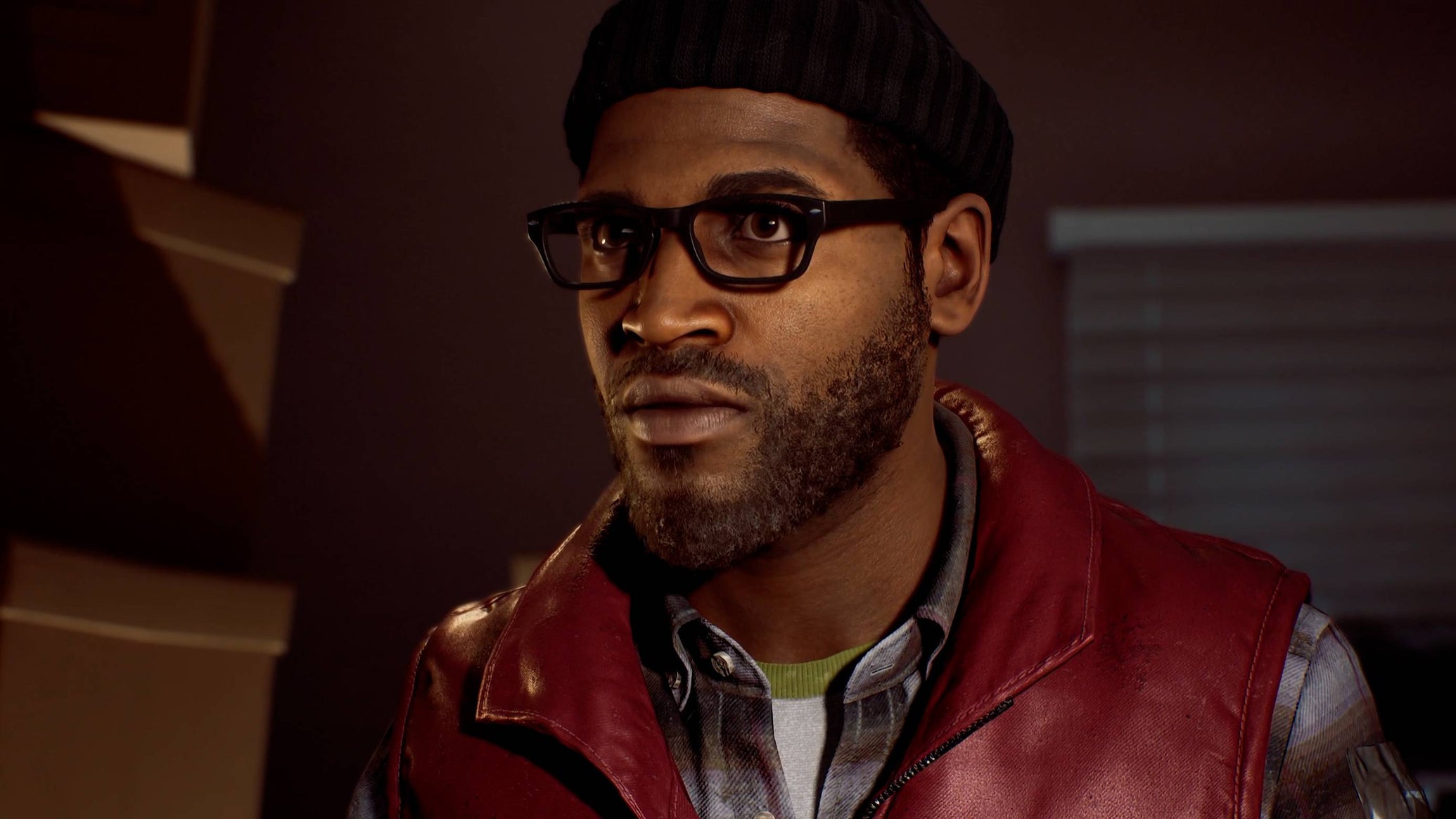
I suppose, in a way, I asked for this. Crouched and cowering behind a garden fence, inches away from the thrashing, cleaver-faced miscreation who’d quite comfortably win in a fight against my splintering plank of rotten wood, I can almost hear Silent Hill: Townfall whisper mocking in my ear: not too much combat now, eh?
Point made. New protag Simon, through whose eyes I explored Townfall’s forsaken Scottish village of St. Amelia in a Gamescom 2026 demo, is taller, wider, and wearing a far more padded gilet than Silent Hill f’s Hinako. Yet next to her spear-wielding and I-frame dodging, he’s a wet mouse, barely able to whack a garden-variety knifeface bloke into submission with desperate, panicked swings. What a loser, and also, more conventional survival horror character.
As you’ve probably seen, mind, Townfall is (again) not a conventional Silent Hill. St. Amelia is an ocean away from that town Jimmy S sees in his restless dreams, and is packed with the details of 1990s Britain – 20mph signs, the yellow kitchen cabinets, the shitty grey phoneboxes – that only a homegrown dev studio, namely Glasgow’s Screen Burn Interactive, could get so consistently right. Simon also uses tech to regain something vaguely approaching an advantage, a portable TV that displays puzzle clues and tracks enemies - once manually tuned.
The introduction of the CRTV, as it’s called, is masterful horror. Trapped in an almost entirely pitch-black room, I followed the tutorial steps to tune into a detected frequency, and followed the red arrows to a lurking humanoid on the dinky screen. Can’t see exactly what he is, but he is right there. Then another frequency appears, leading to another silhouette. He’s got a mate. Then another frequency. Then another. The music swells. I'm surrounded. I still can’t see five feet in front of Simon’s face, and in the space of a minute, the CRTV has gone from magic monster detector to herald of likely death.
Out on the foggy but still daylit street, it does become more straightforwardly utilitarian, serving to help keep track of the ghoulies while stealthing from house to shop to house, gathering keys and puzzle components. But it’s not some EZ mode wallhack, thanks in part to the inherent fiddliness of the device itself.
"I think that's where the Nineties [setting] helps," director and writer Jon McKellen tells me, "because you're at the cusp of technology. It’s pre-Internet, pre-smartphone, so you're not leaning into tech that does empower you.
"The tech's kind of unreliable, it doesn't work all the time. It feels slow and sluggish. It's limited. Even the way that we use the CRTV to track enemies and see through walls, you can only see one enemy at a time. So if you have three enemies in an area, you've got to tune between them, and it feels tactile, and a little bit clunky, but deliberately so. It feels like it's not the perfect tool to save you."
Sure enough, spending too much time looking at the screen instead of the creatures themselves is a good way to get them slashing at you, as is - I can attest - overestimating how concealed you remain while lean-peeking. Still, both these physical and observational tools strongly favour stealthy use, as does Simon’s ability to slip into cupboards, Alien Isolation-style.
Fighting, by contrast, seems actively discouraged, perhaps even beyond the usual survival horror tenets of saving precious resources. 'Weapons,' assuming the word applies to glorified sticks, are even more brittle than SHf’s hoardable armaments, and even the most basic enemy can attack faster than Simon can raise an effective block. Honestly, total loser. Scuttling around behind cover, watching the CRTV for turned backs and escape windows, is evidently Townfall’s preferred way to play.
Which is fine? I think? SHf didn’t entirely undermine its own tension, but Townfall’s slow pace and stronger sense of weakness does feel more naturally conducive to unscripted horror. I did, after all, spend quite some time hiding behind that fence, sinking ever-so-slightly deeper into my seat whenever that jittery red silhouette began filling the tellybox. And carrying over that careful, methodical approach to the village’s relatively safe interiors also makes it easier to appreciate one of the less expected strengths of these early stages: the wonderfully lived-in homes of St. Amelia’s denizens.
Once things went all Silent Hillly, alas, some of that homeliness has been compromised by bloodstains. But as with the road signs and the phoneboxes, the attention to detail in these spaces is impressive, and absolutely enhances the process of rifling through them for puzzles. Unique family photos on countertops. Drawers full of loose, clattering cutlery. Still-ticking wall clocks. An elderly resident’s bathroom cabinet stuffed with pill bottles. Different wallpapers in each room of a family home, peeling monuments to the value of placating children over adhering to interior design consistency.
According to McKellen, this personal touch was achieved by Screen Burn’s designers essentially taking one house each and decorating them as they pleased, even enlisting their own families for extra flourishes. "Whether that's fridge magnets or calendars or whatever they grew up with, they could kind of infuse [interiors] with that," he explained. "And even some of the drawings that are in the game, like on fridges, are by our kids.
"We've always said that the game should feel nostalgic to us if we grew up in the UK. It should feel nostalgic for us, and for everyone else, it should feel moving, and I think we made that happen."
If you’re not easily moved, and/or have never owned furniture bought from an Argos catalogue, fear not: Konami are still keen to keep the series globe-trotting. Everyone else, Silent Hill: Townfall is out on September 24th.





 English (US) ·