
 2 hours ago
4
2 hours ago
4
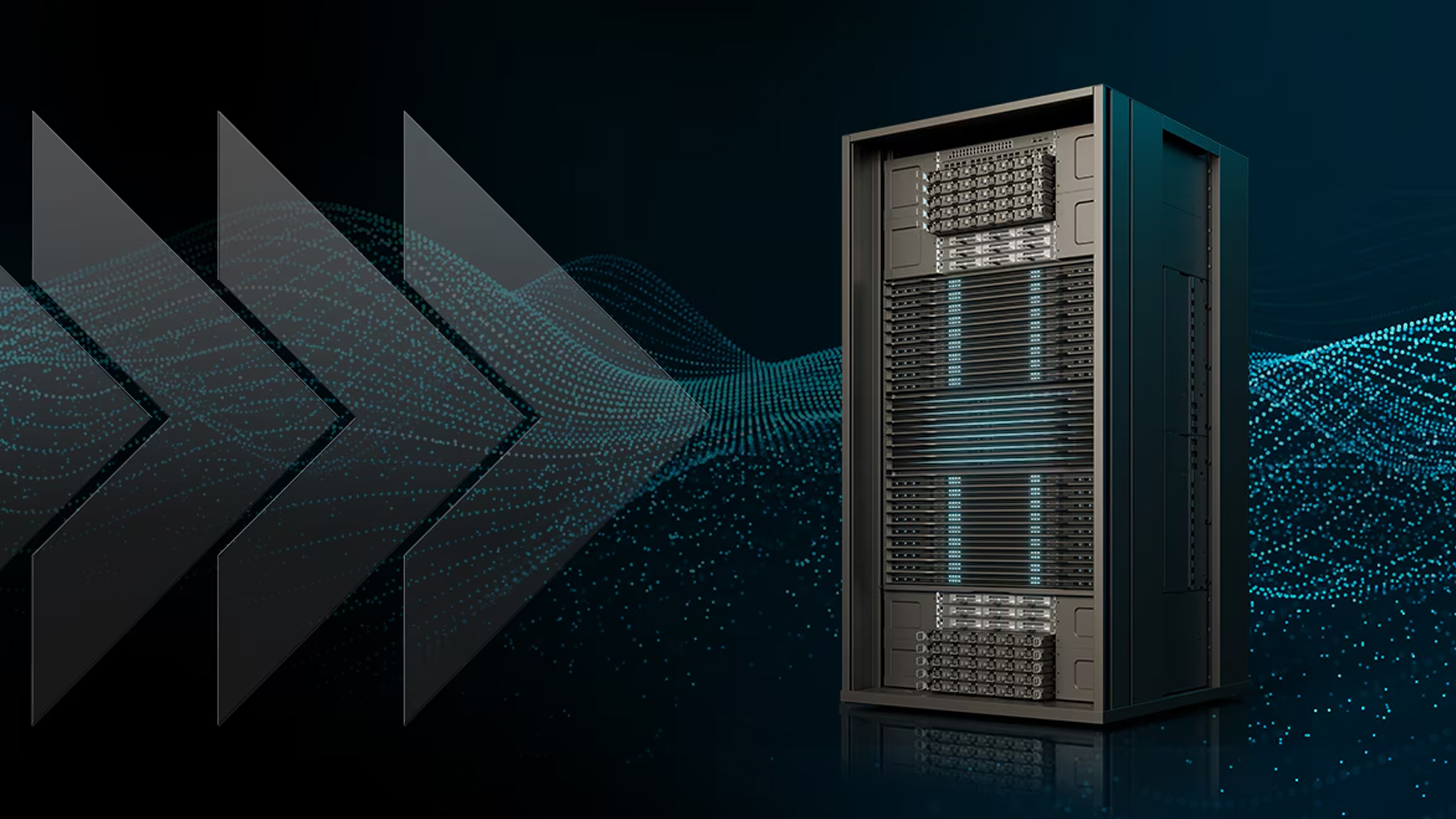
AMD and HPE are expanding their long-running partnership with a new agreement that will bring the AMD Helios rack-scale AI architecture into HPE’s product portfolio from 2026 onward. This will give Helios its first major OEM backer and position HPE to ship complete 72-GPU AI racks built around next-generation Instinct MI455X accelerators, new EPYC “Venice” CPUs, and an Ethernet-based scale-up fabric developed with Broadcom.
Helios has been AMD’s reference design for an open rack-level AI platform since its introduction earlier this year. It uses Meta’s Open Rack Wide mechanical standard and combines MI450-series GPUs, Venice CPUs, and Pensando networking hardware inside a liquid-cooled, double-wide chassis.
AMD has targeted up to 2.9 exaFLOPS of FP4 compute per rack with the MI455X generation, along with 31TB of HBM4 and a scale-up topology that exposes every GPU as part of a single pod. HPE will implement that design with a purpose-built HPE Juniper switch that supports Ultra Accelerator Link over Ethernet. The switch is the result of a collaboration with Broadcom and forms the backbone of the system’s high-bandwidth GPU interconnect.
The choice of Ethernet for scale-up connectivity is intended to separate Helios from Nvidia’s NVLink-centric approach. Nvidia’s GB200 NVL72 rack keeps 36 Grace CPUs and 72 Blackwell GPUs within one NVLink domain and relies on InfiniBand for system-to-system traffic. Helios runs a comparable GPU count behind a single Ethernet fabric that uses UALoE for the accelerator link layer. HPE will also use Ultra Ethernet Consortium-aligned hardware for scale-out networking, which keeps the design inside an open, standards-driven stack.
HPE’s adoption gives Helios a path to market in 2026, but the announcement also confirms how the next EPYC and Instinct parts will reach into high-performance computing. The High-Performance Computing Center Stuttgart has selected HPE’s Cray GX5000 platform for its next flagship system, named Herder. It will use MI430X GPUs and Venice CPUs across a set of direct liquid-cooled blades.
Herder is scheduled for delivery in the second half of 2027 and will replace HLRS’s current system, Hunter. HPE has highlighted the environmental friendliness of the project’s energy strategy, which uses the waste heat from the GX5000 racks to warm buildings on the University of Stuttgart’s Vaihingen campus.
Follow Tom's Hardware on Google News, or add us as a preferred source, to get our latest news, analysis, & reviews in your feeds.



 English (US) ·