
 2 hours ago
19
This article was produced in collaboration with our sponsor, Kuro Games.
When Wuthering Waves launched in May 2024, it arrived as one more open-world anime action RPG in a crowded field. Two years later, Version 3.7, "Prism's Illusion, Heart's Illumination", went live on September 30, 2026, closing the Xuanfang arc and adding two new Resonators, Hsin and Suoming. Kuro Games' title now sets the pace for the genre.
That reputation rests on four pillars: fast-paced combat, fluid movement and exploration, environments that keep evolving with every region, and compelling character presentation. Each one is strong on its own, but they also feed into each other and into the story.
In this article, we look at how these pillars connect, using examples from launch through Version 3.7, and why together they have raised what players expect from an anime action RPG. If you have never set foot on Solaris-3, there has never been a better time to start.
Combat and Character Design: Every Resonator Fights Like Themselves
In Wuthering Waves, a weapon type is only the starting point. Every Resonator is officially classed as a Sword, Broadblade, Pistols, Gauntlets or Rectifier user, yet most of them fight with something that is uniquely theirs:
Roccia is a Gauntlets user, and her combat style is made even more distinctive by fighting alongside Pero, the mysterious magic box that serves as both prop and partner. Even her Intro Skill is called “Pero, Help.”
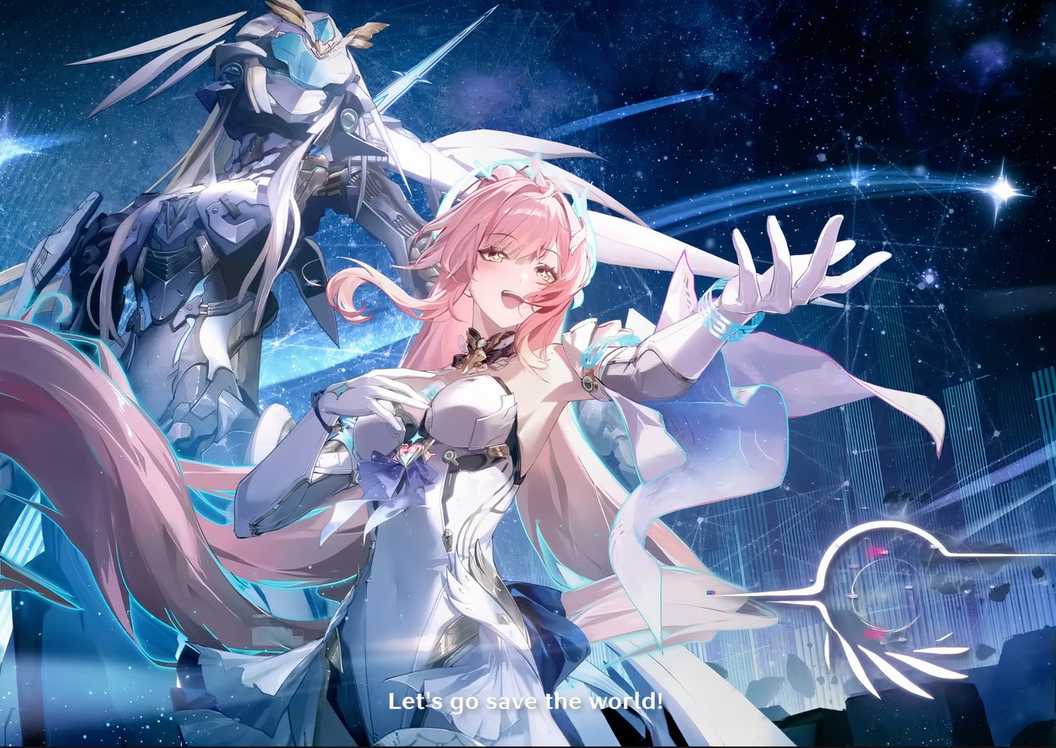
Aemeath is classed as a Sword user, but her kit revolves around switching into a mech form rooted in her past as an Exostrider Synchronist. The mech has its own attack chain, while Sync Strike: Armament Merge brings her two combat styles together.
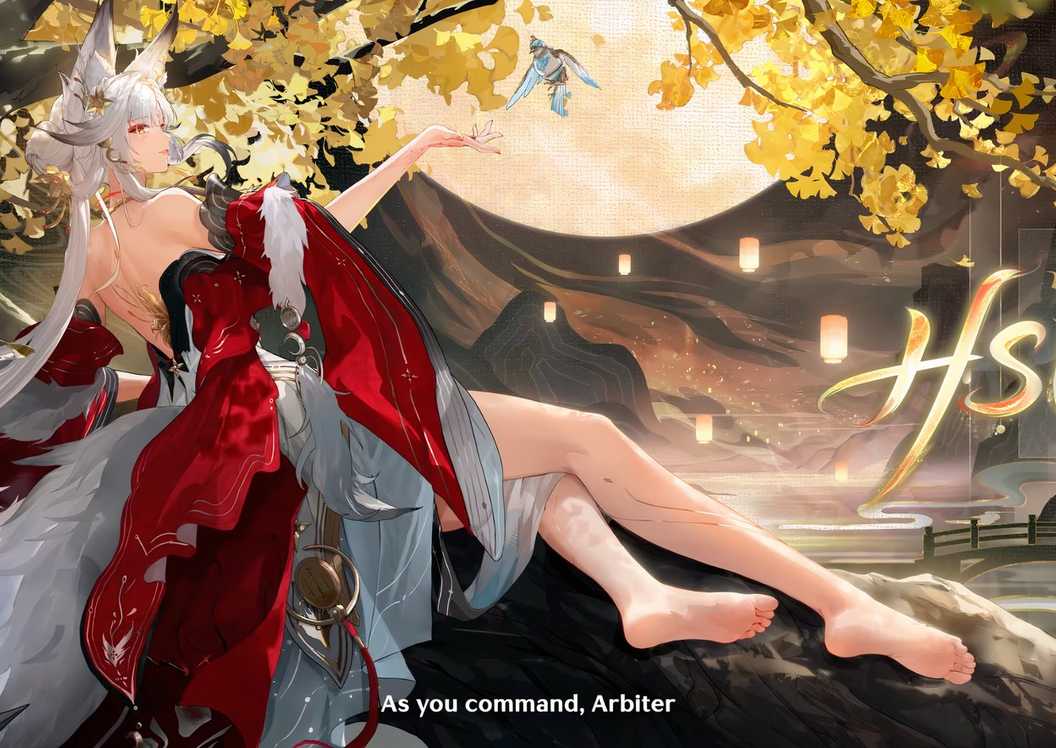
Hsin is a Rectifier user who shifts between Answering Form and Illumining Form, with different attacks and action modules making transformation part of her rotation rather than a visual flourish.
Fast to understand, deep enough to master
The wider combat system supports that individuality. Players dodge, counter, use Echo Skills, manage each Resonator’s Forte Circuit, and switch characters in the middle of a combo. When Concerto Energy is ready, a switch can activate the outgoing Resonator’s Outro Skill and the incoming Resonator’s Intro Skill, turning a character change into a coordinated handoff of damage, buffs, healing, or positioning.
The basic rhythm is easy to understand, but there is room for more technical play. Experienced players can use what the community calls “swap-cancel,” switching during eligible animations to shorten rotations or layer actions from multiple Resonators. High-difficulty encounters further reward players for learning enemy patterns, judging counter windows, and deciding when to press an attack or dodge away. The same team can therefore feel simple in casual play and much more demanding when optimized.
Because combat moves so quickly, presentation must remain readable. Clear enemy wind-ups, distinctive intro animations, impact pauses, sound, and camera movement all help communicate what is happening. Hsin’s Answering and Illumining forms illustrate that balance: the transformation creates spectacle, but it also changes the structure and rhythm of her rotation. The visual climax and the mechanical decision are the same moment.
Movement reveals personality
The attack style goes one step further: it tells you who the character is. Roccia's acrobatic flips and showy gestures come from her life as First Mate of the Fool's Troupe, a traveling performer of Rinascita's carnival scene. Aemeath’s singing carries her love of music into battle, while her mech form recalls her past as an Exostrider Synchronist.
The strongest character designs do more than look distinctive. Their animation, resources, and rotations all express the same personality, giving players another way to understand each Resonator through the rhythm of controlling them.
Exploration and Environment: A World Built to Be Seen
Wuthering Waves makes moving around Solaris-3 feel good, and that comfort is what lets the environment shine. Its foundation already includes sprinting, wall-running, climbing, gliding, and the Grapple. Later updates expanded that vocabulary:
Version 2.0 introduced Flight, giving the player a faster and more flexible way to move through Rinascita’s vertical spaces.
Rinascita’s transport Gondolas make Ragunna’s canals part of its traversal network. In Version 2.1’s Old Man and the Sea fishing activity, the Rover can also steer the Gondola Rachel through the waters around the Riccioli Islands.
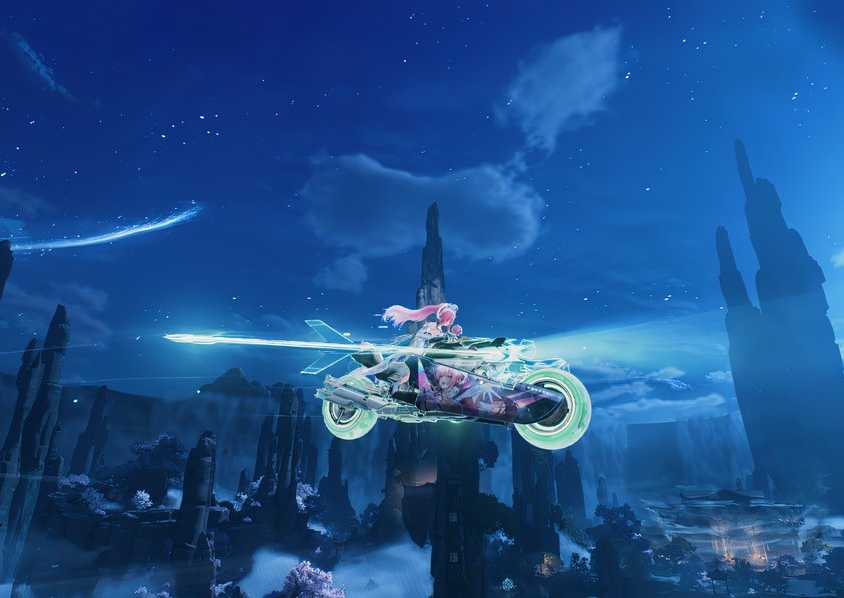
Version 3.0 introduced the Expedition Motorbike, a system closely associated with the long routes and open terrain of Lahai-Roi.
Version 3.6 introduced sword-riding flight at specific quest locations in Xuanfang, giving the new region its own form of aerial traversal.
With travel this smooth, the journey becomes part of the fun rather than the gap between destinations. Instead of trudging toward the next waypoint, you sweep over rooftops and ridgelines, and you start noticing what lies below.
Traversal and map design grow together
In Wuthering Waves, traversal is not bolted onto the map; the map design is inspired by it.
Rinascita’s canals, bridges, and rooftops work in harmony with Flight, helping the city feel like one connected space rather than a maze of streets. Lahai-Roi’s wide-open terrain offers a similarly natural fit for the motorbike. Roads connect resource points, while racetracks, motorbike challenges, and the ability to gather materials while riding make driving more than a way to get around; they make it part of exploration itself. Traversal and environment complement each other, reflecting a broader design approach that considers the player experience as a whole.
This relationship matters because the way players move changes how they read the landscape. A fast or flexible traversal system encourages exploration and detours: a rooftop becomes a route, a distant ridge becomes an invitation, and a vertical structure becomes something to circle rather than merely climb.
The environment stops being a backdrop for objectives and becomes space players come to understand through movement.
Puzzles that reward curiosity
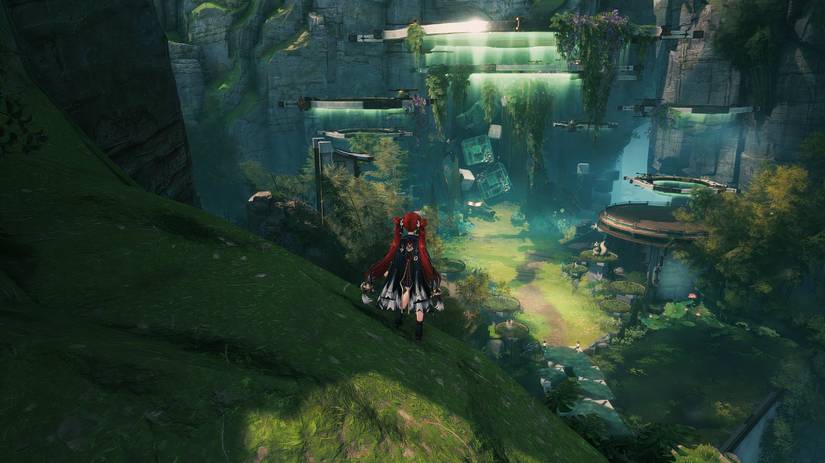
The environment is also full of puzzles, and each region solves them in its own way. Lahai-Roi has its Smartprint Cube puzzles, Echo-form puzzles ask you to transform into an Echo to reach a solution, and ice-cube puzzles have you shifting blocks to open the way forward. Other activities use movement, object manipulation, or region-specific rules to redirect the player away from the main path.
The rewards vary, but many chests, exploration milestones, and activities contribute Astrite or other progression materials. More importantly, the puzzles reward curiosity itself, encouraging players to follow detours, investigate anything unusual, and explore beyond the main route.
Good traversal gets the player to a location. Good environmental design rewards them for looking closer.
When Combat, Character, and Story Speak the Same Language
Connecting story and gameplay means more than placing a battle between two cutscenes. Narrative, combat, level-design, and animation teams must agree early on what a character or chapter is fundamentally about. When that alignment works, dialogue, combat rotations, puzzles, and the environment can all speak the same design language.
Kuro Games builds this alignment around each character’s core concept. Cartethyia’s “three swords as one” is reflected in both her story and combat identity, while the sun-and-moon imagery surrounding Augusta and Luno connects their identity to their battle presentation. Frequent communication between teams allows an idea discovered in one area to echo in another, whether players encounter it first in a quest or in a character’s kit.
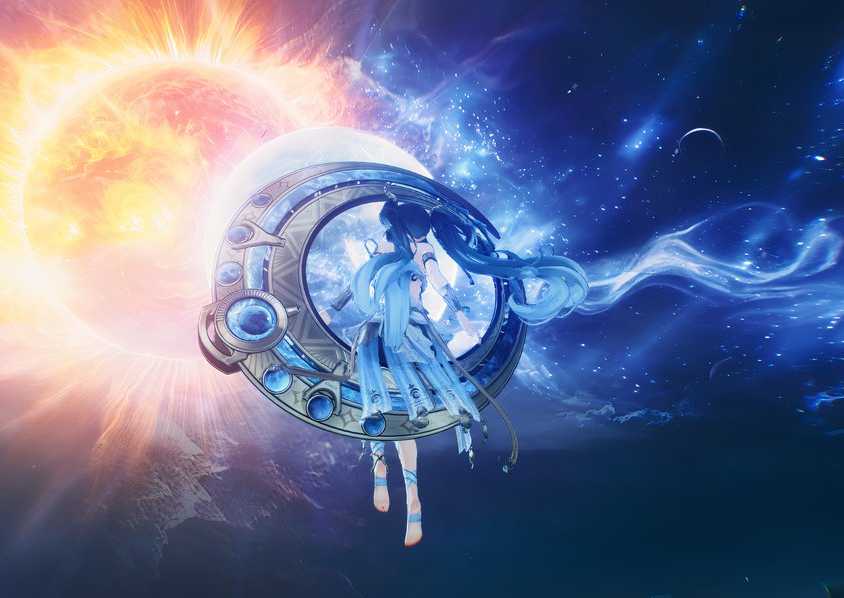
Version 2.2 provides a clear example. The Rover accompanies Cartethyia through a series of gameplay sequences in the Inverted Tower before finally reaching Fleurdelys. Here, the gameplay is closely integrated with Cartethyia’s abilities and story. The concept of her three swords is echoed in an objective that asks players to set three swords into three locations across Avinoleum to lift the final seal. The battle sequence involving Cadanto likewise reflects the guardian-knight bond between Cartethyia and Cadanto, while the Inverted Tower design gives physical form to the opposing aspects represented by Cartethyia and Fleurdelys. Together, these elements give the entire sequence a unified feel.
Making that integration work also requires careful control of pacing. Main Quests cannot always play like endgame challenges, because excessive difficulty can interrupt a scene’s emotional flow. By emphasizing interaction, feedback, and narrative expression, the gameplay supports the story rather than competing with it. Character mechanics express identity, objectives turn lore into action, and architecture gives relationships a physical form. The result is not merely a story interrupted by gameplay, but a story the player helps perform.
Kuro Has Done It Again
What makes Wuthering Waves stand out is not one great update but a steady run of them. Across 23 version releases since launch, Kuro Games has delivered more than 100 hours of main-story content, over 200 square kilometers of open-world maps, 206 distinct enemy types, and 67 playable Resonators. Every major version has pushed the world and its possibilities a little further.
The clearest example was this summer’s Cyberpunk: Edgerunners collaboration. It brought Lucy and Rebecca into Wuthering Waves alongside two Cyberpunk-themed areas, Night City and the Moon, and a Nightmare: Adam Smasher boss encounter. Its emotional coda led many fans to nickname it “Edgerunners Episode 11.” CD Projekt Red associate game director Paweł Sasko summed up the response: “We have done a bunch of collabs in the past, small and huge, and I have never seen a response this insane from the community.”
Version 3.4, which featured the collaboration, also set a new Steam concurrent-player peak for Wuthering Waves. Across 2026, the game repeatedly reached No. 1 on Steam’s Top Sellers charts in major markets, and its latest update, Version 3.7, continued that performance by taking the global top spot on launch day. That momentum has translated into formal recognition as well: a Still Playing – Mobile nomination at the 2026 Golden Joystick Awards, plus Best Ongoing Game and Popular Vote at the Thailand Game Awards, where Kuro Games was also named Best Game Publisher; and three nominations at the 17th Hollywood Music in Media Awards in 2026, across Song – Video Game (Console & PC), Song/Score – Mobile Video Game, and Live Concert for Visual Media.
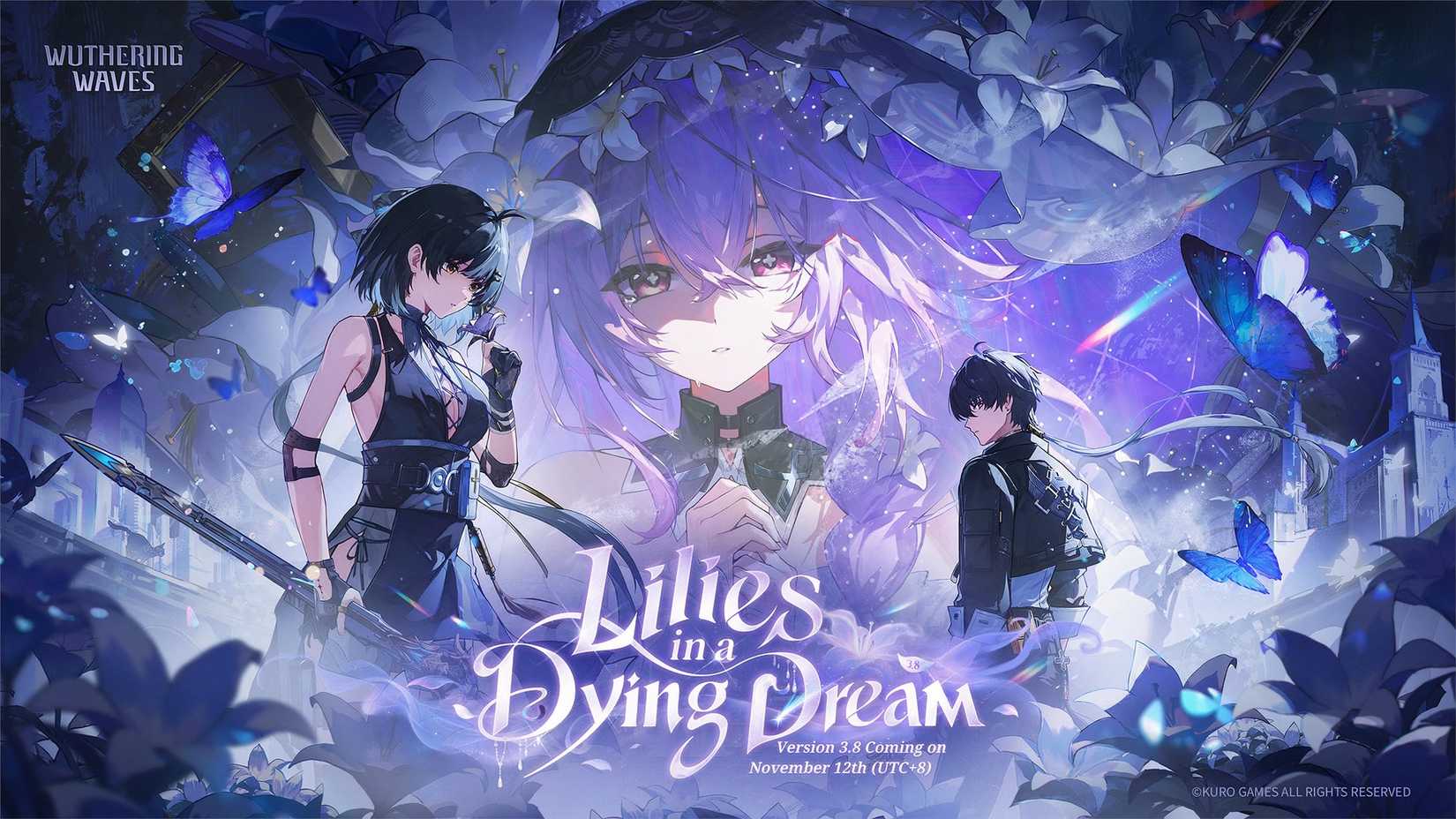
With Version 3.8 now approaching, Kuro Games is not slowing down. For anyone wondering where the anime action RPG goes next, Solaris-3 is a good place to look. Kuro has done it again—and the next step is already on the way.




 English (US) ·