
 1 hour ago
9
1 hour ago
9
Windows 11 can automate more of your PC routine than its aging Task Scheduler interface suggests.
Rokas Tenys/Shutterstock
Task Scheduler has been part of Windows for years, but it's so old-school that you might have written it off. Ignore the gray menus, though, and there's a surprisingly capable automation tool underneath. Microsoft explains that Task Scheduler waits for a trigger you configure, then runs the associated task when it fires. This trigger may be a specific time, Windows startup, your login or even a system event.
Task Scheduler won't magically make your processor faster, and that's not its intended purpose. What it can do is take repetitive tasks off your hands, delay apps that normally flood Windows the moment you log in and execute commands or scripts while you're busy with something more fun. Those are pretty neat tricks for a tool that appears to have been absent from the last decade of Windows redesign meetings.
Setting up Task Scheduler is easier than it looks
Husain Parvez for Engadget
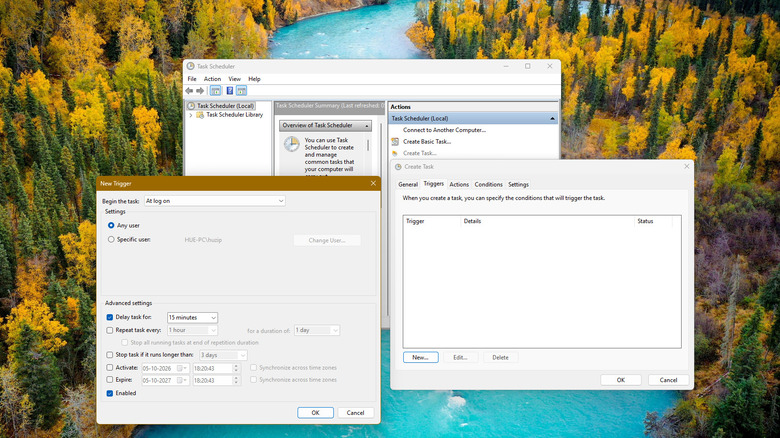
To get started, type "Task Scheduler" into the Start menu and click it. You'll be greeted with a fairly busy interface; ignore most of it for now. Select Create Task in the right Actions pane. Avoid Create Basic Task; it's friendlier, but the full option reveals the controls that make Task Scheduler worth using.
From there, here's how to set up a task:
- Under General, give the task a Name.
- Open Triggers, select New and choose when to run it. Options include On a schedule, At startup or At log on.
- In Actions, choose New, then Start a program. You can direct Windows to a program, command-line tool or PowerShell.
- Review Conditions and Settings to determine whether the task can run on battery power, must wait until the PC is idle or should catch up after a missed run.
- Save it, then right-click the task in Task Scheduler Library and select Run to test it once and make sure it works.
Those conditions are of special concern to those on a laptop. According to Microsoft, a task that runs every five minutes will prevent a PC from entering a low-power idle state. Instead, you should use event, idle or maintenance triggers for tasks that do not require constant polling.
Don't enable Run with highest privileges unless the task truly needs to run as an administrator. Automation is great, but the less running as an administrator, especially without your explicit input, the better.
Three automations that are actually worth setting up
Husain Parvez for Engadget
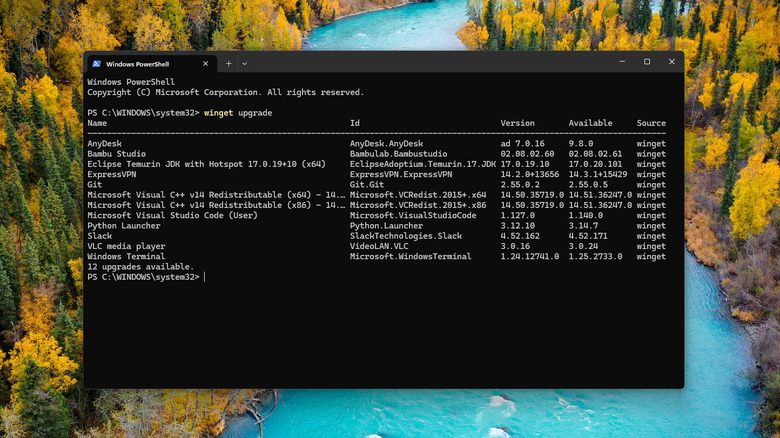
An example of putting the task manager to good use is keeping supported apps up to date with WinGet. Microsoft's package manager can check for newer versions of installed software, and winget upgrade --all will attempt to upgrade eligible installed packages it recognizes.
You can make it a weekly task with this:
winget upgrade --all --silent --accept-package-agreements --accept-source-agreements --disable-interactivity
Execute the command manually prior to scheduling it. Not all apps are managed by WinGet, and pinned packages are skipped by default. Some installers may still require elevation.
Another option addresses the well-known startup frenzy. Trimming unnecessary startup apps can make the logon process faster, but Task Scheduler gives you a middle ground: disable an app's normal startup entry, then launch it with a delayed logon trigger instead. A cloud storage client or other commonly used app can appear a few minutes later, rather than competing with everything else to get your desktop ready to go.
Task Scheduler also works well with PowerShell if you have scripts you've already tested, like copying files to another location or doing your own PC housekeeping. Conditions can ensure the job waits for idle time or AC power instead of barging in halfway through something important.
Power Automate for desktop is better suited to automations that require clicking through apps or interacting with interfaces. However, broader cloud and unattended automation can require paid licenses.
Also, there's little reason to automate maintenance Windows already performs itself. Storage Sense can automatically delete temporary files and items in the Recycle Bin, while Windows automatically optimizes both HDDs and SSDs.







 English (US) ·