
 4 weeks ago
30
4 weeks ago
30
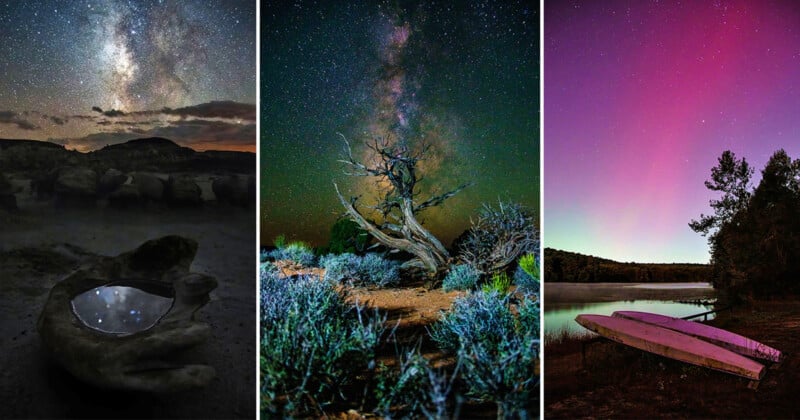
Drawing on decades of photographing nightscapes, this guide offers practical tips on Milky Way timing, scouting, blue-hour blends, and crafting strong foregrounds. Learn how to capture distinctive night sky landscapes through thoughtful planning, smart gear choices, and creative field techniques.
The Astrophotography Nightscape Defined
Night sky photography has always been one of my favorite ways to connect the vastness of the universe with the landscapes I love. Stars, the Milky Way, and auroras have been photographed countless times, yet the images that stay with me are the ones where the sky interacts with the Earth below. Mountains, lakes, forests, and quiet ridgelines give a night image scale, depth, and story, transforming it from a simple starry sky into something I feel personally connected to.
Astrophotography has two main branches. Night sky landscape photography, or nightscapes, captures stars, constellations, or the Milky Way alongside terrestrial foregrounds, usually with wide-angle lenses to create a sense of scale and immersion. Deep-sky astrophotography focuses on distant nebulae, galaxies, and clusters, often requiring telescopes, tracking mounts, and specialized long exposures to reveal detail invisible to the naked eye. While I admire deep-sky work, my own focus is on nightscapes, where the interaction of landscape and sky allows me to create images that feel alive and personal.
Over decades of photographing nature, I’ve learned that creating unique nightscapes is as much about preparation and observation as it is about technical skill. It takes patience, curiosity, and a willingness to experiment. In my night sky photography, I let myself play more, approaching each scene with an artistic mindset rather than a strict documentation approach. I don’t focus on perfection or whether the colors are completely realistic; instead, I prioritize expression, mood, and a sense of playfulness that brings the scene to life in my own way.
In this article, I share how I photograph both popular starlit locations and hidden or overlooked spots, and how timing, planning, composition, and technique help me capture night landscapes that feel distinctive and personal.
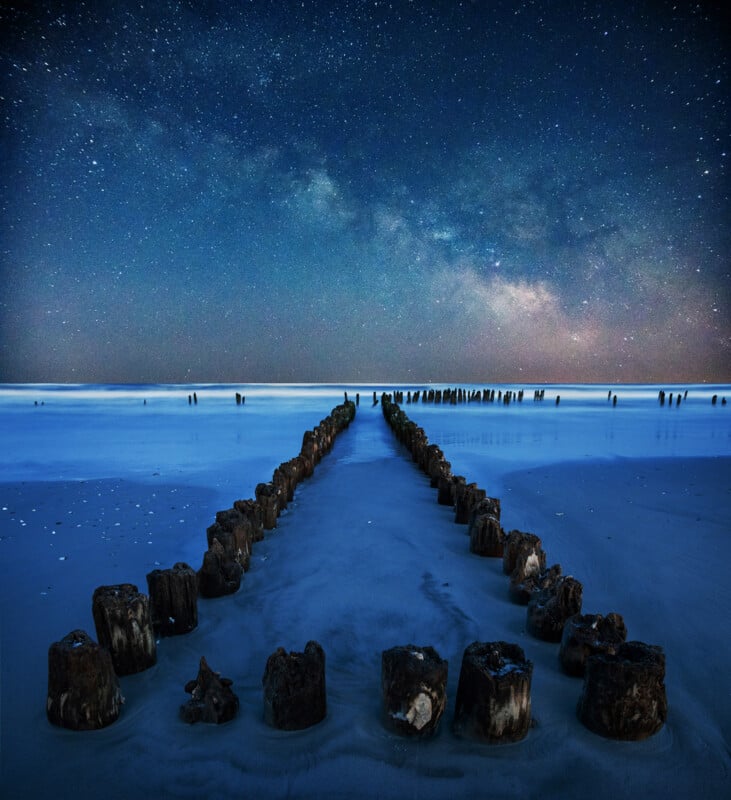 This rare maritime relic is the remains of an 1800s life-saving station. Usually barely visible, it emerges at low tide after the heaviest storms.
Timing and Location
Timing is crucial in nightscape photography. The Milky Way rises and sets at different times throughout the year, and its position relative to the horizon shifts depending on your latitude. Planning when the galaxy will appear above a ridge, lake, or tree line can transform a scene that might otherwise feel ordinary. Seasonal timing is just as important. In the northern hemisphere, the Milky Way core is most visible from late spring through early fall, while in the southern hemisphere, it is accessible for much of the year. Understanding these patterns helps me be in the right place at the right moment.
Clear skies are essential for capturing stars in detail. I always check weather forecasts for nights with minimal cloud cover and low humidity. A few scattered clouds can add texture or drama, but too many will obscure stars and diminish the image’s overall impact.
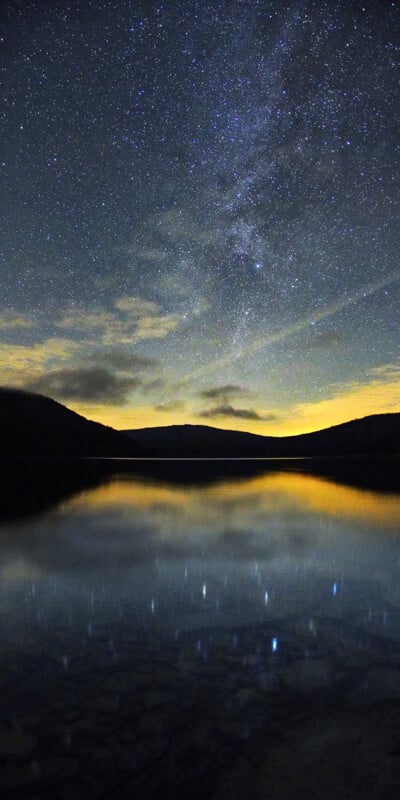 Example of yellow light pollution visible on the horizon.
Equally important is finding dark skies. Light pollution from nearby towns or cities can wash out stars and diminish the atmosphere of a photograph. I frequently use dark-sky websites that use the Bortle scale, which rates sky brightness from urban to wilderness areas, to find the best locations. These skies reveal the Milky Way in full brilliance and allow foregrounds to feel immersive and three-dimensional. Online resources like darksitefinder.com and maps from the International Dark-Sky Association help me locate protected areas or remote spots where light pollution is minimal.
Planning tools are another critical part of my workflow. Apps like PhotoPills, Stellarium, and The Photographer’s Ephemeris let me visualize the Milky Way’s path, predict moonrise and moonset, and see how celestial objects align with the landscape. They also help me check light pollution, calculate exposure settings, and anticipate how moonlight will illuminate the foreground. Combining careful research, scouting, and celestial knowledge dramatically increases the chances of capturing a nightscape that feels personal and distinctive.
Scouting locations during the day is just as important as planning the night. Popular starlit spots can yield unique results if I explore unusual angles or foreground elements, while overlooked ridgelines, ponds, and small forests often provide unobstructed views and creative freedom. I frequently explore state parks or lesser-known wilderness areas near home to find vantage points I can return to at night. These less obvious locations often produce the most memorable images because I can approach them on my own terms.
Planning Around Celestial Events
I also look for opportunities to photograph special celestial events. Certain nights offer a combination of sky and landscape that is impossible to capture under ordinary conditions. In 2026, several events stand out. A total lunar eclipse on March 3 will turn the Moon a deep red, casting dramatic light across foreground landscapes. The Perseids meteor shower on August 12–13 promises bright fireballs and streaking meteors, and in 2026, it coincides with a new moon, giving exceptionally dark skies for shooting.

Other meteor showers, including the Lyrids in April, Eta Aquarids in May, Orionids in October, Taurids in November, and Geminids in December, offer chances to add motion and energy to nightscapes. Planetary events, such as oppositions of Jupiter and Saturn or notable conjunctions, can also provide striking compositions when framed with mountains, trees, or other terrestrial foregrounds. Even the total solar eclipse on August 12, though a daytime event, can inspire creative blue hour or twilight compositions as the landscape shifts in anticipation.
I track these events using a mix of planning apps and Aurora sites and apps to know when and where the sky will align with the landscape. By combining this planning with location scouting and a shot list, I can arrive ready to capture rare alignments of foreground and celestial activity. Flexibility, patience, and repeated visits are essential, as even small variations in light or cloud cover can completely change the scene. Approaching celestial events with preparation and awareness allows me to create nightscapes that feel both unique and deeply personal.
 Reacting quickly to aurora alerts allowed me to capture this panorama on October 10, 2024, when a sudden solar storm produced one of the most vivid and colorful displays seen in years.
Essential Gear
Once I know when and where to shoot, the right gear and techniques help bring my vision to life. Wide-angle lenses are my primary tool for nightscapes because they allow me to capture both the sky and a foreground that tells a story. I use ultra-wide lenses with an aperture of f/2.8 or faster. The wider aperture lets in more light, allowing me to keep ISO lower and reducing noise in the final image. Noise can be particularly tricky in nightscape photography because stars cover the sky so densely, and aggressive noise reduction can blur or distort them.
A sturdy tripod is essential. I always make sure it is level and stable, especially when shooting long exposures on uneven or icy terrain. Tripods give me the freedom to experiment with composition and subtle motion, such as water reflections, drifting clouds, or swaying grass. While star-tracking mounts are useful for capturing sharp Milky Way detail, I often embrace intentional motion in clouds or star trails to add a sense of time passing and depth to a scene.
Other tools I rely on include a remote shutter or intervalometer to trigger exposures without touching the camera, which helps prevent vibration and ensures sharp stars. In cold conditions, small lens heaters or heat packets can prevent frost or condensation from forming on the front element during long exposures. A headlamp with a red filter is invaluable for adjusting camera settings or checking focus without affecting night vision. I also carry extra batteries, as long exposures and cold weather can drain them quickly, and a sturdy camera bag to protect equipment from moisture or dust.
Using this combination of carefully selected gear and practical accessories allows me to focus on creativity in the field. The right tools not only make shooting easier but also expand the range of images I can capture, from subtle Milky Way landscapes to dramatic compositions with foreground interest and motion in the sky.
Composition and Personal Vision
One of my most valuable tips for planning night sky compositions is to arrive before sunset to scout the location and identify your preferred compositions. It is much harder to do this once darkness falls, and you might miss an interesting leading line, a textured rock, or a potential foreground subject. By exploring the site in daylight, I can note vantage points, angles, and objects that will interact well with the stars, then return after dark ready to execute the shot with confidence.
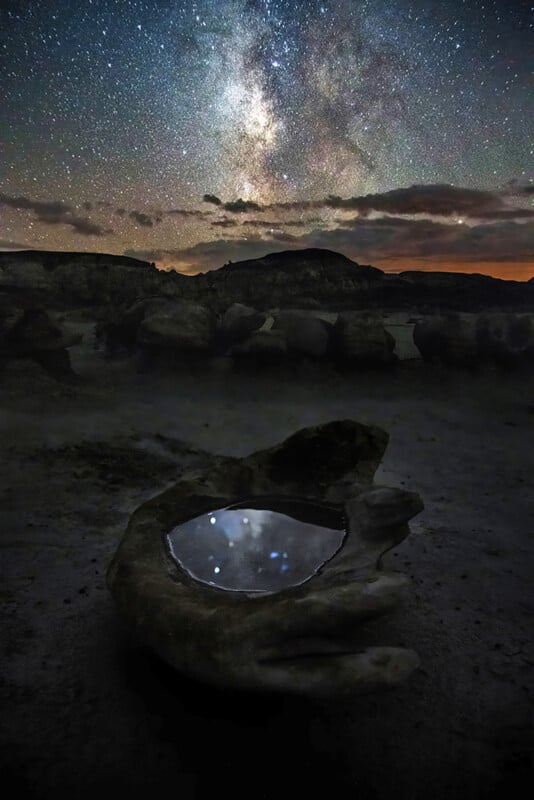 I utilized the pool of water in this natural rock formation to position my camera height just so, capturing a reflection of the milky way.
For me, the sky and foreground are inseparable in nightscapes. I think in layers, arranging the foreground, middle ground, and sky to guide the viewer’s eye through the scene. Silhouetted trees, reflective water, mountain ridges, and even fog or mist can serve as natural anchors, connecting the Earth to the stars and creating a sense of scale. I often plan compositions around specific visual ideas. For example, a vertical layered composition can emphasize a tall tree or lighthouse rising into the starry sky.
At the same time, a wide-angle approach can highlight the sweeping Milky Way above a mountain ridge or a quiet lake. Star trails are another option that allows time to become a visual element, adding motion to otherwise static landscapes. I also enjoy photographing the Milky Way arching over iconic structures such as barns, historic buildings, or isolated lighthouses, which gives both context and narrative to the scene.
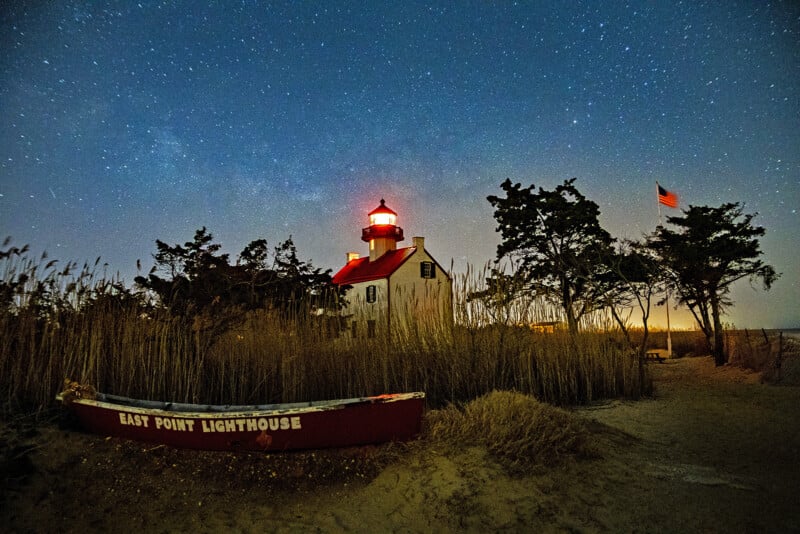
I approach nightscapes as a long-term project, and shot lists have become an essential tool for me. Before heading out, I make note of possible compositions, foreground elements, and angles I want to test. This allows me to stay creative and efficient when I arrive at a location, especially during fleeting light windows or when timing celestial events. Returning to the same locations across seasons gives me the chance to observe how vegetation, water levels, and seasonal changes alter the interaction between landscape and sky. Even subtle differences, such as moonlight highlighting a ridge or reflections on a pond, can completely transform a photograph’s mood.
By combining careful planning, experimentation, and repeated observation, I can explore a variety of perspectives at each site. Varying focal lengths, adjusting angles, and incorporating seasonal elements keep even familiar locations fresh. Over time, this process builds a portfolio of nightscapes that reflects my perspective and creative vision, while giving me the freedom to capture images that are immersive, layered, and distinct from what others have already seen.
Having shot lists and a selection of favorite local spots has been a huge advantage, especially for aurora photography. When a sudden solar storm or geomagnetic event occurs, I can mobilize quickly because I already know where to go and what compositions work best there. Having these locations scouted and visualized in advance allows me to focus on capturing the moment rather than scrambling to find a suitable foreground, enabling me to create impactful images even on short notice.

Beyond the Ordinary
Capturing night sky landscapes that feel original requires more than equipment. It requires curiosity, patience, and a willingness to experiment. What makes an image distinctive is noticing details others might miss, waiting for light and sky conditions to align, and interpreting a scene through your own vision. Over the years, I have found that approaching nightscapes like a long-term project allows me to explore subtle changes in a scene across seasons, weather, and celestial events, resulting in images that feel deeply personal. Even a quiet pond, a familiar ridge, or a small grove of trees can feel extraordinary when illuminated by stars, moonlight, or auroras.
Including a person or silhouette in the frame is another way I add scale and human connection to nightscapes. A lone figure on a ridge, standing at the edge of a lake, or walking along a trail can transform a vast, starry landscape into a story. I often vary their placement, pose, or silhouette shape across multiple compositions to create subtle narrative differences. Sometimes the person is small in the frame, emphasizing the enormity of the sky, and at other times they are closer, interacting with a foreground element such as a tree or rock formation. These decisions, combined with careful foreground selection, add layers and dimension, helping the image feel alive and distinctive.
Foregrounds are critical for creating uniqueness. I seek out less popular locations where I can frame interesting natural elements beneath the stars. Seasonal elements such as fall leaves, blooming flowers, or snow can dramatically alter the look of a scene and make a familiar spot feel new. By scouting areas during the day and noting potential compositions, I can create a shot list for the night, giving me the freedom to experiment while the sky moves overhead. I also vary angles, shooting low to emphasize reflections in water or high to capture the expanse of ridges and valleys, so that even well-known locations can yield fresh and compelling images.
 Blue hour blend, two exposures.
One way I have expanded the variety in my night sky portfolio is through what I call blue hour blends. While this technique has become popular, it is still relatively new in my own work, and I enjoy the creative challenge it offers. Over the past few years, I have experimented with combining exposures from blue hour with the night sky, capturing the last traces of sunset or the cool pre-dawn glow while keeping the stars visible. This allows the foreground to retain color, depth, and texture that might otherwise appear flat or as a silhouette in a purely night exposure. Timing is critical, as the window for ideal light often lasts only a few minutes. By revisiting familiar locations and remaining flexible, I can explore subtle shifts in atmosphere and light, creating images that feel layered, immersive, and unmistakably my own.
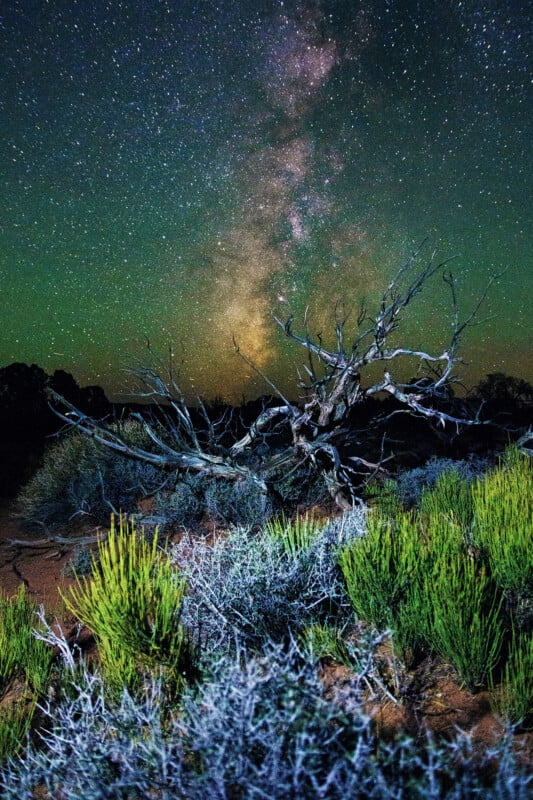
 Light painted scene from the American Southwest, single exposure.
Another approach I use to bring life to nightscapes is the controlled addition of light in the foreground. Light painting can highlight rocks, trees, or other features that would otherwise fade into darkness, adding dimension and visual interest. Some photographers experiment with drone-mounted lights to create ethereal shapes in the sky, while others use steel wool spinning to introduce dramatic, fiery arcs. I often use an adjustable flashlight to selectively illuminate foreground elements without overpowering the stars. Caution is essential, overuse of artificial light can dominate a scene and diminish the natural atmosphere. That said, I do prefer my light painting vibrant, but it is a creative process that you can easily adjust to your taste. When applied thoughtfully, these techniques allow a familiar night landscape to take on new energy, guiding the viewer’s eye while preserving the magic of the starry sky above.
As the years go on and I experiment with night landscapes further, I have expanded my portfolio by looking beyond traditional night skies and incorporating other fleeting natural phenomena. One example is photographing lightning bugs. Their glow is ephemeral, and the window to capture them is very short, often just a few weeks in the right season. Capturing their light in a landscape requires patience, careful planning, and stacking multiple exposures to bring out the full effect without overwhelming the scene. I have found it to be a fun and creative challenge, adding a new dimension to my work and blending the magic of terrestrial light with the stars above. Including phenomena like bioluminescence in water or glow worms can make nightscapes more dynamic, immersive, and uniquely personal.
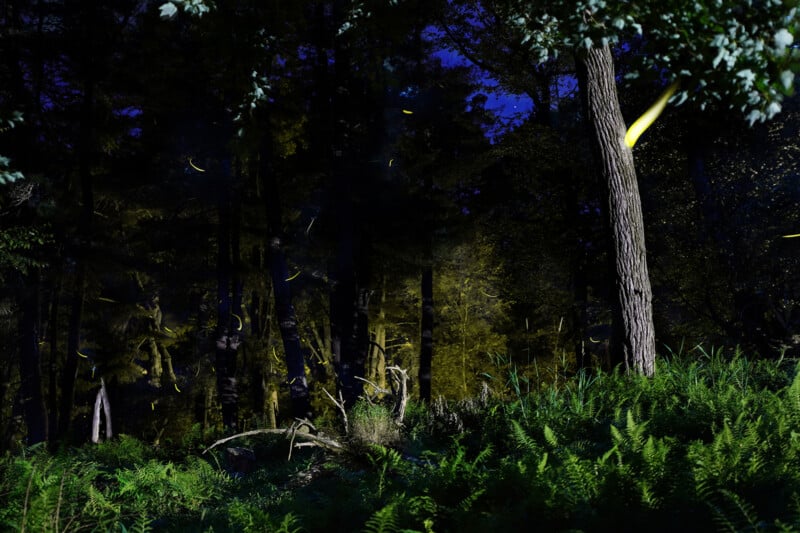 Synchronous fireflies, multiple stationary exposures stacked.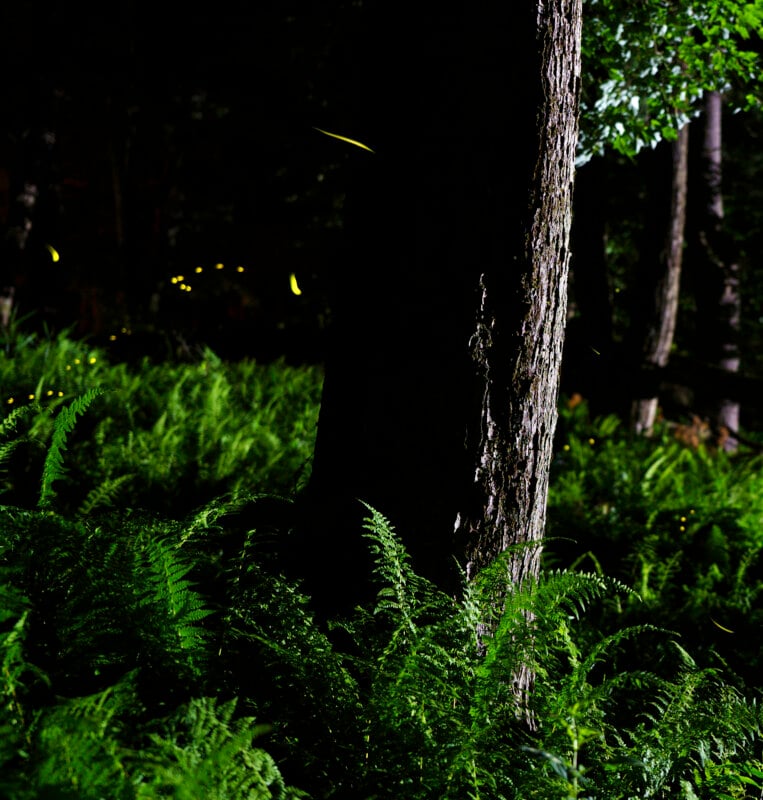
Ultimately, these moments, whether a subtle blue hour glow, a vivid aurora, a meteor streaking across the sky, or a carefully placed silhouette, are what shape my work. They remind me that with observation, planning, and a willingness to explore, even the night sky over familiar landscapes can feel entirely new. By combining vision, persistence, and creativity, it is possible to create nightscapes that are deeply personal, visually compelling, and unlike anything else, even in a world filled with starry photography.
Image credits: Kate Garibaldi






 English (US) ·