
 2 weeks ago
63
2 weeks ago
63
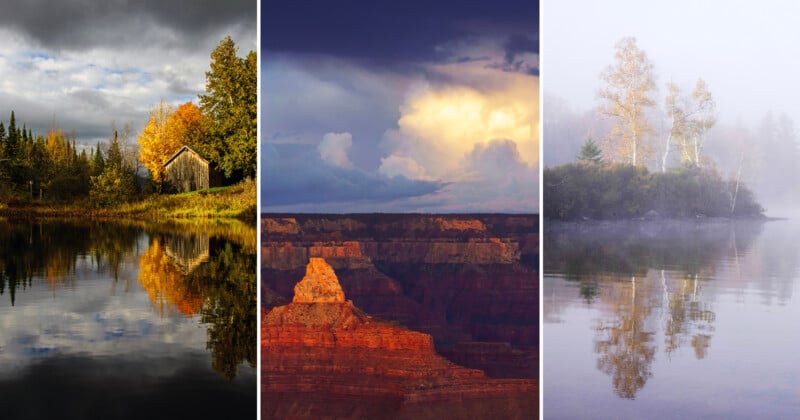
After more than 20 years photographing landscapes in changing conditions, I’ve learned that the goal isn’t to wait for perfect weather, but to understand what each type of weather can offer and be prepared to make the most of it. This guide covers how to harness those conditions with the right techniques, settings, and tools to turn unpredictable weather into powerful compositions.
Last time, we looked at how challenging weather can transform wildlife photography, from photographing animals in falling snow to using rain, fog, and storms to create atmosphere. This time, we’re turning our attention to landscape photography, where weather can be just as transformative, influencing everything from the quality of light and visibility to the very color, contrast, and structure of a composition.
A landscape photographed beneath a cloudless sky may be beautiful, but changing weather introduces opportunities that simply aren’t available under static conditions. Storm clouds can create dramatic directional light, fog can build layers through a mountain range, rain can saturate colors and create reflections, and snow can strip a landscape down to its most essential shapes for a more minimalist, fine-art approach.
The challenge is learning to recognize what the weather is doing and adapting your technique accordingly. That means understanding how different conditions affect exposure, knowing when to reach for a wide-angle or telephoto lens, and recognizing opportunities for layered compositions, panoramas, and long exposures. It also means being prepared with the right filters and gear, so you’re ready when the conditions change.
The goal isn’t to fight the weather, but to understand what it is giving you and use it to shape the photograph.
How Weather Changes Landscape Light
Weather doesn’t simply change what appears in the sky. It fundamentally changes the quality, direction, and contrast of the light falling on the landscape.
Overcast skies act as an enormous natural diffuser, spreading light across the scene and reducing harsh shadows. This can be particularly useful for forests, waterfalls, intimate landscapes, and scenes where texture and color are more important than dramatic contrast. Wet rocks, moss, autumn foliage, and saturated greens can look especially rich beneath soft cloud cover.
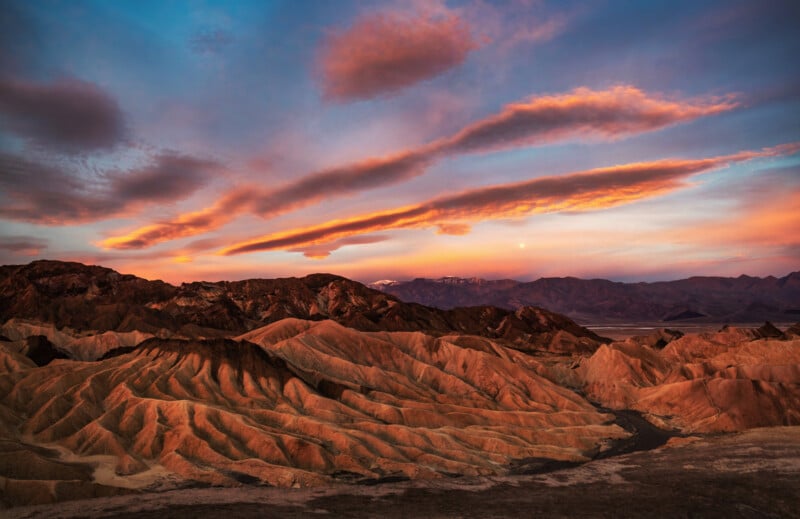
Completely overcast conditions aren’t necessarily the most exciting for every landscape, however. Broken cloud cover can be far more dynamic because it lets sunlight break through periodically. These brief openings can create localized areas of intense illumination while the surrounding landscape remains comparatively dark.
This is often the light worth waiting for.
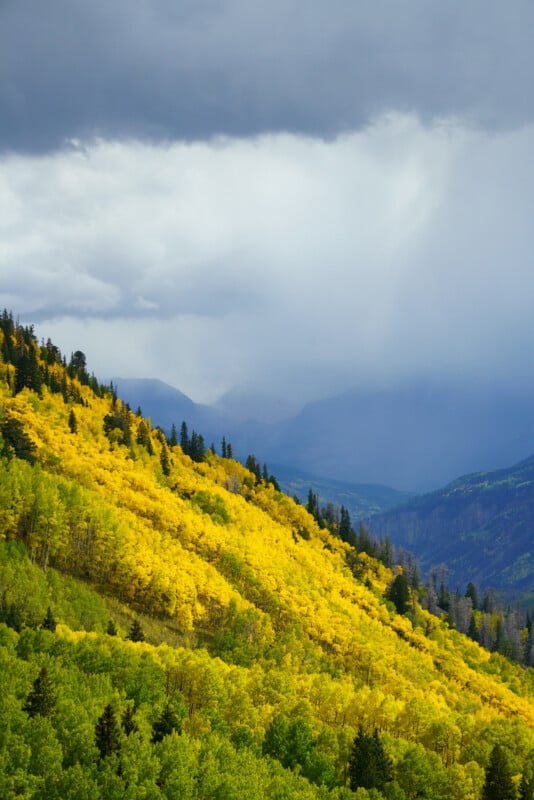
Storm systems can produce dramatic side lighting, backlighting, and shafts of sunlight that move across the landscape. The challenge is that these conditions can change extremely quickly. A composition that looks ordinary one minute can become extraordinary when a break in the clouds illuminates a mountain or valley.
Rather than simply watching the sky, watch the landscape for changes in illumination. The clouds may be dramatic, but the light they create on the land is usually what makes the photograph work.
Read the Weather Like a Photographer
Checking whether the forecast says rain or sunshine is only the beginning. Landscape photographers can gain considerably more information by looking at how the weather is expected to develop throughout the day.
Cloud cover percentage can help determine whether you’re likely to have completely flat light or broken conditions with potential sun breaks. Precipitation timing matters because the periods immediately before and after a storm can produce very different opportunities. Wind direction and speed can tell you whether clouds, fog, vegetation, or water will be moving, while humidity can provide clues about atmospheric haze and visibility.
Storm movement is particularly important. A storm approaching at sunrise may completely obscure a mountain, while that same storm moving away shortly afterward could leave behind clearing skies and dramatic light. The forecast isn’t simply telling you whether to go. It can help you determine when the conditions are most likely to become interesting.
This is why I rarely think of weather as a single condition. A day can contain several photographic opportunities as the weather changes from clear skies to clouds, rain, fog, and eventually clearing light. The transitions are often more valuable than the forecast itself.
Exposure Strategies for Difficult Conditions
Changing weather requires changing exposure decisions, and some common landscape conditions can fool your camera’s meter.
Snow is the classic example. A camera meter generally attempts to render the scene toward a middle tone, which means a predominantly white landscape can be recorded as gray. Positive exposure compensation is often necessary to keep snow looking naturally bright, but the exact adjustment depends on the scene. Rather than relying entirely on the rear LCD, monitor the histogram and highlight warnings to preserve as much tonal information as possible without unnecessarily clipping important detail.
Fog presents almost the opposite problem. The scene may contain very little contrast, and the camera can produce an image that appears darker and flatter than the atmosphere actually looked. Depending on the scene, a small amount of positive exposure compensation can help preserve the luminous quality of the fog.
Storms create another challenge because extremely dark clouds may sit alongside a brightly illuminated landscape. Protecting highlights becomes especially important, and bracketing exposures can add flexibility when the dynamic range exceeds what a single frame can capture.
Rain can reduce contrast while simultaneously increasing saturation and reflections. The exposure itself may be relatively straightforward, but shutter speed becomes a creative decision. A fast shutter can freeze raindrops and wind-driven spray, while slower shutter speeds allow water and vegetation to become blurred elements within the composition.
There is no single “bad weather setting.” Exposure should respond to what the weather is doing and to the visual effect you want to create.
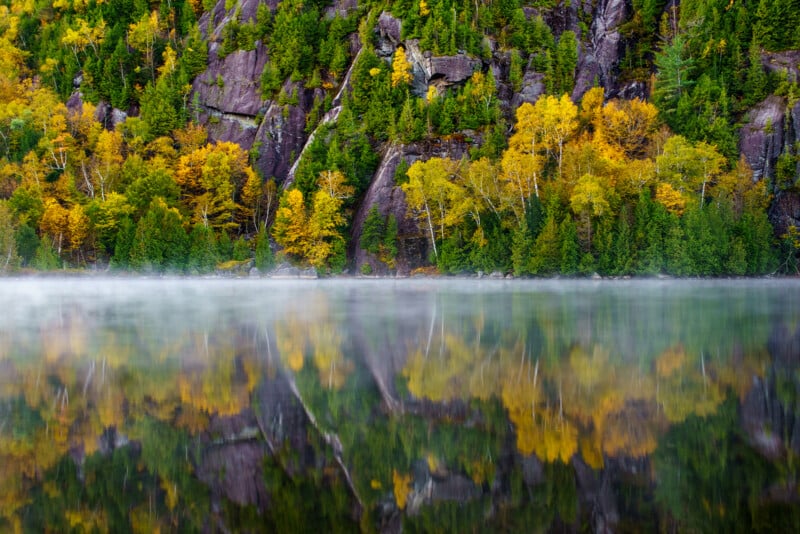
Controlling Exposure: Use Lens Filters to Manage Light
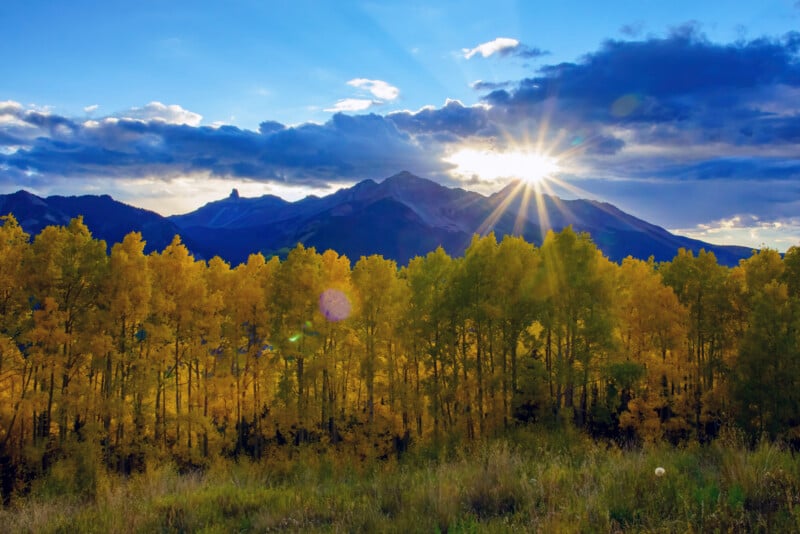
Modern cameras offer exceptional dynamic range and sophisticated metering, but even the most capable camera cannot fully replicate the physical effect of a properly used filter. A circular polarizer can reduce glare and increase apparent color and contrast, while a graduated neutral density filter can balance a bright sky against a darker foreground before the light reaches the sensor.
A circular polarizing filter (CPL) is one of the most versatile filters for landscape photography. By rotating it, you can reduce reflections from water, wet rocks, and foliage, revealing detail and increasing apparent saturation. A CPL can also deepen blue skies, although its effect is strongest when shooting roughly 90 degrees from the sun. Be careful with ultra-wide lenses, where polarization can become uneven across the sky.
Neutral density (ND) filters reduce the amount of light entering the lens, allowing slower shutter speeds in conditions that would otherwise be too bright. This can turn moving water into a smooth blur, allow clouds or vegetation to move during an exposure, or create a specific motion effect while maintaining your desired aperture.
Graduated neutral density (GND) filters address a different problem: a sky that is significantly brighter than the foreground. The upper portion is darkened while the lower portion remains clear, allowing you to reduce the sky’s exposure without unnecessarily darkening the land.
A reverse graduated neutral density (RGND) is particularly useful for sunrises and sunsets. Its darkest portion is concentrated around the middle of the filter, where the sun is often positioned near the horizon, helping control the intense brightness there while keeping the upper sky comparatively bright.
Know When to Stack Exposures
Filters aren’t always the best solution for balancing a difficult landscape. When the scene’s dynamic range or depth exceeds what a single exposure can capture, stacking multiple frames provides another level of control.
HDR or exposure bracketing addresses dynamic range. Capture a sequence at different shutter speeds while keeping the aperture and ISO consistent, then blend them to retain detail in both bright skies and darker foregrounds. This can be useful at sunrise and sunset, in high-contrast storm light, or whenever the brightness difference between sky and land is too great for one frame.
HDR doesn’t have to produce the heavily processed look sometimes associated with the technique. A carefully blended sequence can look completely natural while preserving highlight and shadow detail that would otherwise be lost.
Focus stacking solves a different problem: depth of field. Capture multiple images with focus positioned at different distances through the scene, then blend them to create greater depth of field than one exposure could provide.
This is particularly useful when a composition has an extremely close foreground and distant background. Rather than stopping the lens down excessively and potentially sacrificing fine detail to diffraction, you can shoot at an aperture where the lens performs well and combine the frames in post.
The distinction is simple: exposure stacking controls dynamic range, while focus stacking controls depth of field. In demanding landscapes, you can combine these techniques with filters to control light and achieve both tonal range and front-to-back sharpness.
Choosing the Right Focal Length
Weather can dramatically change how different focal lengths behave, making lens choice just as important as exposure.
Wide-angle lenses are excellent for dramatic skies and expansive landscapes because they include more sky and exaggerate the relationship between a close foreground and distant landscape. They are particularly effective when weather creates an interesting foreground element, such as wet rocks, snow, reflections, or windblown vegetation.
Standard focal lengths provide a more natural perspective and are useful when the scene doesn’t require exaggerated depth. They are particularly versatile when weather is already creating strong layers.
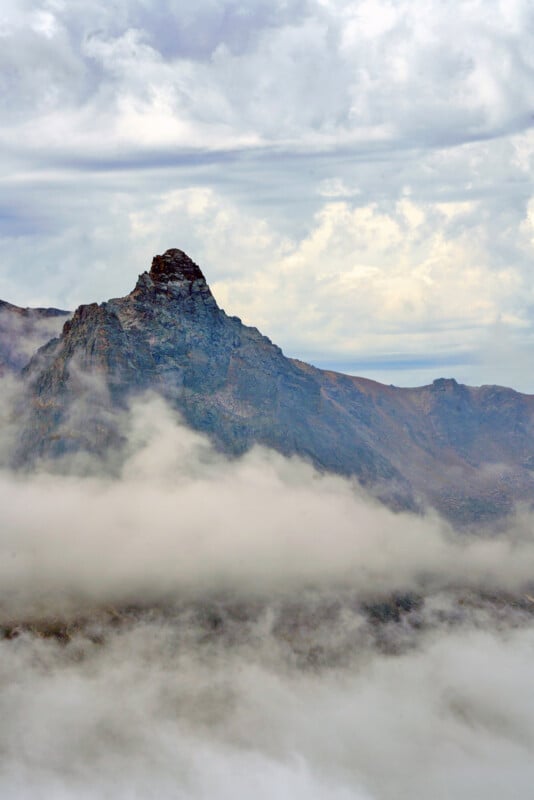
Telephoto lenses are often overlooked in bad weather, but they can be some of the most powerful tools available. Fog, rain, snow, and atmospheric haze naturally separate distant elements, allowing you to isolate layers and compress the apparent distance between them.
Instead of photographing an entire mountain range, you can photograph several ridgelines fading into fog. Instead of including an entire storm system, you can isolate an illuminated peak beneath a dark cloud bank.
Bad weather doesn’t always call for a wider lens. Sometimes it is the reason to reach for a longer one.
Protecting Your Gear in Difficult Landscape Conditions
Landscape photographers often spend hours exposed to the elements while waiting for the right light, so protecting your equipment is just as important as protecting yourself. A waterproof camera cover helps in rain and wet snow, while a dry bag or waterproof backpack cover provides extra protection.
Don’t assume that your camera bag’s included rain cover will be enough. Most are essentially a shower cap for the front of the bag, leaving the back, straps, and portions of the bag exposed. For particularly wet conditions, I like carrying a large dry bag that can fit my entire camera bag inside.
In windy environments, protection from blowing sand and dust is equally important. A UV or CPL filter can help protect the front element of your lens, while a camera cover helps shield the body and controls. At the coast, salt spray requires extra care, so wipe equipment down after shooting and avoid letting saltwater dry on the camera or lens.
Cold weather brings its own challenges as batteries deplete much faster. Keep spare batteries in an inner jacket pocket, and when returning indoors from extreme cold, let your equipment warm gradually to reduce condensation.
Don’t forget your tripod. Mud can work into leg locks, saltwater can corrode hardware, and snow can freeze around mechanisms. If you’re regularly shooting in harsh conditions, clean and inspect your tripod just as carefully as your camera gear.
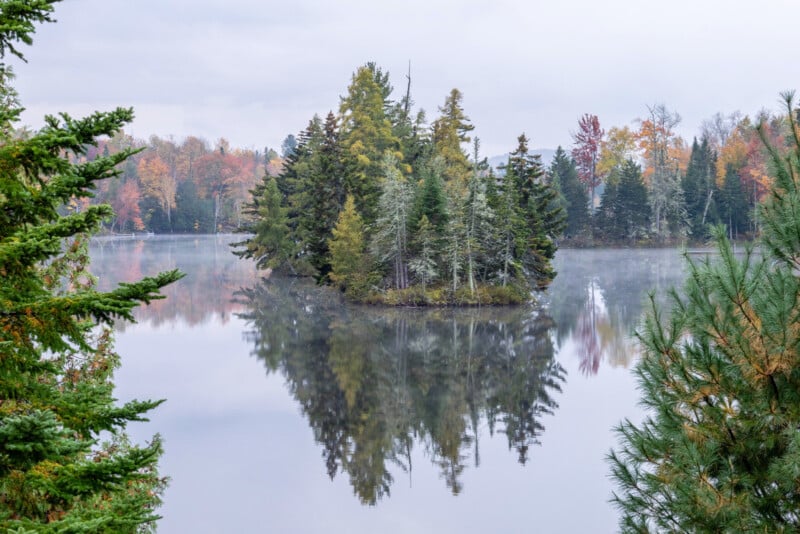
Build Depth With Atmospheric Layers
Atmospheric conditions provide one of the most natural ways to create depth in a landscape photograph.
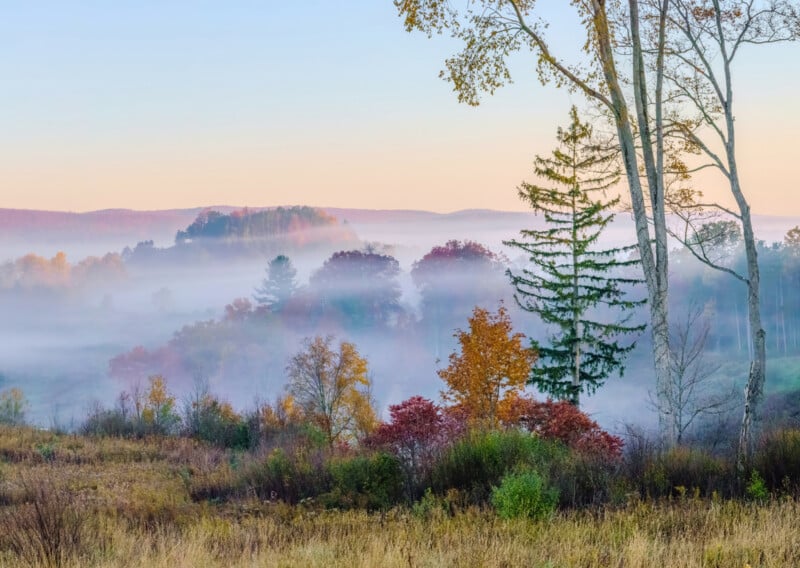
On a clear day, distant mountains may have strong contrast and sharp detail similar to the foreground. Fog and atmospheric haze gradually remove that information as distance increases, leaving foreground elements defined while middle- and distant features become progressively softer.
Instead of trying to eliminate this loss of detail, use it to structure the composition.
Look for three or more distinct layers and position them so they overlap without becoming confusing. A foreground ridge might lead toward a middle-distance mountain, while a distant peak fades into fog. Each layer can have progressively lower contrast, giving the viewer a visual path through the scene.
Telephoto lenses are particularly effective because they compress the apparent distance between layers, turning atmospheric perspective into a graphic composition of repeating ridges, trees, or mountains.
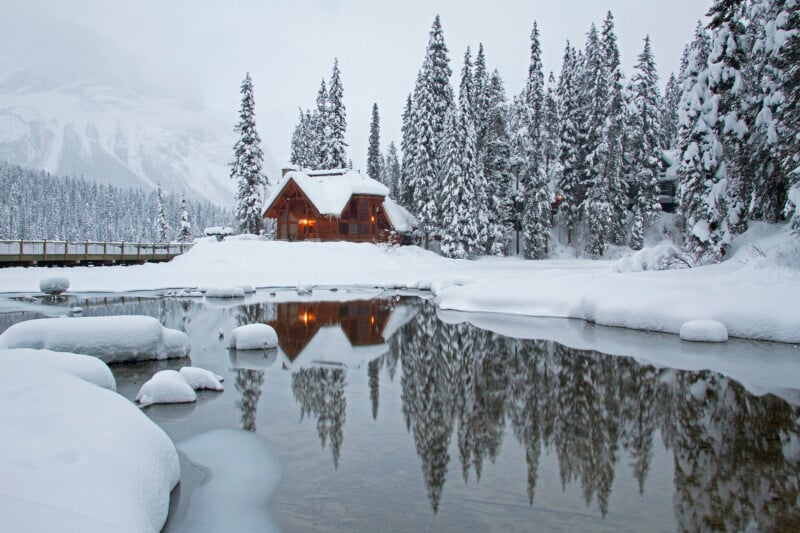
Use Snow to Simplify the Landscape
Snow is one of the most powerful compositional tools available to landscape photographers because it removes information.
Vegetation disappears beneath a uniform surface. Rocks become isolated shapes. Trails and roads become graphic lines. Dark trees stand out against white backgrounds.
This simplification can make otherwise cluttered compositions much easier to organize. Instead of searching for more elements to include, look for what the snow has removed.
Fresh snowfall is particularly valuable because it creates clean surfaces before footprints, tire tracks, and other disturbances appear. If you’re photographing immediately after a storm, pay attention to the direction of the light and the texture of the snow. Low-angle light can reveal subtle contours and wind patterns that disappear under flat illumination.
Snow also introduces color considerations. Shadows can take on strong blue tones, particularly under overcast skies. Whether you correct those tones or leave them as is depends on the mood you want, but always check your white balance rather than assuming the camera’s automatic setting has interpreted the scene correctly.
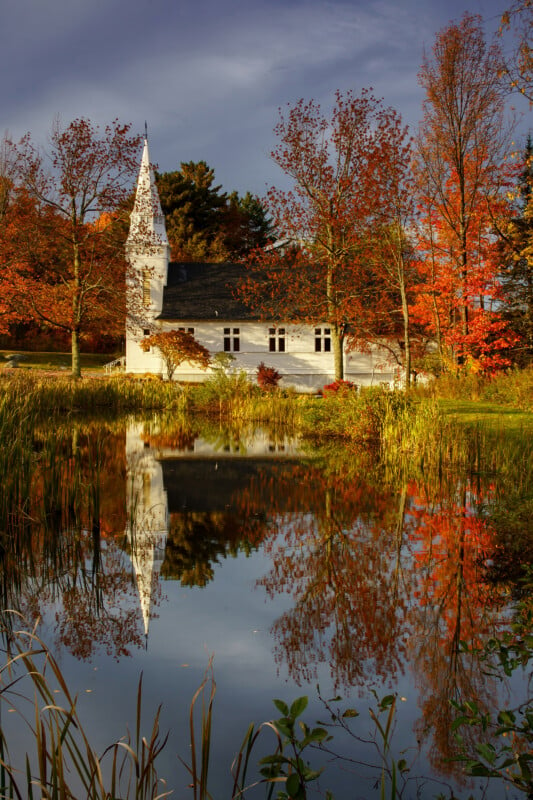
Rain, Wet Surfaces, and Reflections
Rain changes landscapes in ways that can last long after the precipitation stops.
Wet rocks become darker and more saturated. Leaves become glossy. Roads and trails develop reflective surfaces, while puddles can provide temporary foreground reflections that completely change a familiar composition.
This is why some of the best opportunities occur immediately after a storm. The rain may have passed, but the landscape remains wet while clouds begin breaking apart and sunlight returns.
Look for reflections at ground level rather than limiting yourself to large bodies of water. A shallow puddle can become a significant compositional element when photographed from a low angle.
Rain also provides softer light as clouds diffuse sunlight across the landscape, reducing harsh contrast and making reflective surfaces easier to photograph.
Of course, shooting in rain requires preparation. A rain cover for the camera and lens, a lens hood, and several microfiber cloths should be standard equipment. Saltwater spray at coastal locations requires even more caution because salt residue can be particularly difficult to remove.
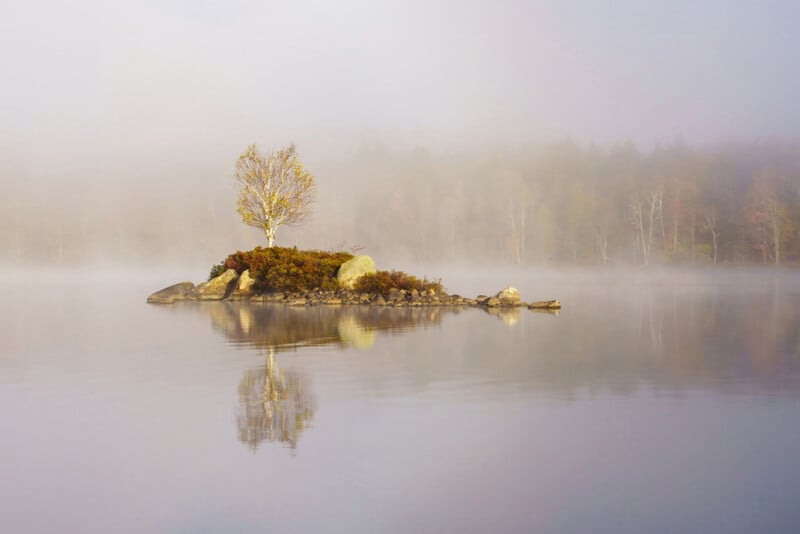
Fog and Minimalist Landscapes
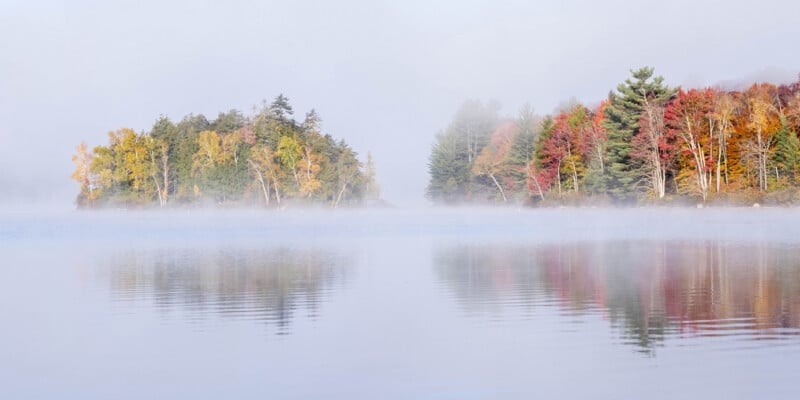
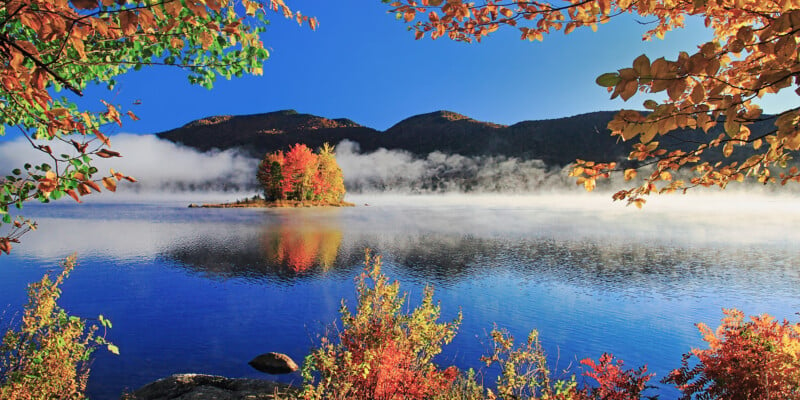
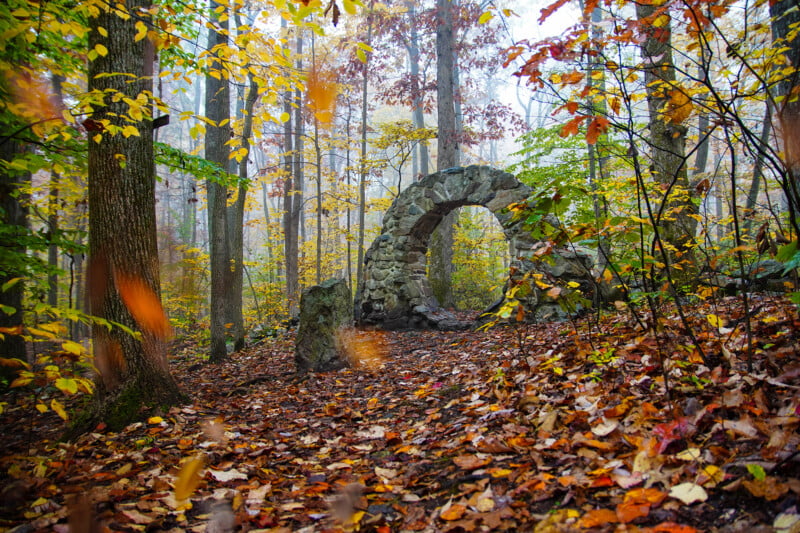
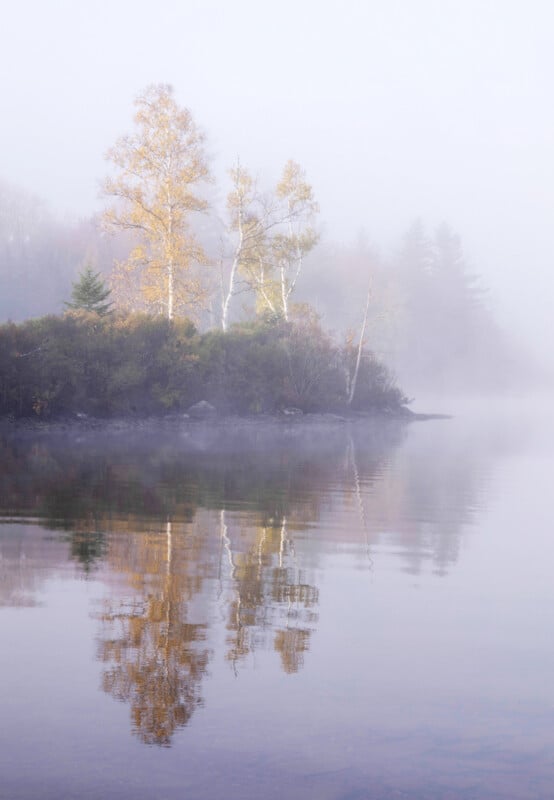
Fog can completely transform the way a landscape is perceived, and it is one of my favorite weather conditions to photograph. I have an entire series of New England fall color scenes created around lakes on cool autumn mornings, when fog slowly burns away as the sun rises. There is something almost magical about watching the scene reveal itself piece by piece, and I find myself returning to this concept again and again.
One of the most fascinating qualities of fog is that it feels almost alive. It moves across the landscape, constantly changing shape, concealing some elements while revealing others. A forest can become a collection of vertical trunks disappearing into white, a mountain can become a soft silhouette, or a single tree can emerge as the dominant subject.
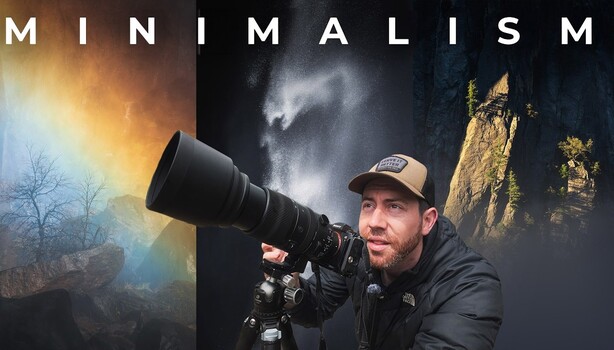
Fog is particularly effective for minimalist photography because it naturally removes visual information. Instead of trying to capture everything that remains visible, look for what the fog isolates. A small patch of autumn color, a distant tree, or the edge of a mountain can suddenly become much more significant when everything surrounding it fades into the atmosphere.
But fog doesn’t always mean minimalism. When visibility extends farther into the landscape, it can create overlapping layers, with each successive ridge, tree line, or mountain becoming progressively softer and less defined.
The key is to watch how the fog is moving and how quickly the landscape is being revealed. A mountain may disappear completely one moment and emerge minutes later, while fog drifting across a lake can create an entirely new composition without you moving the camera. Rather than constantly searching for a new location, find a promising scene and give it time to evolve. With fog, the photograph you came for may not be the photograph that the landscape ultimately gives you.
Use Wind as a Creative Tool
Wind is easy to overlook because it is invisible, but its effects can become some of the strongest visual elements in a photograph. Moving grasses, leaves, branches, blowing snow, waves, and clouds can all communicate the intensity of the conditions, while shutter speed determines whether that movement is frozen, subtly blurred, or transformed into something more abstract.
A fast shutter can freeze individual blades of grass, snowflakes, or windblown spray, while a moderately slower shutter introduces motion blur while retaining recognizable form. With longer exposures, moving vegetation can become painterly streaks while stationary elements remain sharp.
I encounter this often when photographing wildflower meadows. I may arrive intending to capture crisp flowers, only to find that the wind is constantly moving them. Because the individual flowers throughout the meadow vary in size and height, they don’t move in unison, creating a chaotic mix of stems and blooms swaying in different directions. Rather than waiting for the impossible moment when everything becomes perfectly still, I sometimes embrace the movement and deliberately slow my shutter speed. The resulting blur can turn a familiar field of flowers into something much more impressionistic and abstract.
The important distinction is intentional movement versus accidental blur. Decide how you want the movement to look and choose your shutter speed accordingly. Sometimes the goal is to freeze a single flower while allowing the surrounding field to move. Other times, allowing the entire scene to blur can create a completely different interpretation. The same concept applies to ocean waves, storm clouds, and other moving elements.
Wind also creates a practical tripod challenge. Strong gusts can introduce vibration through the legs or camera, particularly during longer exposures. Keep the center column lowered, make sure the legs are firmly planted, and avoid hanging a camera bag from the tripod in strong wind unless you can make it touch the ground. Otherwise, it can act like a sail and introduce additional movement. In particularly severe conditions, stripping the setup down to the camera and essential equipment can actually make it more stable.
The goal isn’t always to overcome the wind. Sometimes the more interesting photograph comes from letting the wind change the image on purpose.
Tips For Long Exposures in Changing Weather
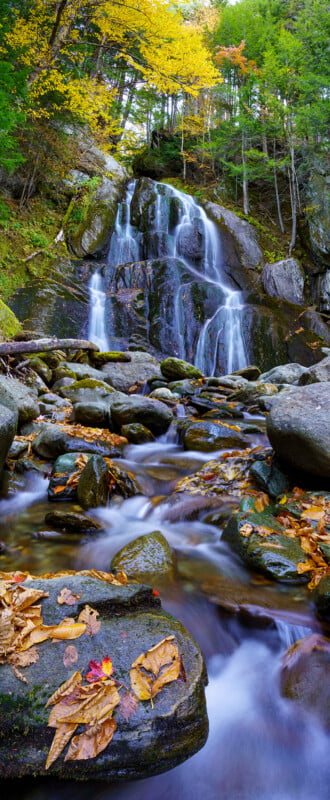
Long exposure is a powerful landscape technique, but the goal shouldn’t simply be to make everything blurry. Your shutter speed determines how the weather and movement are rendered, so choose it based on the effect you want.
Fast shutter speeds can freeze blowing snow, waves, or vegetation, while slower exposures introduce varying degrees of motion blur. A few seconds can smooth moving water and soften vegetation, while much longer exposures can turn clouds, waves, and other moving elements into abstract shapes.
Neutral density filters allow you to extend exposure times when there is too much available light. But don’t automatically reach for the strongest filter. If clouds are moving quickly, an extremely long exposure can turn their structure into an indistinct blur, while a shorter exposure may preserve enough definition to show their direction and movement.
The goal is to control movement, not simply eliminate it. Decide what you want to remain sharp and what you want the weather to transform.
Panoramas When One Frame Isn’t Enough
Changing weather can make panoramic photography both more rewarding and more challenging. I love using panoramas for landscapes because the wider perspective can give viewers a much more immersive sense of place. They do require more time both in the field and during post-processing, but when the scene calls for it, the extra effort is worthwhile.
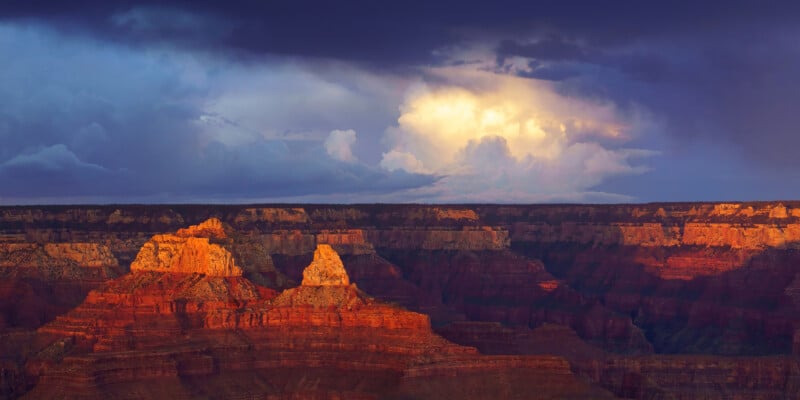
A panorama allows you to capture a much broader landscape while retaining more resolution than a single wide-angle frame. This is especially useful when a dramatic storm stretches across the horizon, or a mountain range extends far beyond what one frame can comfortably include.
For consistent results, I recommend shooting a series of overlapping vertical frames while keeping the exposure, white balance, and focus locked manually. Aim for roughly 30 to 50 percent overlap between frames, particularly when the scene contains complex foreground elements. A panoramic head or nodal rail can also help minimize parallax when shooting close foregrounds.
Changing weather adds another consideration. Moving clouds, fog, rain, and vegetation can shift between frames and create stitching problems. Work efficiently and watch the conditions. If the weather is changing too quickly, a single frame may ultimately produce the cleaner image.
Photograph the Transition, Not Just the Storm
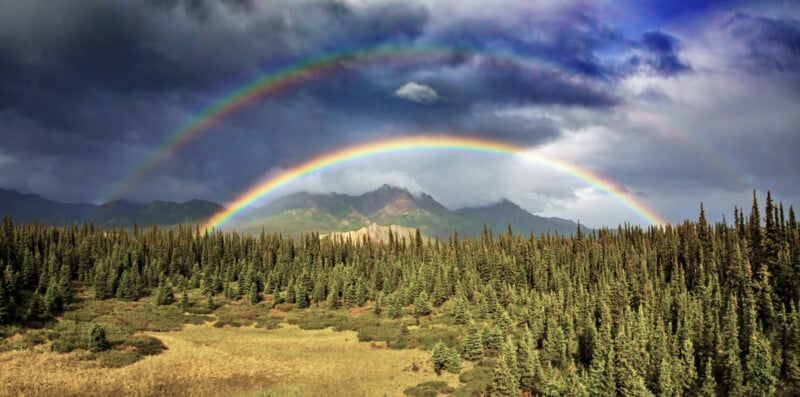
Some of the most productive landscape photography happens before or after the weather event itself. Before a storm, clouds may build dramatically across the horizon. During the storm, rain, fog, and low visibility can create atmospheric compositions. As it passes, sunlight may break through the clouds and illuminate portions of the landscape, while wet surfaces and calm water create reflections beneath a still-dramatic sky.
I rarely think of a storm as a single photographic moment. Rather than arriving, taking a photograph, and leaving when the weather changes, stay through the transition. The composition you planned before the storm may become irrelevant once the light shifts, and the most compelling image may happen minutes after you thought the opportunity had passed.
Watch the sky and the landscape at the same time. The moment the clouds begin to break can be more powerful than the darkest part of the storm.
Iconic Weather-Specific Landscape Opportunities Around the World
Some landscapes are especially rewarding for weather photography because their geography creates distinctive and often predictable conditions. Rather than choosing a destination based solely on its scenery, consider what weather patterns can transform that scenery into something truly extraordinary.
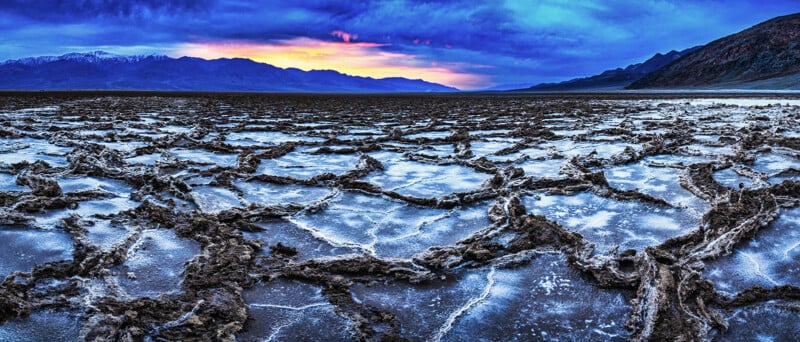
The Rocky Mountains and Alaska offer dramatic opportunities for heavy snowfall, low clouds, winter storms, and rapidly changing mountain weather. Patagonia is known for powerful winds and rapidly shifting conditions that can send enormous clouds racing across the mountains.
Iceland is almost tailor-made for weather-driven landscape photography. Coastal storms, sea mist, snowfall, fog, rain, and rapidly changing light can all occur within the same trip. The Faroe Islands and Scotland offer similarly unpredictable conditions, with wind, rain, fog, low clouds, and dramatic coastal landscapes creating constantly changing compositions.
The Pacific Northwest is particularly rewarding during its wetter seasons, when rain, fog, moss, waterfalls, and low clouds create deeply atmospheric forests and coastlines. In the American Southwest, summer monsoon season brings towering thunderstorms, rain shafts, lightning, and dramatic cloud formations over otherwise arid landscapes.
Other regions offer their own distinctive combinations. Norway and the Lofoten Islands can produce dramatic winter conditions and low coastal clouds, while New Zealand combines rugged mountains, rapidly changing weather, and powerful coastal conditions. The Dolomites in Italy can become particularly atmospheric when low clouds and fog settle around the peaks.
When planning a weather-focused landscape trip, don’t just research what a destination looks like. Research when and why its most interesting weather occurs. Snowfall, monsoon storms, autumn fog, coastal storms, and mountain cloud formations can be seasonal, and timing your visit around those conditions can be just as important as choosing the location itself. The weather isn’t simply something you hope to encounter once you arrive. It can be the reason you choose the destination in the first place.
A Field Workflow for Chasing ‘Bad’ Weather
The most effective way to photograph difficult weather is to have a plan before conditions arrive, while staying flexible enough to change it as the landscape evolves. Start by researching cloud cover, precipitation, wind, and timing rather than simply checking whether rain is expected. Scout your composition before the weather peaks so you’re ready when the light changes, and decide whether the scene calls for a wide-angle composition, telephoto layers, a panorama, or long exposure.
Once the weather arrives, pay attention to what it is doing rather than forcing the composition you originally envisioned. Fog may create layers, rain may reveal reflections, wind may turn vegetation into intentional motion blur, and breaking clouds may produce dramatic directional light. Have your filters, tripod, and weather protection ready so you can respond quickly without sacrificing your composition.
Most importantly, don’t leave when the storm appears to be ending. Some of the most dramatic light can happen during the transition, when sunlight returns while the atmosphere is still unsettled. I would rather work slowly and methodically to create a handful of strong images than rush from place to place filling my memory card with snapshots.
The goal isn’t simply to photograph bad weather. It is to understand it well enough to anticipate what it can do to the landscape, then use those conditions deliberately to create a more powerful image.
When the Weather Becomes the Composition
Weather can become far more than a backdrop in landscape photography. It can determine the composition itself, changing the way light, color, depth, and movement interact within the frame.
Snow can simplify a cluttered landscape, fog can create atmospheric layers, rain can deepen color and produce reflections, and wind can turn vegetation into deliberate painterly motion. Storms can completely reshape the light, while haze can compress distant mountains into graphic layers.
The key is recognizing what the conditions are contributing and building the composition around them rather than simply trying to document the landscape as it normally appears. That might mean waiting for fog to reveal a distant peak, slowing your shutter to embrace wind-blown movement, or repositioning yourself to make a break in the storm part of the composition. Sometimes the best thing you can do is trade a little more time in the field for the chance to let nature reveal the photograph for you.
That’s the thing. Changing weather gives you something more difficult: a landscape that may never look the same way again, and that unique moment is exactly what makes it worth photographing.
Image creditsKate Garibaldi
Affiliate Disclosure PetaPixel articles may include affiliate links; we may earn a commission if you buy through one.





 English (US) ·