
 4 hours ago
12
Crypto scams cost victims billions of dollars each year. Many of them look like real investments at first, which makes them hard to spot.
This guide uses data from the FBI, Chainalysis, the CFTC and other groups. It covers 10 warning signs that a cryptocurrency, app or trading site may be a scam.
No single sign proves fraud. But when several show up together, it is a strong reason to stop and check before sending any money.
How Big Is the Crypto Scam Problem?
The FBI’s Internet Crime Complaint Center logged about $9.3 billion in crypto-related losses in 2024. The losses came from almost 150,000 complaints. That total was up 66% from 2022.
Investment fraud made up $5.8 billion of the 2024 figure. This category includes pig butchering schemes, where a scammer builds trust before pushing a fake investment.
Group-IB, a cybersecurity firm, cites an estimate of $17 billion in crypto scam losses for 2025. The estimate is tied to AI-enabled fraud and large, organized scam operations.
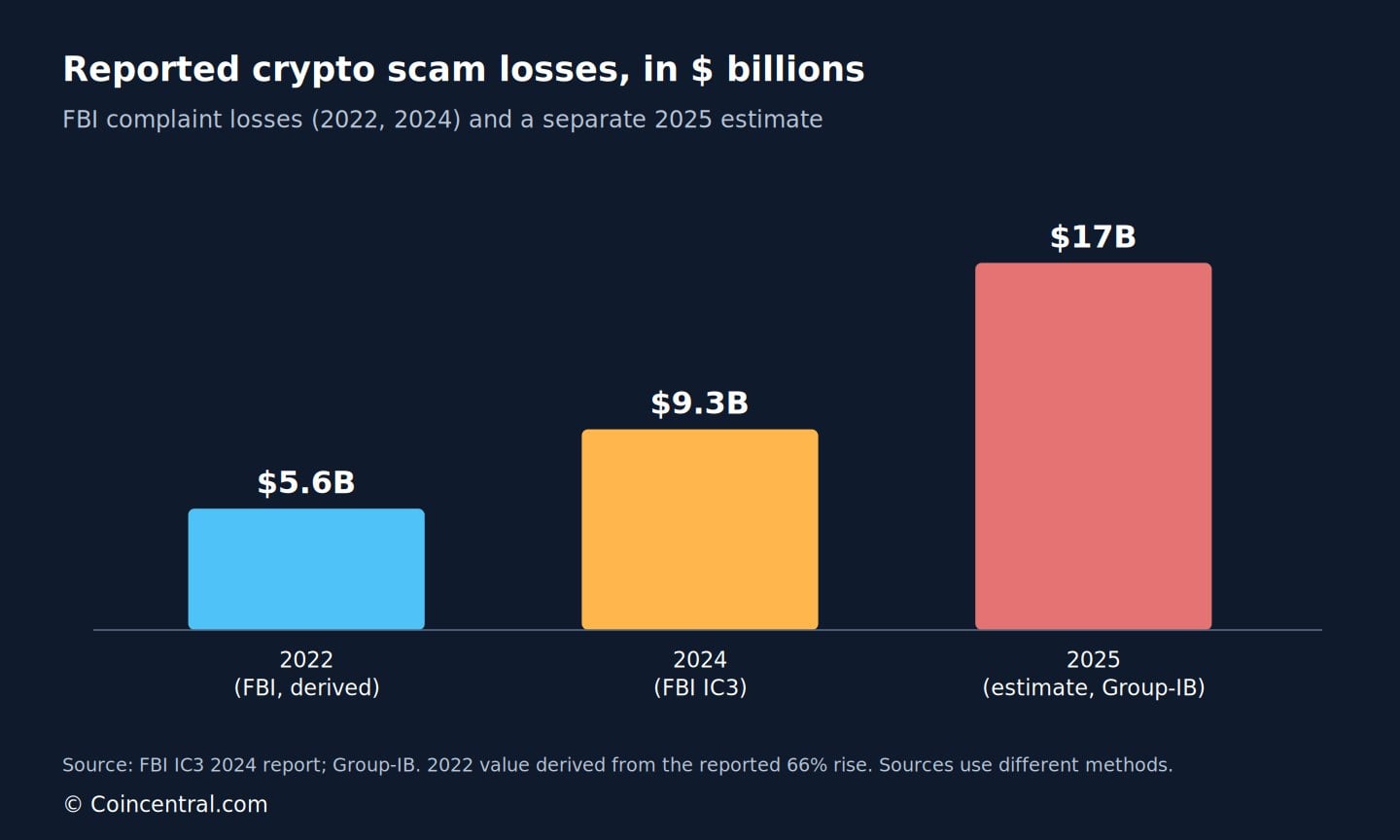 Figure 1: Reported crypto scam losses in billions of dollars. The sources use different methods, so the bars show direction, not an exact match.
Scammers like crypto because it moves fast and across borders. Confirmed transactions cannot be reversed. The FTC adds that crypto payments do not come with the legal protections that credit cards have.
Some details of a crypto transaction are public on the blockchain. Even so, it can be hard to link a wallet to a real person, which helps scammers hide.
| Crypto-related losses | About $9.3 billion | FBI IC3, 2024 |
| Complaints filed | Almost 150,000 | FBI IC3, 2024 |
| Rise from 2022 | 66% | FBI IC3, 2024 |
| Investment fraud losses | $5.8 billion | FBI IC3, 2024 |
| Estimated scam losses | $17 billion | Group-IB estimate, 2025 |
| Rug pull damage | More than $6 billion | Group-IB, 2025 |
Signs 1 and 2: Promises of Big Returns
Sign 1: Guaranteed or very high profits
The FTC says only scammers guarantee profits or big returns. No one can promise that a crypto investment will make money, and nothing about it is low risk.
Crypto prices can swing by the hour. The FTC notes that an investment worth thousands of dollars today might be worth only hundreds tomorrow.
CommBank also lists low-risk, high-return offers and claims of trading systems that use AI or algorithms as signs of a scam. Phrases such as “guaranteed profit” and “risk-free trading” are red flags, according to DataExpert.
Sign 2: Returns that depend on how much you pay in
The CFTC warns about fake sites that offer “investment plans” promising returns of 50, 75, 100 or 200 percent or more. The bigger the deposit, the bigger the promised payout. These upgrades are meant to coax more money out of victims.
Binance Academy describes a similar case. A scam site offered higher VIP tiers for larger deposits and a 10% rebate for paying in USDT. The victim could never withdraw the money.
These setups often work like Ponzi or pyramid schemes. A Ponzi scheme pays old investors with money from new ones. A pyramid scheme pays people for recruiting others. Binance Academy says both models are mathematically unsustainable and will collapse.
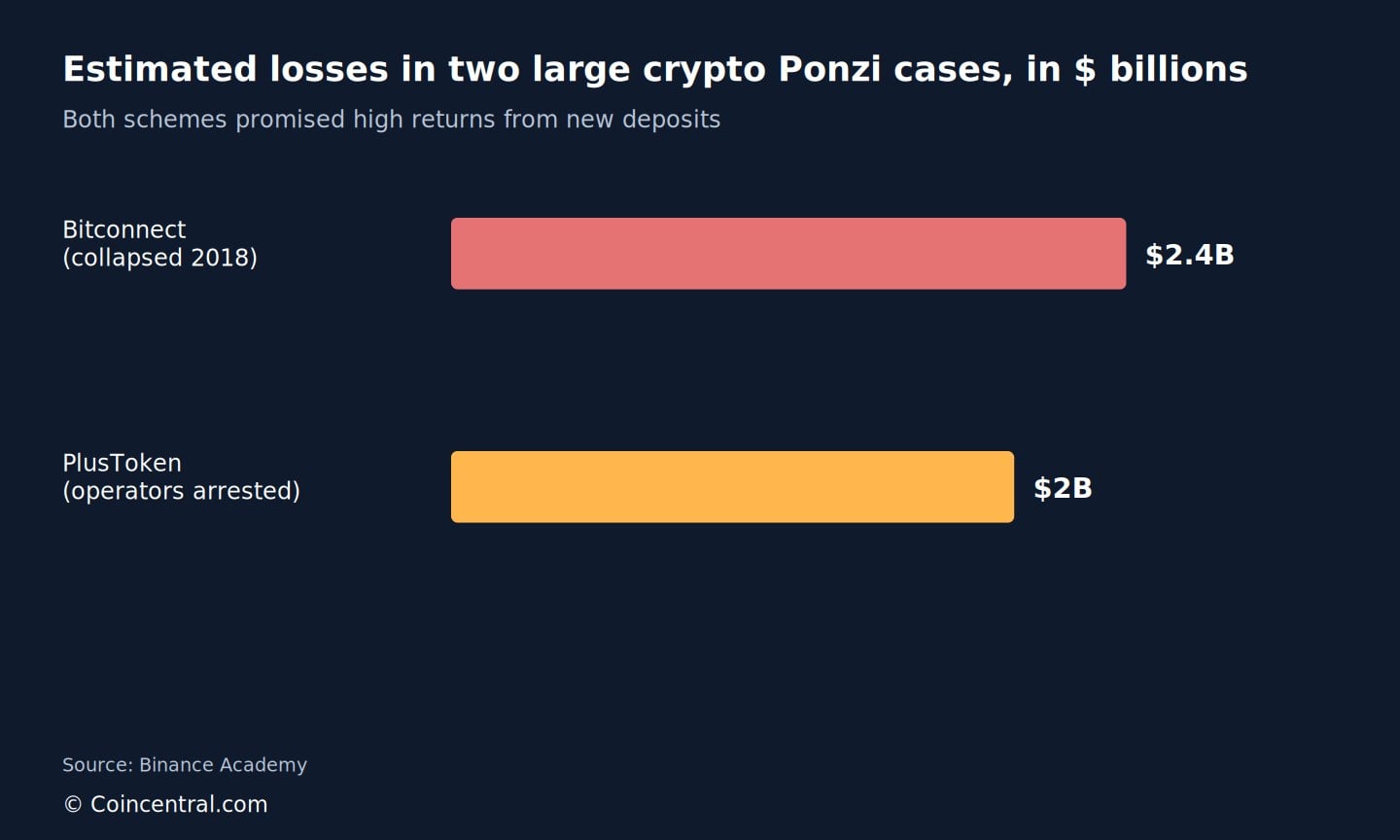 Figure 2: Estimated losses in two large crypto Ponzi cases, in billions of dollars.
| Bitconnect | Ponzi operation, collapsed in 2018 | About $2.4 billion |
| PlusToken | Ponzi operation, operators arrested | About $2 billion |
| OneCoin | Ponzi operation | Not stated in the sources |
Sign 3: Contact Out of the Blue
Yorkshire Building Society says two thirds of crypto scams start on social media. Others begin with a text, email or phone call. The CFTC reports that the vast majority of crypto and forex frauds start on social media or messaging apps.
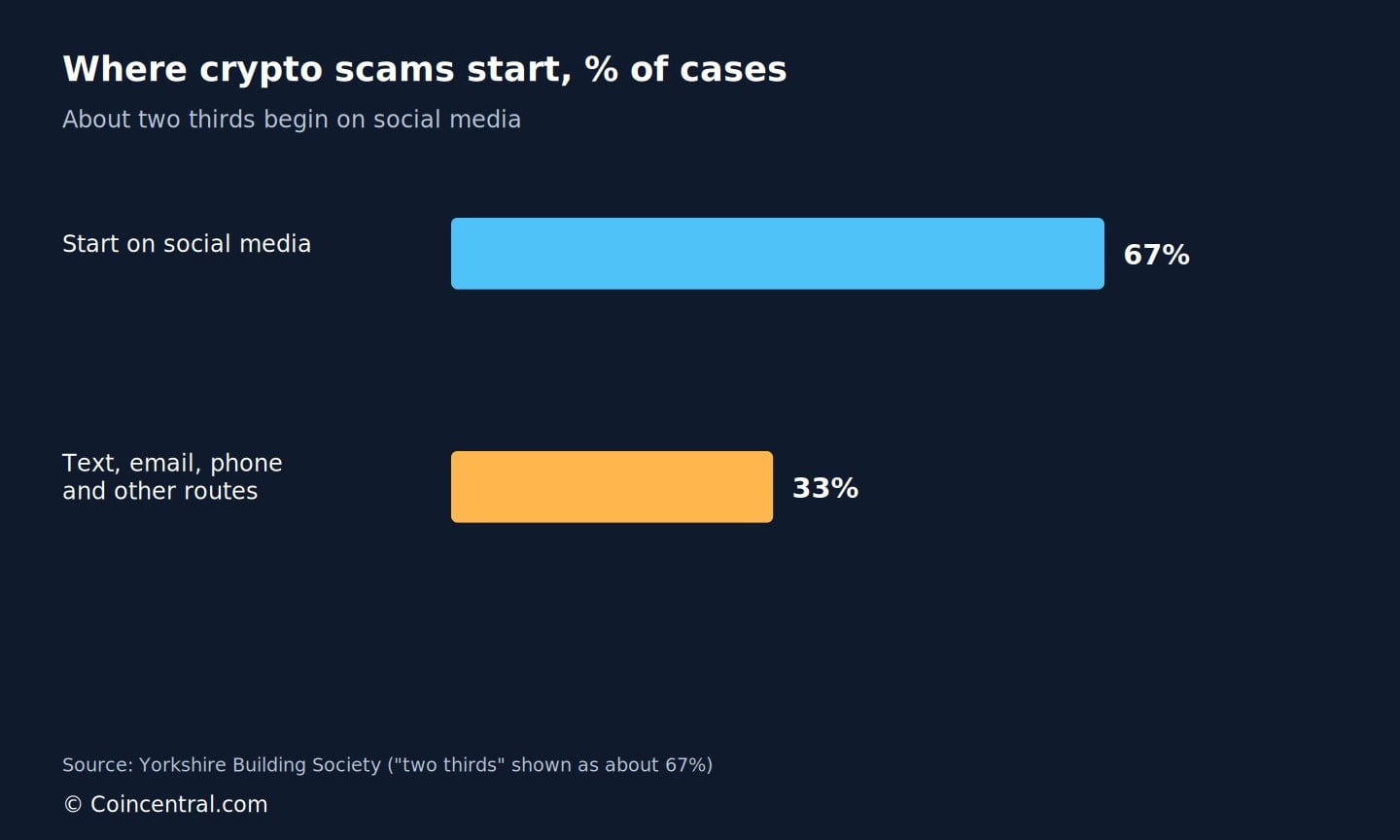 Figure 3: Where crypto scams start. The two thirds figure is shown as about 67%.
The FTC describes a common version. A so-called investment manager contacts you unexpectedly and offers to grow your money. The site they send you to looks real, but it is fake.
Binance Academy describes scam ads on Facebook and Instagram that lead people to WhatsApp and Telegram groups. Most members in those groups are fake accounts that push people to buy certain coins.
Celebrity endorsements are another trick. The FTC says celebrities do not contact people on social media to multiply their crypto. Yorkshire Building Society adds that endorsement images and videos are often made or changed with AI tools.
| Social media ads | Promises of easy profit, often with celebrity images | Check the company on an official regulator site |
| Messaging groups | Fake members posting profits | Leave the group and do not deposit |
| Dating apps | A new contact who soon talks about crypto | Never mix dating and investing |
| Text, email or call | An unknown adviser offering to grow your money | Search the name plus “scam” or “complaint” |
Signs 4 and 5: Trust First, Then Pressure
Sign 4: Personal contact first, investing later
Pig butchering is one of the fastest-growing and highest-loss scam types, according to Binance Academy. The scammer spends days, weeks or months building trust. Then the talk turns to investing.
The victim is guided to a fake trading platform that shows made-up profits. Early on, a small withdrawal may work. That builds trust and leads to bigger deposits.
In 2024, investment fraud was about 62% of the FBI’s crypto-related losses. In its first three months, the U.S. Department of Justice Scam Center Strike Force confiscated more than $578 million in crypto linked to these networks.
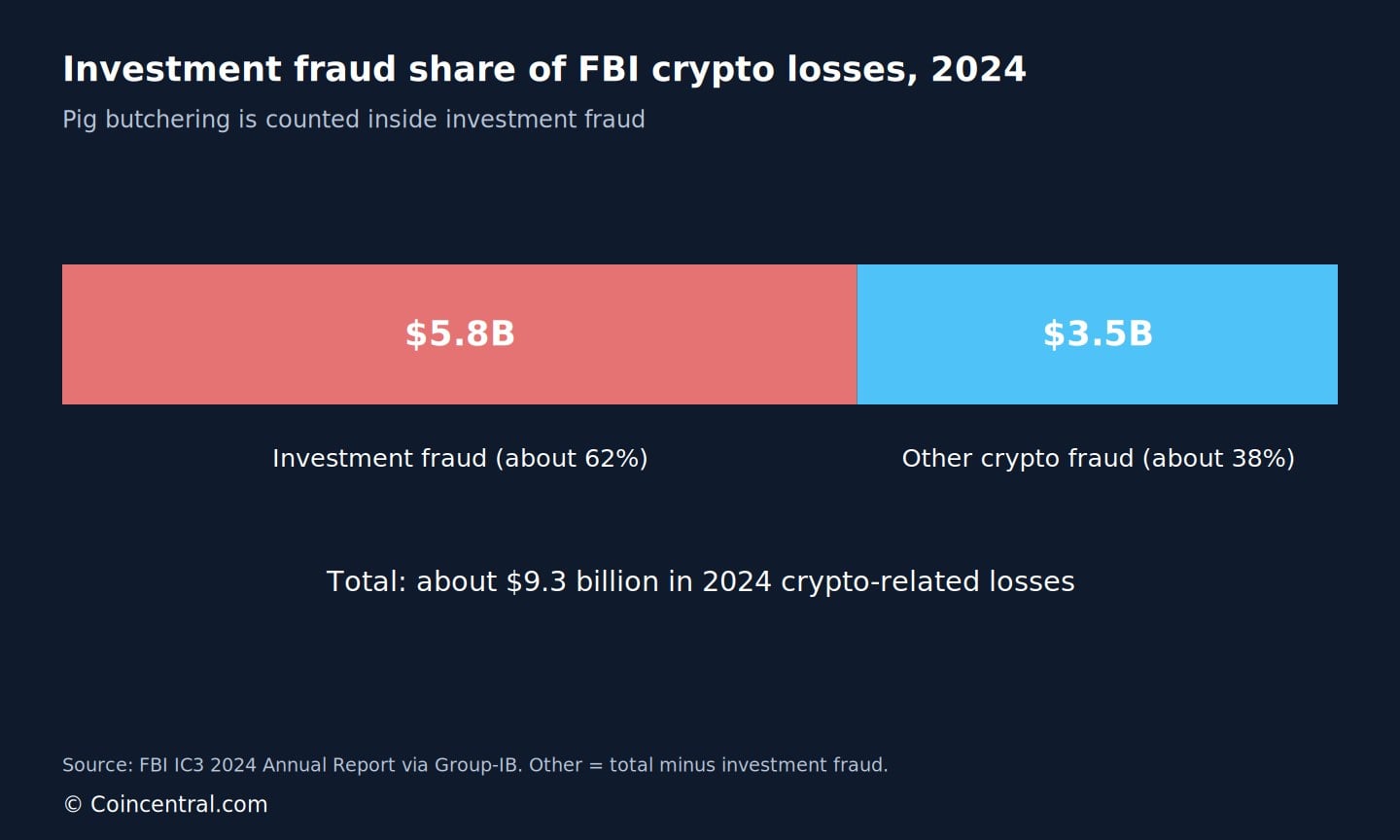 Figure 4: Investment fraud share of FBI crypto losses in 2024. The other category is the total minus investment fraud.
Some scammers also act as “coaches.” Yorkshire Building Society says a coach may explain how to get around bank scam checks. A coach may also tell you what to say if the bank asks questions.
DataExpert warns about requests to share your screen or install tools such as AnyDesk or TeamViewer. This gives the other person control over your device.
Sign 5: Pressure to act fast
Scammers push you to move before you can think. They may say the market is “about to break out” or that an “exclusive opportunity” is closing soon, DataExpert reports.
CommBank tells people not to be pressured, since scammers use the complexity of crypto to confuse them. Yorkshire Building Society says feeling rushed is a sign that you are the target of a scam.
| Contact | A stranger reaches out on a dating app or social media | Unsolicited message |
| Trust | Days or weeks of friendly chat | Talk turns to investing |
| Deposit | You send crypto to a fake platform | Platform you cannot verify |
| Fake profit | A dashboard shows gains | Pressure to deposit more |
| Withdrawal | You are asked to pay fees or taxes first | Funds never arrive |
Sign 6: Demands to Pay in Crypto
The FTC states that only scammers demand payment in cryptocurrency. No real business or agency will ask you to send crypto in advance, to buy something or to protect your money.
Scammers pose as well-known companies, banks, government agencies and even employers. They may claim your account is at risk. Then they tell you to buy crypto to fix it.
Crypto ATMs are a growing channel. The FBI reports that losses from crypto ATM scams reached $333.5 million between January and November 2025. More than 85% of reported losses were by adults over 60.
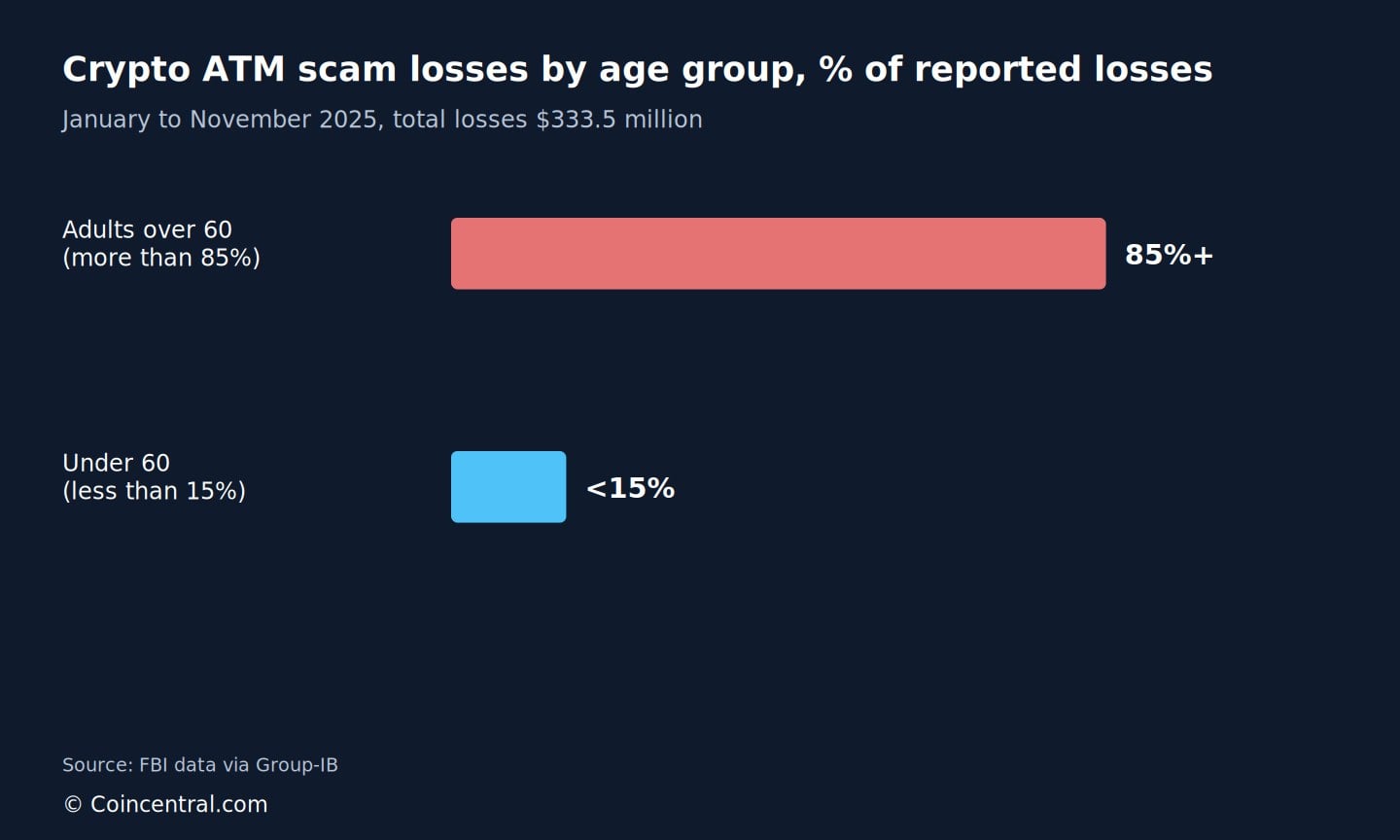 Figure 5: Crypto ATM scam losses by age group, January to November 2025.
In some cases, the FTC says, scammers stay on the phone while victims use the ATM. They give step-by-step directions and a QR code that sends the money straight to the scammer’s wallet.
The CFTC points out another clue. A fake platform often will not accept bank transfers. Instead, it walks you through buying crypto on a real exchange and then sending it on. Bank transfers and card payments have fraud checks, and blockchain transfers do not.
| A known company | Your account has fraud on it | Real firms do not demand crypto |
| A government agency | You owe money or your accounts are frozen | Agencies never ask for crypto |
| An employer | Pay a fee to start the job, or deposit a check and buy crypto | The check is fake |
| A support agent | Your device or account has a problem | Use contact details from the official site |
Signs 7 and 8: A Platform That Does Not Check Out
Sign 7: No registration, address or phone line
The CFTC says firms that sell forex or derivatives to U.S. customers must register with the CFTC and join the National Futures Association. Crypto trading platforms are treated as money service businesses and must register with FinCEN. Many states have their own rules.
Registration alone does not protect you from fraud. Still, the CFTC says most scams involve unregistered firms, people and products.
Missing contact details are another warning. The CFTC says a site with no company address likely does not want you to know where it is. A site with no customer service phone line is a sure sign of a scam, it adds. DataExpert also lists a missing company registration number.
Sign 8: Details that do not add up
The CFTC suggests checking the domain age at lookup.icann.org. If a firm claims years of history but the domain is a few weeks old, it is a scam. Other clues include broken links, spelling errors and awards you have never heard of.
Fake testimonials are also common. The CFTC advises searching the site name with words such as “scam,” “fraud” or “reviews.”
Group-IB found that the CryptosLabs ring allegedly stole about 480 million euros from French-speaking victims in France, Belgium and Luxembourg. It used more than 350 domains and copied over 40 banks, fintechs and crypto platforms. Fake “account managers” called victims and urged them to deposit more.
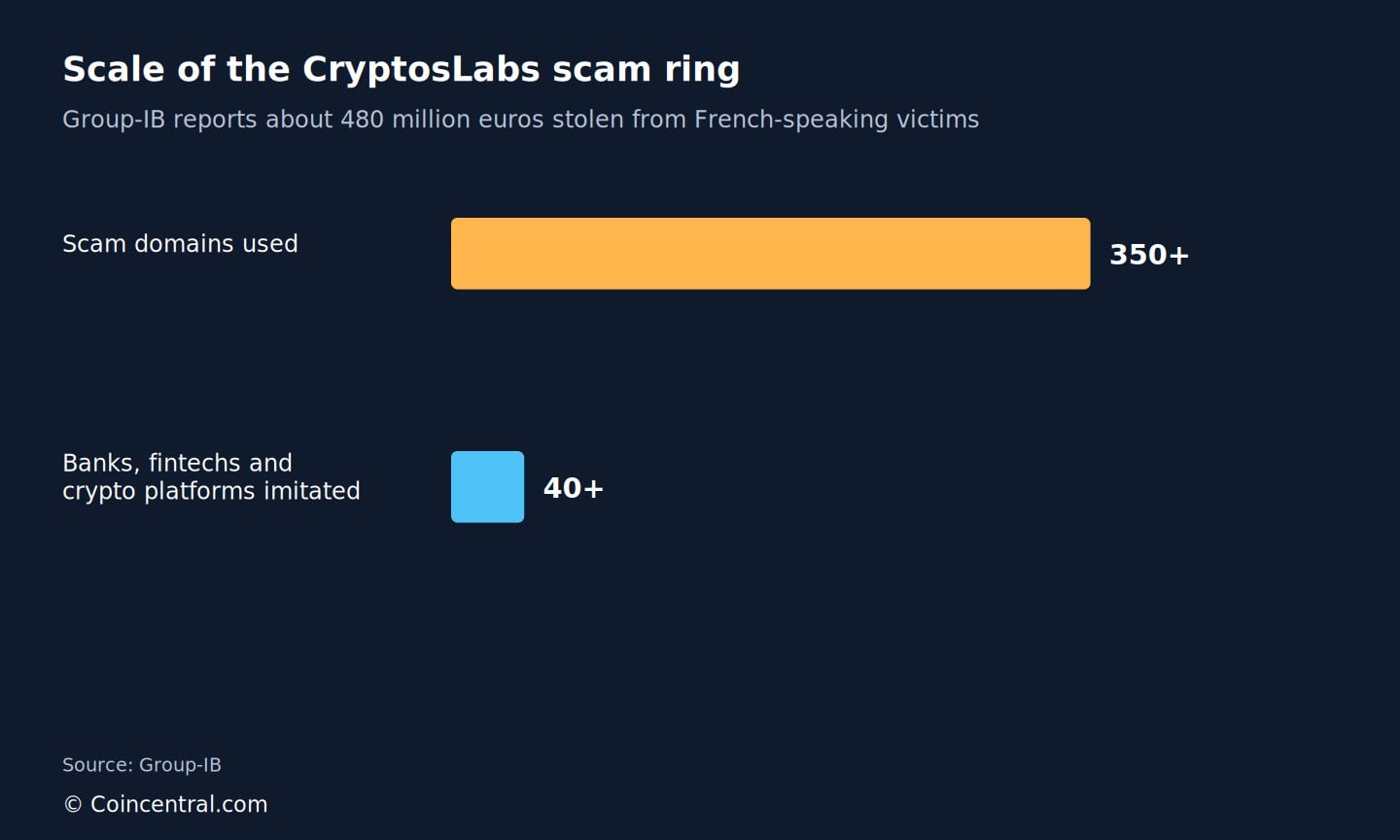 Figure 6: Scale of the CryptosLabs scam ring, according to Group-IB.
| Forex or derivatives registration | nfa.futures.org/basicnet | Not listed |
| Crypto money service registration | fincen.gov/msb-registrant-search | Not listed |
| Domain age | lookup.icann.org | Newer than the firm’s claims |
| Company address | Street-view map search | Missing, fake or offshore |
| Customer service | Phone line | Chat or messaging apps only |
Signs 9 and 10: Hype and Blocked Withdrawals
Sign 9: Hype with little behind it
Some scams rely on hype. In a pump-and-dump, promoters push a token to drive up the price and then sell. In a rug pull, developers take the money and abandon the project.
Group-IB reports that rug pulls caused more than $6 billion in damage in 2025. It says price peaks usually come within 70 seconds of the pump signal.
Two cases show the pattern. Group-IB says 17 wallets moved $227 million in OM Mantra tokens to exchanges before the price fell 90%. The $LIBRA token reached a $4.56 billion market cap before insiders sold, and the price dropped 94%.
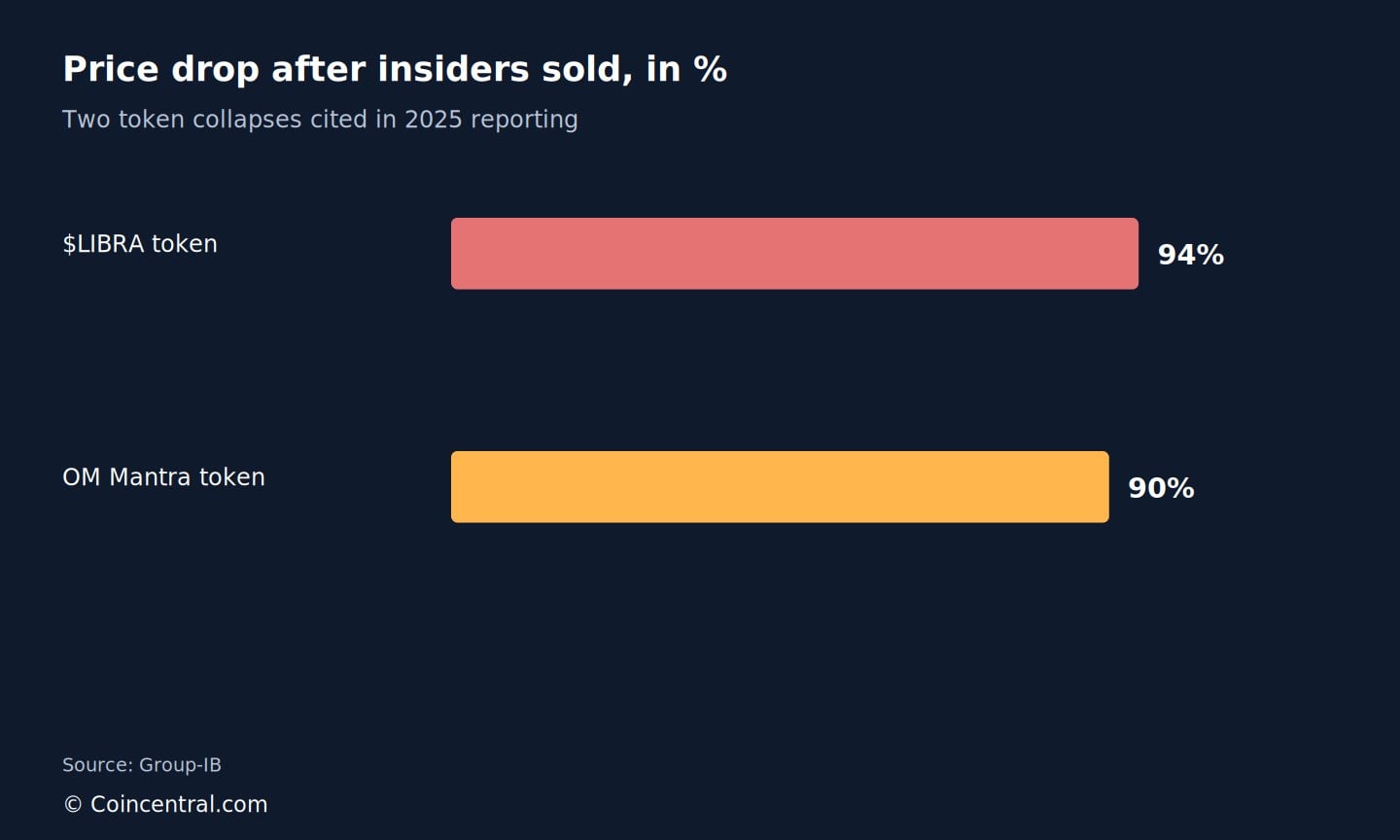 Figure 7: Price drop after insiders sold, in percent, as reported by Group-IB.
Binance Academy suggests asking a few questions before you buy. Is the token supply held by a small number of wallets? Who is on the team, and what is their record? Is there a clear whitepaper and an independent audit of the code?
CommBank gives similar advice for initial coin offerings. It warns about unrealistic returns, vague goals, no clear use for the token and pressure to buy early.
Sign 10: You cannot withdraw your money
This is the sign most victims notice last. DataExpert says scammers ask for extra fees, taxes or verification costs before releasing funds. Real platforms state fees up front and do not need more deposits to release your own money.
Later, the site may stop working, and your contact may stop replying. Then a second scam can follow. Someone offers to recover your money for a fee, but the recovery never happens.
| Early small withdrawal | Works once to build trust | DataExpert |
| Fees before payout | Taxes or verification costs | DataExpert, Binance Academy |
| Site disappears | Login fails, no replies | DataExpert |
| Recovery offer | Pay a fee to get funds back | DataExpert |
Newer Tactics: AI, Deepfakes and Wallet Drainers
Classic scams are now helped by AI tools. Group-IB cites a Chainalysis report finding that scams linked to AI service providers earned an average of $3.2 million per operation. That is roughly 4.5 times as much as schemes without AI.
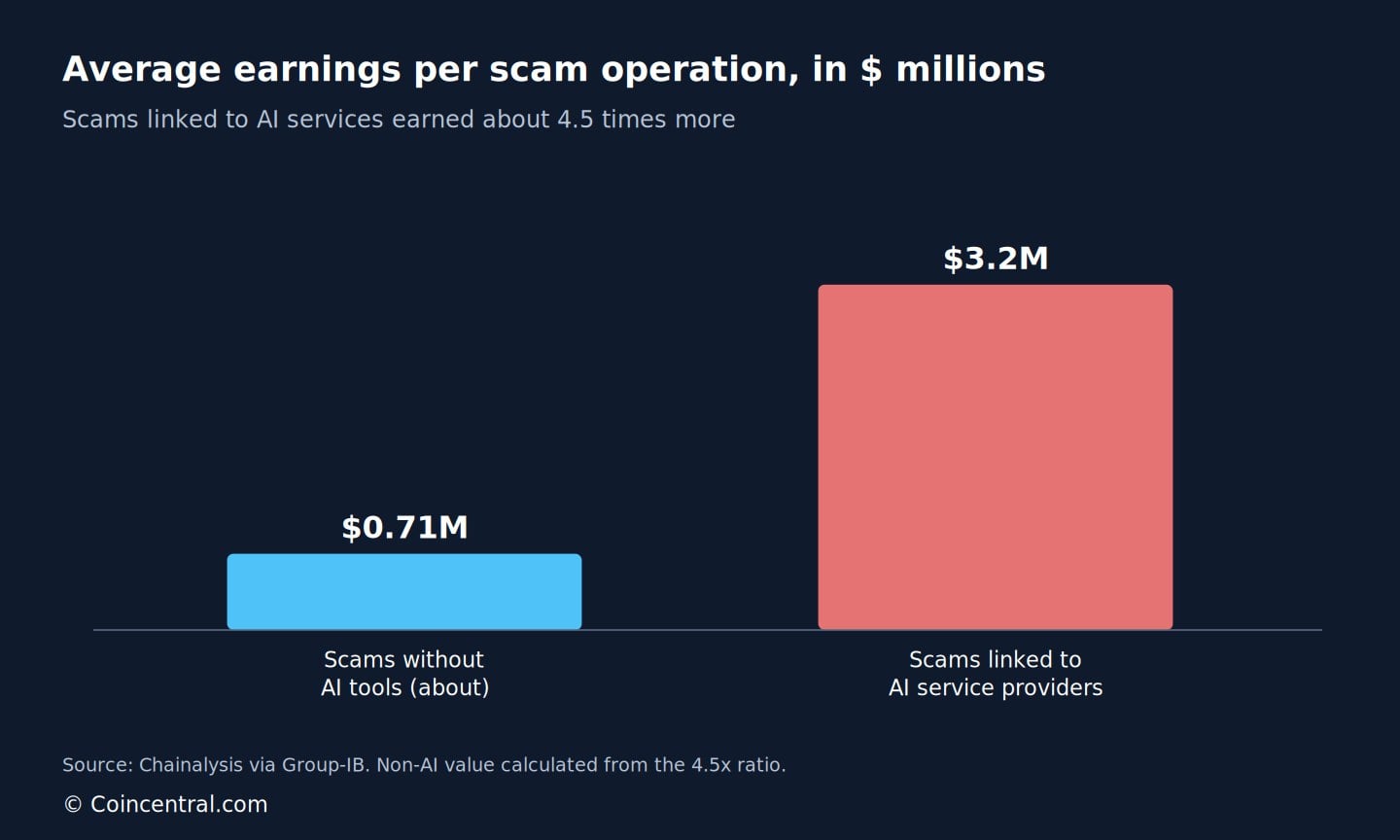 Figure 8: Average earnings per scam operation. The value for scams without AI is calculated from the 4.5 times ratio.
Deepfakes can copy the voice and face of exchange staff, public figures or family members. Binance Academy advises checking any unexpected message through official channels, no matter who it claims to be from.
Wallet drainers are another threat. Group-IB says the Inferno Drainer kit stole from more than 30,000 wallets over six months in 2024 and 2025, even after a shutdown in late 2023. Kits can cost less than $500 on Telegram.
One campaign posed as a tax authority and asked victims to pay crypto tax fees. Victims either typed in seed phrases or signed transactions that drained their wallets.
The rule is simple. No real service will ask for your seed phrase or private key, and Binance says it will never ask for your password.
What To Do If You Think It Is a Scam
Stop sending money right away. DataExpert says to ignore demands for “recovery fees,” taxes or verification costs, since these are usually attempts to take more.
Save chats, emails, transaction records and screenshots. Write down names, phone numbers and websites. Then report the case to the police.
In the U.S., the FTC lists several places to report crypto fraud: ReportFraud.ftc.gov, CFTC.gov/complaint, sec.gov/tcr, ic3.gov and the exchange you used. In Australia, CommBank points to the Australian Cyber Security Centre and the IDCARE support line.
| 1 | Guaranteed or high returns | No one can guarantee crypto profits |
| 2 | Returns tied to deposit size | Ask how the money is really made |
| 3 | Contact out of the blue | Verify through official channels |
| 4 | Trust first, investing later | Never mix dating and investing |
| 5 | Pressure to act fast | Take time and talk to someone you trust |
| 6 | Demands to pay in crypto | Real firms do not ask for this |
| 7 | No registration, address or phone | Check regulator databases |
| 8 | Details that do not add up | Check domain age and reviews |
| 9 | Hype with little behind it | Check the team, supply and audit |
| 10 | Blocked withdrawals or extra fees | Stop paying and save evidence |
The common thread across these scams is pressure combined with an offer that looks too good to be true. Checking each claim on your own, before you send anything, is the best defense.
Sources
- Common Cryptocurrency Scams and How to Avoid Them (Binance Academy)
- Caution on the Rising Number of Crypto Scams (Binance Support)
- What To Know About Cryptocurrency and Scams (Federal Trade Commission)
- Crypto scams (CommBank)
- Cryptocurrency Scams: The 10 Most Common Types and How They Work (Group-IB)
- How to recognize crypto fraud: 10 signs you may have become a victim (DataExpert)
- 10 Signs of a Scam Crypto or Forex Trading Website (CFTC)
- How to spot and avoid cryptocurrency and bitcoin scams (Yorkshire Building Society)
The post How Do You Know if a Cryptocurrency Is a Scam? 10 Warning Signs appeared first on Blockonomi.







 English (US) ·