
Starting a newsletter can seem easy at the beginning. But as you build it, everything gets more complicated. You need to make a stellar copy, an intuitive layout, a precise contact list, and even pinpoint which offer goes to which set of contacts. With so much to handle, you need a tool that helps with everything while keeping ultimate control in your hands.
Hostinger Reach combines all these tasks into an email marketing service. Launched in June 2025, it manages your email marketing campaigns end-to-end. It’s separate from Hostinger’s web hosting and business email, though it connects with its website tools.
I wanted to see it stacks up against some of the best email hosting services I've tested. So, in this review, I’ll assess what Reach offers, where it falls short, and whether you should consider it before launching your campaign. Let’s begin.
Latest Videos FromTechRadar
Hostinger Reach: Plans and pricing
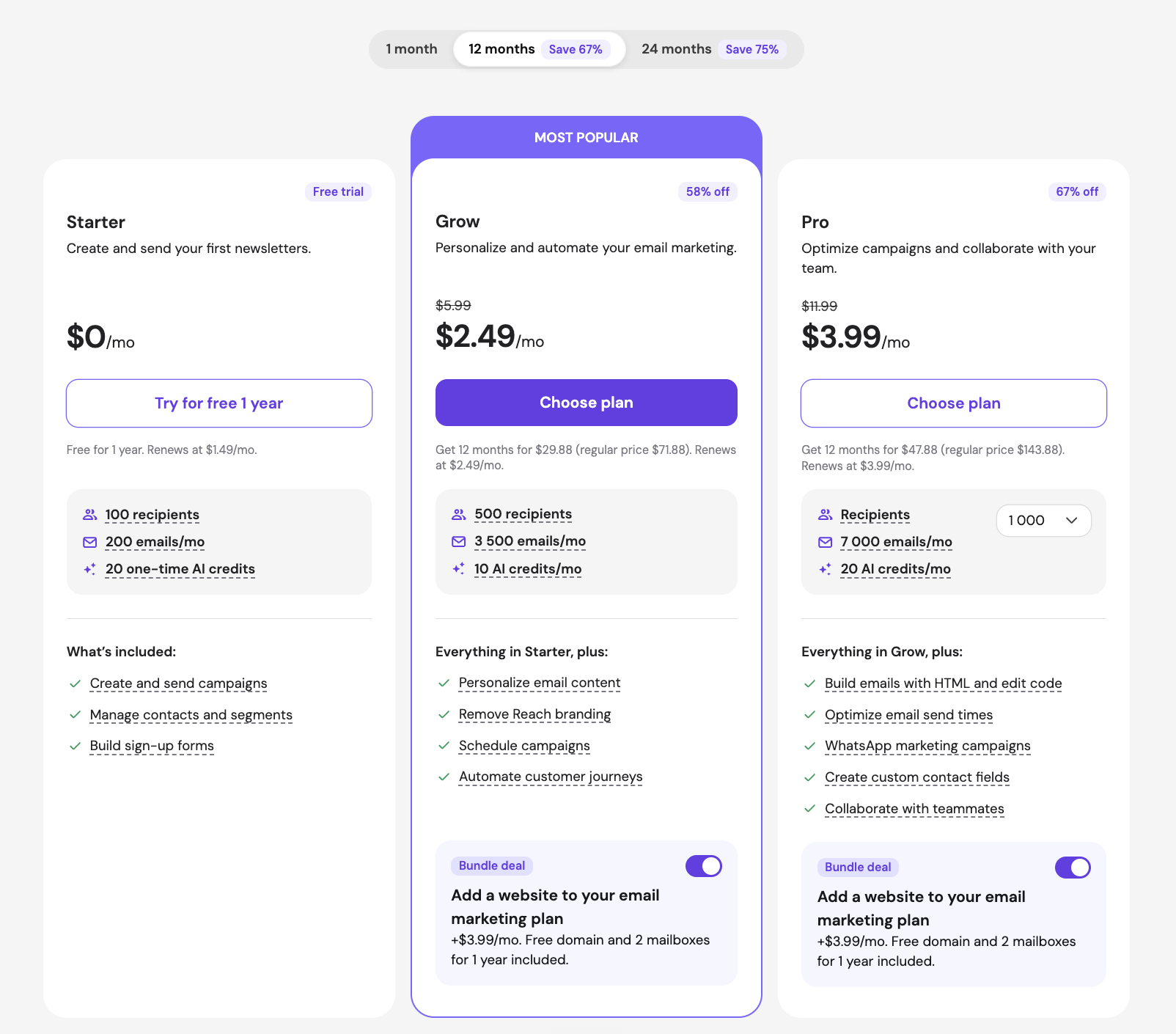
You should first compare the frequency of your emails and the size of your audience contact list with the plans and their limits. Once you’re done with this, go through the add-ons like the editing and automation tools that the plan offers.
Currently, Hostinger Reach offers the following plans:
Swipe to scroll horizontally
Plan |
First-year cost |
Recipients/ month |
Emails/ month |
Starter |
Free |
100 |
200 |
Grow |
$29.88 ($2.49/month) |
500 |
3,500 |
Pro, 1,000 recipients |
$47.88 ($3.99/month) |
1,000 |
7,000 |
The displayed monthly renewal rates currently are $1.49, $2.49, and $3.99, respectively.
Now, you need to understand what “recipients” mean here. It counts distinct addresses emailed during a calendar month, not new subscribers added each month. So, if you delete a contact from your list, it won’t be counted as an additional seat for a new contact. Instead, the counter resets on the first day of each month, not after a specific campaign.
For example, two newsletters to 100 people use all 200 free emails. Four newsletters to those same people need 400. That’s why I’d use Starter to learn the tool, and not assume that it covers a weekly newsletter.
The Starter plan includes 20 one-time AI credits. Grow provides 10 monthly credits and Pro provides 20. Keep in mind that these AI credits pay for generation tasks, and not email delivery.
You will have multiple useful features like scheduling, personalization, and automations under the Grow plan. Whereas the Pro plan adds code editing, send-time optimization, custom fields, and teammates.
Hostinger Reach: Setup and website connections
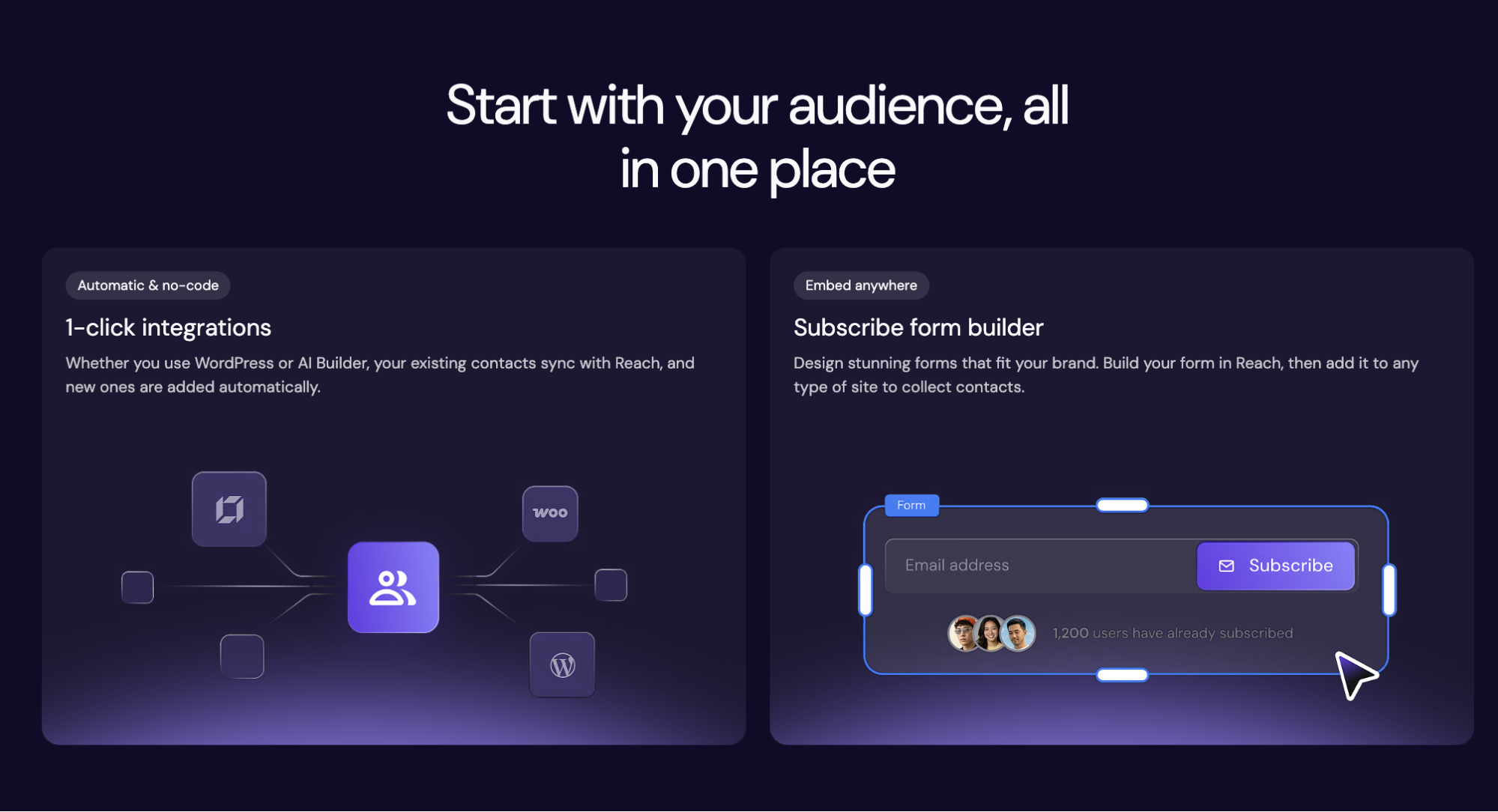
To start an email campaign with Reach, you will need to have a sending domain. Now, if you’re already using a Hostinger-managed domain, it will connect automatically. But if you’re not, you will have to change your DNS records on that external domain to kick-start your campaign.
Once set up, you can add contacts manually, import a CSV file, or connect website forms. Hostinger’s website builder syncs form submissions into Reach. There’s a WordPress plugin too that supports sites hosted elsewhere, with connections for tools including WPForms Lite, Contact Form 7, and Elementor.
That’s the connection I find most useful. A visitor signs up on the website, and their details reach the mailing list without another spreadsheet import. The plugin collects contacts, while campaigns and reports live in Reach.
You should also enable the double opt-in feature for supported signup sources. This asks people to confirm their subscription by email before receiving campaigns. It doesn’t apply automatically to CSV imports or manually added contacts, so an imported address still needs valid permission.
Finally, Reach’s default no-reply address can send without a paid mailbox. Receiving replies requires a working mailbox, which can come from Hostinger or another provider.
Hostinger Reach: Creating and editing emails
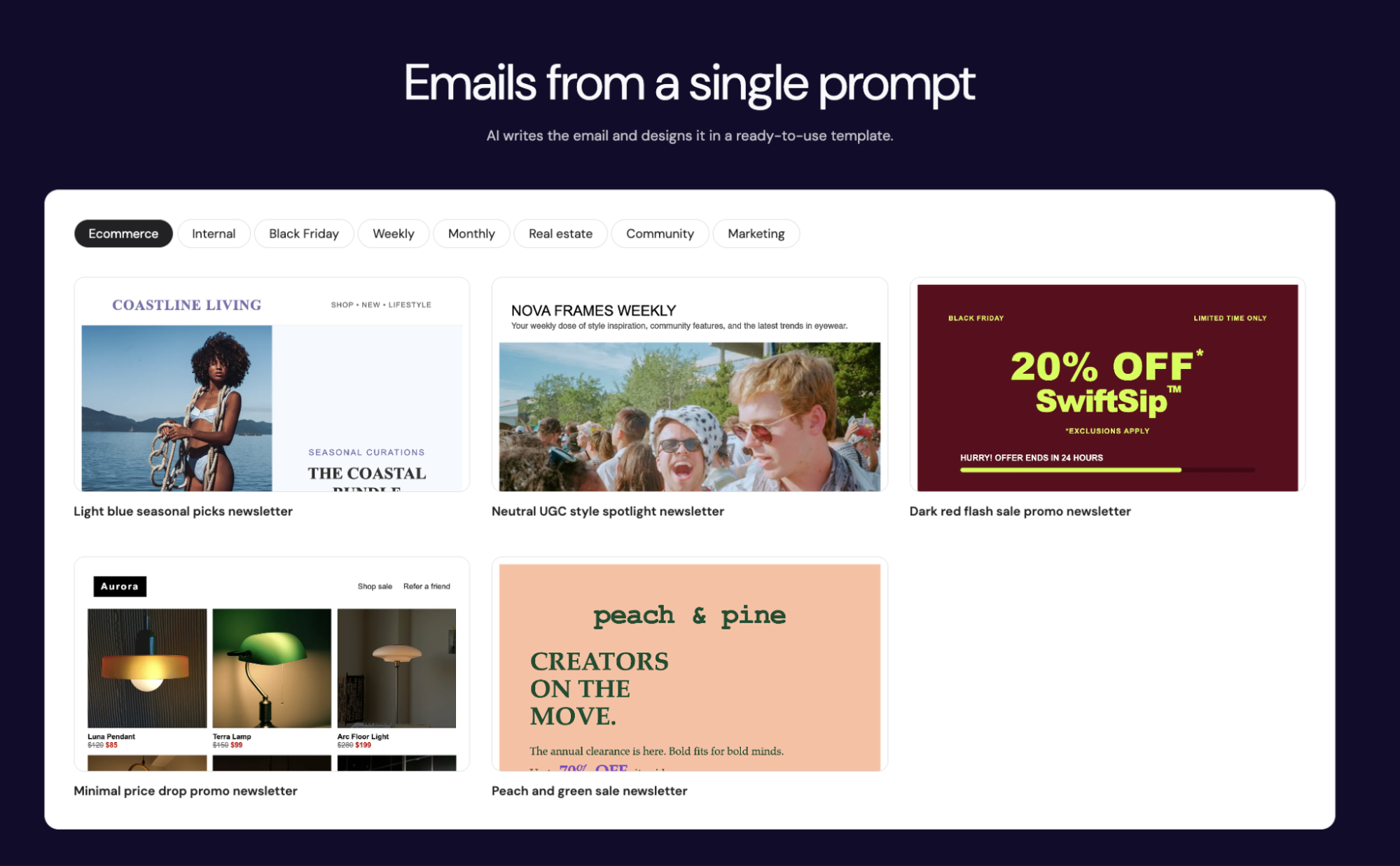
Reach’s AI accepts a goal, supporting links, images, and product details. Using all of this, it proposes a campaign plan and, after confirmation, creates a draft. I noticed this entire process counts as one AI credit, which feels pretty fair to me.
For a small coffee shop, I’d provide the actual offer, closing date, product link, and desired tone. That gives the tool something concrete to work with. “Write a great sales email” leaves too many decisions to software that doesn’t run the shop.
Talking about the editor, you’ll find a template library, visual controls, and HTML/code options on eligible plans. Text, images, links, and design settings can be changed without relying entirely on another prompt. And I definitely prefer that choice. That’s because even if one price is wrong, I would edit the price myself.
I wouldn’t ask AI to rebuild the paragraph and then check whether it changed anything else.
The preheader is worth setting, too. This is the short text shown beside the subject in an inbox. Reach lets you choose it, rather than leave that space to a stray line from the email. I do suggest that before sending, you should check the mobile preview and send yourself a test.
Hostinger Reach: Personalization and automations
You can easily insert the subscriber’s name along with the email address here. My favorite detail in Hostinger’s tutorial is the fallback text. Its coffee-shop example uses “coffee lover” when a first name is missing, so the greeting still makes sense.
That’s a small control with a clear purpose. I would rather send a natural greeting to everyone than a personal greeting that breaks for half the list.
Coming to Segments, they’re simply filtered groups of contacts. Reach can automatically organize people by signup source, and its AI can help define groups using contact activity. I’d use that as a starting rule to review, not a universal sign that someone has lost interest. The useful part is having a group I can address differently from regular readers.
For example, someone joining a coffee workshop list may want class dates, while a shop subscriber wants new beans. Keeping those signup sources separate makes the next message easier to choose. That is a stronger reason to segment than simply making the contact list look tidy.
Hostinger Reach: Reports and email delivery
Reach reports opens, clicks, bounces, and unsubscribes. A bounce means the message could not be delivered. Its click map highlights which links attracted attention, while recipient and device views provide more detail.
You can also use the click map to compare the main offer with other links in the email. That tells more about the next edit than admiring a large open-rate number. But it still doesn’t prove that those clicks became sales.
There’s also a Smart Sending feature that uses past opening behavior to spread a campaign across a 24-hour window. I’d consider it for a general newsletter, but switch it off for an offer that ends that evening.
There’s even a Quality Checker option that looks for problems with content, links, layout, and spam-related signals. Keep in mind, it does not verify the sender’s reputation or guarantee inbox placement.
Hostinger Reach: Final verdict
I would consider Reach for a small business that needs a regular newsletter, website signup forms, and a few useful follow-ups. The appeal is having those jobs connected, with AI to draft and manual controls to finish.
However, you should be more cautious about moving an established mailing operation. Before switching, check the plan’s features, run through the actual store connection, and confirm that saved designs reopen correctly. Those checks matter more than an enthusiastic tutorial or a low monthly figure.
My first step would be a small, permission-based trial with a campaign I genuinely need to send, rather than a throwaway sample. If the editing suits the newsletter and the paid allowance fits its schedule, Reach earns a place on the shortlist.
FAQs
Is email marketing still worth it in 2026?
Yes, I think email marketing is still worth it when people have chosen to hear from the business. Useful newsletters, welcome messages, and relevant offers keep subscribers interested. I’d judge the return by inquiries, repeat purchases, and profit after campaign costs. A high open rate alone doesn’t tell me whether the effort paid off.
What is the 12-second rule for emails?
In email marketing, the “12-second rule” reminds you to make the message clear in a quick scan. Readers should quickly understand who’s writing, what’s being offered, and what to do next. I’d put the main point near the top and cut any opening that delays it. I treat 12 seconds as a writing guideline, not a fixed attention limit that applies to everyone.
What are the 5 C’s of email?
A common version of the five C’s is clear, concise, correct, courteous, and complete. I’d use them as a final check: explain the purpose, remove filler, verify the details, keep the tone respectful, and include everything the reader needs to act. Being concise shouldn’t mean leaving out an offer’s conditions or deadline.
What are the four types of emails?
Four common business email types are newsletters, promotional emails, transactional emails, and welcome emails. Newsletters share updates and useful content. Promotional emails highlight offers. Transactional emails confirm actions, such as purchases or password resets. Welcome emails introduce the business after someone signs up. I’d choose the type around the message’s purpose. These are useful starting categories, not the only kinds of email.







 English (US) ·