
 1 hour ago
4
Powerful? Yes. Necessary? Maybe not.
mrnok/Shutterstock
The ongoing memory shortage has led to price increases across the tech industry, even affecting historically affordable computers like the Raspberry Pi. In early November 2026, Raspberry Pi CEO Eben Upton announced that the latest Raspberry Pi 5's 16GB variant was getting an $80 price hike. At $385 for the 16GB Pi 5, it's safe to say that the platform is no longer as affordable as it once was. The Pi 5's 2GB, 4GB and 8GB models saw price increases earlier in 2026 too.
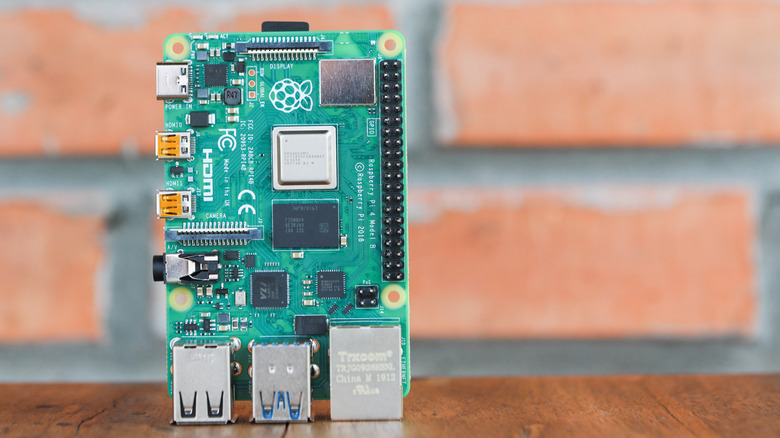
But if you're looking to buy a Raspberry Pi today, you don't have to limit yourself to the newest Pi 5 board. Depending on your intended use case, you could save significant money by buying an older model. The Pi 4, in particular, is still a capable platform with plenty of power for both light desktop use and the typical projects you would run on a Pi. And you're not just saving on the board itself — the Pi 4 has more modest power and cooling requirements than the latest model.
When is the Raspberry Pi 5 overkill?
Daniel Chetroni/Shutterstock
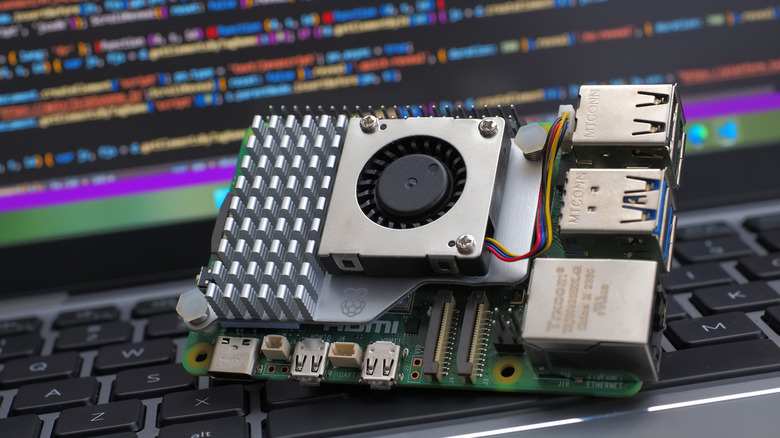
The Raspberry Pi 5 is more than twice as powerful as the previous-generation Pi 4, but you'll only notice that difference in the real world if you use it as your sole computer. The Raspberry Pi 4's slower CPU means it's not as well-suited for web browsing or heavy workloads. But if you're planning to use the board as a springboard for hobbies like self-hosting, home automation or robotics, you're unlikely to find the Pi 4's performance lacking.
Unfortunately, the higher-end Raspberry Pi 4 models have also seen substantial price increases over the past year or so. Still, they remain slightly cheaper than the Pi 5 and more widely available. The Pi 4's official starting price is just $35 for the 1GB model, the same as the original Raspberry Pi that was released in 2012.
The Pi 4's less performant CPU also saves you money on power and cooling. It only needs a 15W USB adapter, which is far more common than the 27W USB-C PD adapter that the Pi 5 required. Additionally, the older Pi 4 runs cooler, and you don't need to add a cooling fan to the bill of materials for most projects. However, the Raspberry Pi 5 tends to exceed 176 degrees Fahrenheit (80 degrees Celsius) after a minute of heavy load. Without a cooling fan, the board then throttles the CPU to bring temperatures under control.
When you factor in the cost of a more capable power adapter and cooling hardware, the Pi 5 ends up costing more than the $45 starting price would have you believe. The Pi 4's CPU also benefits from cooling hardware, but it doesn't get hot as quickly and you can get away with a cheap, passive aluminum heatsink.
Older Raspberry Pi models are easier to find than the Pi 5
If you're willing to stomach the extra initial cost of a Raspberry Pi 5 and hunt for available stock, it's definitely the more future-proof option. The Pi 5's 1GB and 2GB RAM variants, in particular, are only slightly more expensive than the Pi 4, but whether those work for you depends on how much RAM you need from your Pi.
That said, the advantage to buying an older Raspberry Pi is availability. Many official retailers simply cannot keep the affordable Pi 5 models in stock, while you can easily buy a Pi 4 or 3B+ without waiting for a restock. The $35 Pi 4 is also available at Micro Center locations in the US, while you'd have to order the base model Pi 5 online and pay for shipping.
The used market is also flooded with older Pi 4 boards as people upgrade to either the latest model or a more powerful computer altogether. In my city, I see dozens of listings for Raspberry Pi 4 and 3B+ boards on Facebook Marketplace, all selling well below the current retail price. These deals often include power supplies, cases and other necessary accessories too.
Raspberry Pi boards are safe to buy second-hand as they're surprisingly durable. They don't have any moving parts and most people use them for relatively lightweight loads. Even if you use a Raspberry Pi as a media server, for instance, the board remains idle most of the time. With minimal power draw and heat generation, a Pi can easily last several years if not a decade. So buying a used Raspberry Pi isn't as much of a gamble as a pre-owned desktop.
Raspberry Pi's CEO has called the recent price increases a "difficult, but temporary" phase and committed to lowering prices when memory costs fall. However, memory manufacturers have warned of supply shortages extending into 2028 and beyond. Put simply, the latest Raspberry Pi may come down in cost anytime soon.






 English (US) ·