

Published Feb 16, 2026, 3:39 PM EST
Eddie Possehl is a dynamic and driven writer/director with a passion for the written word and all things film, television, comics, and games. His passion for storytelling led him to establish his own production company in hopes of achieving his dreams.
His dedication to his craft has attracted renowned talent like Yuri Lowenthal to collaborate with him on his projects. As he grows and improves, Eddie is a shining example of a self-starter.
Ever since his first theatrical outing in 2002, Spider-Man has been a major figure in cinema. Being the most profitable superhero of all time, it only makes sense that he has quite the tenure in Hollywood. Over the 24 years he's been a cinematic icon, the Friendly Neighborhood has also gone through quite an evolution as a character.
With each new movie —cten in total having been released as of the end of 2025 — the wall-crawling hero goes through a whole new character arc that helps evolve his lore and tell audiences something about him they may not have known before. Whether he's being portrayed by Tobey Maguire, Andrew Garfield, Tom Holland, or one of the many voices who take up a Spider-Person role in the animated Spider-Man: Into the Spider-Verse franchise, the character is always growing.
'Spider-Man' (2002) Set the Standards
 Image via Sony Pictures Releasing
Sam Raimi's Spider-Man is where it all began in cinemas for the Web-Slinger. Being his first time out in the theatrical world, Peter Parker—played by the popular Tobey Maguire—had a lot to prove to audiences everywhere. If this movie did anything, it set the standard for the way Spider-Man should be portrayed on film.
A major way it does so is by driving home the theme of "with great power comes great responsibility," as stated in the movie by Uncle Ben (Cliff Robertson). This powerful message allows it to be a very faithful adaptation of the character from the comic books while setting a baseline standard for how the character should be brought to life on the cinema screen in the decades to come.
'Spider-Man 2' (2004) Explored The Curse of Being a Superhero
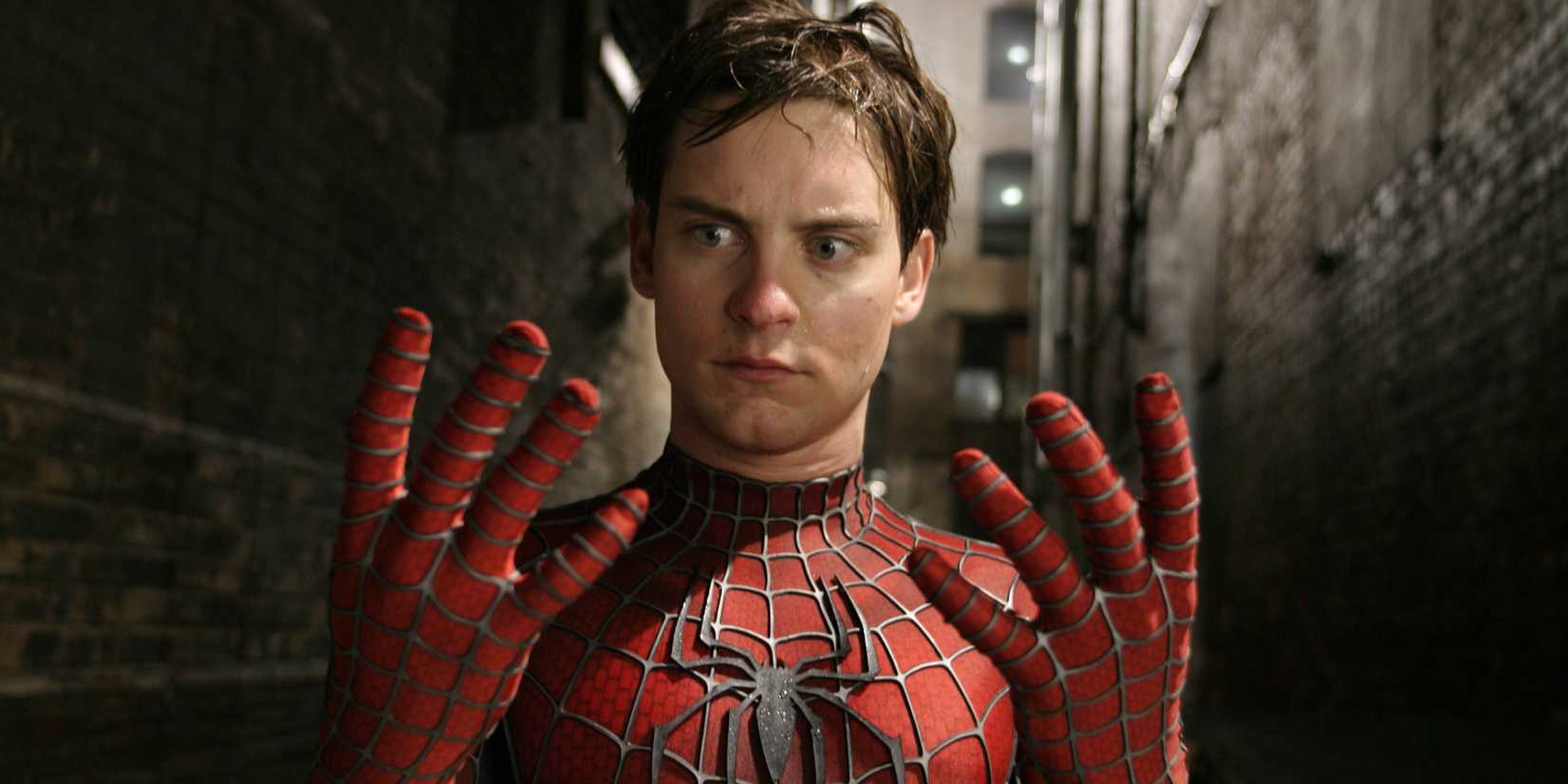 Image via Sony Pictures Releasing
While it is touched on at the end of Spider-Man, it wouldn't be until the sequel film, Spider-Man 2, that Raimi and company explored the curse of being Spider-Man. Not everything is sunshine and rainbows for the Wall-Crawler, and with his second outing, Raimi decided that it was time to truly show the weight of being a hero. The powers of Spider-Man can be seen in one of two ways, as a gift or a curse, and in Spider-Man 2, the choice between both is Peter's main character arc.
It doesn't stop there, though, as Peter's pessimistic thoughts on his life actually end up affecting his powers on a biological level, causing him to lose them temporarily. He gives up being Spider-Man, and while he thinks he can give up the life of a hero, he soon realizes that it isn't Spider-Man that makes Peter Parker, but the other way around. He'll always have the call of responsibility, and whether he likes that or not isn't going to change a thing. Spider-Man 2 is known as one of the best superhero films ever made for this emotional core... well, and the great action.
'Spider-Man 3' (2007) Went Into The Price of Ego
 Image via Sony Pictures Releasing
Peter Parker has always been a character that is down on his luck—the term "Parker Luck" even being an ongoing gag in most Spider-Man media. It has allowed the character to be a very humble man, which is one of his most likable traits. However, what would happen if he let the attention get to his head and he grew a large ego? That is the exact question that Sam Raimi begs with Spider-Man 3, through the inclusion of a city that loves Spidey and the emergence of the alien symbiote.
Spider-Man is just as vulnerable to being as flawed as the person sitting in the movie theater. As a hero who holds so much responsibility, though, growing an ego can be incredibly dangerous. Before he even gets the symbiote in Spider-Man 3, his ego already begins to grow, and when the symbiote emerges, it's made so much worse. Spider-Man 3 makes the case that men who have power unlike any other need to have a dose of humility to keep them from going down the wrong path and even hurting those around them.
'The Amazing Spider-Man' (2012) Addresses How Secrets Have a Cost
While some were worried that a reboot of the franchise was going to mean a rehash of the stories to come before, they were proven wrong when Marc Webb's The Amazing Spider-Man released to theaters in 2012. From the get-go, it was clear that he and Sony Pictures Entertainment were going to go in a very different direction, for better and worse. Previous Spider-Man projects always had an underlying conflict of Peter's secret identity actively hurting and benefiting him, but this new universe really hammered that message home, as the promotional material repeated, "secrets have a cost."
Andrew Garfield's Peter Parker is plagued by secrets. His secret identity, the truth behind Uncle Ben's (Martin Sheen) murderer, and, most importantly, what happened to his parents, had never been touched on in Spider-Man film media prior. For a character whose civilian and heroic identities mean so much to him, this evolution added a lot of drive to his character by using those secrets to guide him and push him forward, rather than just deter him as they had in the past.
'The Amazing Spider-Man 2' (2014) Explores The Weight of Promises
 Image via Sony Pictures Releasing
Many will argue that The Amazing Spider-Man 2 doesn't feel like much of a sequel to The Amazing Spider-Man—definitely not in tone. Still, there's something to be said about the choice Peter makes at the end of the first film, when he promises Captain Stacy (Denis Leary) that he'll leave Gwen out of his heroic life. When audiences see Pete again in the second film, it's made very clear that he's had quite a hard time doing that, implying a very on-and-off relationship for the two in the time since their fight against The Lizard (Rhys Ifans).
This unfairly maligned movie shows how people like Spider-Man need to be careful about promises they make, especially with the lives they live. Of course, this message is best exemplified by the death of the love of his life, Gwen Stacy. This event is one of, if not the most, devastating losses in a Spider-Man movie to this very day, and it caused Andrew Garfield's iteration of the character to grow quite a bit, which can be seen in his appearance in Tom Holland's third solo outing.
'Spider-Man: Homecoming' (2017) Is All About Becoming Your Own Person
 Image via Sony Pictures Releasing
After making his big Marvel Cinematic Universe debut in Captain America: Civil War, Holland's version of the Wall-Crawler got to have a solo adventure just one year later with Spider-Man: Homecoming. This project set the character in a rather unique status quo. Marvel Studios brought him back to high school and actually kept him there (unlike the past two franchises), which opened up a lot of opportunities for growth and adventures.
A major complaint some people have with Spider-Man: Homecoming is the major inclusion of Tony Stark (Robert Downey Jr.) and his mentorship of Peter, causing people to call the MCU's Spidey "Iron Boy Jr." However, what some don't understand is that the entire point of this plot is to show that, even if he's surrounded by other heroes and looks up to them, Spider-Man will always be his own hero and doesn't let the big players stop him from remaining a friendly neighbor. This message is conveyed by Stark telling people to drop the Vulture (Michael Keaton) conflict, and Peter refusing to, even after losing the Stark suit.
'Spider-Man: Into the Spider-Verse' (2018) Takes the Leap of Faith
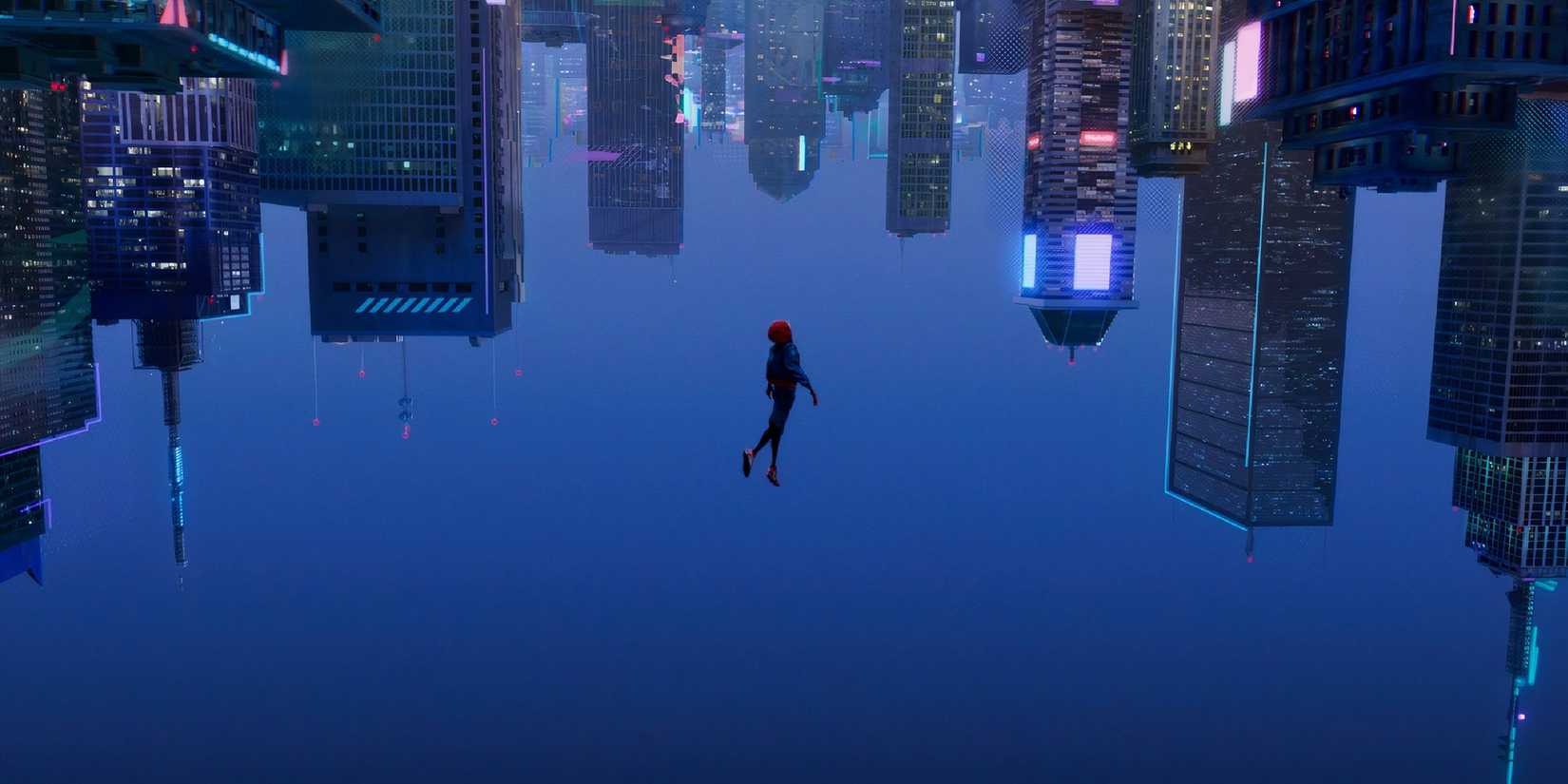 Image via Sony Pictures Releasing
One of the most iconic Spider-Man moments in cinema history is, without a doubt, the "Leap of Faith" moment in the third act of Spider-Man: Into the Spider-Verse. It also acts as the pinnacle that shows that Spider-Man is not someone who lets fear hold him back, no matter who is behind the mask. Despite being scared in the moment, Miles Morales (Shameik Moore) takes a leap of faith to be a hero and get his new multiversal friends home.
Spider-Man: Into the Spider-Verse reminds audiences that, at the end of the day, the Friendly Neighborhood has always been a young character and not devoid of fear. He gets scared—after all, he's a vulnerable character at heart. The film helped evolve audiences' view of the character by showing that no matter how scared the hero may be, the point of wearing the mask is jumping into action despite the doubt.
'Spider-Man: Far From Home' (2019) Shows That No Hero is Perfect
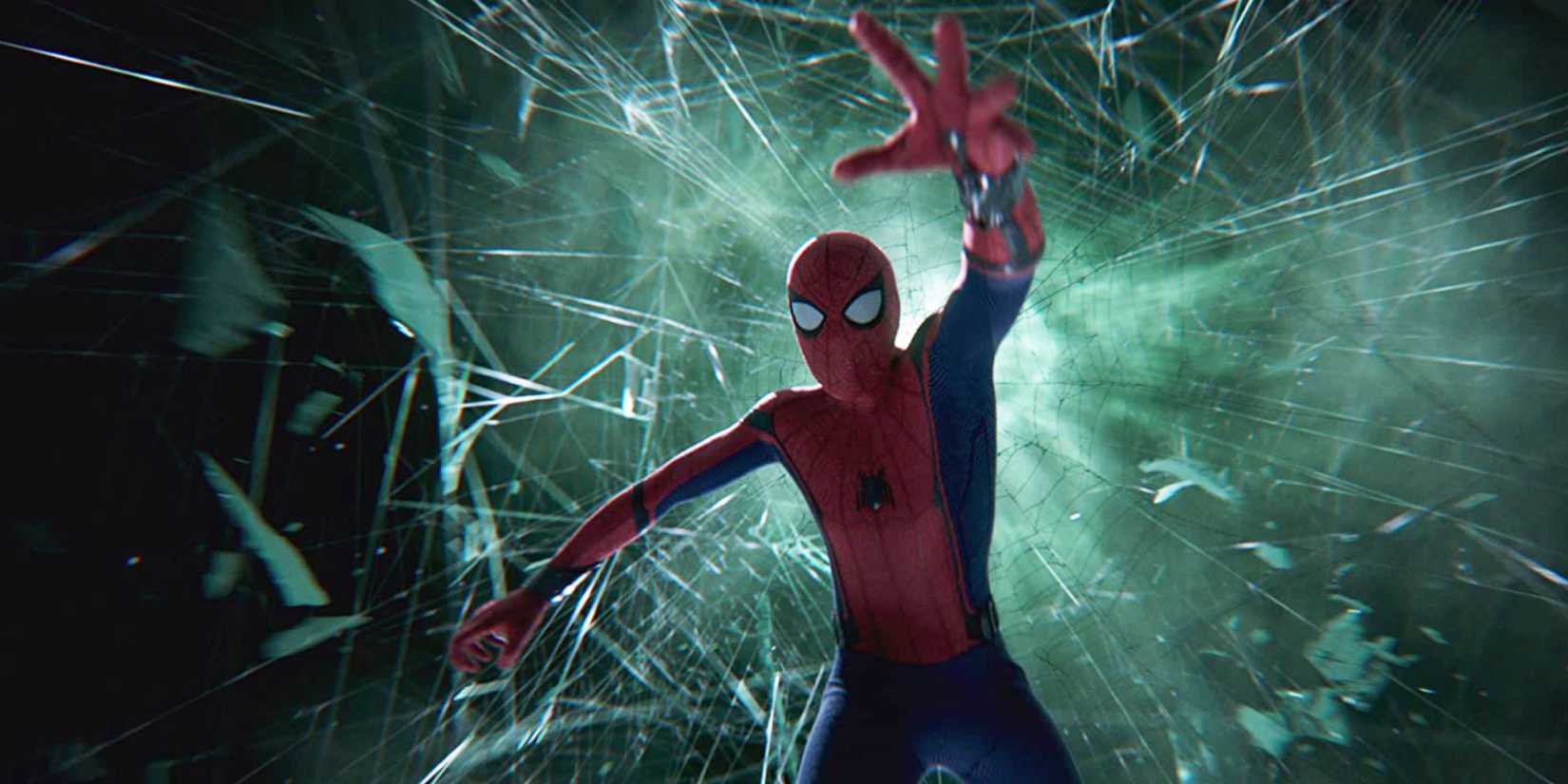 Image via Sony Pictures Releasing
Spider-Man has always been a character rooted in the themes of responsibility. He isn't always perfect, though, and he's not a stranger to sometimes becoming overwhelmed and trying to run from responsibility. Spider-Man: Far From Home emphasizes that while he lives by the code of responsibility, he is not a perfect man and has low moments.
So, when he decides to dedicate his school vacation to Europe to enjoy himself and neglect his heroic duties, he suffers the consequences when he hands the responsibility given to him by the late Tony Stark to Quentin Beck (Jake Gyllenhaal), the secret primary antagonist. Spider-Man: Far From Home forces Spider-Man to mature and realize that while he may get overwhelmed at times, looking past responsibility can result in terrible outcomes.
'Spider-Man: No Way Home' (2021) Has A Hero Saving Everyone
 Image via Sony Pictures Releasing
Spider-Man: No Way Home brings Holland's Spider-Man to the lowest low he's ever been with the death of his beloved Aunt May (Marisa Tomei) at the hands of the Green Goblin (Willem Dafoe). Up until this point in the film, Peter is dedicated to saving the displaced multiversal villains, but his heart changes towards the Green Goblin after this horrific loss.
Aided by Tobey Maguire and Andrew Garfield's Spider-Men, Holland's iteration learns that a true hero tries their best to save every single person they can, no matter how much it hurts. A hero shows mercy and should always do the right thing, even when their enemy doesn't. Being a younger hero with lots of raw emotions, Spider-Man can fall victim to wanting to take revenge when things go sideways, but he goes through a wonderful evolution in Spider-Man: No Way Home, finally understanding that Spider-Man should save everyone, no matter how much he may not want to, at times.
'Spider-Man: Across the Spider-Verse' (2023) Proves That Nothing is Set in Stone
 Image via Sony Pictures Releasing
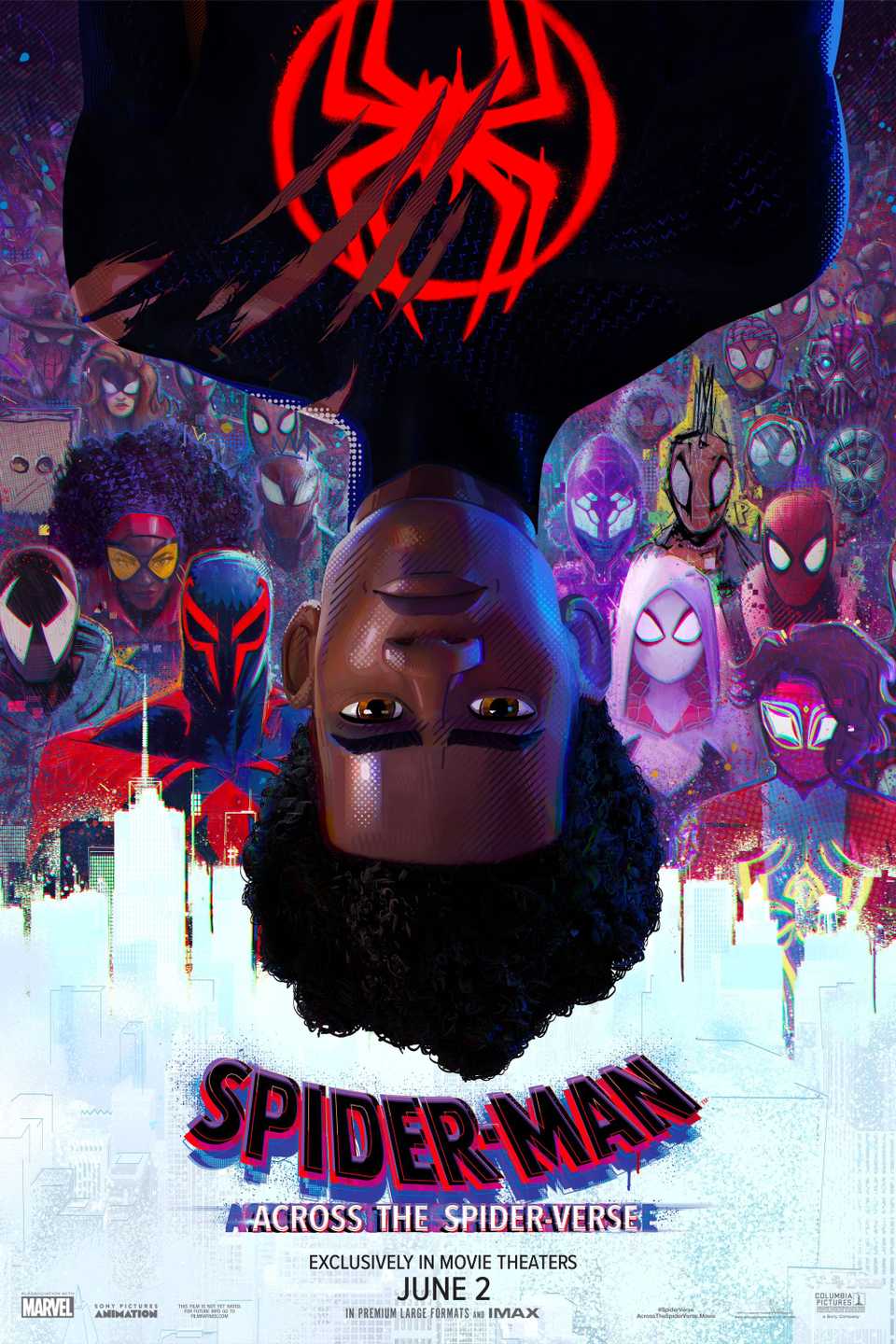
What does one do when the entire multiverse seems to stand against them, telling them that saving a certain person is wrong? Miles Morales faces this conflict when, in Spider-Man: Across the Spider-Verse, his father is seemingly destined to die. When the young hero wants to stop that from happening, the rest of the Spider-Verse tells him that it is what's known as a "Canon Event" and cannot be interfered with.
As Miles proves to Gwen Stacy (Hailee Steinfeld) earlier in the movie, these moments are not set in stone and can and should be changed. This makes the young hero grow to realize that, no matter what others say to him, he needs to do what he feels is right. Once again, Spider-Man tries to save everyone, and even if someone is "destined to die," that's not an excuse not to try to change that fate.






 English (US) ·