
 1 hour ago
13
Matching the $800 console will be costly with new parts, but you can save if you buy used.
Mr.Mikla/Shutterstock
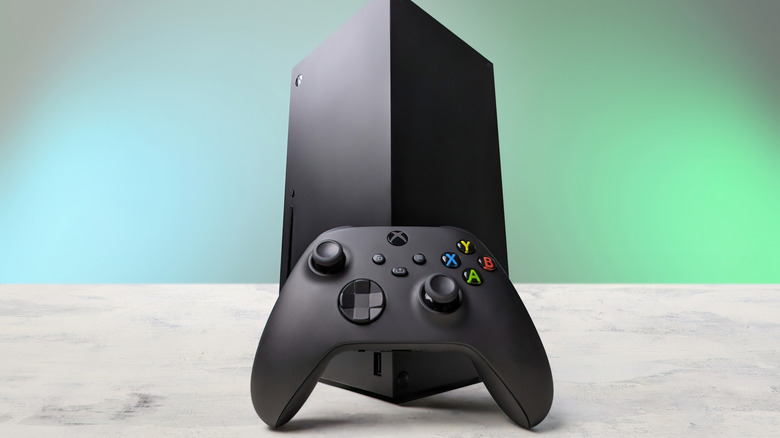
When the Xbox Series X launched in November 2020 at what today sounds like a bargain price of $499.99, claims made the rounds online that $800 is all it'd take to build a PC to match it.
PCWorld put that to the test and came out at a total cost of $1,559, more than three times the original price of the console. Six years later, the Series X costs $799.99, and a matching PC still can't be built for that with new parts. Once you've added Windows and a controller, you're looking at a ballpark figure of $1,200. Even if you're only buying the main components used, you can expect to shell out roughly $730.
Xbox prices rose again on August 1 in the third US increase since the start of last year. To nobody's surprise, Microsoft pointed the finger at "the current components crisis," stating that memory and storage prices had risen by more than 2.5 times. Meanwhile, creating an equivalent PC has gotten cheaper because a six-year-old console doesn't take as much to keep up with. Plenty of parts at the cheaper end of the GPU market can do a job that needed more premium components in 2020.
The card in this build will cost you $330. Sure, you'll still pay more for the PC than the console, but the difference was roughly $1,060 in 2020 versus about $415 today.
The graphics cards that match a Series X
Inside the Series X is an eight-core AMD Zen 2 processor that runs at 3.8GHz. That's paired with an AMD graphics chip rated at 12 teraflops, a 1TB NVMe SSD and 16GB of memory shared between the system and graphics. There's no direct match to a PC card since that graphics chip was never sold as a PC part, but in 2020, Microsoft showed Digital Foundry a Gears 5 benchmark running about level with Nvidia's RTX 2080.
The RTX 2080 and 30-series cards that replaced it are now out of production, so we're basing our assessment on used prices. On resale marketplace Jawa, the RTX 2080 has sold for an average of $195 over the past 12 months, and the slightly slower RTX 2070 Super for $199. The newer RTX 3060 Ti sells for an average of $223, while AMD's RX 6700 XT averages about $260.
New cards in this class start around $310. On October 8, PC Gamer's price tracker had the RTX 5050 at $310 on sale, while Intel's 12GB Arc B580 was at $330. Tom's Hardware listed AMD's RX 7600 at $339. TechSpot, meanwhile, found the B580 within one percent of the RTX 4060 at 1080p across 50 games and 5 percent ahead at 1440p, though the 3060 Ti is 12 percent faster than the 4060 at 1080p.
Nvidia's RTX 4060 has almost disappeared from new stock, with Tom's Hardware's cheapest listing at $530 versus a roughly $261 average on Jawa. An RTX 5060 costs $439, which is up from $359 in mid-August.
Where's the rest of the money going?
Trygve Finkelsen/Shutterstock
A new build around the Arc B580 needs:
-
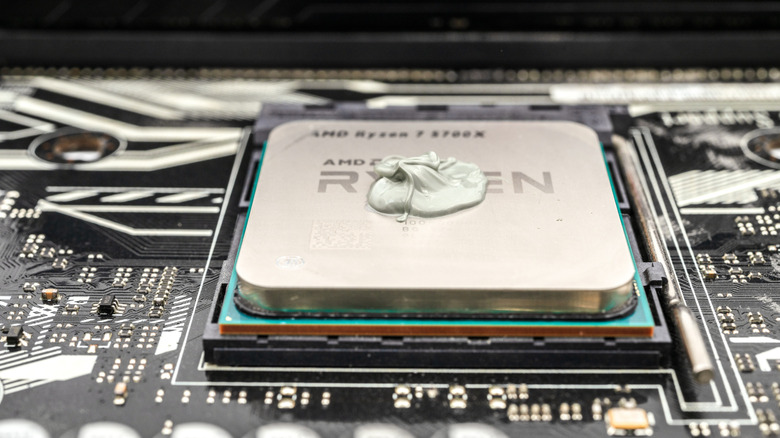
An eight-core Ryzen 7 5700X at $209
-
A $25 cooler (because the chip doesn't include one)
-
A $70 B550 motherboard,
-
16GB of DDR4 at $104,
-
A 1TB SSD at $149,
-
A $60 power supply, and
-
A $65 case.
That's $1,012 with the graphics card, so a $1,000 budget covers the parts, but Windows 11 Home adds $139 and an Xbox controller $65. PCWorld paid $64 for 16GB of RAM in 2020, but that ain't happening in 2026. Per Tom's Hardware, a 32GB DDR4 kit that cost $48 a year earlier was about $200 in July. Newer DDR5 prices are a far worse story, setting buyers back around $249 for 16GB. That's why we've settled on AMD's older AM4 platform for this build.
Forking out for a used processor, motherboard, memory and graphics card brings the parts bill to about $730. A Ryzen 7 3700X, the eight-core Zen 2 chip PCWorld used in its 2020 example build, fetches an average price of $91 on Jawa, a B450 motherboard $49 and a used 16GB DDR4 kit is about $70 on eBay. The remainder of the price is the $223 RTX 3060 Ti plus the same new SSD, power supply, case and cooler. Sellers are asking for more than those 12-month averages at the time of writing: Jawa's current average price for the 3060 Ti is around $284, so $800 is a more realistic number. Windows and a controller would then push the build past $900.
To cut costs a bit, you could get a cheaper third-party wired controller, and you might already have a Windows license on a current PC you could transfer.
Caveat emptor
PCWorld warned in September that those looking in the used market should be cautious, as it includes cards worn down by crypto mining, "untested" parts and listings embellished with AI-generated photos. Some sellers and manufacturers have outright refused returns on dead graphics cards. Meanwhile, Microsoft sells a Certified Refurbished Series X for $649.99, which undercuts the used PC and includes the 4K Blu-ray drive none of these builds have. If you're solely interested in Series X performance, buy the console.
However, an Xbox Series X obviously can't moonlight as a PC. It does have Developer Mode, but that's for testing apps and can't run retail games, so the extra few hundred dollars for a Series X-esque build only makes sense if you'll use the PC as one. Microsoft has confirmed its next-gen 'Project Helix' console will play PC games, with alpha hardware scheduled to go to developers from 2027, and Valve's Steam Machine starts at $1,049 for a PC that already behaves like a console.
With a console at $800 and a console-style PC at $1,049, the $1,000 self-built machine isn't the outlier it was in 2020. As another alternative, Microsoft also sells a refurbished Xbox Series S for $400, but that offers far lower performance.







 English (US) ·