
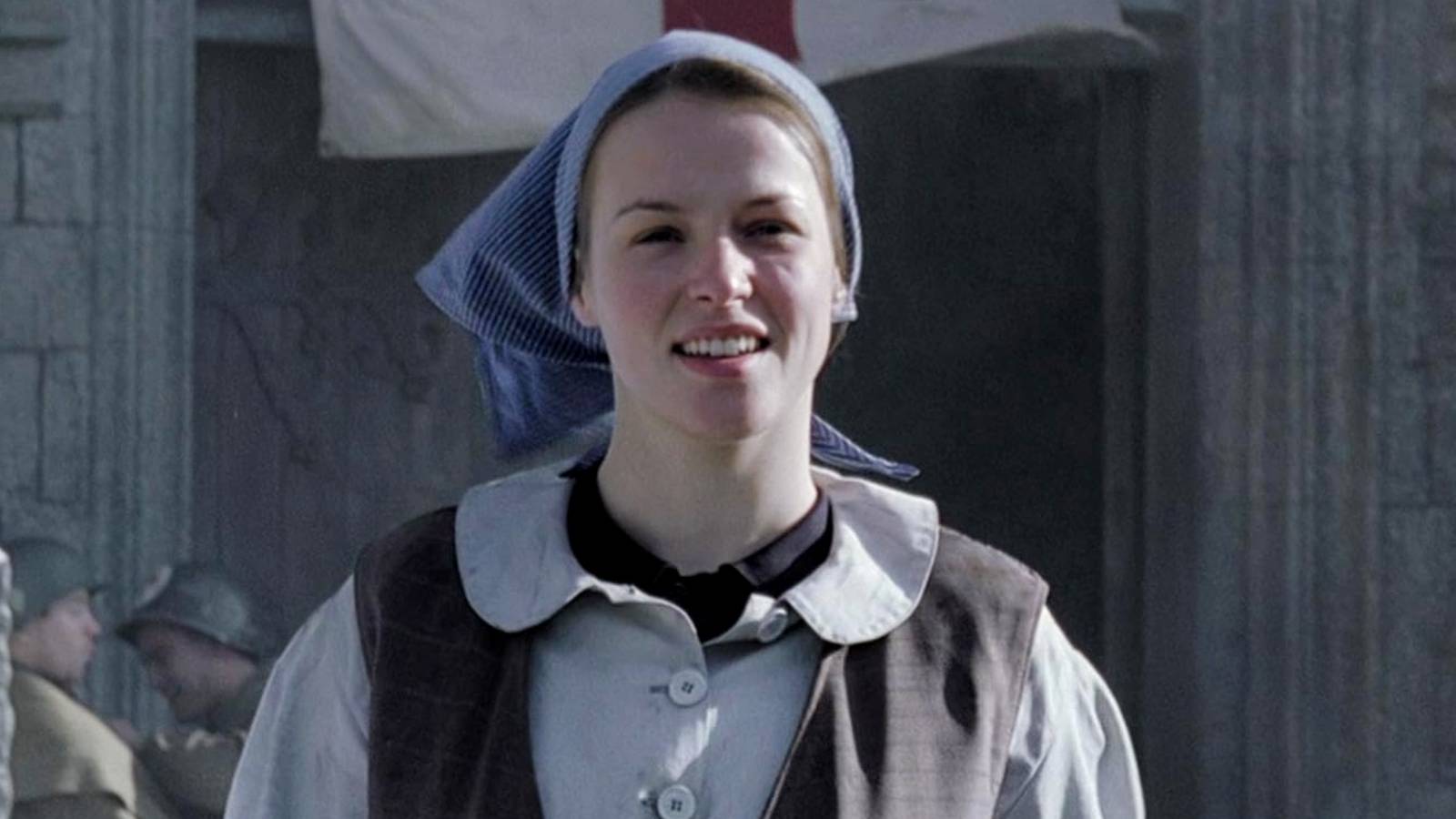
 Image via HBO, Warner Bros.

Published Nov 18, 2026, 11:52 AM EST
Rotten Tomatoes | Letterboxd | Metacritic
Carolyn Jenkins is a voracious consumer of film and television. She graduated from Long Island University with an MFA in Screenwriting and Producing where she learned the art of character, plot, and structure. The best teacher is absorbing media and she spends her time reading about different worlds from teen angst to the universe of Stephen King.
Sign in to your Collider account
HBO’s reputation for quality programming was well-earned, as early as 2001 with the limited series Band of Brothers. Between July 2023 and December 2025, the miniseries pulled 193.3 million viewing hours on streaming, according to the streamer’s engagement reports on FlixPatrol — less than three years of viewing for a series that premiered in 2001. The series was a realistic telling of the 101st Airborne Division whose paratroopers landed in Normandy on D-Day.
These accounts weren’t invented, but rather adapted from Stephen E. Ambrose’s non-fiction book, which chronicled Dick Winters’s rise through the military and the devoted men who served under him. Tom Hanks and Steven Spielberg were the creative forces behind bringing this story to the small screen after their work on Saving Private Ryan. Instead of the fictional narrative of the film, Hanks and Spielberg told a real story that was more about the emotion of the men than the war itself.
Band of Brothers stars Damian Lewis as Dick Winters, an officer in Easy Company. Before Normandy, the series introduces his fellow men, including intelligence officer Lewis Nixon (Ron Livingston), who had a close friendship with Winters. Winters inspires loyalty from the men early on and jealousies from higher-ups who can’t match his military prowess. Eventually, Winters climbs the ladder as the men experience horrible trials and the eventual conclusion of the war.
‘Band of Brothers’ Didn’t Use War as Entertainment
The battles that Easy Company went through during World War II were intense and captivating, but they were never meant to inspire love of combat. Band of Brothers easily depicts the brutalities of war that didn’t just have to do with blood or glory. Some of the harshest experiences these men had were the turmoil that the era inflicted upon them.
Just before D-Day, Bill Guarnere (Frank John Hughes) discovers that his brother has died, adding even more pressure to a high-pressure situation of dropping into enemy territory under the cover of darkness. This is one of many hardships that only increase the longer the brothers are at war. There is no glory in this, and therefore no glamorization of combat. This point is further demonstrated by the testimonials of the real men the show portrayed. Interviews with the veterans frame the dramatized events, grounding the series in their experiences.
COLLIDERInteractive
Ballot sealed
Movies/Academy Awards/Best Picture
Collider · Best Picture
Which Oscar Best Picture
Is Your Perfect Movie?
Five winners · ten questions · one envelope
Five Oscar Best Picture winners. Five completely different visions of what cinema can be and what it can do to you. One of them is the film made for the way your mind works, and ten questions will work out which. The nominees
2020Parasite
2023Everything Everywhere All at Once
2024Oppenheimer
2015Birdman
2008No Country for Old Men
Open the envelope
Question 01 of 10TONE
01 What kind of film experience are you really after? The best movies do not just entertain. They leave something behind.
ASomething that pulls the rug out, that makes me think I am watching one kind of film and then reveals I am watching another entirely. BSomething overwhelming: funny, sad, absurd and genuinely moving, all at once. CSomething grand and weighty, a film that makes me feel the full scale of what I am watching. DSomething formally daring, a film that pushes what cinema can even do. ESomething lean and relentless, pure tension with no wasted frame.
← Back Keys 1 to 5 or A to E · Enter to advance
Next
Question 02 of 10THEME
02 Which idea grabs you most in a film? Great films are driven by a central obsession. What is yours?
AClass, inequality, and what people are willing to do when desperation meets opportunity. BIdentity, family, and the chaos of holding your life together while everything falls apart. CGenius, moral responsibility, and the catastrophic weight of a decision you can never take back. DEgo, legacy, and the terror of becoming irrelevant while you are still alive to watch it happen. EEvil, chance, and whether moral order exists at all or we just tell ourselves it does.
← Back Keys 1 to 5 or A to E · Enter to advance
Next
Question 03 of 10STRUCTURE
03 How do you like your story told? Form is content. The way a story is shaped changes what it means.
AGenre-twisting. I want it to start in one lane and migrate into something completely different. BMaximalist and genre-blending: comedy, action, drama and sci-fi in one ride. CEpic and non-linear, cutting between timelines to build a mosaic of cause and consequence. DA single unbroken flow. I want to feel like I am living it in real time with no cuts to safety. ESpare and precise, every scene doing exactly what it needs to do and nothing more.
← Back Keys 1 to 5 or A to E · Enter to advance
Next
Question 04 of 10VILLAIN
04 What makes a truly great antagonist? The opposition defines the protagonist. What kind of opposition fascinates you?
AA system: invisible, structural, and almost impossible to fight because it has no single face. BThe self, and the ways we sabotage, abandon and fail the people we love most. CHistory, and the unstoppable momentum of events no single person can stop or redirect. DThe industry, the machinery of culture that chews up talent and spits out irrelevance. EPure, implacable evil, a force so certain of itself it becomes almost philosophical.
← Back Keys 1 to 5 or A to E · Enter to advance
Next
Question 05 of 10ENDING
05 What do you want from a film's ending? The final note is the one that lingers. What do you want it to sound like?
AShock and inevitability, a conclusion that recontextualizes everything before it. BEarned emotion. I want to cry, laugh and feel hopeful, even if the world is a mess. CDevastation and grandeur, an ending that leaves me sitting in silence for a few minutes. DAmbiguity, something open enough that I am still turning it over days later. EBleakness, an honest refusal to pretend the world is tidier than it is.
← Back Keys 1 to 5 or A to E · Enter to advance
Next
Question 06 of 10WORLD
06 Which setting pulls you in most? Where a film takes place shapes everything: mood, stakes, what is even possible.
AA gleaming modern city with a hidden underside, beauty masking rot and wealth masking desperation. BA collapsing suburban life that opens onto something infinite, the multiverse inside one ordinary person. CThe corridors of power and science at a world-historical turning point, where decisions echo for decades. DThe grimy, alive chaos of New York and Hollywood, fame as both destination and trap. EVast, indifferent landscape, desert and highway where violence arrives without warning or reason.
← Back Keys 1 to 5 or A to E · Enter to advance
Next
Question 07 of 10CRAFT
07 What cinematic craft impresses you most? Every great film has a signature, the element that makes it unmistakable.
AProduction design and mise-en-scène, every frame composed to carry meaning beneath the surface. BEditing and tonal control, the ability to move between registers without losing the audience. CScore and sound design, music that becomes inseparable from the dread and awe of what you see. DCinematography as performance, the camera not recording events but taking part in them. ESilence and restraint, what is left unsaid doing more work than any dialogue could.
← Back Keys 1 to 5 or A to E · Enter to advance
Next
Question 08 of 10PROTAGONIST
08 What kind of main character do you root for? The protagonist is the lens. Who you follow says something about you.
ASomeone smart and resourceful who makes increasingly dangerous decisions under pressure. BSomeone overwhelmed and ordinary who turns out to be capable of something extraordinary. CA brilliant, tortured figure whose gifts and flaws cannot be separated from each other. DA self-destructive artist whose ego is both their superpower and their undoing. EA quiet, principled person trying to make sense of a world that has stopped making sense.
← Back Keys 1 to 5 or A to E · Enter to advance
Next
Question 09 of 10PACE
09 How do you feel about a film that takes its time? Pace is a choice. Some films sprint. Others let tension accumulate slowly, deliberately.
AI love a slow build when the payoff is going to be seismic. Patience for a devastating reveal. BGive me relentless momentum. I want to feel breathless and emotionally spent by the end. CEpic runtime does not scare me. If the material demands three hours, give me three hours. DI want it propulsive even when nothing is technically happening, restless energy throughout. EDeliberate and unhurried. I want dread to accumulate in the spaces between the action.
← Back Keys 1 to 5 or A to E · Enter to advance
Next
Question 10 of 10AFTERMATH
10 What do you want to feel walking out of the cinema? The best films leave a mark. What kind of mark do you want?
AUnsettled, like I have just seen something I cannot fully explain and cannot stop thinking about. BMoved and energized, like the film reminded me what matters and gave me something to hold onto. CHumbled, like I have been in the presence of something important and overwhelming. DExhilarated, like I have just watched cinema do something it has never quite done before. EHaunted, like a cold, quiet dread that stays with me for days.
← Back Keys 1 to 5 or A to E · Enter to advance
Reveal my film
The envelope, pleaseAnd the Oscar goes to
★ Best Picture, 2020 Parasite Bong Joon-ho, 2019 A film that hides its true intentions until the moment it is ready to reveal them.
You are drawn to films that operate on several levels at once, that begin in one genre and quietly, brilliantly migrate into another. Bong Joon-ho's Parasite is a film about class, desire and the architecture of inequality that manages to be darkly funny, deeply suspenseful and genuinely shocking across a single extraordinary running time. Your instinct is for cinema that rewards close attention and punishes assumptions, right up to its devastating final image. From the Collider file
- The first film not in the English language to win Best Picture, in the Academy's 92-year history to that point.
- It took four Oscars in one night: Picture, Director, Original Screenplay and International Feature.
- It won the Palme d'Or at Cannes in 2019 by a unanimous jury vote, the first Korean film to do so.
- The Park family's modernist house was not a location. It was built from scratch on an outdoor lot.
Reads between the lines Loves a reveal Attention to detail
★ Best Picture, 2023 Everything Everywhere All at Once Daniel Kwan and Daniel Scheinert, 2022 A film that refuses to choose between being entertaining and being meaningful.
You want it all, and this one gives you all of it. The Daniels' Everything Everywhere All at Once is among the most maximalist films ever made: action comedy, multiverse science fiction, family drama, existential crisis, and an emotional core that sneaks up on you in the middle of the chaos. You respond to ambition. Being overwhelmed is the design, not the side effect, because the feeling of being crushed by infinite possibility is exactly what the film is about. From the Collider file
- Seven Oscars, including three acting wins for Michelle Yeoh, Ke Huy Quan and Jamie Lee Curtis.
- Michelle Yeoh became the first Asian woman to win Best Actress.
- The visual effects were handled by a team of fewer than ten people, most of them self-taught.
- Ke Huy Quan had all but left acting for two decades before this role brought him back.
Wants everything Big swings Soft center
★ Best Picture, 2024 Oppenheimer Christopher Nolan, 2023 A film about the gap between what we can do and what we should do.
You are drawn to cinema on a grand scale, films that treat history not as a backdrop but as a force, then place their characters inside that force and watch what happens. Christopher Nolan's Oppenheimer sits inside one of the most consequential moments in human history and refuses to look away from it. You want your films to feel important without being self-important, earning their ambition through craft and the gravity of the subject. This one is enormous, complicated, and offers no easy comfort. From the Collider file
- Seven Oscars, including Nolan's first wins for directing and for Best Picture.
- Cillian Murphy and Robert Downey Jr. both took their first Academy Awards for it.
- Kodak engineered a black-and-white 65mm stock that did not previously exist so Nolan could shoot those sequences on IMAX.
- A three-hour, R-rated drama about theoretical physics that passed 950 million dollars worldwide.
Thinks in decades Scale and weight No easy comfort
★ Best Picture, 2015 Birdman Alejandro G. Iñárritu, 2014 A film doing something that probably should not be possible.
You are drawn to films that foreground their own construction, where the how of the filmmaking becomes part of the what it is about. Alejandro G. Iñárritu's Birdman, stitched to appear as one continuous take, is cinema examining itself through the cracked mirror of a fading actor's ego. You respond to formal daring. Michael Keaton's performance and Emmanuel Lubezki's restless camera make something unlike anything else: a film about creativity, relevance, self-destruction and never quite knowing whether your work means anything at all. From the Collider file
- Four Oscars, among them Best Picture and Best Director for Iñárritu.
- Emmanuel Lubezki's win here was the middle of three consecutive cinematography Oscars, after Gravity and before The Revenant.
- Antonio Sánchez's improvised drum score was ruled ineligible for the score category, which caused a minor uproar.
- The long-take illusion was built from a handful of extended shots joined by hidden cuts.
Formally daring Camera as character Ego and art
★ Best Picture, 2008 No Country for Old Men Joel and Ethan Coen, 2007 A film that treats dread as a form of meaning.
You are drawn to cinema that trusts silence, refuses to explain itself, and lets unease do the talking. The Coen Brothers' No Country for Old Men is about the arrival of a new kind of evil: implacable, arbitrary, and indifferent to the moral frameworks we use to make sense of things. It is one of the most tightly controlled films ever made, and that control is the source of the terror. You want your films to haunt you rather than comfort you, and you have no interest in a resolution that would be a lie. From the Collider file
- Four Oscars: Picture, Director, Adapted Screenplay, and Supporting Actor for Javier Bardem.
- Adapted from Cormac McCarthy's 2005 novel, with much of his dialogue carried over intact.
- Carter Burwell's score runs about sixteen minutes and is nearly inaudible by design.
- Roger Deakins was nominated twice that year, for this and The Assassination of Jesse James, and won for neither.
Trusts silence Dread over answers No tidy endings
Ballot tally · your top three
1
2
3
Ballot counted byCOLLIDERCollider.com · The Awards Desk
The Siege of Bastogne is one of the most grueling of these episodes, which eventually led to the victory of the Battle of the Bulge. Since Band of Brothers is told from the perspective of Easy Company, there is no victory that they saw. They are instructed to secure the territory against the Germans in the dead of winter. The episode showed the terrible experiences of the men, including frostbite, building trenches, and eventually, the loss of several paratroopers in the resulting battle.
Joe Toye (Kirk Acevedo) and Guarnere were critically injured, while others were killed by blasts from the Germans. The cold was the worst of it, as one veteran recalled. On cold nights, he was still thankful it wasn’t as cold as Bastogne. These episodes cemented the idea of the punishing cruelty of war, and the only solace these men had was each other.
‘Band of Brothers’ Showed the Real Effects of Warfare
It can be easy to forget, when watching films and television, what the real ramifications of warfare are. So many features are glamorized to make these events look heroic despite the casualties that come about. Band of Brothers made sure to show that, and though these men were in probably one of the most noble conflicts in American history, they did not come out unscathed.
The interviews with Dick Winters, Bill Guarnere, Babe Heffron, and Donald Malarkey all showed these events with an unflinching eye. These men still carried the emotional scars of warfare that they endured during World War II. In a particularly poignant scene of the series, Malarkey had to pick up laundry in England and paid to bring home every single one of his comrades’ clothes who had died in combat. Viewers didn’t see these deaths firsthand, but could feel the pain just looking at the character's face.
By admission of the series, one of the worst times for the men was the boredom in between battles. In the final episode, “Points,” many men died not because they were in combat but because of the lack of purpose they had while still technically at war. Many died just from accidents, alcohol, or shaky nerves.
These are factors rarely shown on television but were necessary to the narrative. Band of Brothers was aptly named because the bonds that were forged between these men were the most important of all. It kept them going and allowed them to survive even after seeing some of the most brutal warfare tactics. War has a cost, but the bond between the characters – and their real-life counterparts – carried them through.
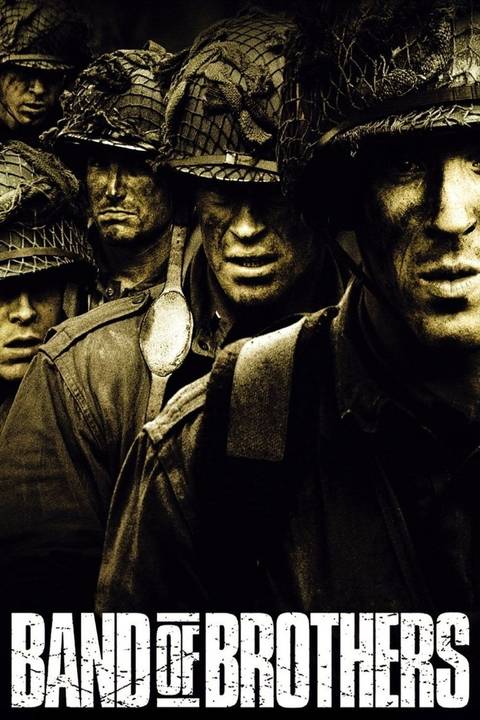
Release Date 2001 - 2001
Network HBO
Writers Bruce C. McKenna, Graham Yost, John Orloff



 English (US) ·